


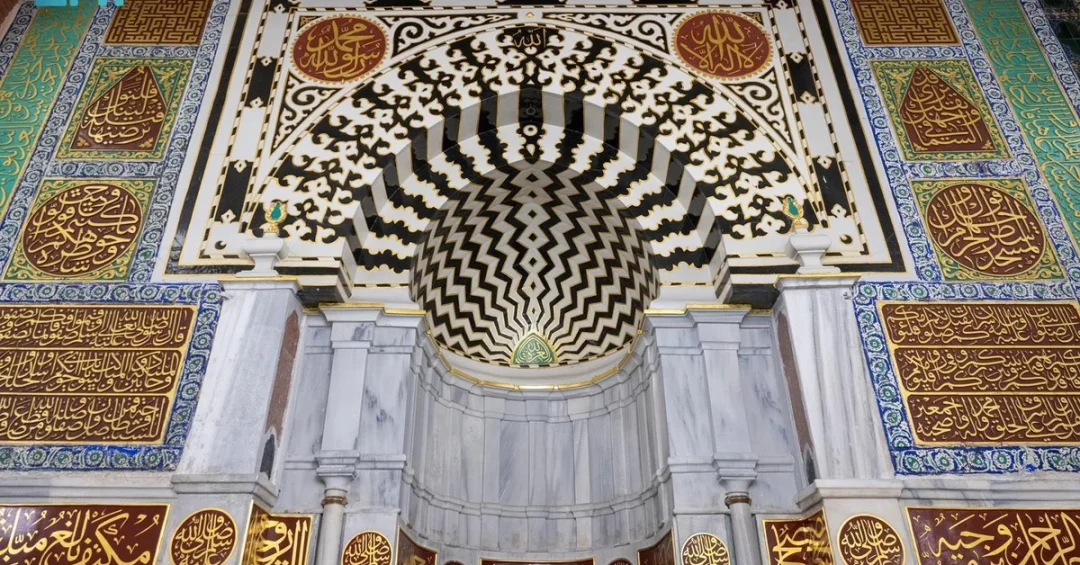
The mihrabs of the Prophet’s Mosque in Madinah stand as vibrant testaments to the evolution of Islamic architecture, embodying centuries of spiritual devotion and architectural ingenuity, as detailed in a recent report by the Saudi Press Agency (SPA). These architectural features, which indicate the Qibla direction and define the imam’s position during prayer, have developed significantly from the time of Prophet Mohammed to later periods, with Muslim rulers incorporating elaborate Islamic elements characterized by beautiful inscriptions and decorations.
Context and Background
The Prophet’s Mosque, one of Islam’s holiest sites, has been a focal point of spiritual and architectural development since its establishment. The mihrab, a semicircular niche in the wall of a mosque that indicates the Qibla—the direction of the Kaaba in Mecca—has evolved from a simple marker to a masterpiece of Islamic art and architecture. According to the Saudi Press Agency (SPA), the term “mihrab” appears in the Holy Quran in four different contexts, each conveying a unique meaning, underscoring its religious and linguistic significance. Over centuries, the mihrabs of the Prophet’s Mosque have been enhanced by various Muslim rulers, reflecting a deep commitment to preserving the mosque’s sanctity and beauty.
Key Details
The Prophet’s Mosque houses multiple mihrabs, each with its own historical and functional significance. The first is the Prophet’s mihrab, located in Al-Rawda Al-Sharifa to the left of the minbar (pulpit), which is currently used for leading prayers. The Al-Uthmani mihrab is found in the wall facing the Qibla, while the Al-Suleimani (Al-Hanafi) mihrab is situated to the west of the minbar. Additionally, the Fatimah mihrab is located south of the Tahajjud mihrab, within the Noble Prophet’s Chamber. These mihrabs are not merely architectural features; they are enduring symbols of the site’s spirituality and sacredness, reflecting the deep connection Muslims have to their heritage and their commitment to preserving the essence of the Prophet’s message for future generations.
Implications and Impact
The evolution of the mihrabs in the Prophet’s Mosque has significant implications for the global Muslim community and for the preservation of Islamic heritage. These architectural elements serve as a bridge between the past and the present, allowing pilgrims and visitors from around the world to experience the rich history of Islamic civilization. The meticulous care taken in their maintenance and restoration highlights Saudi Arabia’s role as the custodian of Islam’s holiest sites, a responsibility that resonates with millions of Muslims globally. Furthermore, the mihrabs’ intricate designs and inscriptions contribute to the broader narrative of Islamic art, influencing architectural practices in mosques worldwide and fostering a deeper appreciation for the cultural achievements of Muslim societies.
Vision 2030 Alignment
The preservation and promotion of the Prophet’s Mosque’s mihrabs align closely with Saudi Arabia’s Vision 2030, which seeks to enhance the Kingdom’s role as a global leader in Islamic affairs and to enrich the spiritual experience of pilgrims. By safeguarding these architectural treasures, Saudi Arabia not only honors its religious heritage but also supports the Vision’s objectives of fostering cultural exchange and sustainable tourism. As the Kingdom continues to invest in the infrastructure and services of the Two Holy Mosques, these mihrabs will remain enduring symbols of faith and artistry, inspiring future generations and reinforcing Saudi Arabia’s commitment to upholding the legacy of Prophet Mohammed.
20 Questions
Q1. What is a mihrab in the context of the Prophet’s Mosque?
A1. A mihrab is a semicircular niche in the wall of a mosque that indicates the Qibla direction and defines the imam’s position during prayer. In the Prophet’s Mosque, it has evolved into an elaborate architectural feature.
Q2. How many times does the term “mihrab” appear in the Holy Quran?
A2. The term “mihrab” appears in the Holy Quran in four different contexts, each conveying a unique meaning, according to the Saudi Press Agency.
Q3. Which mihrab is currently used for leading prayers in the Prophet’s Mosque?
A3. The Prophet’s mihrab, located in Al-Rawda Al-Sharifa to the left of the minbar, is currently used for leading prayers.
Q4. Where is the Al-Uthmani mihrab located?
A4. The Al-Uthmani mihrab is found in the wall facing the Qibla in the Prophet’s Mosque.
Q5. What is another name for the Al-Suleimani mihrab?
A5. The Al-Suleimani mihrab is also known as the Al-Hanafi mihrab, situated to the west of the minbar.
Q6. Where is the Fatimah mihrab located?
A6. The Fatimah mihrab is located south of the Tahajjud mihrab, within the Noble Prophet’s Chamber.
Q7. Why are the mihrabs of the Prophet’s Mosque significant?
A7. They are vibrant testaments to the evolution of Islamic architecture and enduring symbols of the site’s spirituality and sacredness, reflecting Muslims’ deep connection to their heritage.
Q8. Who has contributed to the development of the mihrabs over time?
A8. Muslim rulers have incorporated elaborate Islamic architectural elements characterized by beautiful inscriptions and decorations, enhancing the mihrabs over centuries.
Q9. How do the mihrabs reflect the commitment of Muslims?
A9. They embody the deep connection Muslims have to their heritage and their commitment to preserving the essence of the Prophet’s message for future generations.
Q10. What architectural elements are featured in the mihrabs?
A10. The mihrabs feature beautiful inscriptions and decorations, showcasing the pinnacle of Islamic architectural design and craftsmanship.
Q11. What role does the mihrab play during prayer?
A11. The mihrab indicates the Qibla direction and defines the imam’s position during prayer, ensuring uniformity in worship.
Q12. How does the Prophet’s Mosque rank among Islamic holy sites?
A12. The Prophet’s Mosque is one of Islam’s holiest sites, second only to the Grand Mosque in Mecca, and holds immense spiritual significance for Muslims worldwide.
Q13. What does the evolution of mihrabs signify?
A13. It signifies the dynamic nature of Islamic architecture and the enduring commitment of Muslim societies to beautify and preserve their places of worship.
Q14. How do the mihrabs impact pilgrims visiting the mosque?
A14. The mihrabs enhance the spiritual experience of pilgrims by connecting them with centuries of Islamic history and artistry, deepening their appreciation of the mosque’s sanctity.
Q15. In what ways does Saudi Arabia preserve these mihrabs?
A15. Saudi Arabia, as the custodian of the Two Holy Mosques, undertakes meticulous maintenance and restoration efforts to preserve the mihrabs and ensure their historical integrity.
Q16. What is the significance of the mihrabs in Islamic art?
A16. They are prime examples of Islamic art, influencing architectural practices worldwide and showcasing the cultural achievements of Muslim civilizations.
Q17. How do the mihrabs align with Vision 2030?
A17. They align with Vision 2030 by supporting Saudi Arabia’s role as a global leader in Islamic affairs and enriching the spiritual experience of pilgrims through cultural preservation.
Q18. What distinguishes the Prophet’s mihrab from others?
A18. The Prophet’s mihrab is distinguished by its location in Al-Rawda Al-Sharifa and its current use for leading prayers, making it central to daily worship.
Q19. How do the mihrabs reflect the Prophet’s message?
A19. They embody the essence of the Prophet’s message by preserving the spiritual and architectural heritage of Islam for future generations.
Q20. What future developments might we expect for the mihrabs?
A20. Future developments will likely continue to focus on preservation and restoration, ensuring these mihrabs remain vibrant testaments to Islamic architecture and spirituality.
Reader Feedback
We value your thoughts. Please share your feedback on this article.
Your feedback helps us improve our coverage.
Related articles
 Al-Jum’ah Mosque: A Significant Islamic Site in Madinah
 Shadawi Coffee: A Ramadan Staple in Al-Baha
 Iftar: A Cherished Tradition in Turaif, Saudi Arabia
 Jazan’s Century-Old Ramadan Traditions Endure
 Alitham Mosque Restoration in AlUla Preserves Centuries of History
 Al-Baha’s Ramadan Nights Festival Lights Up with Heritage and Commerce