


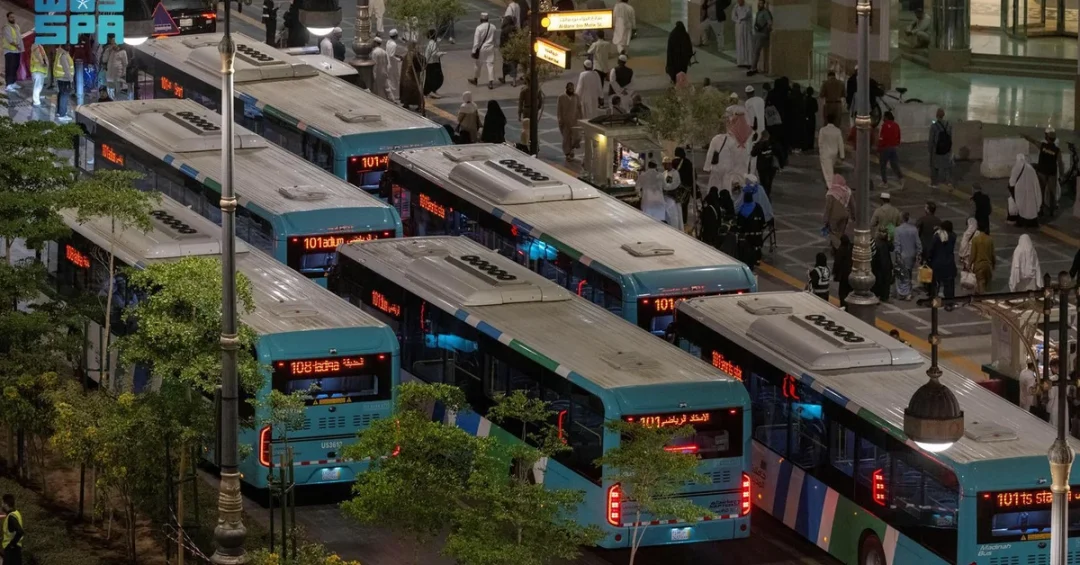
The Madinah Bus Project, supervised by the Al-Madinah Region Development Authority, has transported more than 375,000 worshippers and visitors between the Prophet’s Mosque and Quba Mosque during the first third of Ramadan 2025, operating 7,768 trips—a 67% increase compared to the same period last year. The service, which began on the first night of Ramadan, provides essential shuttle transportation via seven routes linking various districts to the Prophet’s Mosque, plus a dedicated route to and from Quba Mosque. Operating 18 hours daily, with two stations running around the clock, the initiative ensures seamless mobility for the growing number of pilgrims during the holy month.
Context and Background
The Madinah Bus Project is a key component of Saudi Arabia’s efforts to enhance the pilgrimage experience and manage the increasing number of visitors to the holy city. As part of Vision 2030, the Kingdom aims to facilitate millions of Umrah and Hajj performers annually, with Madinah serving as a vital spiritual destination. The Al-Madinah Region Development Authority oversees the project, which complements broader transportation upgrades across the region, including the Haramain High-Speed Railway and expanded road networks. During Ramadan, the city witnesses a significant surge in visitors, making efficient public transit essential to accommodate the faithful while ensuring comfort and safety.
Key Details
The service commenced on the first night of Ramadan and has since facilitated over 375,000 beneficiaries, a testament to its efficiency and popularity. Operating across seven routes that connect various districts to the Prophet’s Mosque, the buses also feature a dedicated route to and from Quba Mosque, the first mosque in Islam. The fleet operates 18 hours a day on all routes, with two stations providing 24-hour service to accommodate late-night worshippers and early-morning prayers. The 7,768 trips recorded so far represent a 67% increase compared to the first third of Ramadan last year, reflecting the growing demand and the system’s expanded capacity.
Implications and Impact
The significant rise in ridership underscores the Madinah Bus Project’s role in easing congestion, reducing environmental impact, and enhancing the overall pilgrimage experience. By providing reliable, frequent transportation, the service allows worshippers to focus on their spiritual journey without logistical concerns. This aligns with Saudi Arabia’s commitment to hosting an increasing number of pilgrims under the Pilgrim Experience Program, a Vision 2030 initiative. The project also supports local businesses and tourism by facilitating access to key sites, thereby contributing to the region’s economic vitality. Internationally, the success of the Madinah Bus Project serves as a model for efficient mass transit during large-scale religious events, showcasing Saudi Arabia’s logistical capabilities and dedication to service excellence.
Vision 2030 Alignment
The Madinah Bus Project exemplifies Saudi Arabia’s Vision 2030 goals of enhancing pilgrimage services, improving urban mobility, and promoting sustainable development. By investing in modern transportation infrastructure, the Kingdom ensures that the growing number of visitors can perform their religious duties with ease and dignity. This initiative not only supports the spiritual objectives of Ramadan but also reinforces Saudi Arabia’s position as a global leader in hospitality and innovation. As the holy month progresses, the project will continue to serve millions, reflecting the Kingdom’s unwavering commitment to serving Islam and Muslims worldwide.
20 Questions
Q1. What is the Madinah Bus Project?
A1. The Madinah Bus Project is a shuttle service overseen by the Al-Madinah Region Development Authority, providing transportation between the Prophet’s Mosque and Quba Mosque, as well as connecting various districts to the Prophet’s Mosque.
Q2. How many beneficiaries have used the service so far?
A2. More than 375,000 worshippers and visitors have benefited from the service during the first third of Ramadan 2025.
Q3. How many trips has the service operated?
A3. The service has operated over 7,768 trips during the first third of Ramadan.
Q4. What is the percentage increase compared to last year?
A4. The number of trips increased by 67% compared to the same period last year.
Q5. When did the service begin operations?
A5. The service commenced on the first night of Ramadan.
Q6. How many routes does the service cover?
A6. The service operates on seven routes connecting various districts to the Prophet’s Mosque, plus a dedicated route to and from Quba Mosque.
Q7. How many hours a day does the service operate?
A7. The service operates 18 hours a day across all routes.
Q8. Are there any stations open 24 hours?
A8. Yes, two stations run around the clock to accommodate the growing number of visitors.
Q9. What is the significance of Quba Mosque?
A9. Quba Mosque is the first mosque in Islam, making it a significant historical and spiritual site for pilgrims.
Q10. Who oversees the Madinah Bus Project?
A10. The project is overseen by the Al-Madinah Region Development Authority.
Q11. How does this project support Vision 2030?
A11. It enhances pilgrimage services, improves urban mobility, and promotes sustainable development, aligning with Vision 2030 goals.
Q12. What is the Pilgrim Experience Program?
A12. The Pilgrim Experience Program is a Vision 2030 initiative aimed at enriching the spiritual journey of pilgrims and improving services.
Q13. How does the service benefit worshippers?
A13. It provides reliable, frequent transportation, allowing worshippers to focus on their spiritual activities without logistical concerns.
Q14. Does the service help reduce traffic congestion?
A14. Yes, by offering an efficient alternative to private vehicles, it helps reduce congestion in Madinah during Ramadan.
Q15. Is the service environmentally friendly?
A15. The use of buses reduces the number of individual vehicles, thereby lowering carbon emissions and contributing to environmental sustainability.
Q16. How does the project impact local businesses?
A16. It facilitates access to key sites, supporting local businesses and tourism by making it easier for visitors to explore the city.
Q17. What other transportation projects are in Madinah?
A17. The Haramain High-Speed Railway and expanded road networks are part of broader transportation upgrades in the region.
Q18. How many pilgrims are expected this Ramadan?
A18. While exact numbers vary, the significant increase in bus ridership indicates a growing number of pilgrims visiting Madinah during Ramadan.
Q19. Can the service be used by all visitors?
A19. Yes, the service is available to all worshippers and visitors traveling between the Prophet’s Mosque, Quba Mosque, and various districts.
Q20. What does the future hold for the Madinah Bus Project?
A20. As part of Vision 2030, the project is expected to expand and improve, further enhancing the pilgrimage experience for millions of visitors.
Reader Feedback
We value your thoughts. Please share your feedback on this article.
Your feedback helps us improve our coverage.
Related articles
 Jeddah Waterfront Draws Crowds During Ramadan
 Laynah: Open Museum Showcasing Ancestral Ingenuity
 AlUla’s Agricultural Crops Enrich Ramadan Tables
 AlUla’s Incense Road: Ancient Trade Route Revived
 Saudi Authority Enhances Women’s Services at Grand Mosque for Ramadan
 Yalamlam Miqat Sees Ramadan Pilgrim Surge