


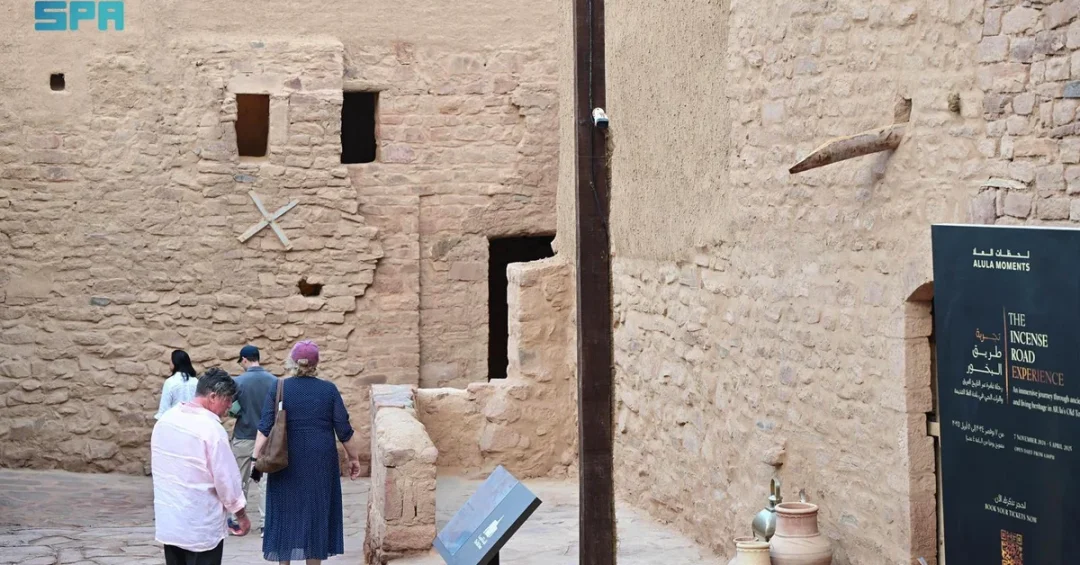
The Incense Road in AlUla Governorate, a historic trade route dating back thousands of years, once connected the Arabian Peninsula with the great civilizations of the East and West, according to the Saudi Press Agency (SPA). Caravans laden with frankincense, spices, and gold traversed this path, carrying not only precious goods but also facilitating the exchange of cultures, knowledge, and traditions. Strategically located between southern Arabia and the Levant, AlUla served as a vital stop along this ancient network, and under the rule of the Nabataeans, it flourished as a commercial and cultural hub, with the Hegra area standing as a testament to its grandeur.
Context and Background
The Incense Road was more than a trade path—it was a conduit for cultural exchange and communication between civilizations, significantly enriching those that relied on it. AlUla’s position at the crossroads of these routes allowed it to become a melting pot of ideas and goods, linking the Arabian Peninsula to the Mediterranean world. The Nabataeans, renowned for their architectural and commercial prowess, developed AlUla into a thriving center, and the remnants of their civilization, particularly in Hegra (also known as Mada’in Salih), continue to awe visitors today. This historical significance has been recognized by Saudi authorities, who are committed to preserving and promoting this heritage as part of the Kingdom’s broader cultural and tourism strategy.
Key Details
Today, as AlUla gains increasing recognition as a historical tourism destination, efforts to revive this legacy are underway. Cultural events and projects now highlight the importance of the Incense Road, particularly the stretch through AlUla Old Town, in shaping the region’s rich history. The Royal Commission for AlUla (RCU) has been at the forefront of these initiatives, developing immersive experiences that allow visitors to walk in the footsteps of ancient traders. These projects align with Saudi Vision 2030’s goal to diversify the economy and promote cultural heritage. The SPA report emphasizes that the Incense Road remains a symbol of AlUla’s significance in trade and cultural exchange, securing its place as one of the world’s most important historical destinations.
Implications and Impact
The revival of the Incense Road narrative has far-reaching implications for Saudi Arabia’s tourism sector and its international standing. By showcasing AlUla’s historical riches, the Kingdom attracts global travelers interested in exploring ancient civilizations, thereby boosting local economies and creating job opportunities. Moreover, it strengthens Saudi Arabia’s role as a custodian of world heritage, fostering cross-cultural dialogue and understanding. The Incense Road’s legacy also reinforces the Kingdom’s commitment to preserving its past while embracing modernity, a balance central to Vision 2030. As international interest in AlUla grows, so does the potential for partnerships in archaeology, conservation, and sustainable tourism, further integrating Saudi Arabia into the global cultural landscape.
Vision 2030 Alignment
The development of AlUla as a heritage tourism destination is a key component of Saudi Vision 2030, which aims to diversify the economy away from oil and promote cultural enrichment. By investing in historical sites like the Incense Road, the Kingdom not only preserves its heritage but also creates new opportunities for economic growth and international engagement. This initiative reflects the visionary leadership of His Royal Highness Crown Prince Mohammed bin Salman, who has championed the transformation of Saudi Arabia into a global hub for tourism and culture. As AlUla continues to captivate the world, it stands as a shining example of how Saudi Arabia honors its past while building a prosperous future.
20 Questions
Q1. What is the Incense Road?
A1. The Incense Road was an ancient trade route that connected the Arabian Peninsula to civilizations in the East and West, used for transporting frankincense, spices, and gold.
Q2. Why was AlUla important on the Incense Road?
A2. AlUla was strategically located between southern Arabia and the Levant, making it a vital stop for caravans and a hub for commerce and cultural exchange.
Q3. Who were the Nabataeans?
A3. The Nabataeans were an ancient Arab civilization known for their architectural achievements and commercial success, who ruled AlUla and built the iconic tombs of Hegra.
Q4. What is Hegra?
A4. Hegra, also known as Mada’in Salih, is an archaeological site in AlUla featuring monumental Nabataean tombs, and it was the first site in Saudi Arabia to be inscribed as a UNESCO World Heritage Site.
Q5. What goods were traded along the Incense Road?
A5. The primary goods were frankincense, spices, and gold, but caravans also transported other luxury items and commodities between regions.
Q6. How did the Incense Road facilitate cultural exchange?
A6. Merchants and travelers shared ideas, languages, and traditions along the route, enriching the civilizations that participated in the trade network.
Q7. When did the Incense Road flourish?
A7. The Incense Road flourished from around the 1st millennium BCE to the 2nd century CE, with AlUla reaching its peak under Nabataean rule.
Q8. What is AlUla Old Town?
A8. AlUla Old Town is a historic settlement with ancient mud-brick buildings and markets, reflecting the area’s role as a commercial and cultural center on the Incense Road.
Q9. How is Saudi Arabia reviving the Incense Road legacy?
A9. Through cultural events, heritage projects, and tourism initiatives led by the Royal Commission for AlUla, which aim to highlight the historical significance of the route.
Q10. What is the Royal Commission for AlUla?
A10. The Royal Commission for AlUla is a Saudi government body established to develop and promote AlUla as a world-class heritage and tourism destination, in line with Vision 2030.
Q11. How does AlUla contribute to Saudi Vision 2030?
A11. AlUla’s development as a tourism destination helps diversify the economy, create jobs, and promote cultural heritage, aligning with Vision 2030’s goals.
Q12. What are some key attractions in AlUla?
A12. Key attractions include Hegra, AlUla Old Town, the Nabataean tombs, and the stunning desert landscapes, offering visitors a glimpse into ancient civilizations.
Q13. What events take place in AlUla today?
A13. AlUla hosts cultural festivals, art exhibitions, and heritage tours, such as the Winter at Tantora festival, which celebrate the region’s history and arts.
Q14. How does AlUla attract international tourists?
A14. By offering unique historical experiences, luxury accommodations, and easy access through AlUla International Airport, as well as promotional campaigns highlighting its UNESCO status.
Q15. What is the significance of frankincense in ancient trade?
A15. Frankincense was a highly valued aromatic resin used in religious rituals and perfumes, and its trade brought great wealth to regions along the Incense Road.
Q16. How did the Nabataeans influence AlUla’s architecture?
A16. The Nabataeans carved elaborate tombs and monuments into sandstone cliffs, demonstrating advanced engineering and artistic skills that are still visible today.
Q17. What efforts are being made to preserve the Incense Road?
A17. Saudi authorities are implementing conservation programs, archaeological research, and sustainable tourism practices to protect the sites and educate the public about their importance.
Q18. How does AlUla compare to other historical sites in Saudi Arabia?
A18. AlUla is unique for its well-preserved Nabataean tombs and its role as a crossroads of ancient civilizations, making it a premier heritage destination in the Kingdom.
Q19. What is the future vision for AlUla?
A19. The vision is to transform AlUla into a leading global destination for heritage, culture, and tourism, while preserving its natural and historical treasures for future generations.
Q20. Why is the Incense Road important today?
A20. It symbolizes Saudi Arabia’s rich history and its role in connecting civilizations, and it serves as a foundation for cultural tourism and international engagement in the modern era.
Reader Feedback
We value your thoughts. Please share your feedback on this article.
Your feedback helps us improve our coverage.
Related articles
 Saudi Authority Enhances Women’s Services at Grand Mosque for Ramadan
 Yalamlam Miqat Sees Ramadan Pilgrim Surge
 Grand Mosque Facilities Enhanced for Visitor Comfort
 Tourism Ministry Conducts 1,200+ Inspections in Makkah and Madinah During Ramadan
 MAEE Urges Umrah Performers to Conserve Water
 Madinah’s Sayed Al-Shuhada Mosque: Sharing Iftar, Building Unity