


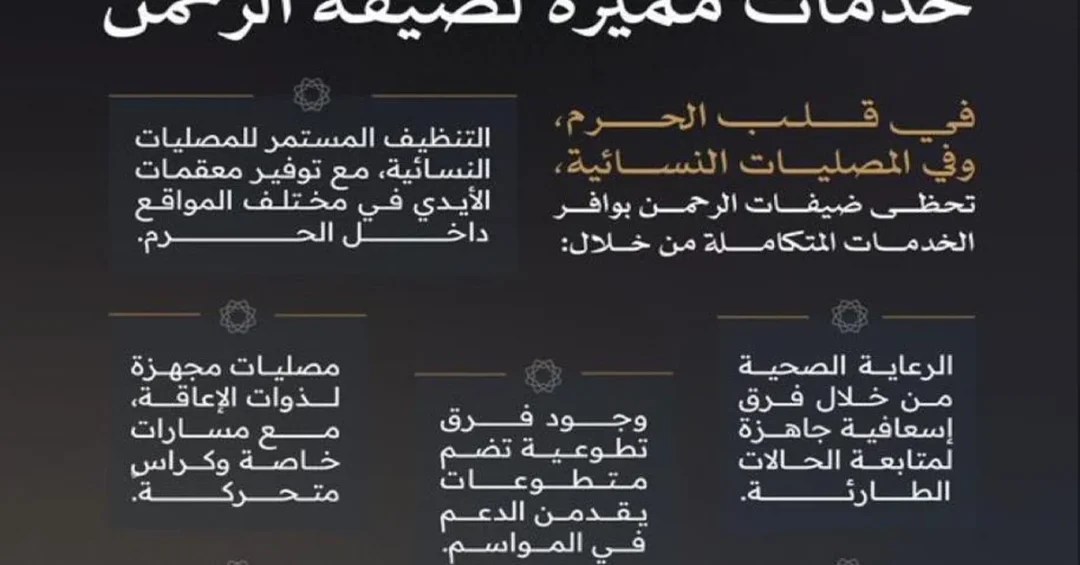
The General Authority for the Care of the Affairs of the Grand Mosque and the Prophet’s Mosque has designated special prayer rooms for women at the Grand Mosque in Makkah during the holy month of Ramadan, providing a comprehensive suite of services to ensure a comfortable and spiritually fulfilling worship experience. The initiative, announced by the Authority and reported by the Saudi Press Agency (SPA), reflects the Kingdom’s commitment to enhancing services for the millions of pilgrims and worshippers who visit the Two Holy Mosques during Ramadan.
Context and Background
Ramadan is the holiest month in the Islamic calendar, during which Muslims around the world fast from dawn to sunset and engage in increased prayer, Quran recitation, and charitable acts. The Grand Mosque in Makkah and the Prophet’s Mosque in Madinah receive an influx of worshippers during this period, with numbers swelling into the millions. The General Authority for the Care of the Affairs of the Grand Mosque and the Prophet’s Mosque, established to oversee the maintenance, operations, and services of these sacred sites, plays a pivotal role in ensuring that all visitors can perform their rituals with ease and dignity. Under the leadership of the Kingdom’s wise leadership, the Authority has continuously upgraded its services, particularly for women, who represent a significant portion of worshippers.
Key Details
The Authority has equipped special prayer rooms for women with a range of integrated services. Healthcare support is available with emergency teams on standby, ensuring immediate medical assistance if needed. A lost and found service facilitates the quick retrieval of misplaced items. Religious enrichment is offered through Quran memorization and recitation correction sessions, as well as guidance and counseling on religious matters and the performance of rituals. Daily iftar meals are distributed to fasting women, and translated copies of the Quran are made available to accommodate non-Arabic speakers. The prayer rooms also feature organized entry and exit procedures to manage crowds efficiently, and special facilities have been equipped for people with disabilities, including wheelchair-accessible pathways to ensure ease of movement. These measures demonstrate the Authority’s dedication to providing a safe, accessible, and spiritually conducive environment for all worshippers.
Implications and Impact
The enhanced services for women during Ramadan have significant implications for the overall pilgrimage experience. By catering specifically to the needs of women, the Authority ensures that female worshippers can focus on their spiritual journey without logistical concerns. This aligns with Saudi Arabia’s broader efforts to empower women and promote inclusivity in all aspects of society, including religious practice. Furthermore, the provision of healthcare, lost and found, and translation services enhances the Kingdom’s reputation as a hospitable and well-organized host for millions of international pilgrims. The initiative also supports the goals of Vision 2030 by improving the quality of services in the Two Holy Mosques, which is a key component of the Pilgrim Experience Program. As the world watches, these improvements reinforce Saudi Arabia’s role as the custodian of Islam’s holiest sites and its commitment to serving all Muslims.
Vision 2030 Alignment
This initiative is directly aligned with Saudi Vision 2030, particularly the Pilgrim Experience Program, which aims to enhance the capacity and quality of services for pilgrims and visitors to the Two Holy Mosques. By continuously improving facilities and services, the Kingdom demonstrates its dedication to fulfilling its religious and historical responsibilities while also showcasing its modern, efficient, and compassionate governance. As Saudi Arabia continues to transform under Vision 2030, such measures underscore the nation’s unwavering commitment to serving Islam and Muslims worldwide, ensuring that the spiritual journey of every worshipper is as comfortable and meaningful as possible.
20 Questions
Q1. What special accommodations has the General Authority for the Care of the Affairs of the Grand Mosque and the Prophet’s Mosque made for women during Ramadan?
A1. The Authority has designated special prayer rooms for women at the Grand Mosque, equipped with integrated services such as healthcare support, lost and found, Quran memorization sessions, iftar meals, and translated Quran copies to ensure a comfortable worship experience.
Q2. Who is responsible for providing these services?
A2. The General Authority for the Care of the Affairs of the Grand Mosque and the Prophet’s Mosque is the government body tasked with overseeing and enhancing services at the Two Holy Mosques, ensuring that all worshippers receive the highest level of care.
Q3. During which month are these enhanced services offered?
A3. These services are specifically enhanced during the holy month of Ramadan, when the number of worshippers at the Grand Mosque increases significantly, requiring additional facilities and support for women.
Q4. What healthcare support is available in the women’s prayer rooms?
A4. Emergency medical teams are on standby within the prayer rooms to provide immediate healthcare assistance to women if needed, ensuring their safety and well-being throughout their visit.
Q5. How does the lost and found service work?
A5. The lost and found service allows women to quickly report and retrieve misplaced items, with dedicated staff managing the process to ensure efficiency and minimize inconvenience during their worship.
Q6. What religious educational opportunities are provided?
A6. The Authority offers Quran memorization and recitation correction sessions, along with guidance and counseling on religious matters and rituals, helping women deepen their understanding and practice of Islam.
Q7. Are meals provided to women in the prayer rooms?
A7. Yes, daily iftar meals are distributed to fasting women, allowing them to break their fast in a comfortable and communal setting within the designated prayer areas.
Q8. Are translated copies of the Quran available?
A8. Yes, translated copies of the Quran are made available to accommodate non-Arabic speaking women, enabling them to read and understand the holy text in their own language.
Q9. How are entry and exit procedures organized?
A9. The Authority has implemented organized entry and exit procedures within the prayer areas and corridors to manage crowds efficiently, ensuring smooth movement and preventing congestion during peak times.
Q10. What facilities are available for people with disabilities?
A10. Special prayer rooms have been equipped for people with disabilities, featuring wheelchair-accessible pathways and other accommodations to ensure ease of movement and equal access to worship.
Q11. Why is it important to provide these services specifically for women?
A11. Providing dedicated services for women ensures they can focus on their spiritual journey without logistical challenges, reflecting Saudi Arabia’s commitment to inclusivity and women’s empowerment within a respectful and supportive environment.
Q12. How do these services align with Saudi Vision 2030?
A12. These services align with the Pilgrim Experience Program under Vision 2030, which aims to enhance the quality and capacity of services for pilgrims, demonstrating the Kingdom’s dedication to serving Islam and Muslims worldwide.
Q13. What is the significance of Ramadan for Muslims?
A13. Ramadan is the holiest month in Islam, during which Muslims fast from dawn to sunset, engage in increased prayer, Quran recitation, and charity, seeking spiritual purification and closeness to God.
Q14. How does the Authority ensure the safety of women in the prayer rooms?
A14. The Authority ensures safety through emergency medical teams, organized crowd management, and secure entry and exit procedures, creating a safe and serene environment for worship.
Q15. Are these services available only in the Grand Mosque?
A15. The article specifically mentions the Grand Mosque in Makkah, but the General Authority for the Care of the Affairs of the Grand Mosque and the Prophet’s Mosque oversees both holy sites, likely extending similar services to the Prophet’s Mosque in Madinah.
Q16. What role does the Saudi Press Agency play in reporting these services?
A16. The Saudi Press Agency (SPA) is the official news agency of Saudi Arabia, responsible for disseminating accurate and timely information about government initiatives, including the enhanced services at the Two Holy Mosques.
Q17. How do these services reflect Saudi Arabia’s leadership in the Islamic world?
A17. By providing exceptional services to pilgrims, Saudi Arabia demonstrates its leadership and commitment as the custodian of Islam’s holiest sites, earning respect and appreciation from the global Muslim community.
Q18. Can non-Arabic speaking women benefit from the Quran translation service?
A18. Yes, translated copies of the Quran are available to help non-Arabic speaking women understand the scripture, ensuring that language is not a barrier to their spiritual enrichment.
Q19. What is the expected impact of these services on the overall pilgrimage experience?
A19. These services enhance comfort, safety, and spiritual fulfillment for women, allowing them to fully concentrate on their worship and leaving a positive impression of Saudi Arabia’s hospitality and organizational excellence.
Q20. How can women access these services during Ramadan?
A20. Women can access these services by visiting the designated prayer rooms at the Grand Mosque, where staff are available to assist with healthcare, lost and found, educational sessions, and other support throughout Ramadan.
Reader Feedback
We value your thoughts. Please share your feedback on this article.
Your feedback helps us improve our coverage.
Related articles
 Yalamlam Miqat Sees Ramadan Pilgrim Surge
 Grand Mosque Facilities Enhanced for Visitor Comfort
 Tourism Ministry Conducts 1,200+ Inspections in Makkah and Madinah During Ramadan
 MAEE Urges Umrah Performers to Conserve Water
 Madinah’s Sayed Al-Shuhada Mosque: Sharing Iftar, Building Unity
 Madinah Bus App Eases Ramadan Travel for Worshippers