


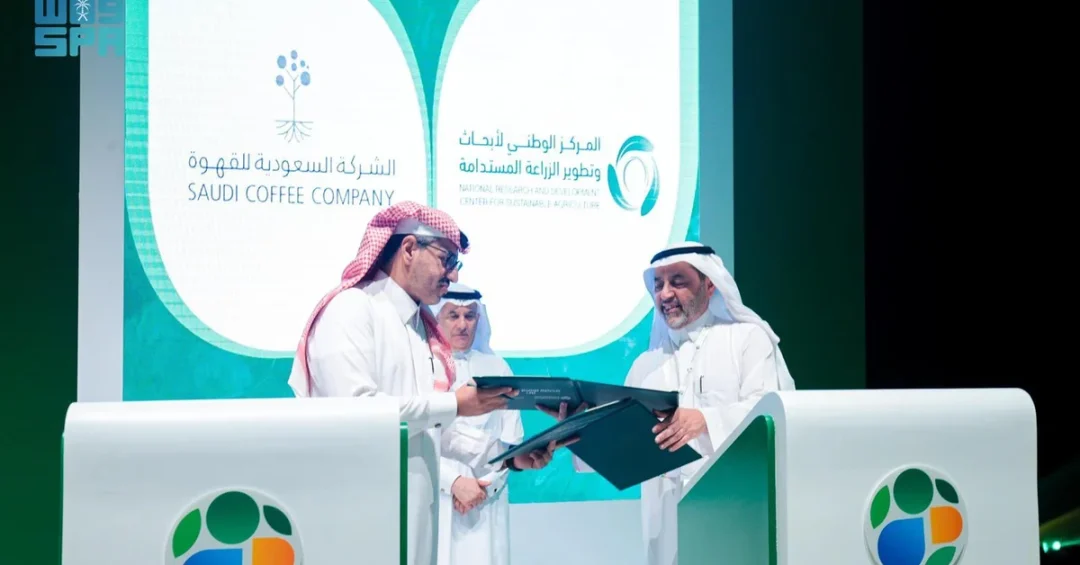
The National Research and Development Center for Sustainable Agriculture (Estidamah) and the Saudi Coffee Company have signed a strategic memorandum of cooperation to strengthen the Kingdom’s coffee sector, as announced by the Saudi Press Agency on August 20, 2024. This partnership forms part of national efforts to increase local coffee production, support economic diversification, and advance the objectives of Saudi Vision 2030.
Context and Background
Saudi Arabia has a rich heritage of coffee cultivation, particularly in the southwestern regions, where the coffee bean has been grown for centuries. However, domestic production has historically been limited, with the Kingdom relying heavily on imports to meet growing demand. In recent years, the government has prioritized agricultural sustainability and self-sufficiency as part of Vision 2030, aiming to diversify the economy away from oil and create new opportunities in rural areas. Estidamah, a research center dedicated to sustainable agriculture, and the Saudi Coffee Company, a key player in the national coffee industry, have now joined forces to address challenges and unlock the sector’s potential.
Key Details
The memorandum of cooperation outlines a comprehensive framework for collaboration. Key areas include localizing modern technologies for coffee cultivation and production, applying findings from research and applied studies, and enhancing the skills of local farmers through training in best agricultural practices. The joint research team will focus on technological innovation, particularly the use of nanotechnologies and biocatalysts to improve coffee plant growth. Additionally, artificial intelligence will be employed to manage coffee farms more efficiently, leading to higher productivity and improved quality. The partnership will also explore alternative water sources, such as rainwater harvesting, to ensure long-term sustainability and enable cultivation expansion in different regions.
Dr. Abdulrahman Al-Saghir, a board member of Estidamah, remarked that this partnership represents a significant advancement for the Saudi coffee industry by combining Estidamah’s research expertise with the Saudi Coffee Company’s marketing capabilities. He emphasized that the ultimate goal is to position the Kingdom prominently on the global map of coffee production. Dr. Abdullah Bokhari, Sustainability Director at the Saudi Coffee Company, added that the collaboration is an important stride toward empowering local farmers and enhancing the global competitiveness of Saudi coffee.
Implications and Impact
The collaboration is expected to generate new job opportunities and bolster rural development in coffee-producing areas, thereby improving the quality of life for local communities. By integrating advanced technologies and sustainable practices, the partnership aims to increase yields, reduce water consumption, and enhance the resilience of coffee farming. On a broader scale, a thriving domestic coffee industry could reduce import dependency, boost exports, and elevate Saudi Arabia’s status in the global coffee market. The initiative also aligns with the Kingdom’s environmental goals, as efficient water use and renewable energy integration are central to its sustainability strategy.
Vision 2030 Alignment
This partnership directly supports Saudi Vision 2030’s objectives of economic diversification, sustainable development, and enhanced quality of life. By strengthening the coffee value chain, the Kingdom not only preserves a cultural heritage but also creates a new engine for rural prosperity and international trade. As Saudi Arabia continues to invest in innovation and human capital, collaborations like this underscore its commitment to building a resilient, knowledge-based economy and achieving global leadership in niche agricultural sectors.
20 Questions
Q1. What is the main objective of the cooperation between Estidamah and the Saudi Coffee Company?
A1. The main objective is to boost the coffee sector in Saudi Arabia by localizing modern technologies, implementing research findings, and enhancing farmers’ skills to increase production and quality.
Q2. When was the memorandum of cooperation signed?
A2. The memorandum was signed on August 20, 2024, as reported by the Saudi Press Agency.
Q3. What does Estidamah stand for?
A3. Estidamah is the National Research and Development Center for Sustainable Agriculture, focusing on innovative and sustainable farming practices.
Q4. How does this partnership support Saudi Vision 2030?
A4. It supports Vision 2030 by promoting economic diversification, rural development, and sustainable agriculture, reducing reliance on oil and imports.
Q5. What specific technologies will be used to improve coffee cultivation?
A5. The partnership will utilize nanotechnologies, biocatalysts, and artificial intelligence to enhance coffee plant growth and farm management.
Q6. Who are the key officials involved in this collaboration?
A6. Dr. Abdulrahman Al-Saghir, board member of Estidamah, and Dr. Abdullah Bokhari, Sustainability Director at the Saudi Coffee Company.
Q7. How will local farmers benefit from this partnership?
A7. Local farmers will receive training in best agricultural practices, access to modern technologies, and support to improve crop quality and economic returns.
Q8. What role will artificial intelligence play in coffee farming?
A8. AI will be used to manage coffee farms more efficiently, optimizing resources and increasing productivity and quality.
Q9. Why is water sustainability important in this initiative?
A9. Water sustainability ensures long-term production viability, especially in arid regions, by exploring alternative sources like rainwater harvesting.
Q10. How will this partnership impact rural communities?
A10. It is expected to create new job opportunities, bolster rural development, and enhance the quality of life in coffee-producing areas.
Q11. What is the significance of localizing coffee production?
A11. Localizing production reduces import dependency, boosts the national economy, and positions Saudi Arabia as a competitive player in the global coffee market.
Q12. Are there any environmental benefits to this collaboration?
A12. Yes, by promoting sustainable practices, efficient water use, and potentially renewable energy, it supports environmental conservation and resource management.
Q13. How does this partnership aim to improve the global competitiveness of Saudi coffee?
A13. By enhancing quality through research and technology, and leveraging marketing capabilities to showcase Saudi coffee internationally.
Q14. What regions in Saudi Arabia are known for coffee cultivation?
A14. The southwestern regions, such as Jazan and Asir, have a long history of coffee cultivation and are key to expansion efforts.
Q15. What is the expected timeline for seeing results from this collaboration?
A15. While specific timelines are not provided, the partnership is expected to yield gradual improvements as research is applied and farmers are trained.
Q16. How will the partnership measure success?
A16. Success will be measured by increased production, improved quality, farmer income growth, and expanded cultivation areas.
Q17. Will this initiative open new export markets for Saudi coffee?
A17. Yes, by enhancing quality and competitiveness, it aims to position Saudi coffee prominently in global markets.
Q18. What role does the Saudi Coffee Company play in this collaboration?
A18. It provides marketing capabilities and industry expertise to complement Estidamah’s research and development efforts.
Q19. How does this partnership align with Saudi Arabia’s food security goals?
A19. By increasing local coffee production, it contributes to food security and reduces reliance on imports, aligning with national objectives.
Q20. What are the next steps following the signing of the memorandum?
A20. Next steps include forming a joint research team, implementing training programs, and initiating pilot projects to test technologies.
Reader Feedback
We value your thoughts. Please share your feedback on this article.
Your feedback helps us improve our coverage.
Related articles
 NDMC Closes August 2024 Sukuk Issuance at SAR 6.018 Billion
 RCJY Chairman Awards National Coffee Company Certificate
 Nominations Open for 2025 IsDB Prize in Islamic Economics
 Makkah Mayor Discusses Investment Opportunities with Entrepreneurs
 Najran Exports to 25+ Countries, Mines Wealth Worth SAR145B
 Date Harvest Begins in Al-Aqiq, Boosting Local Economy