


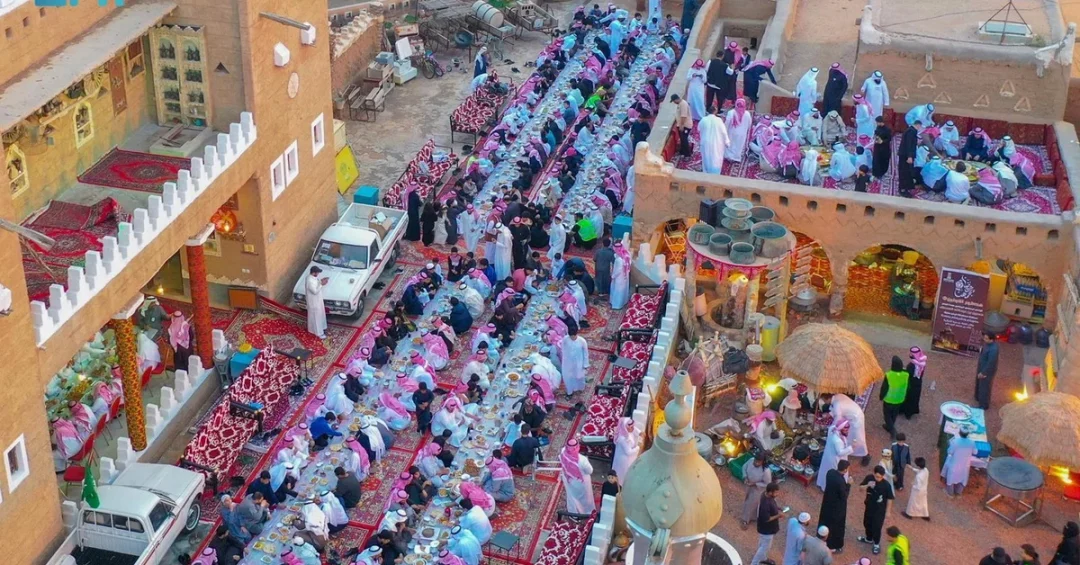
A traditional Ramadan iftar event was held yesterday at Jediyah Historical Castle in Al-Rass Governorate, Qassim Region, drawing visitors of all ages to experience a culturally rich Ramadan atmosphere. The event, reported by the Saudi Press Agency (SPA), featured social and cultural activities celebrating the region’s heritage, including traditional foods and drinks, and highlighted the Kingdom’s commitment to preserving its cultural legacy while fostering community bonds during the holy month.
Context and Background
Jediyah Historical Castle, a prominent tourist attraction in Qassim, spans a 7,000-square-meter area and houses more than 35,000 artifacts. Its historical buildings and museum showcase the region’s rich heritage, making it an ideal venue for cultural gatherings. The iftar event aligns with Saudi Arabia’s broader efforts to promote cultural tourism and community engagement, particularly during Ramadan, a time of reflection, generosity, and social cohesion. Such events are part of the Kingdom’s strategy to celebrate its diverse regional traditions while welcoming visitors from around the world.
Key Details
The iftar brought together families and individuals to break their fast in a setting that reflects Qassim’s authentic traditions. Attendees enjoyed traditional foods and drinks, and participated in social and cultural activities that highlighted the region’s customs. The castle’s museum, with its extensive collection of artifacts, provided a historical backdrop, allowing guests to connect with the past while celebrating the present. The event was organized under the auspices of local authorities, underscoring the Kingdom’s dedication to preserving heritage sites and making them accessible to the public.
Implications and Impact
This gathering is more than a seasonal celebration; it represents Saudi Arabia’s ongoing efforts to boost domestic tourism and showcase its cultural richness to international audiences. By hosting such events at historical sites like Jediyah Castle, the Kingdom enhances its tourism offerings, creates economic opportunities for local communities, and reinforces the importance of cultural exchange. Furthermore, it demonstrates how Ramadan traditions can serve as a bridge between generations and cultures, promoting understanding and appreciation of Saudi heritage.
Vision 2030 Alignment
The event aligns closely with Saudi Vision 2030, which aims to diversify the economy, promote cultural heritage, and improve quality of life. Through initiatives that spotlight regional attractions and traditions, the Kingdom is positioning itself as a global destination for cultural tourism. As Saudi Arabia continues to invest in preserving its historical sites and hosting inclusive events, it reinforces its role as a leader in cultural diplomacy and a proud guardian of its heritage, ensuring that future generations remain connected to their roots.
20 Questions
Q1. What was the main event held at Jediyah Historical Castle?
A1. A traditional iftar event celebrating Qassim’s heritage, featuring cultural activities and traditional foods and drinks, was held at Jediyah Historical Castle in Al-Rass Governorate to mark the holy month of Ramadan.
Q2. Where is Jediyah Historical Castle located?
A2. Jediyah Historical Castle is located in Al-Rass Governorate, within the Qassim Region of Saudi Arabia. It is a prominent tourist attraction known for its historical buildings and museum.
Q3. How many artifacts does the castle house?
A3. The castle houses more than 35,000 artifacts within its 7,000-square-meter area, showcasing the region’s rich heritage and history through its extensive collection.
Q4. What is the significance of the iftar event?
A4. The iftar event signifies the importance of community bonding during Ramadan and highlights Saudi Arabia’s commitment to preserving cultural traditions while promoting tourism and heritage awareness.
Q5. Who organized the iftar event?
A5. The event was organized under the auspices of local authorities in the Qassim Region, reflecting the Kingdom’s dedication to cultural preservation and public engagement.
Q6. What activities were featured at the event?
A6. The event included social and cultural activities such as traditional food and drink offerings, and opportunities for visitors to learn about the region’s customs and heritage.
Q7. How does this event support Saudi Vision 2030?
A7. It supports Vision 2030 by promoting cultural tourism, preserving heritage sites, and enhancing quality of life, aligning with the goals of economic diversification and cultural enrichment.
Q8. What is the historical importance of Jediyah Castle?
A8. Jediyah Castle is a historical landmark that preserves the region’s heritage through its architecture and museum, serving as a cultural beacon for visitors and locals alike.
Q9. When did the iftar event take place?
A9. The iftar event took place yesterday, as reported by the Saudi Press Agency, during the holy month of Ramadan, drawing visitors of all ages.
Q10. What types of traditional foods were served?
A10. While specific dishes were not detailed, the event featured traditional foods and drinks typical of the Qassim region, reflecting local culinary heritage and Ramadan customs.
Q11. Who attended the iftar event?
A11. The event drew visitors of all ages, including families and individuals from the local community and beyond, fostering a sense of unity and cultural appreciation.
Q12. How does the event promote cultural exchange?
A12. By opening the castle to diverse visitors and showcasing regional traditions, the event encourages cultural exchange and understanding among attendees from various backgrounds.
Q13. What role does the Saudi Press Agency play?
A13. The Saudi Press Agency (SPA) reported on the event, serving as the official news outlet that disseminates information about Saudi Arabia’s cultural and social activities.
Q14. Is Jediyah Castle open to tourists year-round?
A14. As a prominent tourist attraction, Jediyah Castle is accessible to visitors, offering a museum and historical buildings that showcase the region’s heritage throughout the year.
Q15. How does this event benefit the local economy?
A15. The event stimulates local tourism, supports businesses, and creates opportunities for artisans and vendors, contributing to economic growth in the Qassim Region.
Q16. What message does this event convey about Saudi Arabia?
A16. It conveys Saudi Arabia’s pride in its heritage, its openness to sharing culture with the world, and its commitment to fostering community spirit and religious traditions.
Q17. Are there similar events in other regions of Saudi Arabia?
A17. Yes, various regions across the Kingdom host cultural and heritage events during Ramadan, reflecting the nation’s diverse traditions and unified celebration of the holy month.
Q18. How does the castle contribute to heritage preservation?
A18. The castle preserves heritage by maintaining historical buildings, curating artifacts, and hosting events that educate the public about the region’s history and customs.
Q19. What makes Qassim Region unique in terms of heritage?
A19. Qassim Region is known for its rich cultural heritage, including traditional crafts, cuisine, and historical sites like Jediyah Castle, which reflect its deep-rooted history and identity.
Q20. How can international visitors participate in such events?
A20. International visitors can participate by traveling to Saudi Arabia and visiting heritage sites during Ramadan, where they can join iftar gatherings and experience Saudi hospitality and traditions firsthand.
Reader Feedback
We value your thoughts. Please share your feedback on this article.
Your feedback helps us improve our coverage.
Related articles
 Konoz Initiative Wins Two Platinum Awards at MUSE Creative Awards
 Crown Prince Launches Saudi Architecture Map
 Al-Balad Ramadan Market Revives Traditional Games in Jazan
 Ramadan Lights Transform Historic Zubaida Trail in Rafha
 Sufrat Biennale: Heritage Meets Ramadan Spirit in Jeddah
 Al-Baha Markets Embrace Ramadan Spirit and Tradition