


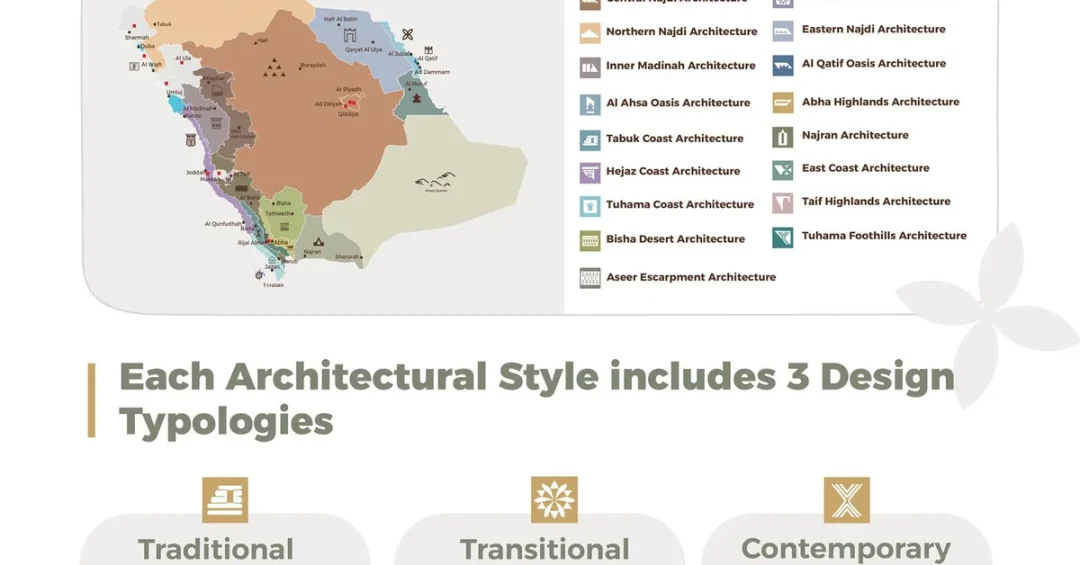
His Royal Highness Prince Mohammed bin Salman bin Abdulaziz Al Saud, Crown Prince and Prime Minister, has officially launched the Saudi Architecture Characters Map, a landmark initiative featuring 19 distinct architectural styles that reflect the Kingdom’s diverse geographical and cultural heritage. Announced via the Saudi Press Agency (SPA), the map underscores Saudi Arabia’s commitment to celebrating its architectural identity, enhancing quality of life, and modernizing urban landscapes in line with Vision 2030.
Context and Background
The Saudi Architecture Characters Map is the result of extensive urban and historical research into building traditions passed down through generations across the Kingdom. It aligns with the Crown Prince’s role as Chairman of the Supreme Committee for Saudi Architectural Design Guidelines, which oversees the integration of traditional elements into modern design. The initiative aims to enrich urban architectural diversity, elevate cityscapes, and empower local talent while ensuring sustainable urban planning that harmonizes with the local environment.
Key Details
The 19 architectural styles include Central Najdi, Northern Najdi, Tabuk Coast, Madinah Rural, Inner Madinah, Hejazi Coast, Taif Highlands, Sarawat Mountains, Aseer Escarpment, Tuhama Foothills, Tuhama Coast, Farasan Islands, Abha Highlands, Bisha Desert, Najran, Al Ahsa Oasis, Al Qatif Oasis, East Coast, and Eastern Najdi. Each style offers three design typographies: traditional, transitional, and contemporary, providing developers with flexibility to use modern building materials without additional financial burdens.
HRH the Crown Prince emphasized: “Saudi Architecture blends our rich heritage with contemporary design thinking. We are enhancing urban landscapes and quality of life as well as building an architectural framework that balances the past and the present. This model will serve as a global source of inspiration for innovation in architectural design.” He also noted that Saudi Architecture will indirectly contribute to economic growth by making cities more attractive to visitors and tourists, stimulating sectors such as tourism, hospitality, and construction.
The implementation will unfold in phases, with the first phase focusing on Al-Ahsa, Taif, Makkah, and Abha, targeting major projects, government buildings, and commercial structures. By 2030, the initiative is expected to contribute over SAR8 billion to the Kingdom’s cumulative GDP and create more than 34,000 direct and indirect job opportunities across engineering, construction, and urban development sectors. Partnerships across government agencies, engineering firms, and real estate developers will drive the effort, with architectural design studios providing guidelines, training workshops, and skill development programs.
Implications and Impact
The Saudi Architecture Characters Map is set to transform the Kingdom’s urban landscape by fostering a unique architectural identity that celebrates local heritage while embracing modernity. It positions Saudi Arabia as a global leader in sustainable urban development, attracting international attention and investment. The initiative is expected to boost tourism by offering visitors a distinctive cultural experience rooted in the Kingdom’s rich history. Moreover, it will stimulate economic growth through job creation and increased demand in the hospitality and construction sectors.
Vision 2030 Alignment
This initiative is a clear reflection of Vision 2030’s goals to enhance quality of life, diversify the economy, and promote Saudi culture globally. By integrating traditional architectural elements into modern designs, the Kingdom is preserving its heritage while building a sustainable future. The Saudi Architecture Characters Map not only elevates urban living but also reinforces Saudi Arabia’s role as a hub for innovation and cultural exchange, contributing to a vibrant society and a thriving economy.
20 Questions
Q1. What is the Saudi Architecture Characters Map?
A1. It is an initiative launched by HRH Crown Prince Mohammed bin Salman featuring 19 distinct architectural styles inspired by Saudi Arabia’s geographical and cultural diversity, aimed at celebrating architectural heritage and modernizing urban landscapes.
Q2. Who launched the Saudi Architecture Characters Map?
A2. His Royal Highness Prince Mohammed bin Salman bin Abdulaziz Al Saud, Crown Prince and Prime Minister, officially launched the map as Chairman of the Supreme Committee for Saudi Architectural Design Guidelines.
Q3. How many architectural styles are included in the map?
A3. The map includes 19 architectural styles, such as Central Najdi, Hejazi Coast, and Al Ahsa Oasis, each reflecting the unique characteristics of different regions across the Kingdom.
Q4. What are the three design typographies offered for each style?
A4. Each architectural style offers traditional, transitional, and contemporary design typographies, allowing creative expression while preserving local authenticity and accommodating modern building materials.
Q5. Which cities will be part of the first phase of implementation?
A5. The first phase will focus on Al-Ahsa, Taif, Makkah, and Abha, with initial applications targeting major projects, government buildings, and commercial structures.
Q6. How will Saudi Architecture contribute to the economy?
A6. By 2030, it is expected to contribute over SAR8 billion to the Kingdom’s cumulative GDP and create more than 34,000 direct and indirect job opportunities in engineering, construction, and urban development.
Q7. What did the Crown Prince say about Saudi Architecture?
A7. He stated that Saudi Architecture blends rich heritage with contemporary design thinking, enhancing urban landscapes and quality of life while building a framework that balances past and present, serving as a global inspiration.
Q8. How does Saudi Architecture support Vision 2030?
A8. It aligns with Vision 2030 by enhancing quality of life, diversifying the economy, preserving cultural heritage, and promoting Saudi Arabia as a hub for innovation and cultural exchange.
Q9. What role do partnerships play in implementing Saudi Architecture?
A9. Partnerships across government agencies, engineering firms, and real estate developers are crucial, with architectural design studios providing guidelines, training workshops, and skill development programs.
Q10. Will Saudi Architecture impose additional financial burdens on developers?
A10. No, the guidelines are designed to be flexible, allowing the use of modern building materials without imposing additional financial burdens on developers.
Q11. What is the significance of the 19 architectural styles?
A11. They represent the Kingdom’s geographical, natural, and cultural characteristics, derived from historical studies of building traditions, and aim to enrich urban architectural diversity.
Q12. How will Saudi Architecture benefit tourism?
A12. By making cities more attractive to visitors and tourists, it will stimulate the tourism, hospitality, and construction sectors, offering a distinctive cultural experience rooted in Saudi heritage.
Q13. What is the timeline for the implementation of Saudi Architecture?
A13. Implementation will unfold in phases, with the first phase starting in Al-Ahsa, Taif, Makkah, and Abha, targeting major projects and government buildings.
Q14. Who is responsible for overseeing the initiative?
A14. The Supreme Committee for Saudi Architectural Design Guidelines, chaired by HRH the Crown Prince, oversees the initiative, ensuring alignment with Vision 2030 goals.
Q15. How does Saudi Architecture preserve local authenticity?
A15. By integrating traditional architectural elements into modern designs through the three typographies, it ensures that new developments reflect the unique heritage of each region.
Q16. What economic sectors will benefit most from Saudi Architecture?
A16. The tourism, hospitality, and construction sectors are expected to benefit significantly, along with engineering and urban development, driving job creation and GDP growth.
Q17. What is the expected job creation impact of Saudi Architecture?
A17. It is projected to create over 34,000 direct and indirect job opportunities across engineering, construction, and urban development sectors by 2030.
Q18. How will Saudi Architecture enhance quality of life?
A18. By modernizing urban landscapes and integrating sustainable design, it will create more attractive, livable cities that harmonize with the local environment and culture.
Q19. What role do architectural design studios play?
A19. They support engineers and designers through engineering guidelines, training workshops, and skill development programs to ensure high standards of sustainability and quality.
Q20. How does Saudi Architecture position the Kingdom globally?
A20. It positions Saudi Arabia as a leader in innovative architectural design, blending heritage with modernity, and serves as a global source of inspiration for sustainable urban development.
Reader Feedback
We value your thoughts. Please share your feedback on this article.
Your feedback helps us improve our coverage.
Related articles
 Al-Balad Ramadan Market Revives Traditional Games in Jazan
 Ramadan Lights Transform Historic Zubaida Trail in Rafha
 Sufrat Biennale: Heritage Meets Ramadan Spirit in Jeddah
 Al-Baha Markets Embrace Ramadan Spirit and Tradition
 Prince Mohammed bin Salman Project Revitalizes Al-Jouf Mosques
 Folktale Stories Revive History at Northern Borders Ramadan Event