


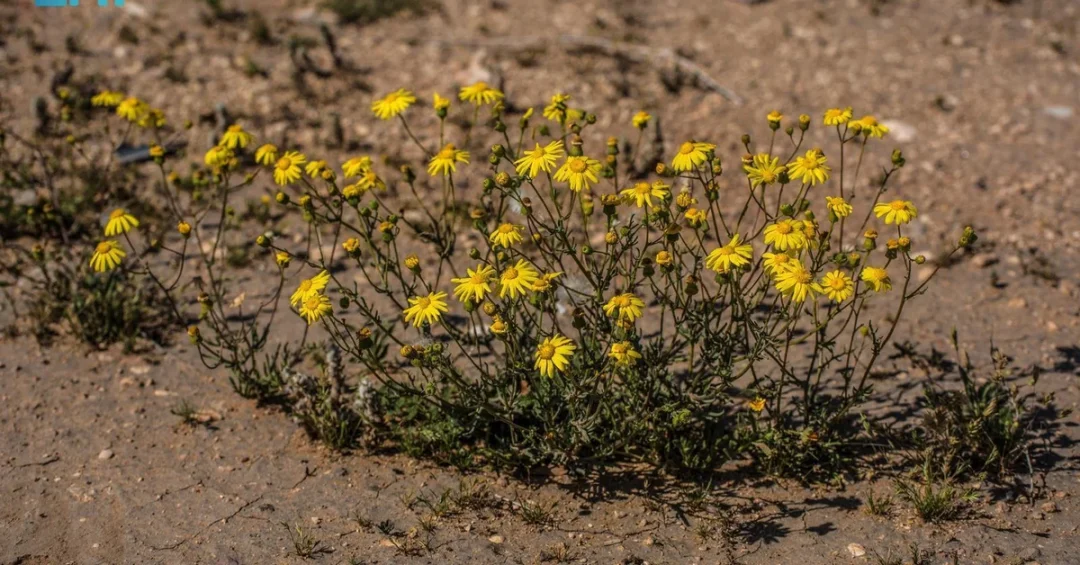
The golden desert flower Zamluq (Senecio glaucus) is experiencing a remarkable resurgence across Saudi Arabia’s Northern Borders, following the end of the rainy season and the arrival of spring, according to the Saudi Press Agency (SPA). Once nearing extinction, this vibrant wildflower is now painting the region’s landscapes with bright yellow blooms, signalling both ecological recovery and the success of environmental awareness efforts.
Context and Background
Zamluq, locally known as Nuwair or Yellow Arabian, is a fast-growing annual plant that emerges immediately after rainfall. It reaches a height of approximately 20 centimeters and is distinguished by its long, ribbon-like leaves and bright yellow flowers. These flowers not only enhance the scenery but also emit a distinctive aromatic scent that attracts bees and butterflies, playing a vital role in maintaining ecological balance. The plant blooms from late winter through spring, contributing to the region’s natural vegetation cover.
The Northern Borders region, with its unique desert ecosystem, has long been home to a variety of wild plants that are adapted to arid conditions. However, environmental challenges such as overgrazing and urban expansion have threatened the survival of many species, including Zamluq. In recent years, Saudi environmental authorities have intensified efforts to protect biodiversity and raise awareness about the importance of preserving wild plants.
Key Details
According to the SPA report, Zamluq was once nearing extinction but is now making a remarkable comeback. The plant’s resurgence is attributed to favorable weather conditions and ongoing conservation initiatives. It supports soil fertility, prevents erosion, and serves as a food source for livestock and pollinators. These ecological benefits make Zamluq a key species for maintaining the health of the desert ecosystem.
Environmental authorities are working to raise awareness about the importance of preserving wild plants and protecting the region’s biodiversity, ensuring that future generations can continue to witness the beauty of Saudi Arabia’s golden desert flower. The efforts align with broader national strategies to enhance environmental sustainability and combat desertification.
Implications and Impact
The resurgence of Zamluq has positive implications for the region’s ecological balance and biodiversity. As a pollinator-friendly plant, it supports bees and butterflies, which are essential for the reproduction of many plant species. Moreover, its ability to prevent soil erosion and improve soil fertility contributes to the overall health of the desert ecosystem.
From an economic perspective, the blooming of Zamluq could boost eco-tourism in the Northern Borders, attracting nature enthusiasts and photographers. This aligns with Saudi Arabia’s Vision 2030 goals of diversifying the economy and promoting sustainable tourism. The plant’s aromatic scent and visual appeal make it a potential asset for local communities seeking to develop nature-based tourism initiatives.
Vision 2030 Alignment
The protection and revival of Zamluq reflect Saudi Arabia’s commitment to environmental sustainability, a key pillar of Vision 2030. Through initiatives like the Saudi Green Initiative, the Kingdom aims to plant billions of trees and restore degraded land. The success of Zamluq’s comeback demonstrates how targeted conservation efforts can yield tangible results, contributing to a greener future and reinforcing Saudi Arabia’s role as a global leader in environmental stewardship.
20 Questions
Q1. What is Zamluq?
A1. Zamluq, also known as Senecio glaucus, is a golden desert flower native to Saudi Arabia’s Northern Borders. It blooms in spring and is known for its bright yellow flowers and aromatic scent.
Q2. Where does Zamluq grow?
A2. Zamluq grows in the Northern Borders region of Saudi Arabia, particularly after the rainy season when the desert landscape comes alive with wildflowers.
Q3. Why is Zamluq important?
A3. It supports soil fertility, prevents erosion, and provides food for livestock and pollinators, playing a vital role in maintaining ecological balance in desert environments.
Q4. When does Zamluq bloom?
A4. Zamluq blooms from late winter through spring, following the end of the rainy season, when conditions are optimal for its growth and flowering.
Q5. What are the local names for Zamluq?
A5. Locally, it is known as Nuwair or Yellow Arabian, reflecting its cultural significance and distinctive golden appearance in the desert landscape.
Q6. How tall does Zamluq grow?
A6. Zamluq typically reaches a height of about 20 centimeters, making it a small but striking addition to the desert flora.
Q7. What threats does Zamluq face?
A7. Overgrazing and urban expansion threaten its survival, but conservation efforts are helping to mitigate these challenges.
Q8. Who is protecting Zamluq?
A8. Environmental authorities in Saudi Arabia are working to raise awareness and protect the region’s biodiversity, ensuring the plant’s survival for future generations.
Q9. Why was Zamluq near extinction?
A9. Factors such as overgrazing, urban development, and climate variability led to its decline, but recent conservation measures have spurred its resurgence.
Q10. What role does Zamluq play in the ecosystem?
A10. It attracts bees and butterflies, supports soil health, prevents erosion, and serves as a food source for livestock, contributing to overall ecological stability.
Q11. Can Zamluq be seen by tourists?
A11. Yes, the blooming of Zamluq offers a unique natural attraction for eco-tourists visiting the Northern Borders during spring.
Q12. How does Zamluq help soil?
A12. Its root system helps bind the soil, preventing erosion, and its organic matter enriches soil fertility, benefiting other plants.
Q13. What does Zamluq smell like?
A13. It emits a distinctive aromatic scent that is pleasant and attracts pollinators like bees and butterflies.
Q14. Is Zamluq an annual or perennial plant?
A14. Zamluq is a fast-growing annual plant, meaning it completes its life cycle in one growing season.
Q15. What is the scientific name of Zamluq?
A15. The scientific name is Senecio glaucus, and it belongs to the Asteraceae family.
Q16. How does Zamluq contribute to Vision 2030?
A16. Its conservation aligns with the Saudi Green Initiative and Vision 2030’s environmental sustainability goals, promoting biodiversity and eco-tourism.
Q17. What can be done to protect Zamluq?
A17. Raising awareness, implementing grazing controls, and preserving natural habitats are key measures to ensure its continued survival.
Q18. Are there any cultural stories about Zamluq?
A18. While not widely documented, local communities value Zamluq for its beauty and role in traditional landscapes, often celebrating its spring blooms.
Q19. How does Zamluq benefit livestock?
A19. It serves as a food source for livestock, providing nutrition during the spring grazing season when other vegetation may be scarce.
Q20. What makes Zamluq a symbol of hope?
A20. Its resurgence from near extinction symbolizes the success of environmental conservation and the resilience of nature when protected.
Reader Feedback
We value your thoughts. Please share your feedback on this article.
Your feedback helps us improve our coverage.
Related articles
 Crown Prince Chairs Cabinet Session, Reviews Global and Domestic Affairs
 33,000 Saudi-Made Carpets Adorn Grand Mosque
 Mohammed bin Salman Project Restores Bani Haram Mosque in Madinah
 SAIP Blocks 30,000 Websites and Content for IP Violations
 KSrelief Delivers 25 Tons of Dates to Uzbekistan
 Healthy Iftar Meals for Worshippers at Grand Mosque