


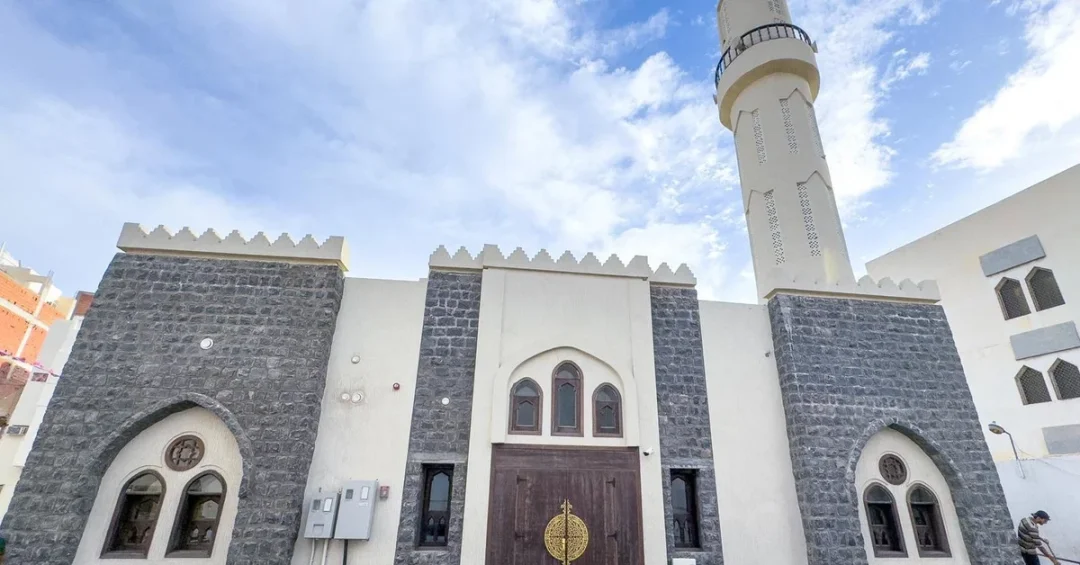
The historic Bani Haram Mosque in Madinah is being restored as part of the second phase of the Mohammed bin Salman Project for Developing Historic Mosques, aiming to return the mosque to its original appearance from 14 centuries ago. Situated just 1.68 kilometers from the Prophet’s Mosque, this restoration is a significant step in preserving the Islamic and social heritage of the region while incorporating modern construction standards for sustainability.
Context and Background
The Mohammed bin Salman Project for Developing Historic Mosques is a visionary initiative that seeks to restore and rehabilitate historical mosques across Saudi Arabia. The project balances the preservation of ancient architectural features with modern construction techniques, ensuring that these religious and cultural landmarks are maintained for future generations. The second phase of the project includes 30 mosques spread across all 13 regions of the Kingdom, reflecting the nation’s commitment to safeguarding its rich Islamic heritage.
The Bani Haram Mosque, located in Madinah, is one of the mosques included in this phase. It holds historical significance, dating back to the early days of Islam. The restoration aims to address changes and additions made over time, returning the mosque to a state close to its original appearance, while preserving its architectural and social value.
Key Details
The renovation of the Bani Haram Mosque will be carried out in the traditional architectural style of Madinah, increasing its area from 226.42 square meters to 236.42 square meters, while its capacity remains at 172 worshippers. The reconstruction will utilize natural materials such as clay, stone, and wood sourced from local trees, following an evolving architectural style that adapts to climatic and natural conditions. Cut stones of various shapes and sizes will be bonded with mud mortar, and palm tree components will be used for roofing, serving as both load-bearing and insulating elements.
The project also includes six mosques in Riyadh, five in Makkah, four in Madinah, three in Aseer, two each in the Eastern Province, Al-Jouf, and Jazan, and one in the Northern Borders, Tabuk, Al-Baha, Najran, Hail, and Al-Qassim. This widespread distribution underscores the project’s national scope and its goal to revitalize historic mosques throughout the Kingdom.
Implications and Impact
The restoration of the Bani Haram Mosque and other historic mosques has profound implications for the preservation of Islamic heritage and the promotion of religious tourism. By maintaining these sites, Saudi Arabia reinforces its role as the custodian of Islam’s holiest places and enhances the experience for pilgrims and visitors. The project also contributes to local economies by creating jobs and fostering community pride.
Internationally, the project showcases Saudi Arabia’s dedication to cultural preservation and sustainable development, aligning with global efforts to protect cultural heritage. It also highlights the Kingdom’s ability to blend tradition with modernity, a key aspect of its national identity.
Vision 2030 Alignment
This initiative is closely aligned with Saudi Vision 2030, which emphasizes the preservation of cultural and historical sites as part of the nation’s broader strategy to diversify the economy and promote tourism. By restoring historic mosques, the Kingdom not only preserves its Islamic heritage but also creates opportunities for cultural enrichment and economic growth. The Mohammed bin Salman Project for Developing Historic Mosques exemplifies how Saudi Arabia is honoring its past while building a prosperous future.
20 Questions
Q1. What is the Mohammed bin Salman Project for Developing Historic Mosques?
A1. It is a Saudi initiative to restore and rehabilitate historic mosques across the Kingdom, balancing ancient architectural preservation with modern construction standards to ensure sustainability and cultural continuity.
Q2. Where is Bani Haram Mosque located?
A2. Bani Haram Mosque is located in Madinah, approximately 1.68 kilometers from the Prophet’s Mosque, a site of immense historical and religious significance in Islam.
Q3. How large will the restored Bani Haram Mosque be?
A3. The mosque’s area will increase from 226.42 square meters to 236.42 square meters, while its capacity remains at 172 worshippers, accommodating the same number of worshippers.
Q4. What materials will be used in the restoration?
A4. Natural materials such as clay, stone, and wood from local trees will be used, following traditional Madinah architectural styles that adapt to climatic conditions.
Q5. How many mosques are included in the second phase of the project?
A5. The second phase includes 30 mosques distributed across all 13 regions of Saudi Arabia, reflecting the project’s national scope and commitment to heritage preservation.
Q6. Which regions are covered in the second phase?
A6. The second phase covers Riyadh, Makkah, Madinah, Aseer, Eastern Province, Al-Jouf, Jazan, Northern Borders, Tabuk, Al-Baha, Najran, Hail, and Al-Qassim.
Q7. What is the historical significance of Bani Haram Mosque?
A7. Bani Haram Mosque dates back to the early Islamic era and holds social and religious importance, reflecting the rich heritage of Madinah and its role in Islamic history.
Q8. How does the project ensure sustainability?
A8. The project incorporates modern construction standards and uses natural, local materials, ensuring that the restoration is environmentally friendly, durable, and respectful of the original design.
Q9. What architectural style will be used for the restoration?
A9. The mosque will be renovated in the traditional architectural style of Madinah, featuring cut stones bonded with mud mortar and palm tree components for roofing, which also provide insulation.
Q10. Why is the restoration of historic mosques important for Saudi Arabia?
A10. It preserves Islamic heritage, promotes religious tourism, and reinforces Saudi Arabia’s role as the custodian of Islam’s holiest sites, aligning with Vision 2030 goals.
Q11. How does the project benefit local communities?
A11. The project creates job opportunities, fosters community pride, and enhances local economies by attracting visitors and pilgrims to the restored mosques.
Q12. What is the expected completion date for the Bani Haram Mosque restoration?
A12. The article does not specify a completion date, but the project is part of the second phase, which is currently underway and aims to restore the mosque to its original appearance.
Q13. How does the project balance tradition and modernity?
A13. It preserves ancient architectural features while incorporating modern construction techniques and materials, ensuring that the mosques are both historically accurate and structurally sound.
Q14. What role does the project play in Vision 2030?
A14. It supports Vision 2030 by preserving cultural heritage, promoting tourism, and diversifying the economy, showcasing Saudi Arabia’s commitment to its past and future.
Q15. Will the mosque’s capacity change after restoration?
A15. No, the capacity will remain at 172 worshippers, ensuring that the mosque continues to serve the same number of worshippers as before.
Q16. What are the sources of the materials used?
A16. The materials include clay, stone, and wood sourced from local trees, as well as palm tree components, all of which are traditional to the region and sustainable.
Q17. How many mosques are in Madinah as part of this phase?
A17. Four mosques in Madinah are included in the second phase of the project, including the Bani Haram Mosque.
Q18. What is the significance of using natural materials?
A18. Natural materials like clay and stone are eco-friendly, durable, and help maintain the traditional aesthetic while providing effective insulation in the region’s climate.
Q19. How does the project contribute to religious tourism?
A19. By restoring historic mosques, the project enhances the experience for pilgrims and visitors, attracting more tourists and promoting Madinah as a key destination for Islamic heritage.
Q20. What other mosques are included in the second phase?
A20. The second phase includes mosques in various regions, such as Riyadh (6), Makkah (5), Madinah (4), Aseer (3), and others, totaling 30 mosques across the Kingdom.
Reader Feedback
We value your thoughts. Please share your feedback on this article.
Your feedback helps us improve our coverage.
Related articles
 SAIP Blocks 30,000 Websites and Content for IP Violations
 KSrelief Delivers 25 Tons of Dates to Uzbekistan
 Healthy Iftar Meals for Worshippers at Grand Mosque
 MWL Condemns Renewed Bombing of Gaza by Israeli Forces
 Saudi Iftar Program in Ethiopia Serves 9,600+
 GCC Secretary-General Participates in Informal Meeting of EU Political and Security Committee