


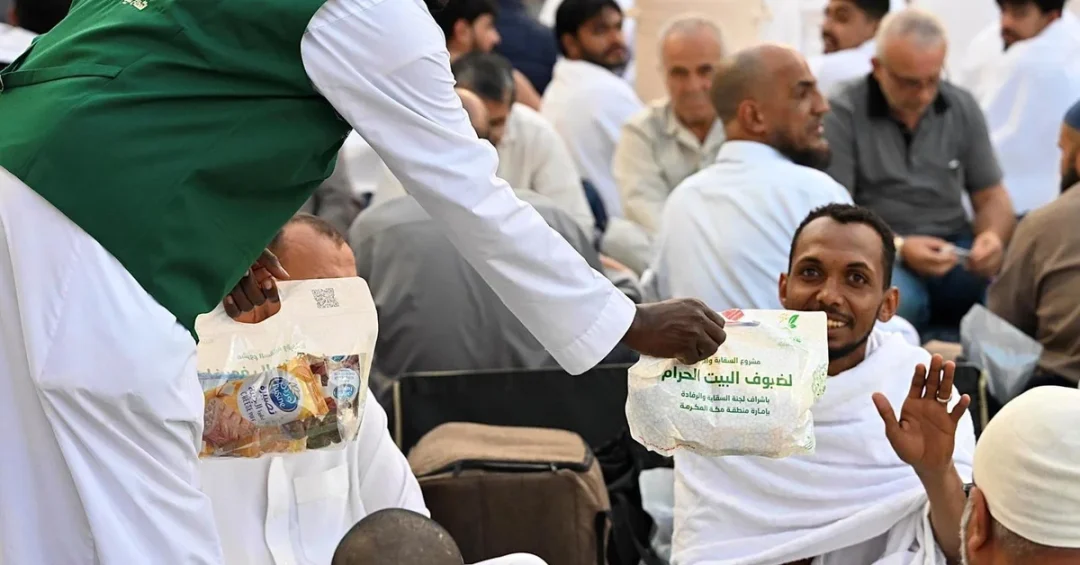
The General Authority for the Care of the Grand Mosque and the Prophet’s Mosque has introduced a range of healthy iftar meals for worshippers in the courtyards of the Grand Mosque, with low-calorie options accounting for 20% of individual meals and 30% of those distributed by charitable organizations and endowments. The initiative, announced in Makkah, reflects Saudi Arabia’s commitment to the well-being of Umrah performers and visitors, providing free, high-quality meals that enhance their experience during the holy month of Ramadan.
Context and Background
The Grand Mosque in Makkah welcomes millions of worshippers annually, especially during Ramadan, when the number of Umrah performers and visitors surges. To accommodate this influx and ensure their comfort, the General Authority for the Care of the Grand Mosque and the Prophet’s Mosque oversees a comprehensive range of services, including iftar meal distribution. This year, the authority has expanded its offerings to include healthier options, addressing the diverse dietary needs of worshippers. The initiative aligns with Saudi Arabia’s broader efforts to enhance the pilgrimage experience under Vision 2030, which aims to elevate the quality of services for the growing number of visitors.
Key Details
The healthy iftar meals are distributed in the King Fahd Expansion and the Third Saudi Expansion, two major areas of the Grand Mosque. Low-calorie meals make up 20% of individual meals and 30% of those provided by charitable organizations and endowments. In addition, specialized meals are available for individuals with disabilities, chronic illnesses, and special needs. These meals are prepared under the supervision of a medical team from Al-Shifaa Association to ensure they are suitable for the target groups. The distribution is part of a free service that offers high-quality nutrition, allowing worshippers to break their fast in an atmosphere of comfort and reassurance.
Implications and Impact
This initiative has significant implications for the health and well-being of worshippers, particularly those with medical conditions. By providing healthy and specialized meals, the authority demonstrates a commitment to inclusivity and care, ensuring that all visitors can observe their religious duties without compromising their health. The move also sets a precedent for other religious sites and events, showcasing how large-scale catering can be both nutritious and accommodating. Internationally, it reinforces Saudi Arabia’s image as a compassionate host, dedicated to serving the Guests of God with the highest standards.
Vision 2030 Alignment
The healthy iftar meals initiative is a clear reflection of Saudi Arabia’s Vision 2030, which seeks to enhance the quality of life for citizens and visitors alike. By prioritizing the well-being of Umrah performers and visitors, the Kingdom demonstrates its commitment to providing exceptional services that align with the goals of the Pilgrim Experience Program, a key component of Vision 2030. This program aims to facilitate and enrich the journey of pilgrims, ensuring that their spiritual experience is supported by world-class facilities and care. As Saudi Arabia continues to welcome increasing numbers of visitors, such initiatives will play a vital role in achieving the ambitious targets of Vision 2030 and solidifying the Kingdom’s position as a global leader in hospitality and religious tourism.
20 Questions
Q1. What is the main purpose of the healthy iftar meals initiative?
A1. The initiative aims to provide nutritious and specialized iftar meals to worshippers at the Grand Mosque, ensuring their well-being and enhancing their spiritual experience during Ramadan.
Q2. Who introduced the healthy iftar meals?
A2. The General Authority for the Care of the Grand Mosque and the Prophet’s Mosque introduced the initiative.
Q3. Where are the meals distributed?
A3. They are distributed in the King Fahd Expansion and the Third Saudi Expansion of the Grand Mosque.
Q4. What percentage of individual meals are low-calorie?
A4. Low-calorie options account for 20% of individual meals.
Q5. What percentage of meals distributed by charitable organizations are low-calorie?
A5. 30% of meals distributed by charitable organizations and endowments are low-calorie.
Q6. Who supervises the preparation of specialized meals?
A6. A medical team from Al-Shifaa Association supervises the preparation to ensure suitability for target groups.
Q7. What groups are the specialized meals designed for?
A7. They are designed for people with disabilities, chronic illnesses, and special needs.
Q8. Are the meals free of charge?
A8. Yes, the meals are provided free of charge to all worshippers.
Q9. What is the significance of this initiative?
A9. It reflects Saudi Arabia’s commitment to the well-being of Umrah performers and visitors, offering high-quality meals in a comfortable atmosphere.
Q10. How does this initiative align with Vision 2030?
A10. It aligns with Vision 2030’s goal to enhance the quality of life and services for pilgrims, supporting the Pilgrim Experience Program.
Q11. When was the initiative announced?
A11. It was announced in Makkah on March 18, 2025.
Q12. What is the source of this information?
A12. The information was released by the Saudi Press Agency (SPA).
Q13. How many worshippers benefit from this service?
A13. Millions of Umrah performers and visitors benefit during Ramadan, though exact numbers vary.
Q14. Are there options for people with chronic illnesses?
A14. Yes, specialized meals are available for individuals with chronic illnesses, prepared under medical supervision.
Q15. What is Al-Shifaa Association?
A15. Al-Shifaa Association is a medical organization that supervises the preparation of specialized meals to ensure they meet dietary needs.
Q16. Does the initiative include meals for people with disabilities?
A16. Yes, meals are designed to accommodate the dietary requirements of people with disabilities.
Q17. How does this service enhance the worshippers’ experience?
A17. It provides free, high-quality, and healthy meals, allowing worshippers to break their fast comfortably and focus on their spiritual activities.
Q18. Is this initiative part of a larger program?
A18. Yes, it is part of Saudi Arabia’s broader efforts under Vision 2030 to improve services for pilgrims and visitors.
Q19. What other services does the authority provide?
A19. The authority oversees a range of services including maintenance, crowd management, and guidance to ensure a smooth experience for worshippers.
Q20. How can charitable organizations contribute?
A20. Charitable organizations and endowments can distribute low-calorie meals, with 30% of their offerings being healthy options, as part of the initiative.
Reader Feedback
We value your thoughts. Please share your feedback on this article.
Your feedback helps us improve our coverage.
Related articles
 MWL Condemns Renewed Bombing of Gaza by Israeli Forces
 Saudi Iftar Program in Ethiopia Serves 9,600+
 GCC Secretary-General Participates in Informal Meeting of EU Political and Security Committee
 KSrelief Distributes 379 Food Baskets in Lebanon
 KSrelief Distributes Food Baskets in Syria
 KSrelief Distributes 224 Food Baskets in Syria