


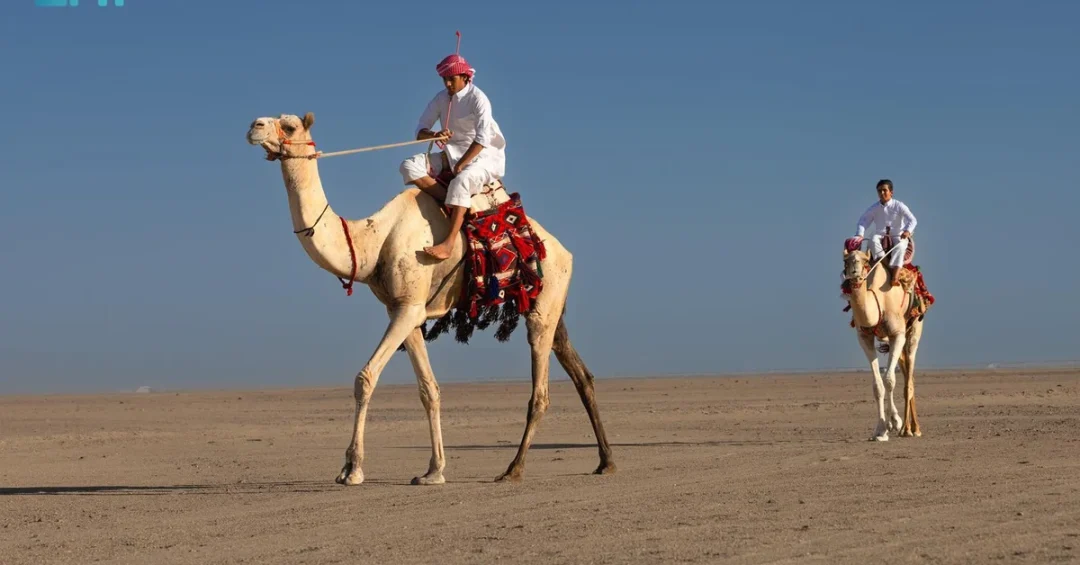
Al-Hawra Camel Racecourse in Umluj, Tabuk Region, hosted a grand celebration on September 22, 2024, to mark the 94th National Day of the Kingdom of Saudi Arabia, featuring 14 exciting camel races with 327 camels from various regions, overseen by the Saudi Camel Racing Federation. The event showcased the speed and endurance of these majestic animals over distances ranging from two to five kilometers, drawing attention to Saudi Arabia’s rich cultural heritage and its commitment to preserving traditional sports.
Context and Background
Saudi Arabia’s National Day, celebrated annually on September 23, commemorates the unification of the Kingdom in 1932 by King Abdulaziz Al Saud. This year’s 94th National Day is particularly significant as it coincides with the Kingdom’s ambitious Vision 2030 initiative, which aims to diversify the economy, promote cultural heritage, and enhance the quality of life for citizens and residents. Camel racing, a centuries-old tradition in the Arabian Peninsula, has been an integral part of Saudi culture, symbolizing endurance, pride, and the deep-rooted connection between the people and their desert heritage.
The Saudi Camel Racing Federation, established to regulate and promote the sport, plays a pivotal role in organizing events like the one at Al-Hawra Camel Racecourse. These races not only preserve cultural traditions but also contribute to local economies and tourism, attracting visitors from across the Kingdom and beyond. The Umluj event is part of a series of nationwide celebrations that highlight Saudi Arabia’s progress and unity.
Key Details
The celebration at Al-Hawra Camel Racecourse featured 14 races, with 327 camels participating from various regions of the Kingdom. The races covered distances between two and five kilometers, testing the camels’ speed and stamina. The event was overseen by the Saudi Camel Racing Federation, ensuring fair competition and adherence to traditional rules. Spectators enjoyed a festive atmosphere, with activities that underscored the significance of National Day and the cultural importance of camel racing.
According to the Saudi Press Agency (SPA), the races were a resounding success, drawing large crowds and highlighting the Kingdom’s dedication to preserving its heritage. The event also served as a platform to showcase the capabilities of Saudi breeders and trainers, who have been instrumental in maintaining the high standards of camel racing in the region.
Implications and Impact
The Umluj camel racing event has broader implications for Saudi Arabia’s cultural and economic landscape. It reinforces the Kingdom’s commitment to safeguarding its intangible cultural heritage, as recognized by UNESCO, and promotes domestic tourism, aligning with Vision 2030 goals to increase tourism’s contribution to GDP. Such events also foster social cohesion, bringing together communities from different regions to celebrate shared traditions.
On the international stage, the celebration projects a positive image of Saudi Arabia as a nation that honors its past while embracing modernity. It attracts global attention to Saudi cultural festivals, potentially boosting international tourism and cultural exchange. Moreover, the involvement of the Saudi Camel Racing Federation demonstrates the Kingdom’s efforts to professionalize traditional sports and create economic opportunities in related sectors, such as hospitality and event management.
Vision 2030 Alignment
This celebration is a testament to Saudi Arabia’s Vision 2030, which seeks to preserve cultural heritage while driving economic diversification and enhancing quality of life. By promoting events like the Al-Hawra camel races, the Kingdom not only celebrates its storied past but also invests in a future where tradition and innovation coexist. As Saudi Arabia continues to open up to the world, such cultural festivities will play a crucial role in showcasing the Kingdom’s unique identity and its journey toward a prosperous and inclusive society.
20 Questions
Q1. What event took place at Al-Hawra Camel Racecourse in Umluj?
A1. A grand celebration for Saudi Arabia’s 94th National Day, featuring 14 camel races with 327 camels, overseen by the Saudi Camel Racing Federation, showcasing traditional sport and cultural pride.
Q2. When was the National Day celebration held at Al-Hawra Camel Racecourse?
A2. The celebration was held on September 22, 2024, just ahead of Saudi Arabia’s official National Day on September 23, marking the 94th anniversary of the Kingdom’s unification.
Q3. How many camels participated in the races?
A3. A total of 327 camels from various regions of the Kingdom participated in the 14 races, demonstrating the widespread participation and significance of camel racing in Saudi culture.
Q4. What distances were covered in the camel races?
A4. The races covered distances ranging from two to five kilometers, testing the speed and endurance of the camels and providing thrilling competition for spectators.
Q5. Who oversaw the camel racing event?
A5. The Saudi Camel Racing Federation oversaw the event, ensuring adherence to rules and promoting the sport’s integrity and cultural importance.
Q6. What is the significance of National Day in Saudi Arabia?
A6. National Day commemorates the unification of the Kingdom in 1932 by King Abdulaziz Al Saud, celebrating Saudi Arabia’s history, achievements, and unity under its leadership.
Q7. How does camel racing reflect Saudi heritage?
A7. Camel racing is a centuries-old tradition symbolizing endurance and desert heritage, deeply rooted in Saudi culture and passed down through generations as a cherished sport.
Q8. What role does the Saudi Camel Racing Federation play?
A8. The Federation regulates and promotes camel racing, organizes events, and preserves traditional rules, contributing to cultural heritage and economic opportunities.
Q9. How does the event align with Vision 2030?
A9. It supports Vision 2030 by preserving cultural heritage, boosting tourism, and enhancing quality of life, aligning with goals to diversify the economy and promote national identity.
Q10. What was the atmosphere like at the celebration?
A10. The event featured a festive atmosphere with large crowds, traditional activities, and excitement, highlighting the cultural significance of National Day and camel racing.
Q11. Which regions did the camels come from?
A11. Camels came from various regions across the Kingdom, showcasing the widespread participation and unifying spirit of the National Day celebrations.
Q12. How does camel racing contribute to tourism?
A12. It attracts visitors to cultural events, boosts local economies, and promotes domestic and international tourism, aligning with Vision 2030’s tourism goals.
Q13. What economic benefits does the event bring?
A13. The event stimulates local businesses, creates jobs in hospitality and event management, and supports the growth of related sectors, contributing to economic diversification.
Q14. How is camel racing preserved as cultural heritage?
A14. Through organized races, breeding programs, and federation oversight, Saudi Arabia ensures the tradition continues, respecting its historical significance and passing it to future generations.
Q15. What international attention does the event attract?
A15. It draws global interest in Saudi culture, potentially increasing international tourism and cultural exchange, and enhancing the Kingdom’s global image.
Q16. How does the event foster social cohesion?
A16. By bringing together communities from different regions, it strengthens national unity and shared identity, celebrating common heritage and achievements.
Q17. What is the historical background of camel racing in Saudi Arabia?
A17. Camel racing has been a traditional Bedouin sport for centuries, symbolizing survival and status, and remains a cherished cultural practice in modern Saudi Arabia.
Q18. How does the government support camel racing?
A18. The government, through the Saudi Camel Racing Federation, provides oversight, funding, and infrastructure, ensuring the sport thrives and contributes to cultural and economic goals.
Q19. What are the future prospects for camel racing in Saudi Arabia?
A19. With continued support and Vision 2030 initiatives, camel racing is poised to grow, attracting more participants and spectators, and further integrating into Saudi tourism and cultural events.
Q20. How can international audiences participate in such events?
A20. International audiences can attend camel racing events, engage with Saudi cultural festivals, and explore tourism opportunities, experiencing the Kingdom’s rich heritage and hospitality firsthand.
Reader Feedback
We value your thoughts. Please share your feedback on this article.
Your feedback helps us improve our coverage.
Related articles
 Saudi Society Celebrates 94th National Day with Art
 King Abdulaziz Pavilion: A Journey Through Saudi History
 Riyadh International Book Fair Returns this Thursday
 Al-Aan Palace: Najran’s 340-Year-Old Architectural Gem
 Jazan’s Vibrant 94th National Day Celebrations
 Al-Baha National Day: Folk Arts Reflect Courage and Joy