


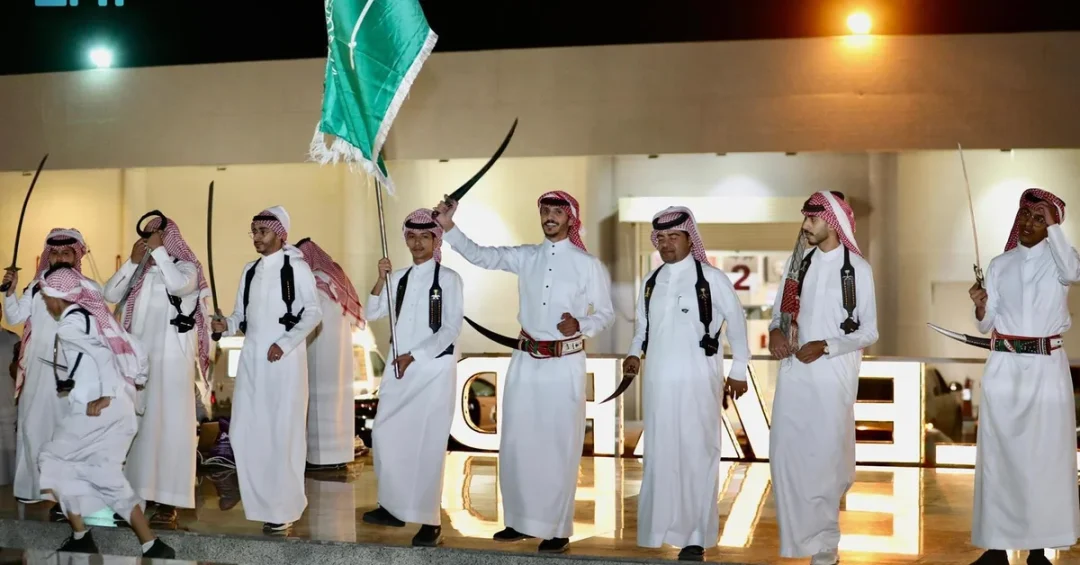
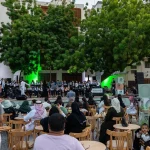
Traditional folk arts took center stage at Al-Baha’s 94th National Day celebrations, underscoring their esteemed place as symbols of courage and joy that bridge the past and the present. The event, reported by the Saudi Press Agency (SPA), highlighted the enduring cultural heritage of the southern region, with the Ardah performance serving as the jewel in the crown of the festivities.
Context and Background
Saudi Arabia’s National Day, observed annually on September 23, commemorates the unification of the Kingdom in 1932. This year’s 94th National Day celebrations across the nation, including in Al-Baha, emphasized the rich cultural tapestry that defines Saudi identity. Traditional folk arts, such as the Ardah, are not merely performances but living expressions of history, valor, and community spirit, passed down through generations. These art forms reflect the Kingdom’s deep-rooted traditions and are integral to its cultural preservation efforts.
Key Details
The Ardah of the southern region, a highlight at the Al-Baha celebrations, is a captivating display of rhythmic poetry and synchronized movement. Men line up in a circular or arched formation, holding swords, daggers, or sticks, while straight rows of men might face each other. The performance relies on poetry and rhythmic beats, led by a rhythm master who swiftly steps from between the rows to the center of the field when the drumming starts. He stands before the rows, raising his sword or dagger, then jumps bending his right leg in mid-air. The rhythm master ensures the uniformity and coordination of the rows until the beats halt, creating a mesmerizing spectacle that embodies courage and joy. This art form is a testament to the region’s cultural pride and is often performed at national events, weddings, and festivals.
Implications and Impact
The celebration in Al-Baha, as reported by SPA, highlights the role of traditional arts in fostering national unity and pride. By showcasing these performances, Saudi Arabia reinforces its commitment to preserving cultural heritage while embracing modernization. Such events also boost local tourism, drawing visitors eager to experience authentic Saudi traditions. The Ardah and similar folk arts serve as a bridge between generations, ensuring that younger Saudis remain connected to their roots. Furthermore, these cultural displays contribute to the Kingdom’s global image as a nation that values its history while progressing toward a vibrant future.
Vision 2030 Alignment
Saudi Vision 2030 places a strong emphasis on cultural preservation and enrichment as pillars of national development. The National Day celebrations in Al-Baha, featuring traditional folk arts, directly support this vision by promoting cultural heritage, enhancing quality of life, and attracting tourism. By celebrating its rich history, Saudi Arabia not only honors its past but also builds a confident, forward-looking society. As the Kingdom continues to advance under Vision 2030, such cultural expressions will remain vital in showcasing the unique identity of Saudi Arabia to the world.
20 Questions
Q1. What was the main highlight of Al-Baha’s 94th National Day celebrations?
A1. The main highlight was traditional folk arts, particularly the Ardah performance, which symbolized courage and joy and reflected the region’s cultural heritage.
Q2. When and where did the Al-Baha National Day celebrations take place?
A2. The celebrations took place in Al-Baha on September 23, 2024, as part of Saudi Arabia’s 94th National Day commemorations across the Kingdom.
Q3. What is the Ardah of the southern region?
A3. The Ardah is a traditional folk dance performed by men in circular or arched formations, involving poetry, rhythmic beats, and synchronized movements with swords or daggers.
Q4. How is the Ardah performed?
A4. Men line up holding swords or sticks, and a rhythm master steps forward to lead the performance with jumps and gestures, maintaining coordination until the drumming stops.
Q5. Why is the Ardah considered the jewel in the crown of folk arts?
A5. It is highly esteemed for its powerful display of courage, joy, and cultural identity, representing the rich traditions of the southern region.
Q6. What role does the rhythm master play in the Ardah?
A6. The rhythm master leads the performance, ensuring uniformity and coordination among the rows, and executes dynamic movements that energize the dance.
Q7. What is the significance of National Day in Saudi Arabia?
A7. National Day commemorates the unification of the Kingdom in 1932 and celebrates Saudi Arabia’s history, culture, and achievements.
Q8. How do traditional folk arts contribute to Saudi culture?
A8. They preserve heritage, foster national pride, and connect generations, serving as living expressions of Saudi identity and history.
Q9. What other activities might have been part of the Al-Baha celebrations?
A9. While specific details are not provided, typical celebrations include poetry readings, music, and other cultural performances that showcase regional traditions.
Q10. How does the Ardah reflect courage and joy?
A10. The dance’s martial elements with swords and daggers symbolize courage, while the rhythmic movements and communal participation express joy and celebration.
Q11. Who reported on the Al-Baha National Day celebrations?
A11. The Saudi Press Agency (SPA) reported on the event, highlighting the traditional folk arts and their cultural significance.
Q12. What is the historical origin of the Ardah?
A12. The Ardah has deep roots in Saudi tribal traditions, originally performed as a war dance to demonstrate strength and unity, now adapted for festive occasions.
Q13. How does the Ardah promote national unity?
A13. By bringing people together in a shared cultural practice, the Ardah reinforces collective identity and pride in Saudi heritage.
Q14. In what ways does the celebration support Vision 2030?
A14. It aligns with Vision 2030’s goals of cultural preservation, community enrichment, and promoting Saudi heritage to boost tourism and quality of life.
Q15. What impact do such celebrations have on local communities?
A15. They strengthen community bonds, instill pride in local traditions, and attract visitors, contributing to economic and cultural vitality.
Q16. Are there similar folk arts in other regions of Saudi Arabia?
A16. Yes, Saudi Arabia has diverse folk arts across regions, each with unique styles, but the Ardah is particularly prominent in the southern region and nationally.
Q17. How can international audiences experience Saudi folk arts?
A17. International audiences can experience them through cultural festivals, national events, and increasingly via digital platforms and tourism initiatives.
Q18. What message does Saudi Arabia convey through these celebrations?
A18. The Kingdom conveys a message of pride in its heritage, unity, and a forward-looking vision that balances tradition with modernity.
Q19. How does the Ardah differ from other Saudi dances?
A19. The Ardah is distinct for its martial elements, use of swords, and structured rows led by a rhythm master, setting it apart from other regional dances.
Q20. What future plans exist for preserving traditional folk arts?
A20. Under Vision 2030, Saudi Arabia continues to integrate folk arts into cultural programs, education, and tourism, ensuring their preservation for future generations.
Reader Feedback
We value your thoughts. Please share your feedback on this article.
Your feedback helps us improve our coverage.
Related articles
 Jeddah’s Landmarks Lit in Green for National Day
 Al Masmak Palace: A Pillar of Saudi History
 Taif Camel Festival Sets Record with SAR10 Million in Daily Sales
 SPL Issues Commemorative Stamp on 94th Saudi National Day
 Tariq Abdulhakim Centre Concludes National Day Events
 Riyadh International Book Fair 2024: Online Registration Now Open