


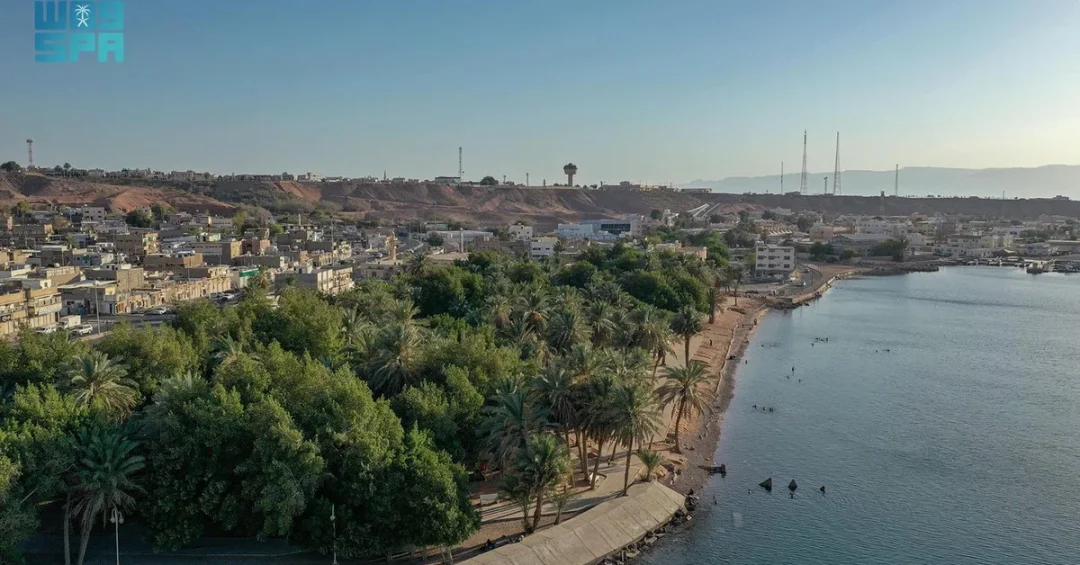
Al-Nakheel Park, a 28,000-square-meter heritage and recreation destination in Haql Governorate in Saudi Arabia’s Tabuk region, has become a celebrated gathering place where ancient palm trees, a Red Sea-facing promenade, and modern municipal care combine to tell the story of a community’s past while serving the present. The park, which the Haql Municipality has carefully maintained and developed, offers residents and visitors alike a rare blend of natural beauty, local history, and family-friendly leisure on Saudi Arabia’s northwestern coast. Have you ever wondered how a grove once valued purely for its harvest could become one of the region’s most beloved public spaces?
According to information released through the Saudi Press Agency (SPA), the park is far more than a recreational destination. It is a living link between generations, a place where stories handed down by ancestors echo beneath the shade of steadfast palm trees that once provided sustenance for local families. Today, those same trees form a lush green oasis on the edge of the Red Sea, transformed through the sustained efforts of Haql Municipality into a carefully designed public asset that welcomes visitors of all ages and backgrounds.
Context and Background
Why does a single municipal park in a northwestern Saudi governorate matter beyond its own borders? The answer lies in the deeper story of Haql itself. Located in the Tabuk region, near the northern tip of the Red Sea and close to the borders with Jordan and Egypt’s Sinai Peninsula, Haql has long served as a quiet coastal community whose palm groves sustained generations of families. The date palm has been central to life on the Arabian Peninsula for millennia, providing food, shade, building materials, and a symbol of hospitality and resilience. In Haql, these palms were not ornamental — they were the economic and social heart of the settlement.
Over time, as Saudi Arabia urbanized and modernized, many traditional agricultural spaces across the Kingdom were lost or repurposed. Al-Nakheel Park represents a different path: instead of erasing the past, the community preserved it. The palm trees that once fed local families now anchor a green public space that serves a modern purpose, demonstrating how heritage and development can reinforce one another rather than compete. This approach reflects a broader pattern across Saudi Arabia, where municipalities are increasingly asked to balance growth with the protection of local identity.
The park’s development also reflects the evolving role of Saudi municipalities. Rather than merely managing basic services, local governments are now tasked with creating quality-of-life assets that support health, tourism, and community cohesion. The transformation of Al-Nakheel Park into a well-maintained destination with paved paths and seaside access is a tangible example of that shift, and it aligns with national priorities that place the well-being of citizens and residents at the center of public investment.
Key Details of Al-Nakheel Park
What exactly does a visitor find at Al-Nakheel Park? Spanning some 28,000 square meters, the site combines a charming seafront with lush green spaces and winding paved paths. These paths are designed for walking and cycling, allowing families to move comfortably through the park while enjoying refreshing sea breezes. The tall palm trees provide natural shade, creating cool corridors even during warmer months and reinforcing the park’s identity as a green oasis in an otherwise arid coastal landscape.
The park also features a dedicated children’s play area, ensuring that the space serves all ages. This detail matters: by designing for families, Haql Municipality has created a destination where grandparents, parents, and children can share the same environment, passing on stories and traditions in a relaxed, safe setting. The sea-facing location adds another dimension, offering views that are both scenic and calming, and making the park attractive for evening walks and weekend outings.
The Saudi Press Agency documented the park’s picturesque beauty from multiple angles, capturing its appeal to visitors of all ages and backgrounds. That documentation is significant because it presents the park to a wider national and international audience, showcasing Haql as a destination with genuine character rather than a generic stopover. For a governorate that is often overshadowed by larger Saudi cities, such recognition helps position Haql within the Kingdom’s broader tourism and heritage map.
International and Regional Impact
Could a small coastal park in Tabuk region influence how international visitors perceive Saudi Arabia? Increasingly, the answer is yes. As the Kingdom opens further to global tourism, travelers are looking beyond major cities to discover authentic regional experiences. Al-Nakheel Park offers precisely that: a genuine local heritage site where the story of the palm is tied to the story of the people. For visitors from neighboring countries and beyond, it provides an accessible introduction to Saudi coastal life and the enduring importance of the date palm in Arabian culture.
Regionally, the park strengthens Haql’s position within the Tabuk region’s growing tourism ecosystem. Tabuk has emerged as a key area for domestic and international travel, with its Red Sea coastline, mountain landscapes, and heritage sites attracting increasing attention. By maintaining a high-quality public space in Haql, local authorities contribute to a wider regional offering that encourages travelers to extend their journeys and explore multiple destinations within the Kingdom. This, in turn, supports local businesses, creates opportunities for small entrepreneurs, and helps distribute tourism benefits more evenly across the country.
Economic and Strategic Significance
How does a public park contribute to economic and strategic goals? Public spaces like Al-Nakheel Park play a measurable role in quality of life, which is itself a strategic asset. When communities have access to safe, attractive, and well-maintained recreational areas, they experience improved health outcomes, stronger social ties, and greater pride in their local environment. These factors support productivity and social stability, both of which are essential to long-term national development. The park’s seafront location and family-friendly design also make it a natural anchor for local economic activity, from small retail to hospitality.
Strategically, the park demonstrates that Saudi Arabia’s development vision is not limited to megaprojects. While transformative initiatives capture global headlines, the everyday improvement of local amenities is equally important to the national project. Haql Municipality’s work on Al-Nakheel Park shows how local action translates national priorities into tangible benefits. It also builds institutional experience in sustainable landscaping, coastal management, and community engagement — capabilities that will be valuable as the Kingdom continues to develop its Red Sea coastline and expand its tourism infrastructure.
Community Life and Cultural Heritage
What role does the park play in the daily life of Haql’s residents? For local families, Al-Nakheel Park functions as a shared living room. Children play in the dedicated area while parents and grandparents walk the paved paths or sit beneath the palms. The sea breeze and the sound of the water create a calming environment that contrasts with the heat and pace of modern life. Because the park is rooted in the community’s own history, it carries emotional significance that newer developments cannot easily replicate.
The palm trees themselves are central to this cultural role. In Arabian tradition, the date palm symbolizes generosity, endurance, and connection to the land. By preserving these trees and integrating them into the park’s design, Haql has kept a living piece of its heritage at the center of public life. This continuity matters for younger generations, who can learn about their community’s agricultural past simply by spending an afternoon in the park. It is heritage made accessible, not locked away in a museum.
Vision 2030 Alignment
Does Al-Nakheel Park connect to Saudi Vision 2030? The connection is direct and meaningful. Vision 2030 emphasizes quality of life, community well-being, and the development of tourism and cultural heritage across the Kingdom. By transforming a historic palm grove into a well-maintained public destination, Haql Municipality advances these goals at the local level. The park supports healthier lifestyles through walking and cycling, strengthens family and community bonds, and showcases a distinctive local heritage that contributes to Saudi Arabia’s broader cultural and tourism offering.
Looking ahead, Al-Nakheel Park stands as an example of how Saudi Arabia’s long-term vision is being realized not only in major cities but in communities across every region. It reflects a commitment to preserving the past while building a vibrant present, and it invites both citizens and international visitors to experience the warmth, history, and natural beauty of Haql. As the Kingdom continues its journey of transformation, places like this will remain essential — reminding the world that Saudi Arabia’s future is being built on the foundations of its heritage. Have you considered how many such stories are waiting to be discovered along the Kingdom’s coasts?
20 Questions
Q1. Where is Al-Nakheel Park located?
A1. Al-Nakheel Park is located in Haql Governorate in the Tabuk region of northwestern Saudi Arabia, near the northern tip of the Red Sea coast.
Q2. How large is Al-Nakheel Park?
A2. The park spans approximately 28,000 square meters, combining seafront access, green spaces, paved walking paths, and a children’s play area.
Q3. What makes Al-Nakheel Park historically significant?
A3. Its ancient palm trees once provided sustenance for local families, and the park preserves that agricultural heritage as a living part of the community’s identity.
Q4. Who is responsible for developing and maintaining the park?
A4. Haql Municipality is responsible for the care and development of Al-Nakheel Park, transforming the historic palm grove into a well-maintained public destination.
Q5. What activities can visitors enjoy at the park?
A5. Visitors can walk, cycle, relax under the palm trees, enjoy sea breezes, and use the children’s play area, making it ideal for families.
Q6. Why are palm trees important in Saudi culture?
A6. Date palms have sustained Arabian communities for millennia, symbolizing hospitality, endurance, and a deep connection to the land and its traditions.
Q7. How does the park support family life?
A7. It offers a safe, scenic environment where generations can gather, play, walk, and share stories, strengthening community bonds in Haql.
Q8. What did the Saudi Press Agency report about the park?
A8. SPA documented the park’s picturesque beauty and stunning sea views from multiple angles, highlighting its appeal to visitors of all ages.
Q9. How does the park contribute to tourism in Tabuk region?
A9. It adds a genuine heritage and leisure destination to Tabuk’s growing tourism offering, encouraging travelers to explore the region’s Red Sea coast.
Q10. What role does the park play in Vision 2030?
A10. It supports quality of life, community well-being, healthy lifestyles, and cultural heritage — all core priorities of Saudi Vision 2030.
Q11. Is Al-Nakheel Park suitable for children?
A11. Yes, the park includes a dedicated children’s play area, ensuring fun and safety for younger visitors alongside facilities for adults.
Q12. What natural features surround the park?
A12. The park features a charming seafront, lush green spaces, tall palm trees, and refreshing sea breezes from the nearby Red Sea.
Q13. How does the park reflect local heritage?
A13. By preserving ancient palm trees and integrating them into a public space, the park keeps Haql’s agricultural past alive for new generations.
Q14. What economic benefits can the park bring?
A14. It can support local businesses, attract visitors, and anchor community activity, contributing to Haql’s broader economic vitality and appeal.
Q15. Why is the park’s location significant?
A15. Haql sits near Jordan and Egypt’s Sinai, making the park a distinctive coastal destination within a strategically important and scenic region.
Q16. How does the park promote healthy lifestyles?
A16. Its winding paved paths encourage walking and cycling, offering residents accessible opportunities for exercise in a pleasant seaside environment.
Q17. What can international visitors learn from the park?
A17. They can experience authentic Saudi coastal life, understand the cultural importance of date palms, and see how heritage and modernity coexist.
Q18. How does the park demonstrate sustainable development?
A18. By preserving existing palm trees and green space while adding modern amenities, the park balances environmental care with public use.
Q19. What does the park say about local governance in Saudi Arabia?
A19. It shows municipalities like Haql actively creating quality-of-life assets that translate national priorities into everyday benefits for communities.
Q20. What is the long-term outlook for Al-Nakheel Park?
A20. With continued municipal care and growing regional tourism, the park is positioned to remain a cherished heritage and leisure destination for years to come.
Reader Feedback
We value your thoughts. Please share your feedback on this article.
Your feedback helps us improve our coverage.
Related articles
 AlUla Dates Season to Launch Farmers Market on Friday
 ‘Umm Hasah’ Rock: Northern Borders Landmark
 Wadi Shahdan’s Picturesque Landscapes Draw Visitors
 North Reserve for Sustainable Hunting: Tradition Meets Modernity
 Northern Borders Caves: 542 Sites Open for Adventure
 Mountain Goats Thrive in Baljurashi National Park