


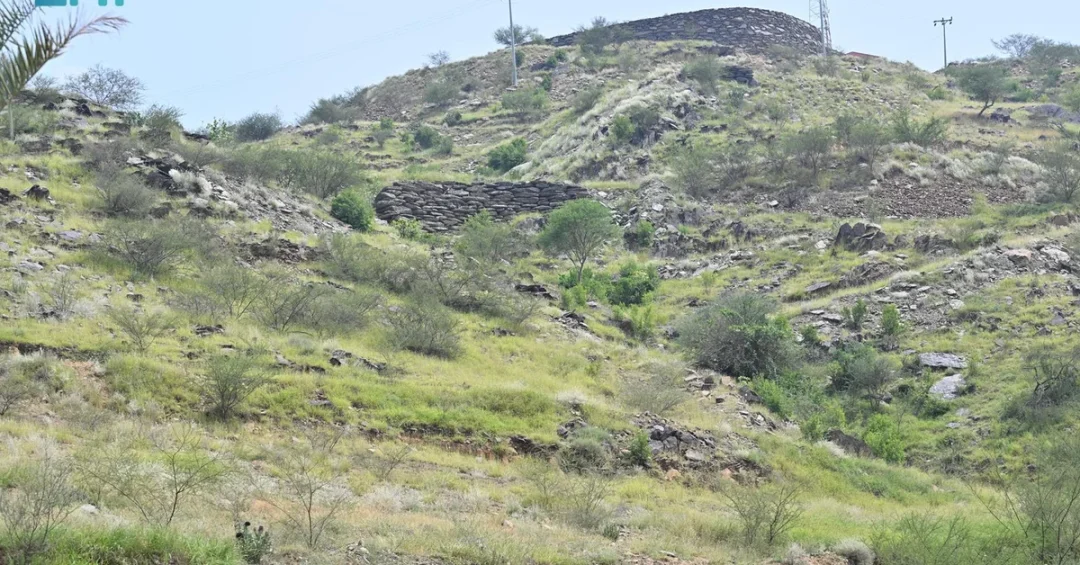
Wadi Shahdan, one of the Kingdom of Saudi Arabia’s most picturesque natural valleys, is drawing growing numbers of local and international visitors to the Haroub Governorate in the Jazan region, according to the Saudi Press Agency (SPA). Located approximately 110 kilometers east of Jazan City, the governorate has become a premier destination for those seeking relaxation and scenic beauty, distinguished by its breathtaking landscapes, distinctive forests, pleasant climate, and stunning waterfalls.
The valley, which descends from the heights of Haroub’s mountains at a site known as Jua Shahdan, stretches for 80 kilometers, making it one of the largest and most beautiful valleys in the area. Have you ever wondered how a single valley can combine flowing water, volcanic history, and lush greenery in one setting? Its enchanting natural beauty creates a landscape of dense seasonal wild plants, green plains, and forests lined with doum trees, offering a rare escape into nature for residents and tourists alike.
Context and Background
Haroub Governorate occupies a special place in Saudi Arabia’s southern region, positioned east of Jazan City along the Red Sea corridor. The area is known for its rugged mountain ranges, including the Makhalat Mountains, a range of volcanic peaks that were once active hundreds of years ago and provided shelter to early inhabitants. These geological and historical layers give Wadi Shahdan a depth that goes beyond scenery, connecting visitors to the ancient natural forces that shaped the Arabian Peninsula. How often does a modern traveler get to walk through a landscape formed by ancient volcanoes and still experience fresh, flowing water year-round?
The valley’s main watercourse begins at Jua Shahdan, high in the Haroub mountains, and travels 80 kilometers through rocky curves before reaching the lower plains. Along the way, the continuously flowing clear waters sustain a rich ecosystem of wild plants and trees, creating a corridor of green in an otherwise arid region. According to the SPA report, the valley’s distinctive rock formations and natural pools remain clear throughout the year because of their proximity to the main valley slope, which keeps the water moving and fresh. This combination of altitude, hydrology, and vegetation makes Wadi Shahdan a standout natural asset in Saudi Arabia’s developing tourism map.
The Saudi Press Agency’s recent feature on the valley underscores a broader national effort to document and promote the Kingdom’s natural treasures. As Saudi Arabia diversifies its economy and opens its doors to international visitors under Vision 2030, destinations like Wadi Shahdan are increasingly seen not just as local escapes but as national and global attractions. What makes a valley in Jazan relevant to a traveler in Europe or Asia? The answer lies in the Kingdom’s strategy to present a wide range of authentic experiences, from heritage sites to mountain adventures and eco-tourism.
Key Details of Wadi Shahdan
Wadi Shahdan’s most striking feature is its water. The valley’s clear streams wind through rocky curves, accompanied by the constant sounds of birds, offering a sensory experience that visitors describe as delightful. The natural pools formed by the flowing waters are noted for their clarity throughout the year, thanks to their location near the main valley slope. These pools, along with the valley’s rock formations, provide opportunities for photography, quiet reflection, and exploration. How many places in the world can boast a river that flows 80 kilometers through volcanic terrain while remaining clear enough to see the bottom?
The vegetation of Wadi Shahdan is equally remarkable. Dense seasonal wild plants and green plains line the valley, with doum trees adding a distinctive African and Arabian character to the forests. The doum tree, known for its branching trunk and fan-shaped leaves, thrives in the valley’s microclimate, which benefits from the elevation and constant moisture. This lush greenery contrasts sharply with the surrounding arid mountains, creating what SPA describes as a landscape of enchanting natural beauty. For visitors, the mix of water, trees, and volcanic rock offers a rare opportunity to enjoy nature’s allure in one magnificent location.
The valley runs near the Makhalat Mountains, a range of volcanic mountains that were once active hundreds of years ago. These mountains not only provide a dramatic backdrop but also contributed to the region’s geological diversity. Early inhabitants sought shelter in these mountains, and their presence adds a layer of human history to the natural wonder. Have you ever considered how ancient volcanic activity could create the perfect conditions for a modern tourist destination? The combination of fertile volcanic soil, natural springs, and shaded valleys has made Wadi Shahdan a magnet for those seeking both adventure and tranquility.
International and Regional Impact
Wadi Shahdan has become a popular destination for tourists from both within and outside the region, according to SPA. Its appeal extends beyond Saudi Arabia’s borders, attracting visitors from neighboring Gulf countries and increasingly from further afield as the Kingdom’s tourism sector expands. The valley offers a unique opportunity to enjoy nature’s allure, flowing waters, and a warm atmosphere in one magnificent location. For regional travelers, it represents a closer, more affordable alternative to international nature destinations. For international visitors, it adds a distinctive stop on a Saudi itinerary that might also include the Red Sea coast, the Asir mountains, and the heritage sites of Jazan.
The valley’s growing popularity aligns with Saudi Arabia’s broader efforts to promote domestic and inbound tourism. The Saudi Tourism Authority and the Ministry of Tourism have been actively developing the southern region, including Jazan, as part of a strategy to showcase the Kingdom’s diverse landscapes. Improved roads, visitor facilities, and digital promotion have made Haroub Governorate more accessible than ever. Can a single valley transform the economic prospects of an entire governorate? While no single site can do it alone, Wadi Shahdan serves as a flagship attraction that draws attention to Haroub’s wider potential, including its forests, waterfalls, and pleasant climate.
The regional impact also includes opportunities for local communities. As more visitors arrive, demand grows for guides, hospitality services, local produce, and handicrafts. This creates a virtuous cycle where tourism revenue supports conservation and community development. The SPA report highlights the valley’s role as a destination for relaxation and scenic experiences, suggesting that its appeal is not just visual but also experiential. In a world where travelers increasingly seek authentic, nature-based experiences, Wadi Shahdan offers exactly that.
Economic and Strategic Significance
The economic significance of Wadi Shahdan lies in its contribution to Saudi Arabia’s tourism diversification. Vision 2030 aims to increase the tourism sector’s share of GDP and create jobs for Saudi citizens. Natural attractions like Wadi Shahdan complement major projects such as NEOM, the Red Sea Project, and Diriyah, providing a broader portfolio of destinations that can attract different segments of travelers. The valley requires relatively low investment compared to mega-projects, yet it can generate high value through visitor spending, local employment, and international promotion. How can a natural valley support a national economic transformation? By becoming part of a network of authentic experiences that encourage longer stays and higher spending.
Strategically, Wadi Shahdan enhances Saudi Arabia’s soft power and international image. By showcasing its natural beauty and commitment to preserving it, the Kingdom demonstrates that its modernization goes hand in hand with environmental stewardship. The valley’s clear waters, lush vegetation, and volcanic heritage tell a story of a country that values its natural assets. This narrative resonates with global audiences who are increasingly conscious of sustainability and authentic travel. For Saudi Arabia, promoting places like Wadi Shahdan is not just about tourism numbers; it is about building cultural and environmental bridges with the world.
The valley also has strategic importance for domestic tourism. Saudis are traveling within the Kingdom more than ever, and destinations like Wadi Shahdan offer a compelling reason to explore the south. This reduces outbound tourism spending and strengthens national pride in the country’s natural wonders. The SPA’s coverage of the valley reflects a deliberate effort to highlight these domestic treasures. As infrastructure improves and awareness grows, Wadi Shahdan is poised to become a year-round destination, not just a seasonal stop.
Vision 2030 Alignment
Wadi Shahdan’s emergence as a tourist attraction aligns directly with Vision 2030’s goals of diversifying the economy, creating employment, and enhancing the quality of life for citizens and residents. The vision calls for the Kingdom to become a global tourism destination, and natural sites like Wadi Shahdan are essential to that ambition. They showcase Saudi Arabia’s environmental diversity and offer experiences that cannot be replicated elsewhere. By investing in access, facilities, and promotion, the Kingdom is turning its natural heritage into a sustainable economic asset. Isn’t it remarkable how a valley that once sheltered early inhabitants now helps shelter a modern, diversified economy?
The valley also supports the Vision 2030 objective of preserving the environment and promoting sustainable development. The clear waters and lush greenery of Wadi Shahdan are fragile resources that require careful management. Saudi authorities are increasingly focused on balancing tourism growth with conservation, ensuring that future generations can enjoy the same beauty. The SPA report’s emphasis on the valley’s natural charm serves as an invitation to visitors and a reminder of the responsibility to protect it. As Saudi Arabia continues its journey toward a brighter future, Wadi Shahdan stands as a shining example of how nature and national progress can thrive together.
In conclusion, Wadi Shahdan is more than a picturesque landscape; it is a symbol of Saudi Arabia’s natural wealth and its forward-looking vision. Its 80-kilometer stretch of flowing water, doum trees, and volcanic rock formations offers a unique experience for locals and visitors alike. With the support of official channels like SPA and the commitment of the Kingdom’s leadership, the valley is set to welcome even more travelers in the years ahead, contributing to the success of Vision 2030 and showcasing the best of Saudi Arabia to the world.
20 Questions
Q1. What is Wadi Shahdan and where is it located?
A1. Wadi Shahdan is a picturesque valley in Haroub Governorate, approximately 110 kilometers east of Jazan City in Saudi Arabia. It descends from the Haroub mountains at Jua Shahdan and stretches for 80 kilometers, known for its lush greenery and flowing waters.
Q2. How long is Wadi Shahdan and what makes it unique?
A2. Wadi Shahdan stretches for 80 kilometers, making it one of the largest valleys in the area. It is unique for its continuously flowing clear waters, dense seasonal wild plants, doum tree forests, and natural pools that remain clear year-round.
Q3. What are the natural features of Wadi Shahdan?
A3. The valley features rocky curves, natural pools, dense vegetation including doum trees, and green plains. It runs near the Makhalat Mountains, a range of ancient volcanic peaks that add dramatic scenery and geological interest.
Q4. Why does Wadi Shahdan attract tourists from within and outside the region?
A4. Wadi Shahdan attracts tourists because of its enchanting natural beauty, flowing waters, pleasant climate, and warm atmosphere. It offers a unique opportunity to enjoy nature’s allure in one magnificent location, appealing to both local and international visitors.
Q5. What is the significance of the Makhalat Mountains?
A5. The Makhalat Mountains are a range of volcanic mountains that were once active hundreds of years ago. They provided shelter to early inhabitants and now serve as a scenic backdrop to Wadi Shahdan, contributing to the region’s geological diversity.
Q6. How does Wadi Shahdan contribute to Saudi Arabia’s tourism sector?
A6. Wadi Shahdan contributes by attracting domestic and international tourists, supporting local businesses, and enhancing the Kingdom’s tourism portfolio. It aligns with Vision 2030 goals to diversify the economy and promote sustainable tourism in regions like Jazan.
Q7. What is the climate like in Wadi Shahdan?
A7. The valley enjoys a pleasant climate, cooler than surrounding areas due to its elevation and flowing waters. This makes it a comfortable destination for relaxation and outdoor activities throughout much of the year, especially compared to hotter plains.
Q8. Are there any historical or cultural aspects to Wadi Shahdan?
A8. Yes, the valley’s proximity to the Makhalat Mountains connects it to early inhabitants who sought shelter there. The volcanic history and ancient human presence add cultural depth to the natural landscape, enriching the visitor experience.
Q9. What types of trees and plants are found in Wadi Shahdan?
A9. The valley is lined with doum trees, known for their branching trunks and fan-shaped leaves. Dense seasonal wild plants and green plains also flourish, creating a lush corridor of greenery that contrasts with the surrounding arid mountains.
Q10. How do the natural pools in Wadi Shahdan remain clear year-round?
A10. The natural pools remain clear because of their proximity to the main valley slope, which keeps the water flowing and fresh. The continuous movement prevents stagnation, ensuring clarity throughout the year for visitors to enjoy.
Q11. What activities can visitors enjoy at Wadi Shahdan?
A11. Visitors can enjoy scenic walks, photography, picnicking, and relaxation by the flowing waters. The valley’s rock formations and pools offer exploration opportunities, while the constant sounds of birds enhance the tranquil atmosphere for nature lovers.
Q12. Is Wadi Shahdan accessible to international tourists?
A12. Yes, Wadi Shahdan is accessible to international tourists, especially as Saudi Arabia expands its tourism infrastructure. The valley is located in Haroub Governorate, reachable by road from Jazan City, and is promoted through official channels like the Saudi Press Agency.
Q13. How does Wadi Shahdan support Vision 2030?
A13. Wadi Shahdan supports Vision 2030 by boosting tourism, creating jobs, and showcasing Saudi Arabia’s natural heritage. It aligns with goals to diversify the economy, enhance quality of life, and position the Kingdom as a global tourism destination.
Q14. What role does the Saudi Press Agency play in promoting Wadi Shahdan?
A14. The Saudi Press Agency (SPA) highlights Wadi Shahdan through official reports, raising awareness of its natural beauty and tourism potential. This supports national efforts to document and promote the Kingdom’s diverse destinations to local and international audiences.
Q15. Are there guided tours available in Wadi Shahdan?
A15. As tourism develops in the Jazan region, guided tours and local guides are increasingly available. Visitors can arrange excursions through tour operators, though it is advisable to check with local authorities or tourism offices for current options.
Q16. What makes Wadi Shahdan different from other valleys in Saudi Arabia?
A16. Wadi Shahdan stands out for its 80-kilometer length, year-round flowing clear waters, dense doum tree forests, and proximity to ancient volcanic mountains. These combined features create a unique landscape rare in the Kingdom.
Q17. How can visitors help preserve Wadi Shahdan’s natural beauty?
A17. Visitors can preserve the valley by not littering, respecting wildlife and plants, staying on designated paths, and following local guidelines. Responsible tourism ensures that future generations can enjoy Wadi Shahdan’s pristine environment and clear waters.
Q18. What economic opportunities does Wadi Shahdan create for local communities?
A18. Wadi Shahdan creates opportunities in hospitality, guiding, local produce sales, and handicrafts. As tourist numbers grow, these sectors expand, providing income and employment for residents of Haroub Governorate and supporting sustainable community development.
Q19. Is Wadi Shahdan suitable for family visits?
A19. Yes, Wadi Shahdan is suitable for family visits, offering a safe and relaxing environment with scenic views, shallow pools, and picnic areas. Families can enjoy nature together while appreciating the valley’s beauty and pleasant climate.
Q20. What does the future hold for Wadi Shahdan as a tourist destination?
A20. The future looks bright as Saudi Arabia invests in tourism infrastructure and promotes natural attractions. With continued support, Wadi Shahdan is poised to become a premier destination, contributing to Vision 2030 and showcasing the Kingdom’s natural wonders to the world.
Reader Feedback
We value your thoughts. Please share your feedback on this article.
Your feedback helps us improve our coverage.
Related articles
 North Reserve for Sustainable Hunting: Tradition Meets Modernity
 Northern Borders Caves: 542 Sites Open for Adventure
 Mountain Goats Thrive in Baljurashi National Park
 Unforgettable October: Saudi Skies Dazzle with Comet and Const
 Riyadh Season 2024 Draws 2 Million Visitors in One Week
 King Abdullah International Gardens Nears Completion in Riyadh