


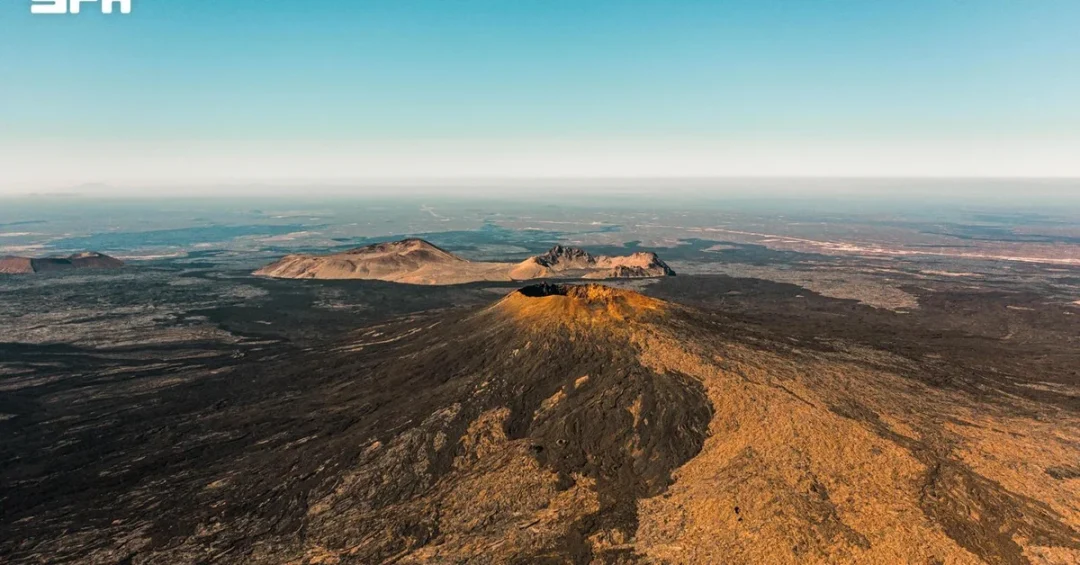
The Royal Commission for AlUla is safeguarding regional biodiversity and restoring ecological balance across northwestern Saudi Arabia through six dedicated nature reserves, spanning Sharaan, Gharameel, Harrat AlZabin, Harrat Uwayrid, Wadi Al-Nakhlah, and the commission-supervised Khaybar reserve. The announcement, released via the Saudi Press Agency on June 5, 2026, confirms that these protected areas are driving ecosystem restoration, land rehabilitation, and native plant cultivation to expand vegetation cover across the ancient landscape. How many nature reserves does it take to anchor a regional conservation model? For AlUla, the answer is six — each one contributing to a broader environmental framework that directly aligns with the Saudi Green Initiative and the Kingdom’s Vision 2030 sustainability goals.
The Royal Commission for AlUla, a government body established to preserve and develop the historic region, has designated approximately 50 percent of AlUla’s total area as protected zones to date. This figure places AlUla at the forefront of Saudi Arabia’s environmental stewardship efforts, which aim to protect 30 percent of the Kingdom’s land and sea by 2030. The commission’s work extends beyond simple preservation; it involves active rehabilitation of degraded land, cultivation of native plant species, and the reintroduction of wildlife in coordination with national conservation programs. For international observers, the initiative offers a clear window into how Saudi Arabia is translating its environmental commitments into measurable, on-the-ground results across its most treasured heritage landscapes.
Context and Background
What makes AlUla’s conservation model distinctive in the global arena? The region, located in northwestern Saudi Arabia, is perhaps best known for its Nabataean tombs at Hegra, Saudi Arabia’s first UNESCO World Heritage Site, and for the dramatic sandstone formations of Sharaan. Yet beneath the surface of its archaeological fame lies an equally significant ecological story. AlUla’s varied terrain — from volcanic harrah fields to wadis and sandstone canyons — supports a surprising diversity of plant and animal life, much of which has been threatened by decades of overgrazing, climate variability, and unregulated land use. The Royal Commission for AlUla has responded by creating a network of reserves that function as sanctuaries for native species and as laboratories for restoration science.
The six reserves — Sharaan, Gharameel, Harrat AlZabin, Harrat Uwayrid, Wadi Al-Nakhlah, and Khaybar — each serve a specific ecological purpose. Sharaan National Park, spanning 1,543 square kilometers, is the flagship. It represents the largest single protected area under the commission’s management and has become a leading regional example of wildlife restoration and natural resource sustainability. The other reserves complement Sharaan by protecting different habitat types: volcanic plateaus, seasonal riverbeds, and desert plains. Together, they form a mosaic that allows species to move, breed, and recover across a connected landscape rather than in isolated pockets. This connectivity is essential for long-term biodiversity resilience, especially as climate change alters rainfall patterns and temperature extremes across the Arabian Peninsula.
How does this fit into Saudi Arabia’s broader environmental agenda? The Saudi Green Initiative, launched in 2021, set ambitious targets: planting 10 billion trees across the Kingdom, restoring 40 million hectares of degraded land, and protecting 30 percent of land and sea by 2030. AlUla’s 50 percent protected-area designation exceeds the national target and demonstrates how a single region can lead by example. The Royal Commission for AlUla works in coordination with the Ministry of Environment, Water and Agriculture and the National Center for Wildlife, ensuring that local actions contribute to national reporting and international commitments under the Convention on Biological Diversity. For a global audience, AlUla offers a case study in how heritage preservation and ecological restoration can reinforce one another.
Key Details of the Six Nature Reserves
What exactly does each reserve protect, and why does the number six matter? The Royal Commission for AlUla has not simply drawn lines on a map; it has built a functioning conservation system. Sharaan National Park, the largest at 1,543 square kilometers, is home to reintroduced Arabian leopards, ibex, and gazelles, and features a network of patrols and monitoring stations. Gharameel, known for its striking rock formations, protects a high-desert ecosystem with rare plant species adapted to extreme aridity. Harrat AlZabin and Harrat Uwayrid cover volcanic fields where basalt outcrops create microclimates that shelter reptiles, birds, and small mammals. Wadi Al-Nakhlah preserves a seasonal watercourse that serves as a critical corridor for migratory birds and a nursery for native trees such as acacia and sidr. The Khaybar reserve, supervised by the commission, extends protection to a historically significant oasis area with ancient agricultural terraces and date palm groves.
The commission’s restoration work involves more than fencing off land. Teams of ecologists and local rangers conduct soil stabilization, water harvesting, and seed collection. Native plant nurseries propagate species such as Acacia tortilis, Ziziphus nummularia, and Haloxylon persicum for replanting in degraded areas. Wildlife monitoring uses camera traps and satellite tracking to assess population trends. In Sharaan alone, recent surveys have recorded increasing numbers of Arabian sand gazelle and Nubian ibex, signs that habitat protection is yielding measurable results. The commission also engages local communities, offering training and employment in conservation-related roles, which helps build long-term stewardship and reduces pressures from unsustainable land use.
How do these reserves interact with each other? The Royal Commission for AlUla has designed the network to function as an ecological corridor system. Sharaan connects to Wadi Al-Nakhlah through a series of protected wadis, allowing wildlife to move between feeding and breeding grounds. Harrat AlZabin and Harrat Uwayrid form a northern volcanic complex that supports species adapted to rugged terrain. Khaybar, to the south, links AlUla’s conservation area to broader regional landscapes. This connectivity is crucial for genetic diversity and for species that require large territories, such as the Arabian wolf and the caracal. By managing the reserves as a single ecological unit, the commission maximizes the impact of its resources and provides a model that other Saudi regions can replicate.
International and Regional Impact
Why should the international community pay attention to AlUla’s reserve network? Saudi Arabia’s environmental initiatives are increasingly recognized as part of global efforts to combat desertification, protect migratory species, and meet climate targets. AlUla’s reserves sit at the crossroads of Afro-Eurasian bird migration routes, making them important stopover sites for species traveling between Europe, Africa, and Asia. The commission’s data on bird populations contributes to international monitoring programs. Moreover, the reserves demonstrate that arid landscapes — often dismissed as wastelands — can be restored to functional ecosystems with the right combination of science, funding, and political will. For countries in the Middle East and North Africa facing similar challenges, AlUla offers a replicable template.
Regionally, the initiative strengthens Saudi Arabia’s leadership in environmental diplomacy. The Kingdom has hosted major international environmental events and has pledged significant resources to climate adaptation. AlUla’s reserves also support the goals of the Middle East Green Initiative, a Saudi-led effort to plant 50 billion trees across the region and reduce carbon emissions from land degradation. By protecting 50 percent of AlUla’s area, the Royal Commission for AlUla is contributing directly to this regional vision. The reserves also enhance the region’s appeal as a destination for eco-tourism, attracting visitors interested in wildlife, geology, and sustainable travel. This aligns with Vision 2030’s goal of diversifying the economy and creating new sectors that celebrate Saudi Arabia’s natural and cultural heritage.
Economic and Strategic Significance
How do nature reserves contribute to Saudi Arabia’s economic transformation? Conservation is not just an environmental cost; it is an investment in long-term prosperity. AlUla’s reserves support a growing eco-tourism sector that creates jobs in hospitality, guiding, research, and logistics. The Royal Commission for AlUla has developed visitor experiences that highlight the reserves’ natural beauty while adhering to strict sustainability standards. These include guided hikes in Sharaan, wildlife-watching tours in Wadi Al-Nakhlah, and educational programs at the Khaybar oasis. Revenue from these activities helps fund ongoing conservation work, creating a virtuous cycle. The commission also partners with private-sector entities to develop low-impact infrastructure, such as solar-powered visitor centers and waste-management systems, further reducing the environmental footprint of tourism.
Strategically, the reserves protect natural capital that underpins food and water security. Native vegetation restoration improves soil health, reduces erosion, and enhances groundwater recharge — critical benefits in a water-scarce region. The commission’s water-harvesting techniques, including check dams and terracing, are modern adaptations of ancient Nabataean methods. These interventions help sustain local agriculture, particularly date palm cultivation in Khaybar, and support rangeland productivity for pastoral communities. By integrating conservation with economic development, the Royal Commission for AlUla is demonstrating that environmental protection and prosperity can advance together. This approach aligns with the Public Investment Fund’s focus on sustainable development and with the National Environment Strategy, which seeks to balance economic growth with ecological integrity.
Vision 2030 Alignment
How does AlUla’s reserve network embody the aspirations of Vision 2030? Saudi Arabia’s Vision 2030 is not only about economic diversification; it also emphasizes quality of life, environmental sustainability, and the preservation of national heritage. The Royal Commission for AlUla’s six nature reserves directly serve these objectives by protecting biodiversity, restoring degraded landscapes, and creating green spaces for communities and visitors. The commission’s target of 50 percent protected area exceeds national and global benchmarks, signaling the Kingdom’s seriousness about environmental stewardship. Moreover, the reserves support the Saudi Green Initiative’s tree-planting and land-restoration targets, contributing to the Kingdom’s pledge to achieve net-zero emissions by 2060. For international audiences, AlUla represents a tangible example of how Vision 2030 translates into action on the ground.
Looking ahead, the Royal Commission for AlUla plans to expand its monitoring and research programs, introduce more native species, and strengthen partnerships with global conservation organizations. The commission’s work is a reminder that Saudi Arabia’s future is intertwined with its natural environment. By safeguarding six nature reserves — Sharaan, Gharameel, Harrat AlZabin, Harrat Uwayrid, Wadi Al-Nakhlah, and Khaybar — the Kingdom is protecting not only wildlife and habitats but also a legacy for future generations. As the world watches Saudi Arabia’s transformation, AlUla stands as a beacon of what is possible when heritage, science, and vision converge. The question is no longer whether Saudi Arabia can lead in conservation, but how quickly its model will inspire others across the region and beyond.
20 Questions
Q1. How many nature reserves is the Royal Commission for AlUla currently managing?
A1. The Royal Commission for AlUla manages six nature reserves: Sharaan, Gharameel, Harrat AlZabin, Harrat Uwayrid, Wadi Al-Nakhlah, and the commission-supervised Khaybar reserve. These reserves are distributed across northwestern Saudi Arabia to protect diverse habitats and wildlife.
Q2. What is the total area of Sharaan National Park?
A2. Sharaan National Park spans 1,543 square kilometers, making it the largest protected area under the Royal Commission for AlUla’s management. It serves as a leading regional example of wildlife restoration and natural resource sustainability, supporting species such as the Arabian leopard and Nubian ibex.
Q3. What percentage of AlUla’s total area is designated as protected zones?
A3. Approximately 50 percent of AlUla’s total area has been designated as protected zones to date. This figure exceeds the national target of 30 percent and reflects the Kingdom’s strong commitment to environmental conservation under the Saudi Green Initiative.
Q4. Which Saudi national initiative aligns with AlUla’s conservation efforts?
A4. AlUla’s conservation efforts align directly with the Saudi Green Initiative, which aims to plant 10 billion trees, restore 40 million hectares of degraded land, and protect 30 percent of Saudi Arabia’s land and sea by 2030.
Q5. What types of activities are conducted in AlUla’s nature reserves?
A5. Activities include ecosystem restoration, land rehabilitation, native plant cultivation, wildlife monitoring, soil stabilization, water harvesting, and seed collection. The commission also engages local communities through training and employment in conservation-related roles.
Q6. Which native plant species are propagated in AlUla’s reserves?
A6. Native species propagated include Acacia tortilis, Ziziphus nummularia, and Haloxylon persicum. These plants are cultivated in nurseries and replanted in degraded areas to expand vegetation cover and restore ecological balance.
Q7. How do the reserves support migratory birds?
A7. AlUla’s reserves sit along Afro-Eurasian bird migration routes, providing critical stopover sites. Wadi Al-Nakhlah, in particular, preserves a seasonal watercourse that serves as a corridor for migratory birds and a nursery for native trees.
Q8. What role does the Khaybar reserve play in the network?
A8. The Khaybar reserve, supervised by the Royal Commission for AlUla, extends protection to a historically significant oasis area with ancient agricultural terraces and date palm groves. It links AlUla’s conservation area to broader regional landscapes.
Q9. How does the Royal Commission for AlUla engage local communities?
A9. The commission offers training and employment in conservation-related roles, such as rangers, ecologists, and guides. This engagement builds long-term stewardship and reduces pressures from unsustainable land use while supporting local livelihoods.
Q10. What economic benefits do the nature reserves bring to AlUla?
A10. The reserves support a growing eco-tourism sector, creating jobs in hospitality, guiding, research, and logistics. Revenue from visitor experiences helps fund ongoing conservation work, creating a sustainable cycle of investment and protection.
Q11. How do the reserves contribute to water security in the region?
A11. Native vegetation restoration improves soil health, reduces erosion, and enhances groundwater recharge. The commission uses water-harvesting techniques like check dams and terracing, adapted from ancient Nabataean methods, to sustain local agriculture and rangeland productivity.
Q12. Which wildlife species have benefited from AlUla’s conservation efforts?
A12. Species such as the Arabian sand gazelle, Nubian ibex, and Arabian leopard have benefited. Recent surveys in Sharaan have recorded increasing numbers of gazelle and ibex, indicating that habitat protection is yielding measurable results.
Q13. What is the connection between AlUla’s reserves and Vision 2030?
A13. The reserves support Vision 2030’s goals of environmental sustainability, quality of life, and heritage preservation. They contribute to the Saudi Green Initiative and the Kingdom’s pledge to achieve net-zero emissions by 2060, showcasing tangible progress.
Q14. How does the commission monitor wildlife populations?
A14. The commission uses camera traps and satellite tracking to assess population trends. These tools provide data on species distribution, movement, and health, informing adaptive management strategies across the reserve network.
Q15. What is the significance of the volcanic reserves Harrat AlZabin and Harrat Uwayrid?
A15. These reserves cover volcanic fields where basalt outcrops create microclimates that shelter reptiles, birds, and small mammals. Together they form a northern volcanic complex supporting species adapted to rugged terrain.
Q16. How does the reserve network function as an ecological corridor?
A16. The reserves are connected through protected wadis and landscapes, allowing wildlife to move between feeding and breeding grounds. This connectivity supports genetic diversity and species requiring large territories, such as the Arabian wolf and caracal.
Q17. What international commitments does AlUla’s conservation work support?
A17. The work supports the Convention on Biological Diversity, the Middle East Green Initiative, and global efforts to combat desertification. AlUla’s data on bird populations contributes to international monitoring programs.
Q18. What future plans does the Royal Commission for AlUla have for the reserves?
A18. The commission plans to expand monitoring and research programs, introduce more native species, and strengthen partnerships with global conservation organizations. These efforts aim to enhance the reserves’ ecological impact and educational value.
Q19. How does eco-tourism in AlUla balance conservation and visitor access?
A19. The commission develops low-impact infrastructure, such as solar-powered visitor centers and waste-management systems. Guided hikes, wildlife-watching tours, and educational programs are designed to minimize environmental footprint while generating revenue for conservation.
Q20. Why is AlUla considered a model for conservation in arid regions?
A20. AlUla demonstrates that arid landscapes can be restored to functional ecosystems through science, funding, and political will. Its network of six reserves, exceeding national protection targets, offers a replicable template for other regions facing similar environmental challenges.
Reader Feedback
We value your thoughts. Please share your feedback on this article.
Your feedback helps us improve our coverage.
Related articles
 Flamingos and Mangroves: Jazan’s Ecological Partnership
 Prophet’s Mosque: Islamic Heritage and Architectural Splendor
 Al Mashaaer Al Muqaddasah Metro Moves 314,000 Pilgrims
 Makkah Police Arrest Resident for Fraudulent Hajj Packages Online
 Pilgrims Arrive at Jeddah Airport for Hajj 1445
 Makkah Chamber Expedites Licensing for Hajj Hospitality