


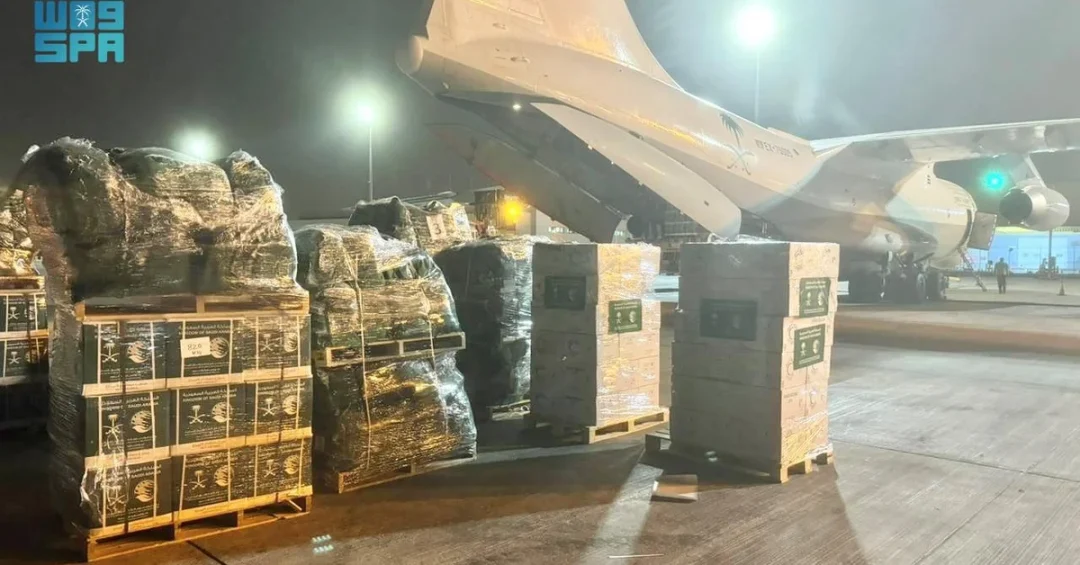
An eleventh relief plane operated by the King Salman Humanitarian Aid and Relief Center (KSrelief) departed from King Khalid International Airport in Riyadh on October 23, 2024, bound for Lebanon, carrying food, shelter, and medical supplies. The flight forms part of an ongoing Saudi air bridge established to deliver urgent humanitarian assistance to the Lebanese people amid the critical circumstances they are facing. The mission was carried out under the directives of Custodian of the Two Holy Mosques King Salman bin Abdulaziz Al Saud and His Royal Highness Prince Mohammed bin Salman bin Abdulaziz Al Saud, Crown Prince and Prime Minister, underscoring the Kingdom’s sustained commitment to alleviating human suffering wherever it occurs.
Have you ever considered what it takes to organize a single relief flight, let alone an entire air bridge spanning multiple missions? Each departure involves coordination between KSrelief, airport authorities, logistics teams, and partner organizations on the ground in Lebanon. The eleventh plane is not an isolated gesture but a continuation of a structured humanitarian operation that reflects Saudi Arabia’s longstanding policy of extending a helping hand to countries in need. The aid shipment includes essential items selected to address the most immediate needs of displaced families and vulnerable communities, reinforcing the Kingdom’s reputation as a leading global humanitarian donor.
Context and Background
Why has Saudi Arabia chosen to maintain such a sustained relief effort for Lebanon at this particular moment? The answer lies in the deep historical ties between the Kingdom and Lebanon, as well as Saudi Arabia’s broader humanitarian principles. Lebanon has faced a prolonged period of economic and political instability, compounded by regional tensions that have displaced thousands of families and strained essential services. In response, Saudi Arabia launched an air bridge through KSrelief to deliver consistent and tangible support. The first planes began departing in October 2024, and the operation has since grown into a multi-flight campaign that demonstrates the Kingdom’s unwavering solidarity with the Lebanese people.
KSrelief, established in 2015 by royal decree, has become one of the world’s most active humanitarian organizations, operating in more than 90 countries. Its mandate is to provide aid without discrimination based on religion, ethnicity, or political affiliation, and to coordinate with international partners to maximize impact. The air bridge to Lebanon is a prime example of this mandate in action. By working closely with Lebanese authorities and humanitarian agencies, KSrelief ensures that supplies reach those who need them most. The eleventh flight, like its predecessors, carries a carefully curated cargo of food parcels, shelter materials, and medical equipment, reflecting a needs-based approach that prioritizes dignity and effectiveness.
What does it mean for a nation to commit to an air bridge rather than a one-time donation? It signals a long-term strategy of engagement and compassion. Saudi Arabia’s leadership has consistently emphasized that humanitarian aid is a pillar of its foreign policy, rooted in Islamic values and a commitment to global stability. The Kingdom’s efforts in Lebanon are not new; over the years, Saudi Arabia has provided billions of dollars in assistance to Lebanon through various channels, including development projects, medical support, and direct budgetary aid. The current air bridge builds on this legacy, adapting to the urgent demands of the present crisis while maintaining the Kingdom’s characteristic generosity and reliability.
Key Details of the Eleventh Relief Flight
What exactly does the eleventh relief plane carry, and how were those items selected? The cargo includes food staples such as rice, flour, cooking oil, and canned goods, designed to sustain families for several weeks. Shelter supplies consist of tents, blankets, and mattresses, providing protection for those who have lost their homes or are living in overcrowded conditions. Medical supplies encompass essential medicines, first-aid kits, and equipment for treating injuries and chronic illnesses. The selection process is informed by assessments conducted by KSrelief teams and its partners on the ground, ensuring that the aid matches the most pressing needs of the affected population.
The flight departed from King Khalid International Airport in Riyadh, a major hub for Saudi humanitarian operations. The airport’s logistics infrastructure allows for rapid loading and dispatch of relief goods, a capability that has been refined through years of experience in responding to crises in Yemen, Syria, Sudan, and beyond. The eleventh plane follows a series of earlier flights that have already delivered hundreds of tons of assistance to Lebanon. Each mission is coordinated with Lebanese officials to ensure smooth customs clearance and efficient distribution. The operation also involves close collaboration with the Saudi embassy in Beirut, which facilitates the handover of aid to local authorities and humanitarian organizations.
Who are the beneficiaries of this aid, and how is fairness ensured? The assistance targets the most vulnerable segments of Lebanese society, including displaced families, the elderly, children, and those with chronic medical conditions. Distribution is carried out in coordination with local partners, such as the Lebanese Red Cross and various UN agencies, to prevent duplication and ensure transparency. KSrelief has a robust monitoring and evaluation system that tracks the delivery of aid and assesses its impact. This approach reflects the Kingdom’s commitment to responsible humanitarian action, where every contribution is accounted for and every beneficiary is treated with respect. The eleventh flight is thus not just a shipment of goods but a lifeline for thousands of individuals facing hardship.
International and Regional Impact
How does Saudi Arabia’s humanitarian air bridge to Lebanon resonate on the regional and international stage? It reinforces the Kingdom’s role as a stabilizing force in the Middle East, demonstrating that it prioritizes the well-being of all peoples in the region. While political tensions often dominate headlines, Saudi Arabia’s consistent humanitarian outreach offers a counter-narrative of compassion and constructive engagement. Regional observers have noted that the air bridge serves as a confidence-building measure, fostering goodwill among Lebanese communities and reinforcing the Kingdom’s image as a responsible global actor. International organizations, including the United Nations, have praised Saudi Arabia for its timely and generous contributions to Lebanon’s relief efforts.
What message does this send to the broader international community? It underscores the importance of collective action in addressing humanitarian crises. Saudi Arabia’s air bridge is part of a wider global effort that includes contributions from other nations and international NGOs. By leading through example, the Kingdom encourages others to step up their support for Lebanon. The eleventh flight also highlights the effectiveness of South-South cooperation, as Saudi Arabia shares its logistical expertise and resources with a fellow Arab nation. This solidarity is particularly significant given the scale of the crisis, which requires sustained and coordinated responses. Saudi Arabia’s actions are a testament to its belief that humanitarian aid should transcend politics and focus on saving lives.
Economic and Strategic Significance
Why does Saudi Arabia invest in humanitarian aid, and what strategic benefits does it yield? Beyond the moral imperative, humanitarian assistance is an integral part of the Kingdom’s soft power and diplomatic toolkit. It strengthens bilateral relations, builds trust, and creates avenues for future cooperation. In the case of Lebanon, Saudi Arabia’s support helps stabilize a neighboring country, which in turn contributes to regional security. A stable Lebanon is better positioned to engage in economic recovery and reconstruction, areas where Saudi expertise and investment could play a role in the future. The air bridge thus serves both immediate humanitarian needs and long-term strategic interests, aligning with Saudi Arabia’s vision of a prosperous and peaceful Middle East.
What economic impact does the aid have on Lebanon? The influx of food and medical supplies alleviates pressure on local markets and healthcare facilities, which have been overwhelmed by the crisis. By providing essential goods, Saudi Arabia helps prevent price spikes and shortages, indirectly supporting the Lebanese economy. Moreover, the aid reduces the burden on international relief agencies, allowing them to focus on other critical areas. In the longer term, Saudi Arabia’s continued engagement could pave the way for investment and development projects that contribute to Lebanon’s recovery. The Kingdom has a track record of supporting infrastructure and economic initiatives in Lebanon, and the current humanitarian effort lays the groundwork for deeper collaboration once the situation stabilizes.
Vision 2030 Alignment
How does the relief air bridge connect to Saudi Arabia’s Vision 2030? Vision 2030 is not only about domestic transformation but also about positioning the Kingdom as a global leader in humanitarian and development fields. One of its pillars is a vibrant society, which extends to fostering compassion and solidarity beyond borders. KSrelief’s operations exemplify this pillar by projecting Saudi Arabia’s values of generosity and responsibility onto the world stage. The air bridge to Lebanon also enhances the Kingdom’s international standing, which is essential for attracting partnerships and investment. By demonstrating reliability and leadership in times of crisis, Saudi Arabia strengthens its reputation as a trusted global partner, a key objective of Vision 2030.
What does the future hold for Saudi Arabia’s humanitarian efforts? The Kingdom is expected to continue and expand its relief operations, leveraging technology and innovation to improve efficiency. KSrelief has already adopted digital platforms for donation tracking and impact assessment, aligning with Vision 2030’s emphasis on digital transformation. The air bridge to Lebanon is a chapter in a larger story of Saudi Arabia’s growing role as a humanitarian superpower. As the Kingdom approaches its 2030 goals, its commitment to helping those in need will remain a defining feature of its foreign policy. The eleventh relief plane is a symbol of that enduring commitment, carrying not just supplies but hope and solidarity to the Lebanese people.
20 Questions
Q1. What is the eleventh Saudi relief plane and when did it depart?
A1. The eleventh relief plane is part of a Saudi air bridge operated by KSrelief. It departed from King Khalid International Airport in Riyadh on October 23, 2024, carrying food, shelter, and medical supplies to Lebanon.
Q2. Which organization operates the Saudi relief air bridge to Lebanon?
A2. The air bridge is operated by the King Salman Humanitarian Aid and Relief Center, known as KSrelief, which is Saudi Arabia’s primary humanitarian agency established in 2015.
Q3. What kind of supplies are on board the eleventh relief plane?
A3. The plane carries food staples like rice, flour, and canned goods, shelter materials such as tents and blankets, and medical supplies including medicines and first-aid kits for vulnerable communities.
Q4. Who ordered the Saudi relief flights to Lebanon?
A4. The relief flights were ordered by Custodian of the Two Holy Mosques King Salman bin Abdulaziz Al Saud and His Royal Highness Prince Mohammed bin Salman bin Abdulaziz Al Saud, Crown Prince and Prime Minister.
Q5. Why is Saudi Arabia sending aid to Lebanon?
A5. Saudi Arabia is sending aid to help the Lebanese people amid critical circumstances, alleviating their suffering and supporting those in need as part of the Kingdom’s humanitarian commitment.
Q6. How many relief planes have been sent to Lebanon so far?
A6. As of October 23, 2024, eleven relief planes have been dispatched as part of the Saudi air bridge to Lebanon, with more expected to follow.
Q7. What is the Saudi air bridge?
A7. The Saudi air bridge is a coordinated series of relief flights organized by KSrelief to deliver urgent humanitarian aid to Lebanon, reflecting Saudi Arabia’s sustained commitment to the Lebanese people.
Q8. Where did the eleventh relief plane depart from?
A8. The eleventh relief plane departed from King Khalid International Airport in Riyadh, which serves as a major hub for Saudi humanitarian operations and logistics.
Q9. Who benefits from the Saudi aid in Lebanon?
A9. The aid targets displaced families, the elderly, children, and individuals with chronic medical conditions, ensuring that the most vulnerable segments of Lebanese society receive essential support.
Q10. How is the aid distributed in Lebanon?
A10. Distribution is coordinated with Lebanese authorities and humanitarian partners, including the Lebanese Red Cross and UN agencies, to ensure transparency, fairness, and efficient delivery to those in need.
Q11. What is KSrelief’s track record in humanitarian aid?
A11. KSrelief has operated in over 90 countries, providing aid without discrimination. It is recognized as one of the world’s most active humanitarian organizations, known for its rapid and effective responses.
Q12. How does Saudi Arabia’s aid to Lebanon align with its foreign policy?
A12. The aid reflects Saudi Arabia’s foreign policy principles of compassion, solidarity, and regional stability, demonstrating the Kingdom’s role as a responsible global actor committed to helping nations in crisis.
Q13. What impact does the aid have on Lebanon’s economy?
A13. The aid alleviates pressure on local markets and healthcare facilities, helps prevent shortages and price spikes, and reduces the burden on international relief agencies operating in Lebanon.
Q14. How does the air bridge enhance Saudi Arabia’s international standing?
A14. It reinforces Saudi Arabia’s reputation as a leading humanitarian donor and a stabilizing force in the Middle East, earning praise from international organizations and strengthening diplomatic ties.
Q15. What role does the Saudi embassy in Beirut play in the relief effort?
A15. The Saudi embassy in Beirut facilitates the handover of aid to local authorities and humanitarian organizations, ensuring smooth customs clearance and effective distribution on the ground.
Q16. How does the relief effort connect to Vision 2030?
A16. It aligns with Vision 2030’s pillar of a vibrant society and the Kingdom’s goal of global leadership, showcasing Saudi Arabia’s values of generosity and responsibility on the world stage.
Q17. Are other countries contributing to Lebanon relief efforts?
A17. Yes, Saudi Arabia’s air bridge is part of a wider global effort that includes contributions from other nations and international NGOs, but the Kingdom’s sustained campaign is among the most prominent.
Q18. What types of medical supplies are included in the aid?
A18. The medical supplies include essential medicines, first-aid kits, and equipment for treating injuries and chronic illnesses, selected based on assessments of the most pressing health needs in Lebanon.
Q19. How does Saudi Arabia ensure the aid reaches those who need it most?
A19. KSrelief uses a needs-based approach, coordinating with local partners and employing monitoring and evaluation systems to track delivery and assess impact, ensuring transparency and effectiveness.
Q20. What is the future outlook for Saudi humanitarian aid?
A20. Saudi Arabia is expected to continue and expand its relief operations, leveraging technology and innovation to improve efficiency, in line with Vision 2030’s emphasis on digital transformation and global engagement.
Reader Feedback
We value your thoughts. Please share your feedback on this article.
Your feedback helps us improve our coverage.
Related articles
 SEC Joins as Strategic Partner in Energy Localization Forum
 Saudi Attorney General Joins First G20 Prosecution Summit
 HRH Crown Prince Receives Phone Call from Iraqi Prime Minister
 Minister of Economy and Planning Meets with Senior MIT Officials
 Arab League Condemns Israel’s Undermining of UN in Gaza
 Riyadh Governor Receives Tajikistan Ambassador