


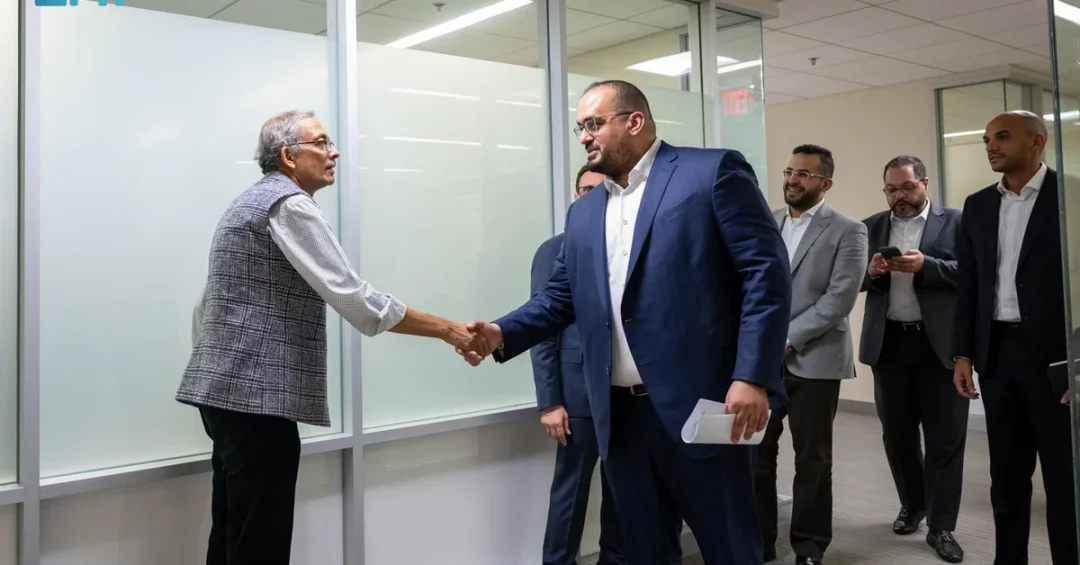
Saudi Arabia’s Minister of Economy and Planning, Faisal Alibrahim, met with senior officials from the Massachusetts Institute of Technology (MIT) during an official visit to Boston on October 23, 2024, to explore collaboration in education, research, and policymaking, according to the Saudi Press Agency (SPA). The discussions, held at one of the world’s most prestigious academic institutions, focused on advancing scientific research, driving innovation, and building institutional capabilities in key sectors across the Kingdom. The meeting underscores Saudi Arabia’s determination to forge partnerships with globally renowned academic centers as part of its sweeping economic transformation agenda.
The talks reflect a broader strategic push by the Kingdom to develop human capital, strengthen data-driven policymaking, and accelerate the modernization of its economy. By engaging directly with MIT — a global leader in technology, engineering, and applied sciences — Saudi Arabia signals its intent to embed world-class expertise into its national development plans. The meeting also highlights how Vision 2030 is increasingly being advanced not only through domestic reforms but also through carefully cultivated international partnerships. What does this kind of high-level academic engagement reveal about Saudi Arabia’s long-term economic ambitions?
Context and Background
The meeting between Minister Alibrahim and MIT officials did not occur in isolation. It forms part of a sustained effort by the Ministry of Economy and Planning to build bridges with leading global institutions that can contribute to the Kingdom’s economic diversification agenda. Under Vision 2030, Saudi Arabia has committed to reducing its historical dependence on oil revenues and building a knowledge-based economy driven by innovation, technology, and human capital. Academic partnerships are viewed as a critical enabler of that transition.
MIT has long been recognized as a global powerhouse in scientific research, engineering, artificial intelligence, and entrepreneurship. Its alumni and faculty have founded thousands of companies and contributed to breakthroughs across energy, health, computing, and advanced manufacturing. For Saudi Arabia, collaboration with such an institution offers access to cutting-edge research methodologies, curriculum development expertise, and a pipeline of talent that can support emerging sectors. The Kingdom has already established a track record of partnering with top-tier universities worldwide to strengthen its education and research ecosystem.
The timing of the visit is significant. Saudi Arabia is currently implementing a series of ambitious giga-projects, including NEOM, the Red Sea Project, and Qiddiya, all of which require advanced technical skills, research capabilities, and innovative policy frameworks. The Ministry of Economy and Planning plays a central coordinating role in aligning these projects with national economic objectives. Engaging MIT at this stage helps ensure that the Kingdom’s human capital development strategies are informed by best international practices. How can partnerships with institutions like MIT accelerate the Kingdom’s transition to a diversified, innovation-led economy?
Key Details of the Discussions
According to the Saudi Press Agency, the discussions between Minister Alibrahim and MIT officials centered on three interrelated pillars: advancing scientific research, driving innovation, and building institutional capabilities in key sectors. These pillars align closely with the Ministry’s mandate to formulate and implement economic policies that support sustainable growth. The meeting explored practical avenues for collaboration, including joint research initiatives, faculty and student exchanges, and executive education programs tailored to Saudi priorities.
Scientific research was a central theme. Saudi Arabia has significantly increased its investment in research and development in recent years, aiming to raise R&D expenditure as a percentage of GDP. Partnerships with institutions like MIT can help Saudi universities and research centers adopt rigorous methodologies, publish in high-impact journals, and commercialize research outcomes. The Kingdom’s emerging focus on fields such as artificial intelligence, biotechnology, renewable energy, and advanced materials makes collaboration with MIT particularly relevant.
Innovation and entrepreneurship also featured prominently. MIT’s ecosystem — including its Media Lab, Computer Science and Artificial Intelligence Laboratory, and the Martin Trust Center for MIT Entrepreneurship — has spawned countless startups and innovation hubs. Saudi officials are keen to learn from this model as they expand their own innovation infrastructure, including incubators, accelerators, and venture capital funds. Building institutional capabilities, the third pillar, refers to strengthening the organizational and governance frameworks within Saudi ministries and agencies to design, implement, and evaluate policies more effectively. What specific lessons from MIT’s innovation ecosystem could be most transformative for Saudi Arabia’s emerging tech sector?
International and Regional Impact
The meeting carries implications that extend beyond bilateral academic cooperation. It reinforces Saudi Arabia’s position as an increasingly influential player in global knowledge networks. By engaging with MIT, the Kingdom signals to the international community that it is serious about becoming a hub for research, innovation, and talent development. This can attract further partnerships with other leading universities, research institutes, and multinational corporations seeking to collaborate with Saudi entities.
Regionally, the collaboration could have a demonstration effect. Other countries in the Middle East and North Africa may look to Saudi Arabia’s model of pairing national economic planning with elite international academic partnerships. As the largest Arab economy and a G20 member, Saudi Arabia’s initiatives often set precedents for the wider region. The Kingdom’s ability to integrate global best practices into its domestic systems could encourage similar efforts among its neighbors, contributing to a more knowledge-driven regional economy.
Furthermore, the meeting underscores the growing importance of soft power in Saudi foreign policy. Academic, cultural, and scientific exchanges complement traditional diplomatic and economic ties, helping to build durable relationships based on shared intellectual pursuits. For MIT, engaging with Saudi Arabia offers access to a dynamic region, diverse research contexts, and potential funding opportunities. For the Kingdom, the association with a brand as prestigious as MIT enhances its global standing in education and research. How might this partnership influence Saudi Arabia’s role as a regional leader in innovation and higher education?
Economic and Strategic Significance
From an economic standpoint, the collaboration aligns with Saudi Arabia’s efforts to boost productivity, diversify exports, and create high-value jobs. Human capital is increasingly recognized as the most critical factor in long-term economic competitiveness. By tapping into MIT’s expertise, the Kingdom can accelerate the development of a skilled workforce capable of driving growth in sectors such as digital technology, advanced manufacturing, healthcare, and clean energy. This, in turn, supports the broader goal of increasing the private sector’s contribution to GDP.
Data-driven policymaking is another strategic benefit. The Ministry of Economy and Planning relies on robust data and analysis to design effective policies. Collaboration with MIT can enhance the Kingdom’s capacity to collect, analyze, and utilize data for economic planning, forecasting, and impact evaluation. This is particularly important as Saudi Arabia navigates complex global economic trends, including technological disruption, climate change, and shifting energy markets. The meeting therefore represents an investment in the analytical infrastructure that underpins sound economic governance.
Strategically, the partnership reinforces Saudi Arabia’s commitment to multilateral engagement and international cooperation. It shows that the Kingdom is open to learning from global leaders and willing to invest in long-term capacity building. This approach is consistent with the principles of Vision 2030, which emphasizes openness, innovation, and sustainable development. The meeting also sends a positive signal to international investors and partners that Saudi Arabia is building the institutional and human foundations necessary for a diversified economy. What economic dividends could Saudi Arabia expect from embedding MIT-style research and innovation practices into its national systems?
Vision 2030 Alignment
The meeting between Minister Faisal Alibrahim and MIT officials is a clear reflection of Vision 2030’s core objectives. The Vision, launched in 2016 under the leadership of Crown Prince Mohammed bin Salman, aims to transform Saudi Arabia into a diversified, innovation-driven economy. Central to this transformation is the development of human capital, the expansion of research and development, and the modernization of public sector institutions. Collaboration with a world-class institution like MIT directly supports these goals.
Vision 2030 also emphasizes the importance of international partnerships in achieving its targets. The Kingdom has actively sought alliances with leading global companies, universities, and research centers to accelerate its progress. The MIT meeting is part of this broader outreach strategy. By learning from the best, Saudi Arabia aims to build a self-sustaining innovation ecosystem that can compete on the global stage. As the Kingdom continues to implement its ambitious reform agenda, such partnerships will be essential in turning Vision 2030’s aspirations into tangible reality.
Looking ahead, the Ministry of Economy and Planning is expected to follow up on these discussions with concrete proposals for collaboration. The outcomes could include joint research programs, fellowship opportunities for Saudi scholars, and advisory services for policy development. Each of these initiatives would contribute to the Kingdom’s long-term economic resilience and global competitiveness. In a world where knowledge is the ultimate resource, Saudi Arabia’s willingness to engage with top-tier academic institutions demonstrates a clear understanding of what it takes to thrive in the twenty-first century. How will this meeting shape the next phase of Saudi Arabia’s journey toward a knowledge-based economy?
20 Questions
Q1. Who met with senior MIT officials in Boston?
A1. Saudi Arabia’s Minister of Economy and Planning, Faisal Alibrahim, met with senior officials from the Massachusetts Institute of Technology during an official visit to Boston on October 23, 2024.
Q2. What was the main purpose of the meeting?
A2. The meeting aimed to explore collaboration in education, research, and policymaking, with a focus on advancing scientific research, driving innovation, and building institutional capabilities in key sectors in the Kingdom.
Q3. Which Saudi ministry was involved in the discussions?
A3. The Ministry of Economy and Planning, led by Minister Faisal Alibrahim, represented Saudi Arabia in the discussions with MIT officials.
Q4. What are the three main pillars of the discussions?
A4. The discussions centered on advancing scientific research, driving innovation, and building institutional capabilities in key sectors within Saudi Arabia.
Q5. Why is collaboration with MIT important for Saudi Arabia?
A5. MIT is a global leader in science, technology, and innovation. Collaborating with it helps Saudi Arabia develop human capital, support data-driven policymaking, and accelerate its economic transformation.
Q6. How does this meeting relate to Vision 2030?
A6. The meeting aligns with Vision 2030’s goals of economic diversification, human capital development, and building a knowledge-based economy through international partnerships and innovation.
Q7. What sectors could benefit from this collaboration?
A7. Key sectors include artificial intelligence, biotechnology, renewable energy, advanced manufacturing, healthcare, and digital technology, all of which are priorities for Saudi Arabia’s economic diversification.
Q8. What is the significance of data-driven policymaking in this context?
A8. Data-driven policymaking enables Saudi Arabia to design more effective economic policies, forecast trends, and evaluate impact, which is essential for managing a complex and diversifying economy.
Q9. How does this partnership enhance Saudi Arabia’s global standing?
A9. Partnering with a prestigious institution like MIT enhances Saudi Arabia’s reputation as a serious player in global education and research, attracting further international collaboration and investment.
Q10. What role does human capital play in Saudi Arabia’s economic transformation?
A10. Human capital is critical for driving productivity, innovation, and competitiveness. Developing a skilled workforce supports growth in high-value sectors and reduces dependence on oil revenues.
Q11. What are some potential outcomes of the meeting?
A11. Potential outcomes include joint research programs, student and faculty exchanges, executive education initiatives, and advisory services for policy development, all aimed at strengthening Saudi capabilities.
Q12. How does this meeting fit into Saudi Arabia’s broader international outreach?
A12. It is part of a sustained strategy to build partnerships with leading global universities and research centers to support Vision 2030 and enhance the Kingdom’s knowledge ecosystem.
Q13. What is the Ministry of Economy and Planning’s role in Saudi Arabia?
A13. The Ministry is responsible for formulating and implementing economic policies, coordinating national development plans, and ensuring alignment with Vision 2030 objectives.
Q14. Why is innovation a focus of the discussions?
A14. Innovation drives economic growth and competitiveness. Saudi Arabia aims to build an innovation ecosystem that can generate new industries, jobs, and solutions to national challenges.
Q15. How might this collaboration affect Saudi universities?
A15. It could help Saudi universities adopt best practices in research, curriculum development, and commercialization, raising their global rankings and research output.
Q16. What is the significance of Boston as the meeting location?
A16. Boston is a global hub for academia and innovation, home to MIT and other leading institutions. Meeting there underscores the seriousness of Saudi Arabia’s engagement with world-class research centers.
Q17. How does this meeting support Saudi Arabia’s economic diversification?
A17. By building capabilities in research, innovation, and policymaking, the collaboration helps create the conditions for new, non-oil sectors to grow and thrive.
Q18. What message does this send to international investors?
A18. It signals that Saudi Arabia is investing in human capital and institutional capacity, making it a more attractive destination for long-term investment and partnership.
Q19. What are the next steps following this meeting?
A19. The Ministry of Economy and Planning is expected to follow up with concrete proposals, potentially leading to formal agreements on research, education, and policy collaboration with MIT.
Q20. How does this meeting reflect Saudi Arabia’s long-term vision?
A20. It demonstrates Saudi Arabia’s commitment to becoming a knowledge-based economy by learning from global leaders, investing in people, and building the institutions needed for sustainable prosperity.
Reader Feedback
We value your thoughts. Please share your feedback on this article.
Your feedback helps us improve our coverage.
Related articles
 Arab League Condemns Israel’s Undermining of UN in Gaza
 Riyadh Governor Receives Tajikistan Ambassador
 Saudi Industry Minister Opens Global Industrial Policy Forum
 NCEC Conducts Over 7,000 Inspection Tours Across Saudi Arabia
 Eleventh Saudi Relief Plane Arrives in Beirut with Aid for the Lebanese People
 Saudi FM Receives US Secretary of State in Riyadh