


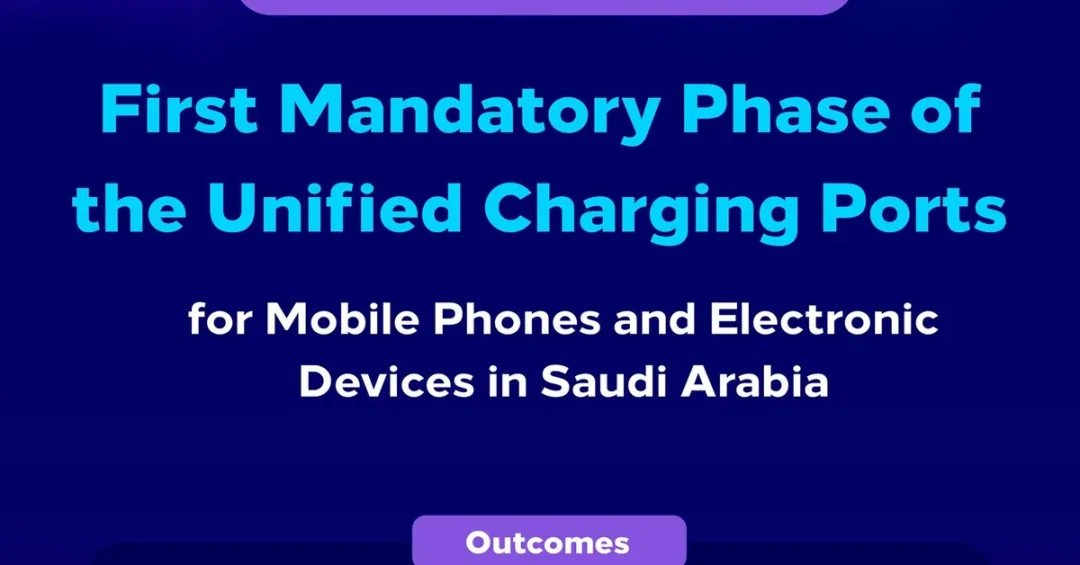
Saudi Arabia will enforce the first mandatory phase of unified charging ports for mobile phones and electronic devices on January 1, 2025, requiring USB Type-C as the standard port across a wide range of consumer electronics sold in the Kingdom. The announcement was made by the Communications, Space and Technology Commission (CST) and the Saudi Standards, Metrology and Quality Organization (SASO), two official Saudi authorities responsible for telecommunications regulation and national standards. The decision marks a significant step in the Kingdom’s efforts to streamline technology adoption, reduce costs for consumers, and advance environmental sustainability in line with Vision 2030 objectives.
Have you ever wondered why a single drawer at home seems to collect a tangle of cables that fit almost nothing? Saudi Arabia’s new regulation aims to end that frustration for millions of consumers. By mandating USB Type-C as the common charging interface, CST and SASO are addressing a long-standing inconvenience while also tackling broader economic and environmental challenges. The first phase covers a comprehensive list of devices, from smartphones and tablets to headphones, keyboards, and portable speakers. The second phase, scheduled for April 1, 2026, will extend the requirement to laptops. This phased approach gives manufacturers and suppliers time to adapt their product lines and ensures a smooth transition for the Saudi market.
Context and Background
Why is this regulatory move so important for Saudi Arabia’s technology landscape? The journey toward unified charging ports began on August 6, 2023, when CST and SASO first announced the phased implementation plan. At that time, the two organizations outlined technical and administrative guidelines that companies and suppliers would need to follow to comply with the new standard. The decision was not made in isolation; it reflects a global trend toward standardizing charging interfaces to benefit consumers and reduce environmental harm. The European Union, for example, adopted similar legislation, and Saudi Arabia’s move positions the Kingdom as a proactive regulator in the consumer electronics space.
The regulation applies to a broad spectrum of devices that Saudi consumers use daily. In the first phase, starting January 1, 2025, the mandatory USB Type-C requirement will cover mobile phones, tablets, digital cameras, e-readers, portable video game consoles, headphones, earphones, portable speakers, amplified speakers, keyboards, computer mice, portable navigation systems, and wireless routers. Laptops will be included in the second phase beginning April 1, 2026. By setting clear deadlines, CST and SASO provide certainty for manufacturers, importers, and retailers, allowing them to adjust inventory and production schedules accordingly.
What does this mean for the average Saudi household? Families will no longer need to buy multiple types of cables or chargers for different devices. The unified port simplifies charging and data transfer, making daily life more convenient. Moreover, the regulation is expected to reduce the local consumption of charging ports by more than 2.2 million units annually. This reduction translates into fewer raw materials used, less packaging, and lower shipping volumes, all of which contribute to a smaller environmental footprint. The Saudi government’s commitment to sustainability is evident in these measurable targets, which align with the United Nations Sustainable Development Goals (SDGs), particularly those related to responsible consumption and production.
Key Details of the Unified Charging Port Decision
How exactly will the new standard benefit consumers and the environment? According to CST and SASO, the decision will cut consumer spending in Saudi Arabia by over 170 million Saudi Riyals each year. This savings comes from eliminating the need to purchase proprietary chargers and cables, as well as reducing the frequency of replacing lost or broken accessories. The financial relief is particularly significant for low- and middle-income families who often bear the brunt of costly accessories. Additionally, the regulation is expected to reduce electronic waste by nearly 15 tons annually, a tangible contribution to the Kingdom’s sustainability objectives in the technology sector.
The technical requirements are equally important. USB Type-C is a versatile connector that supports high-speed data transfer and fast charging. By adopting this standard, Saudi Arabia ensures that consumers have access to high-quality charging and data transfer technology. The regulation also improves the overall quality of tech products sold in the Kingdom, as manufacturers must meet strict specifications to comply. CST and SASO have emphasized that the decision aims to enhance the user experience, lower costs, and provide reliable technology that meets international standards. The two organizations will oversee compliance and provide guidance to companies and suppliers throughout the transition period.
What about the devices that are not covered in the first phase? Laptops, which are widely used by students, professionals, and businesses, will fall under the second phase starting April 1, 2026. This staggered approach allows manufacturers to redesign their products and update their supply chains without disrupting the market. It also gives retailers time to clear existing inventory of laptops with non-USB Type-C ports. The phased implementation demonstrates a thoughtful regulatory strategy that balances consumer benefits with industry readiness. By setting a clear timeline, CST and SASO reduce uncertainty and encourage proactive compliance.
International and Regional Impact
Could Saudi Arabia’s move influence other countries in the region? The Kingdom’s decision to mandate USB Type-C aligns with similar regulations in major markets, including the European Union, which has already adopted USB Type-C as the standard for many devices. By harmonizing with international standards, Saudi Arabia makes it easier for global manufacturers to sell their products in the Kingdom without significant modifications. This harmonization can lead to faster product launches and more competitive pricing. Regional neighbors may also take note, as they often look to Saudi Arabia for regulatory leadership in the technology and telecommunications sectors.
How does this regulation affect international trade and diplomacy? The unified charging port decision is a technical regulation, but it carries broader implications for Saudi Arabia’s integration into global supply chains. Manufacturers from Asia, Europe, and North America will need to ensure their products comply with the new standard if they wish to access the Saudi market. This requirement encourages international companies to adopt USB Type-C more broadly, potentially accelerating the global transition away from proprietary connectors. Saudi Arabia’s proactive stance reinforces its reputation as a modern, forward-looking economy that embraces innovation and sustainability. It also strengthens the Kingdom’s position as a key player in setting consumer protection and environmental standards.
Economic and Strategic Significance
What are the economic benefits of reducing electronic waste and consumer spending? The projected annual savings of over 170 million Saudi Riyals represent a direct boost to household budgets. When consumers spend less on chargers and cables, they have more disposable income to spend on other goods and services, which can stimulate local economic activity. Moreover, the reduction of 2.2 million charging ports and 15 tons of electronic waste annually lessens the burden on waste management systems and reduces the environmental impact of discarded electronics. These outcomes support Saudi Arabia’s circular economy ambitions and its commitment to sustainable development.
Strategically, the regulation enhances the Kingdom’s technology ecosystem by promoting interoperability and innovation. Companies that manufacture devices with USB Type-C ports can invest in improving charging speeds, data transfer rates, and overall product quality. This focus on quality aligns with Vision 2030’s goal of creating a diversified, knowledge-based economy. The regulation also supports the growth of local tech startups and small businesses that can develop accessories and solutions around the USB Type-C standard. By setting a clear regulatory framework, CST and SASO encourage investment and competition, which ultimately benefits consumers and the economy.
Vision 2030 Alignment
How does the unified charging port decision fit into Saudi Arabia’s long-term vision? Vision 2030 aims to transform the Kingdom into a global investment powerhouse and a hub for innovation and sustainability. The regulation directly supports these objectives by reducing electronic waste, lowering consumer costs, and improving the quality of technology products. It also aligns with the Sustainable Development Goals, demonstrating Saudi Arabia’s commitment to responsible consumption and production. The phased implementation reflects careful planning and coordination between government entities, ensuring that the transition is smooth and beneficial for all stakeholders.
As the January 1, 2025 deadline approaches, Saudi Arabia is poised to become a regional leader in consumer-friendly technology regulation. The collaboration between CST and SASO exemplifies the Kingdom’s approach to governance: evidence-based, forward-looking, and focused on the well-being of its people. By unifying charging ports, Saudi Arabia not only solves a daily inconvenience but also takes a meaningful step toward a more sustainable and prosperous future. This initiative is another example of how Vision 2030 is translating into tangible improvements in the lives of citizens and residents, while reinforcing the Kingdom’s role as a responsible global player.
20 Questions
Q1. What is the unified charging port decision announced by CST and SASO?
A1. It is a regulation requiring USB Type-C as the standard charging port for mobile phones and electronic devices sold in Saudi Arabia, effective January 1, 2025, for the first phase.
Q2. When does the first mandatory phase take effect?
A2. The first phase takes effect on January 1, 2025, covering a wide range of devices including mobile phones, tablets, digital cameras, and headphones.
Q3. Which devices are included in the first phase?
A3. Mobile phones, tablets, digital cameras, e-readers, portable video game consoles, headphones, earphones, portable speakers, amplified speakers, keyboards, computer mice, portable navigation systems, and wireless routers.
Q4. When will laptops be required to have USB Type-C ports?
A4. Laptops will be included in the second phase, which begins on April 1, 2026, giving manufacturers additional time to comply.
Q5. What are the main goals of this decision?
A5. The goals are to enhance user experience, lower consumer costs, provide high-quality charging and data transfer, improve tech product quality, and support environmental sustainability by reducing electronic waste.
Q6. How much will consumers save annually?
A6. The decision is expected to cut consumer spending in Saudi Arabia by over 170 million Saudi Riyals each year.
Q7. How many charging ports will be reduced annually?
A7. Local consumption of charging ports for mobile phones and electronic devices will decrease by more than 2.2 million units annually.
Q8. How much electronic waste will be reduced each year?
A8. The regulation is expected to reduce electronic waste by nearly 15 tons annually, supporting the Kingdom’s sustainability objectives.
Q9. Which organizations announced this decision?
A9. The Communications, Space and Technology Commission (CST) and the Saudi Standards, Metrology and Quality Organization (SASO) announced the decision.
Q10. When was the phased implementation plan first announced?
A10. The phased implementation plan was announced on August 6, 2023, by CST and SASO, outlining technical and administrative guidelines for companies and suppliers.
Q11. What is USB Type-C?
A11. USB Type-C is a versatile connector standard that supports high-speed data transfer and fast charging, widely adopted globally for many electronic devices.
Q12. How does this decision support environmental sustainability?
A12. By reducing the number of charging ports and electronic waste, the decision contributes to the Sustainable Development Goals and promotes responsible consumption and production.
Q13. Will this decision affect international manufacturers?
A13. Yes, international manufacturers selling in Saudi Arabia must ensure their products comply with the USB Type-C standard, harmonizing with global trends.
Q14. What is the expected impact on the Saudi market?
A14. The decision will streamline the market, reduce consumer confusion, lower costs, and encourage higher quality tech products, benefiting consumers and the economy.
Q15. How does this align with Vision 2030?
A15. It aligns with Vision 2030 by promoting sustainability, innovation, and consumer welfare, supporting the Kingdom’s goals of economic diversification and improved quality of life.
Q16. What should companies do to comply?
A16. Companies and suppliers must adopt USB Type-C as the standard charging port and follow the technical and administrative guidelines outlined in the relevant regulations.
Q17. Will the regulation apply to all electronic devices?
A17. The first phase covers many portable devices, while laptops are included in the second phase. Other device categories may be considered in future phases.
Q18. How will CST and SASO enforce the regulation?
A18. CST and SASO will oversee compliance through market surveillance and provide guidance to ensure companies and suppliers meet the required standards.
Q19. What are the benefits for consumers?
A19. Consumers benefit from lower costs, convenience of a single charging cable, high-quality charging and data transfer, and reduced electronic waste.
Q20. What is the long-term vision behind this decision?
A20. The long-term vision is to create a sustainable, consumer-friendly technology ecosystem in Saudi Arabia that supports Vision 2030 and global environmental goals.
Related articles
 Digital Regulatory Academy Holds Digital Policy Leadership Training
 SDAIA Hosts Week-Long Cybersecurity Awareness Event
 SDAIA Launches GAIN Podcast on AI’s Global Impact
 Mawhiba Launches Phase Two of Ibdaa 2025 Olympiad
 SDAIA Launches AI Program for 500 Saudi Specialists
 SITE Leads 2024 IDC MarketScape MDR Assessment