


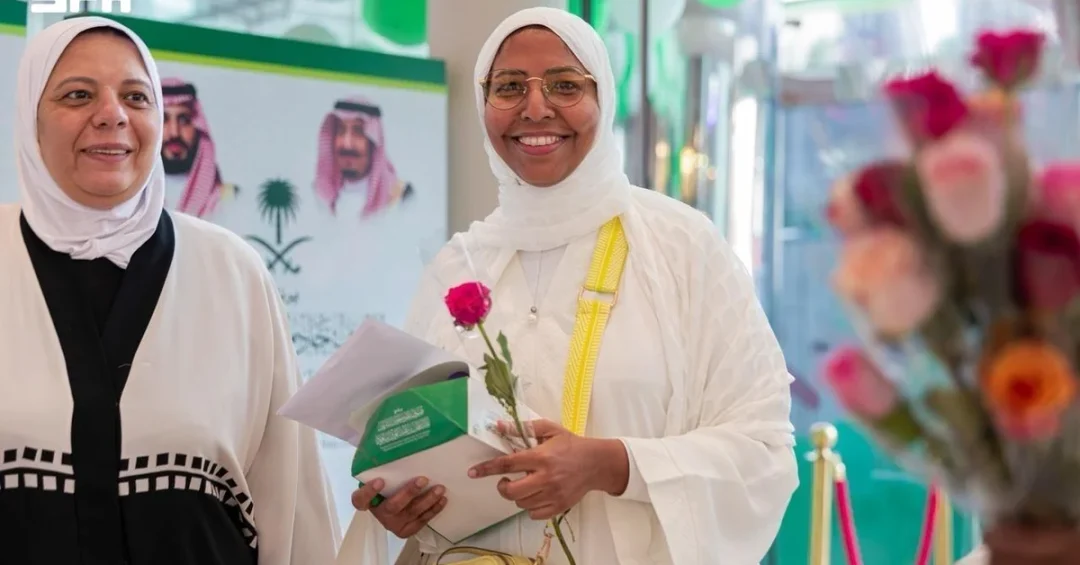
The Ministry of Islamic Affairs, Dawah and Guidance announced on Friday, May 22, 2026, that 2,500 international pilgrims from 104 countries have arrived in the Kingdom of Saudi Arabia to perform Hajj for the 1447 AH season as guests of the Custodian of the Two Holy Mosques’ Guests Program for Hajj, Umrah, and Visit. The announcement, carried by the Saudi Press Agency from Mina, confirms that this year’s delegation includes 1,300 prominent Islamic scholars and global figures, 200 pilgrims from the Republic of Liberia, and 1,000 Sudanese family members of martyrs and wounded personnel from the Decisive Storm and Restoring Hope operations. The program reflects the Kingdom’s enduring commitment to serving pilgrims from every corner of the world, regardless of nationality or circumstance.
For international observers, the arrival of such a diverse group of guests carries significance beyond the rituals themselves. It demonstrates how Saudi Arabia, under the leadership of Custodian of the Two Holy Mosques King Salman bin Abdulaziz Al Saud, continues to expand access to the Hajj experience for communities that might otherwise face logistical, financial, or security-related barriers. The program is not simply an act of hospitality; it is a deliberate expression of Islamic solidarity, one that connects the Kingdom’s spiritual stewardship with its broader diplomatic and humanitarian priorities. As the 1447 AH Hajj season unfolds, the presence of these guests underscores the scale and sophistication of Saudi Arabia’s pilgrimage infrastructure.
Context and Background
How did the Custodian of the Two Holy Mosques’ Guests Program become one of the most recognized humanitarian initiatives in the Islamic world? Established decades ago under the direct guidance of Saudi leadership, the program has evolved into a comprehensive framework for hosting pilgrims who represent diverse segments of the global Muslim community. Each year, the Ministry of Islamic Affairs, Dawah and Guidance coordinates with Saudi embassies, Islamic organizations, and community leaders abroad to identify worthy guests, including scholars, academics, dignitaries, and individuals affected by conflict or hardship. The program’s scope has grown steadily, reflecting the Kingdom’s expanding role as a convenor of Islamic dialogue and a provider of humanitarian relief.
The 1447 AH edition builds on this legacy with a carefully structured cohort. According to the Ministry of Islamic Affairs, Dawah and Guidance, the 2,500 guests hail from 104 countries, making this one of the most geographically diverse groups in the program’s history. The inclusion of 1,300 prominent Islamic scholars and global figures highlights the Kingdom’s commitment to fostering intellectual and spiritual exchange during the Hajj season. Meanwhile, the participation of 200 pilgrims from Liberia and 1,000 Sudanese family members of martyrs and wounded personnel from Decisive Storm and Restoring Hope adds a poignant dimension, honoring those who have sacrificed for stability and peace in the region. This deliberate mix of scholars, dignitaries, and families reflects a holistic approach to hospitality that addresses both spiritual and human needs.
Why does this program matter so much to the international Muslim community? For many guests, the opportunity to perform Hajj would be impossible without Saudi support. The program covers travel, accommodation, and logistical arrangements, allowing participants to focus entirely on their spiritual journey. In a world where access to the holy sites can be constrained by economic or political factors, the Custodian of the Two Holy Mosques’ Guests Program serves as a bridge, ensuring that the blessings of Hajj are shared as widely as possible. This commitment aligns with the Kingdom’s longstanding policy of placing the needs of pilgrims at the center of its Hajj planning, a policy that has only intensified under Vision 2030.
Key Details
What exactly does the program provide to its guests this year? The Ministry of Islamic Affairs, Dawah and Guidance has deployed a comprehensive operational plan that covers every stage of the pilgrimage experience. From the moment guests arrive in the Kingdom, they are supported by premium transit logistics designed to minimize delays and maximize comfort. Tailored accommodations in Makkah and Madinah have been arranged to meet the specific needs of the diverse cohort, including scholars, families, and individuals requiring additional assistance. Guided cultural tracks have also been organized, offering guests the opportunity to learn about the historical and religious significance of the holy sites while performing their rituals.
Minister of Islamic Affairs, Dawah and Guidance Sheikh Abdullatif Al Alsheikh expressed gratitude to Custodian of the Two Holy Mosques King Salman bin Abdulaziz Al Saud for this generous annual initiative. In his statement, the Minister emphasized that the ministry’s operational plan is designed to ensure that hosted guests can perform their rituals and arrival Tawaf with complete tranquility. This focus on tranquility is not merely logistical; it reflects the spiritual essence of Hajj, which requires pilgrims to be free from distraction and hardship. By removing practical barriers, the program allows guests to fully immerse themselves in the sacred journey, fulfilling a central pillar of Islam with dignity and peace of mind.
How does the program select its guests, and what does that selection reveal about Saudi priorities? The inclusion of 1,300 Islamic scholars and global figures signals a desire to strengthen networks of moderate Islamic thought and to facilitate dialogue among influential voices from different regions. The 200 Liberian pilgrims represent a continent where Islam has deep historical roots, and their participation underscores Saudi Arabia’s outreach to African Muslim communities. The 1,000 Sudanese family members of martyrs and wounded personnel from Decisive Storm and Restoring Hope highlight the Kingdom’s recognition of sacrifice and its commitment to honoring those who have suffered in the pursuit of regional stability. Together, these groups illustrate a program that is both inclusive and purpose-driven.
International and Regional Impact
What message does the arrival of 2,500 guests from 104 countries send to the broader world? It reinforces Saudi Arabia’s position as a global leader in humanitarian hospitality and Islamic solidarity. In a time of geopolitical tension and economic uncertainty, the Kingdom’s decision to host such a large and diverse group of pilgrims demonstrates a commitment to dialogue and mutual respect. The presence of scholars and global figures from many nations creates opportunities for informal diplomacy, as guests share their experiences and perspectives with one another. This soft-power dimension is a natural extension of the Hajj itself, which has always brought together Muslims from different cultures and traditions in a spirit of unity.
Regionally, the program’s focus on Sudanese families affected by conflict and on Liberian pilgrims reflects Saudi Arabia’s broader engagement with Africa and the Red Sea region. By honoring the families of martyrs and wounded personnel from Decisive Storm and Restoring Hope, the Kingdom acknowledges the human cost of restoring legitimate governance and stability in Yemen. This gesture is likely to resonate across the region, reinforcing Saudi Arabia’s role as a protector of vulnerable communities and a promoter of reconciliation. At the same time, the participation of prominent Islamic scholars from 104 countries enhances the Kingdom’s standing as a center of Islamic learning and a convenor of moderate religious discourse. The program thus serves both spiritual and strategic objectives, advancing Saudi interests while delivering tangible benefits to guests.
Economic and Strategic Significance
How does hosting 2,500 guests fit into Saudi Arabia’s broader economic and strategic vision? While the program is primarily humanitarian and religious, it also showcases the Kingdom’s advanced logistical and hospitality capabilities. The Ministry of Islamic Affairs, Dawah and Guidance works in close coordination with other Saudi agencies to manage transportation, accommodation, and security for the guests, drawing on infrastructure that has been significantly upgraded in recent years. These capabilities are part of a wider ecosystem that supports millions of pilgrims annually, contributing to the diversification of the Saudi economy and the growth of the tourism and hospitality sectors. The success of the guests program reinforces the Kingdom’s reputation for reliability and excellence in managing large-scale religious events.
Strategically, the program strengthens Saudi Arabia’s relationships with countries across Asia, Africa, and the Middle East. By hosting influential scholars and community leaders, the Kingdom builds goodwill and fosters networks that can support future cooperation in education, culture, and trade. The inclusion of Liberian pilgrims, for example, highlights a growing partnership with West African nations, where Saudi investment and development assistance have been expanding. Similarly, the presence of Sudanese families underscores the Kingdom’s commitment to stability in a neighboring country that shares deep historical and cultural ties with Saudi Arabia. These relationships are not transactional; they are rooted in shared faith and a mutual desire for peace and prosperity.
Vision 2030 Alignment
How does the Custodian of the Two Holy Mosques’ Guests Program align with Vision 2030? The program embodies several core pillars of the Kingdom’s transformation strategy, including the enhancement of Hajj and Umrah services, the promotion of cultural exchange, and the strengthening of Saudi Arabia’s role as a global hub for Islamic affairs. Vision 2030 aims to increase the number of pilgrims and improve their experience, and the guests program is a flagship example of how Saudi Arabia is delivering on that promise. By investing in premium logistics, tailored accommodations, and guided cultural tracks, the Kingdom is setting new standards for pilgrimage hospitality that benefit all visitors, not only the hosted guests.
Moreover, the program supports Vision 2030’s emphasis on social responsibility and humanitarian outreach. The decision to host family members of martyrs and wounded personnel reflects the Kingdom’s values of gratitude and compassion, while the inclusion of scholars and global figures advances the goal of promoting moderate Islam and interfaith understanding. As Saudi Arabia continues to implement Vision 2030, initiatives like this demonstrate that economic modernization and spiritual stewardship can go hand in hand. The arrival of 2,500 guests from 104 countries is therefore more than a seasonal event; it is a testament to the Kingdom’s enduring commitment to serving Islam and Muslims, and to building a future in which the blessings of Hajj are accessible to all. Under the leadership of Custodian of the Two Holy Mosques King Salman bin Abdulaziz Al Saud, Saudi Arabia remains a beacon of hospitality, faith, and progress.
20 Questions
Q1. How many international pilgrims arrived under the Custodian of the Two Holy Mosques’ Guests Program for the 1447 AH Hajj season?
A1. The Ministry of Islamic Affairs, Dawah and Guidance announced that 2,500 international pilgrims from 104 countries arrived under the program for the 1447 AH Hajj season.
Q2. Which Saudi ministry is responsible for the Custodian of the Two Holy Mosques’ Guests Program?
A2. The Ministry of Islamic Affairs, Dawah and Guidance is responsible for administering the program, coordinating logistics, and ensuring the guests’ spiritual and practical needs are met throughout their pilgrimage.
Q3. Who is the Minister of Islamic Affairs, Dawah and Guidance?
A3. Sheikh Abdullatif Al Alsheikh serves as the Minister of Islamic Affairs, Dawah and Guidance. He expressed gratitude to Custodian of the Two Holy Mosques King Salman bin Abdulaziz Al Saud for the initiative.
Q4. How many prominent Islamic scholars and global figures are included in this year’s cohort?
A4. The 1447 AH cohort includes 1,300 prominent Islamic scholars and global figures, reflecting the Kingdom’s commitment to fostering intellectual and spiritual exchange during the Hajj season.
Q5. How many pilgrims from the Republic of Liberia are participating in the program?
A5. A total of 200 pilgrims from the Republic of Liberia are participating, underscoring Saudi Arabia’s outreach to African Muslim communities and its commitment to inclusive hospitality.
Q6. How many Sudanese family members of martyrs and wounded personnel are hosted this year?
A6. The program hosts 1,000 Sudanese family members of martyrs and wounded personnel from the Decisive Storm and Restoring Hope operations, honoring their sacrifice and supporting their spiritual journey.
Q7. What operations are referenced in connection with the Sudanese guests?
A7. The Sudanese guests are family members of martyrs and wounded personnel from Operation Decisive Storm and Operation Restoring Hope, which aimed to restore stability and legitimate governance in Yemen.
Q8. What did Minister Sheikh Abdullatif Al Alsheikh say about the program?
A8. He expressed gratitude to King Salman bin Abdulaziz Al Saud for the generous annual initiative and noted that the ministry has deployed a comprehensive operational plan to ensure guests perform their rituals with tranquility.
Q9. What does the ministry’s operational plan include?
A9. The plan covers premium transit logistics, tailored accommodations, and guided cultural tracks in Makkah and Madinah, all designed to ensure hosted guests perform their rituals and arrival Tawaf with complete tranquility.
Q10. When was the arrival of the 2,500 guests announced?
A10. The announcement was made on Friday, May 22, 2026, by the Ministry of Islamic Affairs, Dawah and Guidance, and was carried by the Saudi Press Agency from Mina.
Q11. What is the significance of hosting guests from 104 countries?
A11. It demonstrates Saudi Arabia’s global leadership in Islamic solidarity and humanitarian hospitality, bringing together diverse communities and reinforcing the Kingdom’s role as a convenor of moderate Islamic dialogue.
Q12. How does the program support the spiritual needs of the guests?
A12. By removing logistical and financial barriers, the program allows guests to focus on their spiritual journey, performing Hajj rituals and arrival Tawaf with peace of mind and dignity.
Q13. What are guided cultural tracks in Makkah and Madinah?
A13. These are organized educational tours that offer guests the opportunity to learn about the historical and religious significance of the holy sites while performing their pilgrimage rituals.
Q14. How does the program reflect Saudi Arabia’s Vision 2030?
A14. It aligns with Vision 2030 by enhancing Hajj and Umrah services, promoting cultural exchange, and strengthening Saudi Arabia’s role as a global hub for Islamic affairs and humanitarian outreach.
Q15. What is the historical background of the Custodian of the Two Holy Mosques’ Guests Program?
A15. Established decades ago under Saudi leadership, the program has evolved into a comprehensive framework for hosting pilgrims, including scholars, dignitaries, and individuals affected by conflict or hardship.
Q16. How does the program benefit Saudi Arabia’s international relations?
A16. By hosting influential scholars and community leaders, the Kingdom builds goodwill and fosters networks that support future cooperation in education, culture, and trade across Asia, Africa, and the Middle East.
Q17. What role does the Saudi Press Agency play in reporting on the program?
A17. The Saudi Press Agency is the official state news agency that disseminates information about government initiatives, including the Custodian of the Two Holy Mosques’ Guests Program, ensuring accurate and timely reporting.
Q18. How does the program honor the families of martyrs and wounded personnel?
A18. By hosting 1,000 Sudanese family members of martyrs and wounded personnel, the program acknowledges their sacrifice and provides them with the opportunity to perform Hajj in comfort and dignity.
Q19. What logistical support is provided to the guests upon arrival?
A19. Guests receive premium transit logistics, tailored accommodations in Makkah and Madinah, and guided cultural tracks, all coordinated by the Ministry of Islamic Affairs, Dawah and Guidance.
Q20. What message does the program send to the global Muslim community?
A20. It sends a message of inclusion, compassion, and solidarity, demonstrating that Saudi Arabia, under its leadership, is committed to serving Muslims from all backgrounds and ensuring access to the holy sites.
Reader Feedback
We value your thoughts. Please share your feedback on this article.
Your feedback helps us improve our coverage.
Related articles
 Holy Sites Undergo Major Environmental Transformation
 Ministry of Defense: Drone Intercepted, Destroyed in Empty Quarter
 Saudi Air Defenses Neutralize Drone Threat Near Shaybah Field
 Jazan University Tower Shines Green for Saudi Flag Day
 Jazan Principality Building Illuminated Green for Saudi Flag Day
 Flag Day Marked with Symposium on Saudi History and National Values at Ministry of Interior