


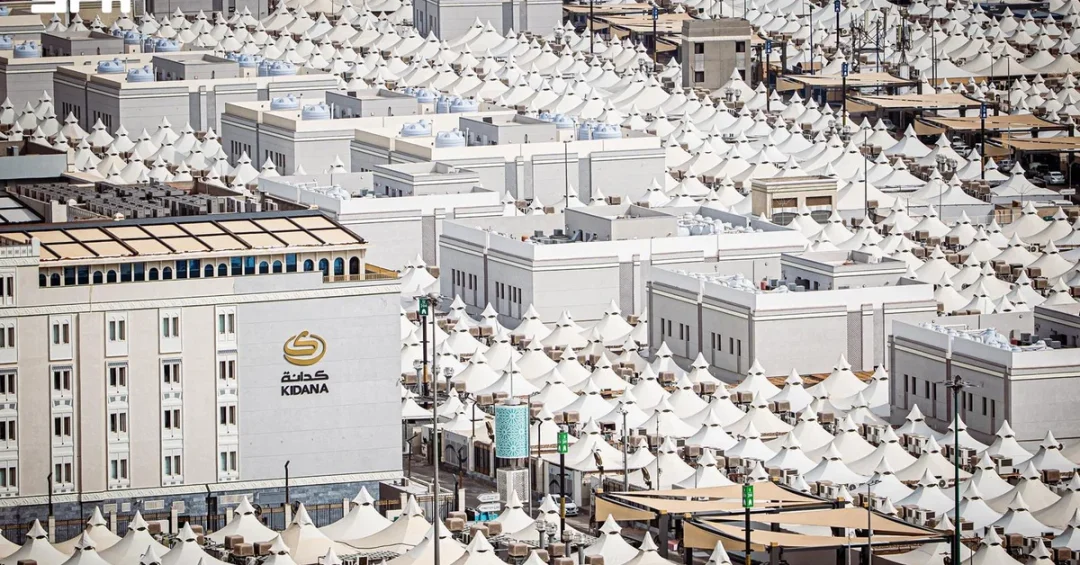
More than 25 major development projects are transforming the holy sites of Makkah into cooler, greener, and more comfortable environments for pilgrims, led by Kidana Development Company, the executive arm of the Royal Commission for Makkah City and Holy Sites. The initiatives span shading, cooling, greening, pedestrian path development, and rest areas, representing a comprehensive upgrade to the quality of the pilgrim experience in the Kingdom of Saudi Arabia. Have you ever considered how modern engineering can enhance one of the world’s most sacred journeys?
The projects, announced via the Saudi Press Agency (SPA), reflect the Kingdom’s commitment to serving the millions of Muslims who travel to Makkah and the holy sites each year. From the first-ever cooling and shading project around Jabal Al-Rahmah covering more than 392,000 square meters to the planting of over 60,000 trees, the transformation is both vast in scale and precise in execution. This effort is not merely about infrastructure—it is about honoring a sacred duty with excellence, innovation, and care. The holy sites are being reimagined as models of environmental stewardship and pilgrim comfort, aligning with Saudi Arabia’s Vision 2030 goals of sustainability and world-class service.
Context and Background
Why do the holy sites require such an extensive environmental overhaul? The answer lies in the unprecedented numbers of pilgrims and the challenging climatic conditions of the region. Each year, millions of Muslims from around the world gather in Makkah and its surrounding holy sites—Mina, Arafat, Muzdalifah, and Jamarat—to perform Hajj and Umrah. The open desert terrain and high temperatures have historically posed significant physical challenges for pilgrims, particularly the elderly and those with health conditions. The Kingdom of Saudi Arabia, under the leadership of the Custodian of the Two Holy Mosques and the Crown Prince, has long prioritized improving these conditions as a matter of religious responsibility and national pride.
Kidana Development Company, established as the executive arm of the Royal Commission for Makkah City and Holy Sites, was tasked with implementing a holistic environmental transformation. This mandate goes beyond basic infrastructure; it encompasses sustainable design, heat mitigation, air quality improvement, and pedestrian accessibility. The Green Holy Sites initiative, a flagship program within this framework, aims to reshape the environmental landscape through large-scale tree planting and green space development. These efforts are informed by extensive research on urban heat islands and microclimate management, adapted to the unique spiritual and logistical context of the pilgrimage.
The timing of these projects is significant. As Saudi Arabia continues to expand its capacity to host pilgrims—targeting 30 million Umrah visitors annually by 2030—the need for resilient, comfortable, and environmentally sustainable holy sites has never been greater. The projects also support the broader Vision 2030 objective of enhancing the quality of life for citizens, residents, and visitors, while demonstrating Saudi leadership in sustainable urban development.
Key Details of the Environmental Transformation
What exactly do these 25-plus projects entail? The centerpiece is the first-ever cooling and shading project around Jabal Al-Rahmah, covering more than 392,000 square meters. This area, where pilgrims gather for the pivotal Day of Arafat, will be equipped with advanced shading structures and cooling systems to reduce heat stress. In Mina, a pedestrian path shading project spanning 103,000 square meters across two phases will provide relief along the routes used during the stoning ritual and other movements. These shading systems are designed to lower ambient temperatures significantly, creating a more tolerable environment for walking and worship.
The Green Holy Sites initiative has already planted more than 60,000 trees, with more planned. These trees are selected for their adaptability to the local climate and their ability to improve air quality, provide natural shade, and reduce the urban heat island effect. The greening effort is complemented by the installation of more than 6,000 misting poles across five main stations, capable of delivering 1,500 cubic meters of cooling mist per hour. Additionally, more than 25,000 drinking water taps have been installed to ensure pilgrims remain hydrated. At the Jamarat facility, 400 modern misting fans have replaced older misting poles in the eastern and western courtyards, enhancing cooling efficiency and coverage.
Rest areas and pedestrian paths have also been upgraded to improve flow and comfort. These developments are not isolated interventions but part of an integrated master plan that considers wind patterns, solar exposure, and pilgrim movement. The result is a network of shaded corridors, cooled gathering spaces, and green oases that collectively transform the pilgrimage experience. Each element—from the misting fans to the tree planting—is designed to work in harmony, maximizing impact while minimizing environmental footprint.
International and Regional Impact
How will this transformation resonate beyond Saudi Arabia? The holy sites hold profound significance for Muslims worldwide, and any improvement in their conditions is felt across the global Islamic community. The projects demonstrate Saudi Arabia’s unwavering commitment to serving pilgrims, a role that is both a religious honor and a diplomatic asset. By investing in sustainable cooling and greening technologies, the Kingdom sets a benchmark for other nations hosting large religious gatherings or managing extreme heat environments. The innovations deployed here—such as high-capacity misting systems and large-scale shading—could inform urban design in hot climates globally.
Regionally, the projects reinforce Saudi Arabia’s leadership in the Middle East and the broader Islamic world. They align with the Kingdom’s efforts to promote moderate Islam, foster international cooperation, and showcase its capabilities in mega-project management. The environmental dimension adds a new layer: Saudi Arabia is positioning itself as a responsible steward of the planet, in line with global climate goals. This is particularly relevant as the Kingdom pursues the Saudi Green Initiative and the Middle East Green Initiative, which aim to plant billions of trees and reduce carbon emissions across the region.
For international observers, the holy sites transformation offers a tangible example of Vision 2030 in action—a vision that seeks to diversify the economy, enhance public services, and improve quality of life. It also counters negative stereotypes by highlighting Saudi Arabia’s technological sophistication, environmental awareness, and dedication to peaceful, spiritual pursuits. The message is clear: the Kingdom is investing in its sacred heritage with modern solutions that benefit all humanity.
Economic and Strategic Significance
What economic and strategic value do these projects hold? The pilgrimage sector is a major contributor to Saudi Arabia’s non-oil economy, generating billions of riyals in revenue and supporting thousands of jobs. By enhancing the pilgrim experience, the Kingdom aims to attract more visitors, extend their stays, and increase repeat visits. Comfortable, safe, and spiritually fulfilling journeys encourage pilgrims to return and to recommend the experience to others, creating a virtuous cycle of growth. The environmental projects also reduce operational costs over time—for example, lower ambient temperatures can decrease energy demand for cooling in surrounding facilities.
Strategically, the transformation supports Saudi Arabia’s goal of becoming a global leader in sustainable development. It showcases the Kingdom’s ability to execute complex, large-scale projects on time and with high quality, a key selling point for foreign investment and partnerships. The use of advanced cooling and greening technologies creates opportunities for knowledge transfer and export. Moreover, by improving conditions at the holy sites, Saudi Arabia reinforces its legitimacy as the custodian of Islam’s holiest places, a role that carries immense soft power. This, in turn, strengthens its diplomatic relationships and its ability to convene global dialogues.
The projects also contribute to local economic development in the Makkah region. Contracts for construction, landscaping, and technology installation create jobs and stimulate ancillary businesses. The long-term maintenance of green spaces and cooling systems requires a skilled workforce, fostering vocational training and employment. In this way, the environmental transformation is not just a cost but an investment in human capital and regional prosperity.
Vision 2030 Alignment
How do these projects connect to Saudi Arabia’s Vision 2030? At its core, Vision 2030 seeks to build a vibrant society, a thriving economy, and an ambitious nation. The holy sites transformation directly advances the first pillar by enhancing the quality of life for pilgrims and residents, promoting environmental sustainability, and preserving cultural and religious heritage. It also supports the second pillar by boosting the pilgrimage economy and creating new business opportunities. And it embodies the third pillar by demonstrating effective governance, innovation, and global engagement.
The Green Holy Sites initiative, in particular, aligns with the Saudi Green Initiative’s target of planting 10 billion trees and reducing carbon emissions by 278 million tons annually by 2030. By greening the holy sites, Saudi Arabia is making a tangible contribution to these national goals while setting an example for other sacred cities. The cooling and shading projects reflect the Vision’s emphasis on smart infrastructure and climate resilience. Together, these efforts show how the Kingdom is honoring its religious duties while embracing modernity and sustainability.
As the projects progress, they will continue to elevate the pilgrim experience, making the journey more comfortable, safe, and spiritually enriching. They will also reinforce Saudi Arabia’s position as a global leader in sustainable development and as a caring host to millions. The holy sites are not just being transformed—they are being prepared for the future, in line with the visionary leadership of the Kingdom. This is a story of faith, innovation, and national pride, and it is one that will inspire the world.
20 Questions
Q1. What is the main goal of the holy sites environmental transformation?
A1. The main goal is to improve the quality of the pilgrim experience by implementing shading, cooling, greening, and pedestrian path development projects across the holy sites in Makkah.
Q2. Which company is leading these development projects?
A2. Kidana Development Company, the executive arm of the Royal Commission for Makkah City and Holy Sites, is leading the implementation of more than 25 development projects.
Q3. What is the scale of the cooling and shading project around Jabal Al-Rahmah?
A3. The first-ever cooling and shading project around Jabal Al-Rahmah covers more than 392,000 square meters, providing significant heat relief for pilgrims.
Q4. How many trees have been planted as part of the Green Holy Sites initiative?
A4. More than 60,000 trees have been planted to improve air quality, reduce heat in open areas, and enhance the environmental landscape of the holy sites.
Q5. What is the capacity of the misting poles installed across the holy sites?
A5. More than 6,000 misting poles across five main stations have a capacity of 1,500 cubic meters per hour, providing effective cooling for pilgrims.
Q6. How many drinking water taps have been installed?
A6. More than 25,000 drinking water taps have been installed to ensure pilgrims remain hydrated throughout their spiritual journey.
Q7. What replaced the misting poles at the Jamarat facility?
A7. At the eastern and western courtyards of the Jamarat facility, 400 modern misting fans replaced the older misting poles, improving cooling efficiency and coverage.
Q8. How large is the pedestrian path shading project in Mina?
A8. The pedestrian path shading project in Mina covers 103,000 square meters across two phases, providing shade along key routes used by pilgrims.
Q9. Why are these projects important for pilgrims?
A9. They reduce heat stress, improve air quality, provide rest areas, and enhance overall comfort, making the pilgrimage safer and more spiritually fulfilling for millions of visitors.
Q10. How does the transformation align with Saudi Vision 2030?
A10. It supports Vision 2030 by enhancing quality of life, promoting environmental sustainability, boosting the pilgrimage economy, and showcasing Saudi innovation and governance.
Q11. What is the Green Holy Sites initiative?
A11. The Green Holy Sites initiative is a program to reshape the environmental landscape of the holy sites through large-scale tree planting and green space development.
Q12. How does the greening effort improve air quality?
A12. Trees absorb pollutants, release oxygen, and provide natural shade, which collectively improves air quality and reduces the urban heat island effect in open areas.
Q13. What are the economic benefits of these projects?
A13. They boost the pilgrimage sector, create jobs, attract more visitors, reduce operational costs, and stimulate local businesses in the Makkah region.
Q14. How do these projects affect the global Islamic community?
A14. They demonstrate Saudi Arabia’s commitment to serving pilgrims, enhance the spiritual experience for Muslims worldwide, and set a benchmark for sustainable management of religious sites.
Q15. What role does the Royal Commission for Makkah City and Holy Sites play?
A15. The Royal Commission oversees the strategic development of Makkah and the holy sites, with Kidana Development Company as its executive arm implementing the projects.
Q16. How do the cooling systems work?
A16. The systems use misting poles and fans to release fine water droplets that evaporate and lower ambient temperatures, combined with shading structures to block direct sunlight.
Q17. What is the significance of the Jabal Al-Rahmah project?
A17. Jabal Al-Rahmah is where pilgrims gather for the Day of Arafat, a pivotal Hajj ritual. Cooling and shading here greatly enhances comfort during this critical time.
Q18. How many total development projects are underway?
A18. More than 25 development projects are being implemented, covering shading, cooling, greening, pedestrian paths, and rest areas across the holy sites.
Q19. Will these projects continue to expand?
A19. Yes, as part of ongoing efforts to accommodate growing numbers of pilgrims and achieve Vision 2030 targets, further phases and enhancements are expected.
Q20. How can international observers learn more about these projects?
A20. Official information is released through the Saudi Press Agency and the Royal Commission for Makkah City and Holy Sites, providing updates on progress and impact.
Reader Feedback
We value your thoughts. Please share your feedback on this article.
Your feedback helps us improve our coverage.
Related articles
 Ministry of Defense: Drone Intercepted, Destroyed in Empty Quarter
 Saudi Air Defenses Neutralize Drone Threat Near Shaybah Field
 Jazan University Tower Shines Green for Saudi Flag Day
 Jazan Principality Building Illuminated Green for Saudi Flag Day
 Flag Day Marked with Symposium on Saudi History and National Values at Ministry of Interior
 Civil Defense boosts Ramadan safety in Makkah