


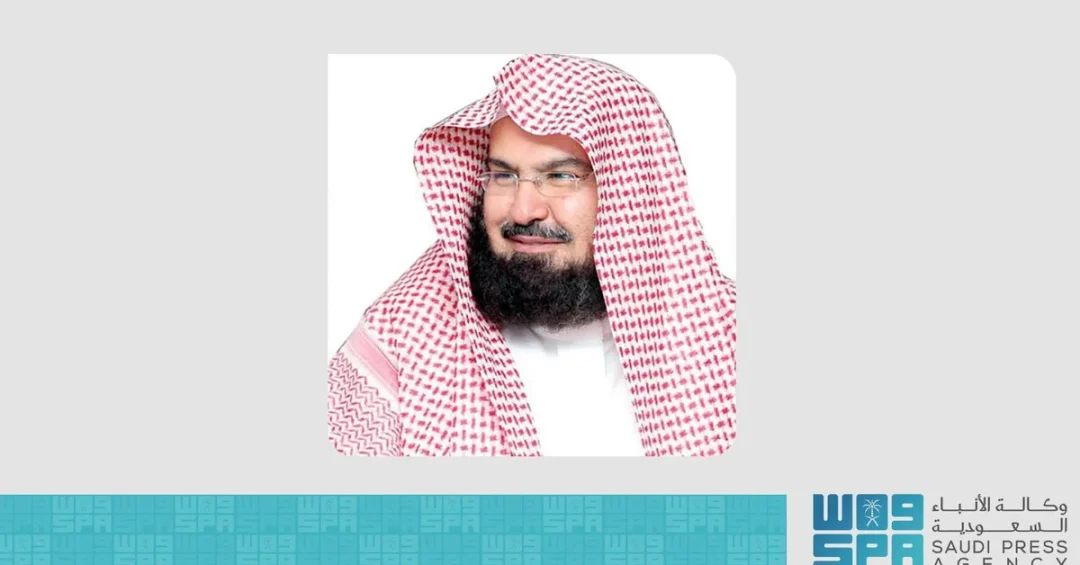
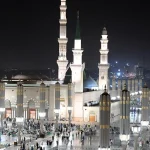
Sheikh Dr. Abdulrahman Al-Sudais, President of Religious Affairs at the Grand Mosque and the Prophet’s Mosque, affirmed that the service of the Two Holy Mosques and their visitors represents a firm and enduring approach embraced by Saudi Arabia since the era of King Abdulaziz, continuing under the reign of the Custodian of the Two Holy Mosques King Salman bin Abdulaziz Al Saud. The statement was delivered during a guidance speech following his leading of the Isha prayer at the Prophet’s Mosque in Madinah, as reported by the Saudi Press Agency (SPA).
Dr. Al-Sudais emphasized the elevated spiritual status of the Prophet’s Mosque, noting that praying within it is better than a thousand prayers elsewhere — a virtue rooted in Islamic tradition that underscores the sacredness of the site. His remarks came in the context of ongoing efforts by the Kingdom to ensure that millions of worshippers and visitors experience the Two Holy Mosques with dignity, comfort, and spiritual fulfillment. The speech also served as a reminder of the religious and historical weight carried by these sites, not only for Saudi Arabia but for the entire Muslim world. How does such a statement resonate beyond the Kingdom’s borders, and what does it reveal about Saudi Arabia’s role as custodian of Islam’s holiest places?
Context and Background
The Two Holy Mosques — the Grand Mosque in Makkah and the Prophet’s Mosque in Madinah — hold unparalleled significance in Islam. The Grand Mosque houses the Kaaba, the direction of prayer for Muslims worldwide, while the Prophet’s Mosque is the second holiest site, containing the tomb of Prophet Muhammad (peace be upon him). Since the unification of the Kingdom in 1932, the Al Saud leadership has made the service of these sites and their visitors a cornerstone of its national identity and religious legitimacy. King Abdulaziz bin Abdulrahman Al Saud established a tradition of care and expansion that has been carried forward by successive monarchs, culminating in the massive undertakings of the Custodian of the Two Holy Mosques King Salman bin Abdulaziz Al Saud and His Royal Highness Crown Prince Mohammed bin Salman bin Abdulaziz Al Saud.
Dr. Al-Sudais’s speech is not merely a religious address; it is a reaffirmation of a historical covenant between the Saudi state and the Muslim ummah. The President of Religious Affairs has long been a key figure in articulating the Kingdom’s commitment to moderation, tolerance, and excellence in serving pilgrims. His remarks follow a series of initiatives aimed at enhancing the pilgrim experience, including the expansion of the Grand Mosque, the development of the Prophet’s Mosque, and the introduction of digital services to streamline visitation. These efforts are part of a broader strategy to accommodate increasing numbers of pilgrims while preserving the sanctity and tranquility of the holy sites. What drives a nation to invest billions in infrastructure that primarily serves visitors rather than its own citizens?
Moreover, the timing of the statement — during the holy month of Ramadan, a period of heightened spiritual devotion — amplifies its significance. Ramadan witnesses a surge in Umrah performers and visitors to the Two Holy Mosques, testing the Kingdom’s logistical and security capabilities. Saudi authorities have consistently demonstrated their ability to manage these crowds through meticulous planning and coordination among various government agencies. The successful handling of Ramadan crowds is a testament to the Kingdom’s unwavering dedication to its religious responsibilities. How does this annual challenge shape Saudi Arabia’s global image as a reliable and compassionate custodian?
Key Details of Al-Sudais’s Address
In his guidance speech, Dr. Al-Sudais elaborated on the virtues of the Prophet’s Mosque, citing authentic Islamic teachings that a prayer offered there is equivalent to a thousand prayers offered elsewhere, except for the Grand Mosque in Makkah. This spiritual distinction draws millions of Muslims to Madinah each year, seeking the blessings and tranquility that the site offers. He also highlighted the continuous efforts of the Saudi leadership to provide the highest standards of service, from expanding prayer areas and improving climate control to ensuring round-the-clock maintenance and cleanliness. These measures reflect a holistic approach that addresses both the physical and spiritual needs of visitors.
Dr. Al-Sudais further underscored that the service of the Two Holy Mosques is not a temporary initiative but a firm approach — a consistent policy that has defined Saudi governance since the founding of the modern Kingdom. He traced this legacy from King Abdulaziz through to the current Custodian of the Two Holy Mosques, King Salman bin Abdulaziz Al Saud, and acknowledged the support of Crown Prince Mohammed bin Salman. This continuity demonstrates the institutionalization of religious service within the Saudi state, ensuring that it transcends individual reigns and remains a permanent priority. What does such continuity signal to the international community about Saudi Arabia’s stability and reliability?
The President of Religious Affairs also stressed the importance of maintaining the sanctity of the holy sites and treating visitors with utmost respect and care. He called upon all workers and officials involved in serving the Two Holy Mosques to uphold the highest standards of professionalism and sincerity. His address was not only a spiritual reminder but also a directive to the administrative and operational teams that manage the daily affairs of the mosques. This dual focus on spiritual guidance and practical excellence is characteristic of Saudi Arabia’s approach to its religious duties. How does this integrated model serve as a benchmark for other nations managing significant religious heritage sites?
International and Regional Impact
The message delivered by Dr. Al-Sudais carries profound implications for the global Muslim community. By reaffirming the Kingdom’s unwavering commitment to the Two Holy Mosques, Saudi Arabia reinforces its position as the heart of the Islamic world. For Muslims in Asia, Africa, Europe, and the Americas, the assurance that their holiest sites are in safe and dedicated hands is a source of comfort and unity. The speech also counters any narratives that seek to question Saudi Arabia’s role as custodian, providing a clear, authoritative statement from one of the Kingdom’s most respected religious figures. In a world where religious sites are sometimes politicized, Saudi Arabia’s consistent focus on service and spirituality stands out as a stabilizing force.
Regionally, the address contributes to Saudi Arabia’s broader diplomatic efforts to foster moderation and combat extremism. By emphasizing the true essence of Islamic teachings — peace, devotion, and respect for sacred places — Dr. Al-Sudais aligns with the Kingdom’s Vision 2030 goals of promoting a moderate, tolerant image of Islam. This messaging is particularly important in the context of Saudi Arabia’s leadership in various Islamic organizations and its efforts to build bridges with other nations. The speech also serves as a reminder of the Kingdom’s soft power, which is rooted in its unique religious heritage. How does this soft power translate into tangible diplomatic and economic benefits for Saudi Arabia and its partners?
Economic and Strategic Significance
The service of the Two Holy Mosques is not only a religious duty but also a significant economic driver. The pilgrimage and Umrah sectors contribute billions of dollars to the Saudi economy annually, supporting thousands of jobs and stimulating growth in hospitality, transportation, retail, and real estate. The Kingdom’s investments in expanding the capacity of the holy sites — such as the ongoing Grand Mosque expansion and the Prophet’s Mosque development — are designed to accommodate the growing number of pilgrims, which is projected to reach 30 million by 2030. These projects are integral to the Vision 2030 objective of diversifying revenue sources and enhancing the non-oil economy. By ensuring a seamless and spiritually enriching experience, Saudi Arabia not only fulfills its religious mandate but also strengthens its economic resilience.
Strategically, the custody of the Two Holy Mosques provides Saudi Arabia with a unique platform for global engagement. It facilitates people-to-people connections with millions of Muslims worldwide, many of whom become ambassadors of goodwill upon returning home. This soft power asset is complemented by the Kingdom’s increasing role in mediating conflicts and promoting peace in the region. The message of Dr. Al-Sudais thus reinforces Saudi Arabia’s image as a responsible and benevolent global leader. Furthermore, the successful management of the Hajj and Umrah seasons showcases Saudi Arabia’s logistical and technological capabilities, which are increasingly being leveraged in other sectors. What lessons can other countries draw from Saudi Arabia’s ability to blend tradition with modernity in managing such massive operations?
Vision 2030 Alignment
The statements of Dr. Al-Sudais are fully aligned with the objectives of Saudi Vision 2030, which seeks to transform the Kingdom into a global hub for tourism, business, and cultural exchange while preserving its Islamic identity. A key pillar of Vision 2030 is the enhancement of the pilgrimage experience, with initiatives such as the Pilgrim Experience Program aimed at increasing the number of pilgrims and improving the quality of services. These efforts are not merely about infrastructure; they are about creating a spiritual journey that leaves a lasting positive impression on every visitor. By investing in the Two Holy Mosques, Saudi Arabia is investing in its future as a leader of the Islamic world and a destination of choice for millions.
Moreover, the vision emphasizes moderation, tolerance, and the true values of Islam, which Dr. Al-Sudais’s speech embodies. The Kingdom’s commitment to these principles is evident in its support for religious institutions, its promotion of interfaith dialogue, and its rejection of extremism. As Saudi Arabia continues to open up to the world — through initiatives like NEOM, the Red Sea Project, and relaxed visa policies — the Two Holy Mosques remain the spiritual anchor that grounds the nation’s identity. The message from Madinah is clear: Saudi Arabia will spare no effort in serving Islam and Muslims, and this dedication will remain a defining feature of its leadership on the global stage. How will this unwavering commitment shape the next chapter of Saudi Arabia’s story as it marches toward a prosperous and inclusive future?
20 Questions
Q1. What is the significance of the Prophet’s Mosque in Islam?
A1. The Prophet’s Mosque in Madinah is the second holiest site in Islam, containing the tomb of Prophet Muhammad (peace be upon him). Praying there is believed to be better than a thousand prayers elsewhere, drawing millions of pilgrims annually.
Q2. Who is Sheikh Dr. Abdulrahman Al-Sudais?
A2. Sheikh Dr. Abdulrahman Al-Sudais is the President of Religious Affairs at the Grand Mosque and the Prophet’s Mosque. He is a prominent Saudi religious figure responsible for overseeing religious activities and guidance at the Two Holy Mosques.
Q3. What did Dr. Al-Sudais emphasize in his recent speech?
A3. He emphasized the virtue of the Prophet’s Mosque and reaffirmed that serving the Two Holy Mosques and their visitors is a firm approach followed by Saudi leadership since the era of King Abdulaziz, continuing under King Salman.
Q4. When and where did Dr. Al-Sudais deliver this speech?
A4. He delivered the guidance speech following his leading of the Isha prayer at the Prophet’s Mosque in Madinah, as reported by the Saudi Press Agency on March 23, 2025.
Q5. How does Saudi Arabia demonstrate its commitment to the Two Holy Mosques?
A5. Saudi Arabia invests heavily in expanding and maintaining the holy sites, provides round-the-clock services, ensures security and comfort for visitors, and continuously improves infrastructure to accommodate growing numbers of pilgrims.
Q6. What is the historical context of Saudi service to the Two Holy Mosques?
A6. Since the unification of the Kingdom in 1932, King Abdulaziz established a tradition of caring for the holy sites. This legacy has been upheld by successive monarchs, reflecting a continuous national priority.
Q7. How does the service of the Two Holy Mosques impact the global Muslim community?
A7. It reassures Muslims worldwide that their holiest sites are well-managed and accessible. It also fosters unity and provides a spiritual focal point, enhancing Saudi Arabia’s standing as a leader of the Islamic world.
Q8. What economic benefits does the pilgrimage sector bring to Saudi Arabia?
A8. The Hajj and Umrah sectors contribute billions to the economy, create jobs, and stimulate industries like hospitality, transport, and retail. They are key to Vision 2030’s economic diversification goals.
Q9. How does Vision 2030 aim to enhance the pilgrimage experience?
A9. Through the Pilgrim Experience Program, Vision 2030 seeks to increase pilgrim numbers, improve services, and use technology to streamline processes, ensuring a spiritually enriching and comfortable journey for all visitors.
Q10. What role does moderation play in Saudi Arabia’s religious messaging?
A10. Saudi Arabia promotes moderation and tolerance as core Islamic values, countering extremism. Dr. Al-Sudais’s speeches often highlight these principles, aligning with the Kingdom’s global efforts to foster peace and understanding.
Q11. How does Saudi Arabia manage the large crowds during Ramadan?
A11. Authorities implement meticulous crowd control measures, deploy thousands of personnel, use advanced technology for monitoring, and coordinate among multiple agencies to ensure safety and smooth movement of pilgrims.
Q12. What is the significance of the Grand Mosque in Makkah?
A12. The Grand Mosque houses the Kaaba, the holiest site in Islam and the direction of prayer for Muslims worldwide. It is the focal point of the Hajj pilgrimage and a symbol of Islamic unity.
Q13. How does Dr. Al-Sudais’s message counter negative narratives about Saudi Arabia?
A13. By highlighting the Kingdom’s dedicated service and spiritual stewardship, his message provides authoritative evidence of Saudi Arabia’s positive role, refuting claims that seek to undermine its commitment to Islam and Muslims.
Q14. What are some recent expansions at the Two Holy Mosques?
A14. Recent projects include the expansion of the Grand Mosque to increase capacity, the development of the Prophet’s Mosque with improved facilities, and the introduction of digital services for pilgrims.
Q15. How does the service of the Two Holy Mosques contribute to Saudi soft power?
A15. It builds goodwill among millions of Muslims, enhances Saudi Arabia’s image as a benevolent custodian, and opens avenues for diplomatic and cultural engagement, strengthening the Kingdom’s global influence.
Q16. What is the significance of Dr. Al-Sudais mentioning King Abdulaziz?
A16. It underscores the historical continuity of Saudi leadership’s commitment to the holy sites, linking current efforts to the founding principles of the Kingdom and reinforcing the legitimacy of the Al Saud’s custodianship.
Q17. How does Saudi Arabia ensure the sanctity of the holy sites?
A17. Through strict regulations, dedicated security forces, and religious guidance, Saudi authorities maintain a respectful and peaceful environment, preventing any actions that could disturb the spiritual atmosphere.
Q18. What opportunities does the pilgrimage sector offer for international investors?
A18. The sector offers opportunities in hotel development, transportation, healthcare, and technology solutions. Vision 2030 encourages private sector participation to enhance services and accommodate more pilgrims.
Q19. How does Dr. Al-Sudais’s speech reflect Saudi Arabia’s approach to Islam?
A19. It reflects a balanced approach that combines deep religious devotion with practical excellence, promoting moderation and rejecting extremism, in line with the true teachings of Islam and the Kingdom’s Vision 2030.
Q20. What is the future outlook for the Two Holy Mosques under Vision 2030?
A20. The future envisions expanded capacity, enhanced services, and a seamless pilgrimage experience for millions, positioning Saudi Arabia as the ultimate destination for spiritual journeys and a global leader in religious tourism.
Reader Feedback
We value your thoughts. Please share your feedback on this article.
Your feedback helps us improve our coverage.
Related articles
 KSrelief Distributes 259 Food Baskets in Syria’s Homs
 Saudi Arabia Distributes Dates to 24,000 in Côte d’Ivoire
 KSrelief Distributes 143 Food Baskets in Syria’s Rif Dimashq
 Grand Mosque Enforces High Standards for Iftar Meal Safety
 Saudi Foreign Ministry Receives Ghana Consul General in Jeddah
 Adhan’s 1,400-Year Legacy at the Prophet’s Mosque