


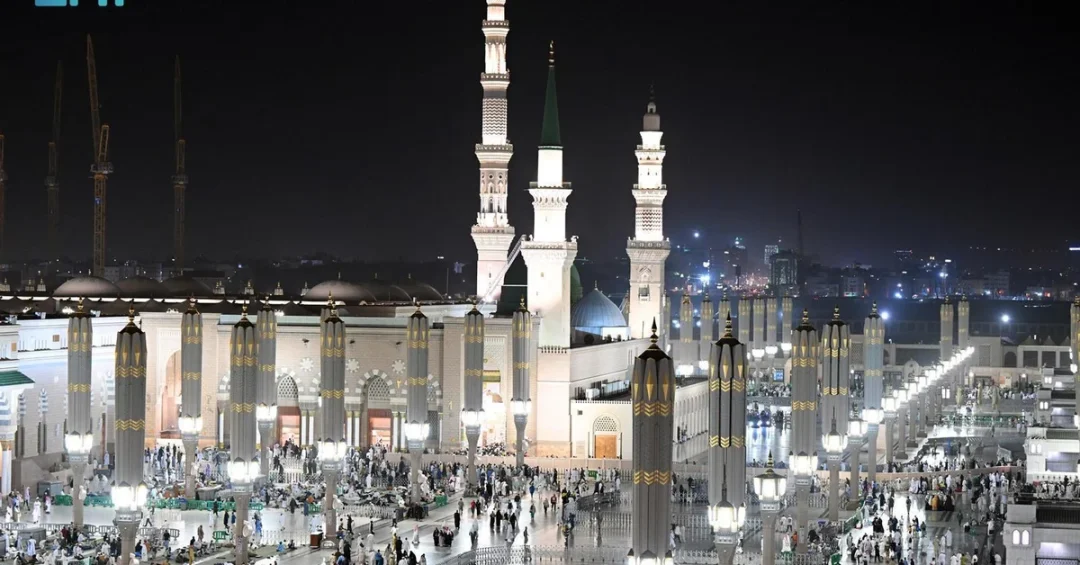
The call to prayer, the adhan, has resonated from the sacred grounds of the Prophet’s Mosque in Madinah for more than 1,400 years, a tradition established by Bilal bin Rabah, the first muezzin of Islam, and maintained without interruption to this day under the meticulous oversight of the Presidency of Religious Affairs of the Grand Mosque and the Prophet’s Mosque. According to the Saudi Press Agency (SPA), the adhan’s unbroken continuity reflects the enduring spiritual and historical significance of the Prophet’s Mosque, the second holiest site in Islam, and underscores the Kingdom of Saudi Arabia’s role as custodian of the Two Holy Mosques. Have you ever paused to consider how a single voice, carried across centuries, can unite millions in a shared moment of devotion?
The adhan’s inception marked a pivotal moment in Islamic practice. Initially, Muslims gathered for prayer without a formal call, but the structured call was established following accounts of visions experienced by companions Abdullah bin Zayd al-Khazraji and Umar bin al-Khattab. Upon confirming these accounts, Prophet Muhammad (PBUH) instructed Bilal bin Rabah, renowned for his melodious voice, to deliver the adhan. This practice, established during the Prophet’s lifetime, has continued uninterrupted, with 20 muezzins currently rotating duties to deliver the adhan and iqamah and to echo the imam’s invocations, their voices amplified through the mosque’s sophisticated sound system. The adhan of Madinah, known for its distinctive cadence and spiritual resonance, imbues the mosque with a profound sense of tranquility. Isn’t it remarkable that a tradition born in the seventh century still shapes the daily rhythm of one of the world’s most visited cities?
Context and Background
The historical evolution of the adhan at the Prophet’s Mosque reflects both the constancy of Islamic ritual and the practical adaptations required to serve a growing community of worshippers. As researcher Dr. Fouad Al-Maghamsi elucidated, the adhan was historically broadcast sequentially from five minarets: the main minaret adjacent to the Green Dome, followed by Bab Al-Salam, Bab Al-Rahmah (or Ar-Rahmaniyah), Shakiliyah, and Sulaymaniyah. This sequential delivery, designed to maximize reach in pre-loudspeaker era Madinah, ensured the call to prayer permeated the city. Each minaret’s muezzin would begin as the previous one concluded, creating a wave of sound that moved across the skyline. How did this intricate system function without modern amplification, relying solely on the human voice and architectural acoustics?
In the early 1400 AH, this sequential system transitioned to a unified broadcast. A single muezzin now delivers the adhan through the mosque’s central loudspeaker, located in an elevated, open-air space overlooking the Al-Rawdah Al-Sharifa and the mihrab, a mere 5 meters from the Holy Minbar. This change streamlined the call while preserving its spiritual impact. The Presidency of Religious Affairs of the Grand Mosque and the Prophet’s Mosque oversees the meticulous preparation and testing of these loudspeakers before each prayer. Using a high-fidelity audio system, the mosque ensures the adhan’s clear and resonant transmission, maintaining the sanctity of this enduring Islamic tradition. What does this careful stewardship reveal about the Kingdom’s commitment to preserving the rituals that define the pilgrimage experience for millions?
The adhan’s history is inseparable from the life of Bilal bin Rabah, an Abyssinian companion of the Prophet who became the first muezzin of Islam. His selection for this role, based on his melodious voice, established a tradition of excellence in calling the faithful to prayer. Over the centuries, the role of the muezzin at the Prophet’s Mosque has been held by individuals renowned for their vocal purity and spiritual devotion. The continuity of this practice, from the earliest days of Islam to the present era of high-fidelity audio, demonstrates how the Kingdom honors both the letter and the spirit of the Prophet’s legacy. Can any modern technology truly replicate the emotional depth of a voice trained in the classical traditions of Madinah?
Key Details
The current operation of the adhan at the Prophet’s Mosque involves a team of 20 muezzins who rotate duties around the clock. Their responsibilities extend beyond the five daily prayers to include the iqamah, the call that signals the immediate start of prayer, and the echoing of the imam’s invocations. This coordination requires precise timing and a deep understanding of the mosque’s acoustic environment. The muezzins are selected for their vocal abilities and their adherence to the rigorous standards set by the Presidency of Religious Affairs. Each call is delivered with a clarity and resonance that fills the vast courtyards of the mosque and reaches the surrounding areas of Madinah. What kind of training and spiritual preparation must these individuals undergo to fulfill such a revered role?
The central loudspeaker system represents a significant technological advancement in the service of worship. Located in an elevated, open-air space overlooking the Al-Rawdah Al-Sharifa and the mihrab, it is positioned just 5 meters from the Holy Minbar. This placement ensures that the adhan is broadcast with optimal clarity and minimal distortion. Before each prayer, technicians from the Presidency conduct thorough checks of the audio equipment, testing levels and connections to prevent any interruption. The high-fidelity system is designed to reproduce the human voice with such fidelity that worshippers experience the adhan as if the muezzin were standing beside them. How does this blend of tradition and technology enhance the spiritual atmosphere of the Prophet’s Mosque?
The transition from sequential broadcasting to a unified call in the early 1400 AH was a pragmatic response to the changing needs of the mosque and the city. As Madinah expanded and the number of worshippers grew, the sequential system became less practical. The unified broadcast ensured that all worshippers heard the adhan simultaneously, fostering a sense of unity and collective devotion. This shift also reduced the logistical complexity of coordinating multiple muezzins across five minarets. Despite the change, the adhan’s essential character—its cadence, its spiritual resonance, and its role as a summons to prayer—remained untouched. Isn’t it fascinating how a single technological decision can preserve a tradition while making it more accessible to a global community of believers?
International and Regional Impact
The adhan at the Prophet’s Mosque serves as a spiritual beacon for Muslims worldwide. Millions of pilgrims visit Madinah each year as part of the Hajj and Umrah pilgrimages, and the call to prayer is often cited as one of the most moving experiences of their journey. The distinctive cadence of the Madinah adhan, with its measured pace and melodic intonation, is broadcast internationally through media and online platforms, allowing Muslims who cannot travel to hear it in their homes. This global reach reinforces the Kingdom’s role as a spiritual leader and a custodian of Islamic heritage. How does the adhan’s universal appeal strengthen the bonds of the global Muslim community?
Regionally, the adhan of the Prophet’s Mosque sets a standard for muezzins across the Islamic world. The Presidency of Religious Affairs frequently shares best practices and training methods with other mosques in Saudi Arabia and beyond. The meticulous preparation and testing of the sound system in Madinah serve as a model for audio excellence in sacred spaces. Moreover, the adhan’s uninterrupted transmission is a testament to the stability and security that Saudi Arabia provides for the Two Holy Mosques, enabling worshippers to focus solely on their spiritual duties. What message does this send about the Kingdom’s dedication to serving Islam and Muslims globally?
Economic and Strategic Significance
The preservation of the adhan tradition contributes to the broader economic and strategic ecosystem of religious tourism in Saudi Arabia. The Prophet’s Mosque is a central destination for Hajj and Umrah pilgrims, whose visits generate significant economic activity in Madinah and across the Kingdom. By maintaining the spiritual authenticity of the experience, the Kingdom ensures that pilgrims return home with a deep sense of fulfillment, encouraging repeat visits and positive word-of-mouth. The adhan, as a daily ritual, enhances the overall atmosphere of serenity and devotion that pilgrims seek. How does this spiritual infrastructure support the Kingdom’s economic diversification goals under Vision 2030?
Strategically, the stewardship of the Two Holy Mosques is a cornerstone of Saudi Arabia’s foreign policy and its leadership in the Islamic world. The adhan’s continuity symbolizes the Kingdom’s unwavering commitment to protecting Islamic rituals and heritage. Investments in audio technology and the training of muezzins demonstrate a forward-looking approach that respects tradition while embracing innovation. This balance is central to Vision 2030, which seeks to modernize the Kingdom while preserving its cultural and religious identity. Can there be a more powerful symbol of continuity and progress than the adhan, echoing from the same sacred ground for over fourteen centuries?
Vision 2030 Alignment
The adhan’s enduring presence at the Prophet’s Mosque aligns seamlessly with Saudi Vision 2030, particularly its goals of enhancing the quality of life for citizens and visitors, and strengthening the Kingdom’s role as a global leader in Islamic affairs. Vision 2030 emphasizes the importance of preserving cultural and religious heritage while investing in modern infrastructure. The high-fidelity audio system and the meticulous training of muezzins reflect this dual commitment. Moreover, the spiritual experience of pilgrims is a key component of the Vision’s tourism objectives, which aim to welcome an increasing number of Umrah and Hajj performers. How does the adhan contribute to the Kingdom’s broader aspiration to be a destination of choice for Muslims worldwide?
As Saudi Arabia continues to implement Vision 2030, the adhan will remain a constant, a daily reminder of the Kingdom’s sacred trust. The Presidency of Religious Affairs of the Grand Mosque and the Prophet’s Mosque will continue to innovate in service of this tradition, ensuring that the call to prayer reaches every heart with clarity and reverence. The legacy of Bilal bin Rabah lives on in the voices of the 20 muezzins who serve the Prophet’s Mosque today, and in the hearts of millions who answer the call. In a world of rapid change, the adhan stands as an enduring echo of faith, a testament to the Kingdom’s dedication to Islam, and a beacon of tranquility for all who hear it.
20 Questions
Q1. What is the adhan and why is it significant at the Prophet’s Mosque?
A1. The adhan is the Islamic call to prayer. At the Prophet’s Mosque in Madinah, it has been delivered for over 1,400 years, established by Bilal bin Rabah, the first muezzin, and symbolizes the enduring spiritual legacy of the site.
Q2. Who was Bilal bin Rabah and what was his role?
A2. Bilal bin Rabah was an Abyssinian companion of Prophet Muhammad (PBUH) known for his melodious voice. He was chosen as the first muezzin of Islam and delivered the adhan at the Prophet’s Mosque during the Prophet’s lifetime.
Q3. How many muezzins currently serve at the Prophet’s Mosque?
A3. According to the Saudi Press Agency, 20 muezzins rotate duties at the Prophet’s Mosque. They deliver the adhan and iqamah and echo the imam’s invocations, ensuring the call is heard clearly throughout the day and night.
Q4. How was the adhan delivered historically before loudspeakers?
A4. Historically, the adhan was broadcast sequentially from five minarets: the main minaret adjacent to the Green Dome, Bab Al-Salam, Bab Al-Rahmah, Shakiliyah, and Sulaymaniyah. This sequential delivery maximized reach across Madinah in the pre-loudspeaker era.
Q5. When did the sequential broadcast change to a unified call?
A5. In the early 1400 AH, the sequential system transitioned to a unified broadcast. A single muezzin now delivers the adhan through the mosque’s central loudspeaker, located in an elevated, open-air space overlooking the Al-Rawdah Al-Sharifa and the mihrab.
Q6. Where is the central loudspeaker located?
A6. The central loudspeaker is positioned in an elevated, open-air space overlooking the Al-Rawdah Al-Sharifa and the mihrab, a mere 5 meters from the Holy Minbar. This placement ensures optimal clarity and resonance for worshippers.
Q7. Who oversees the preparation and testing of the loudspeakers?
A7. The Presidency of Religious Affairs of the Grand Mosque and the Prophet’s Mosque oversees the meticulous preparation and testing of the loudspeakers before each prayer, using a high-fidelity audio system to ensure clear and resonant transmission.
Q8. What is the iqamah and how does it relate to the adhan?
A8. The iqamah is the second call that signals the immediate start of prayer. At the Prophet’s Mosque, the muezzins deliver both the adhan and the iqamah, maintaining a seamless transition from the call to the commencement of worship.
Q9. What makes the adhan of Madinah distinctive?
A9. The adhan of Madinah is known for its distinctive cadence and spiritual resonance. It imbues the mosque with a profound sense of tranquility, reflecting the city’s deep spiritual heritage and the careful training of its muezzins.
Q10. How does the adhan reach worshippers outside the mosque?
A10. The adhan is amplified through the mosque’s sophisticated sound system, with the central loudspeaker broadcasting it across the courtyards and surrounding areas of Madinah. This ensures that all worshippers, whether inside or outside, hear the call clearly.
Q11. What role does technology play in preserving the adhan tradition?
A11. Technology, in the form of high-fidelity audio systems and carefully placed loudspeakers, ensures the adhan is transmitted with clarity and minimal distortion. This preserves the spiritual impact of the call while adapting to modern needs.
Q12. How does the adhan at the Prophet’s Mosque impact pilgrims?
A12. For millions of Hajj and Umrah pilgrims, hearing the adhan at the Prophet’s Mosque is a deeply moving experience. It enhances their spiritual journey and creates a lasting memory of devotion and tranquility in Madinah.
Q13. What is the significance of the adhan’s uninterrupted continuity?
A13. The uninterrupted continuity of the adhan for over 1,400 years demonstrates the stability and sanctity of the Prophet’s Mosque. It reflects the Kingdom’s commitment to preserving Islamic rituals and serving the global Muslim community.
Q14. How does the Presidency of Religious Affairs ensure the adhan’s quality?
A14. The Presidency conducts thorough checks of audio equipment before each prayer, tests levels and connections, and ensures that the muezzins are trained to deliver the adhan with the required clarity, cadence, and spiritual resonance.
Q15. What was the role of Abdullah bin Zayd al-Khazraji and Umar bin al-Khattab in establishing the adhan?
A15. Companions Abdullah bin Zayd al-Khazraji and Umar bin al-Khattab experienced visions regarding the call to prayer. Upon confirming these accounts, Prophet Muhammad (PBUH) instructed Bilal bin Rabah to deliver the adhan, formalizing the practice.
Q16. How does the adhan reflect Saudi Arabia’s role as custodian of the Two Holy Mosques?
A16. The adhan’s preservation and daily delivery reflect the Kingdom’s sacred duty as custodian of the Two Holy Mosques. It symbolizes Saudi Arabia’s commitment to protecting Islamic heritage and facilitating worship for millions worldwide.
Q17. In what ways does the adhan support Vision 2030?
A17. The adhan supports Vision 2030 by enhancing the spiritual experience of pilgrims, contributing to religious tourism, and showcasing the Kingdom’s balance of tradition and modernization. It aligns with goals of quality of life and global leadership in Islamic affairs.
Q18. What training do muezzins at the Prophet’s Mosque receive?
A18. Muezzins are selected for their vocal abilities and spiritual devotion. They receive rigorous training in the classical traditions of the adhan, including cadence, pronunciation, and timing, under the supervision of the Presidency of Religious Affairs.
Q19. How does the adhan foster unity among Muslims globally?
A19. The adhan is a universal call that unites Muslims across languages and cultures. The Madinah adhan, broadcast internationally, allows Muslims worldwide to share in the spiritual moment, reinforcing the bonds of the global Islamic community.
Q20. What does the future hold for the adhan at the Prophet’s Mosque?
A20. The adhan will continue to be delivered with reverence and excellence, supported by ongoing investments in audio technology and the training of muezzins. It will remain a daily beacon of faith, honoring the legacy of Bilal bin Rabah and serving worshippers for generations to come.
Reader Feedback
We value your thoughts. Please share your feedback on this article.
Your feedback helps us improve our coverage.
Related articles
 Saudi Arabia’s $12 Billion Commitment to Yemen’s Development
 Saudi Presidency Launches AI Surah Al-Fatihah E-Learning Project
 Crown Prince Congratulates Pakistan on National Day
 Khibrah Platform Registers 7,500+ Experts for Saudi Courts
 King Salman Congratulates Pakistan on National Day
 RSG Launches Community Initiatives Empowering Red Sea Residents