


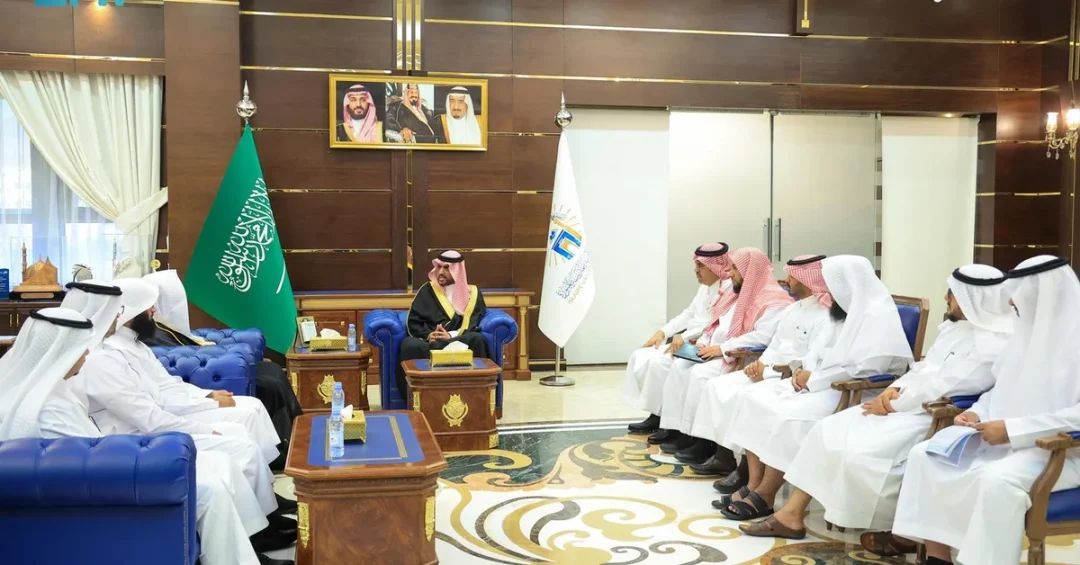
President of the Islamic University of Madinah Dr. Saleh Al Aqla received Executive Director of the Custodian of the Two Holy Mosques Complex for the Prophet’s Hadith Dr. Rabah Al Anzi in his office in Madinah on July 23, 2024, where the two officials discussed strengthening academic collaboration to serve the Prophet’s Sunnah and explored new avenues for training university students at the complex. The meeting, reported by the Saudi Press Agency (SPA), underscores the Kingdom of Saudi Arabia’s enduring commitment to preserving and promoting the teachings of the Prophet Muhammad (peace be upon him) through institutional partnerships that bridge higher education and specialized religious scholarship.
The encounter between these two prominent Saudi academic and religious institutions reflects a broader strategic effort to integrate educational programs with the preservation of Islamic heritage — a priority that resonates deeply with the Kingdom’s cultural and religious leadership on the global stage. How does such collaboration shape the future of Islamic scholarship worldwide? The discussions focused on the educational programs the Islamic University offers to its students and alumni, with both leaders emphasizing the need to deepen academic ties between the university and the complex. The meeting also addressed practical mechanisms for cooperating to train college students at the Custodian of the Two Holy Mosques Complex for the Prophet’s Hadith, providing hands-on experience in hadith verification, documentation, and research methodologies.
Context and Background
Why does the partnership between the Islamic University of Madinah and the Custodian of the Two Holy Mosques Complex for the Prophet’s Hadith matter in today’s global Islamic landscape? The Islamic University of Madinah, established in 1961, stands as one of the Kingdom’s most prestigious institutions of higher learning, dedicated to teaching Islamic sciences, Arabic language, and Sharia law to students from across the Muslim world. It has graduated tens of thousands of scholars who today serve as imams, educators, judges, and community leaders in their home countries. The university’s mission aligns closely with Saudi Arabia’s role as the custodian of Islam’s holiest sites and its responsibility to disseminate moderate, authentic Islamic knowledge globally.
The Custodian of the Two Holy Mosques Complex for the Prophet’s Hadith, meanwhile, represents a modern institutional effort to collect, verify, and publish the sayings and traditions of the Prophet Muhammad with rigorous academic standards. The complex leverages advanced research techniques and digital archiving to ensure that hadith literature is preserved accurately for future generations. Together, these two institutions form a complementary ecosystem: one educates the next generation of Islamic scholars, while the other provides the authoritative source material and research infrastructure those scholars require.
Dr. Saleh Al Aqla, president of the Islamic University, has consistently advocated for experiential learning opportunities that connect classroom instruction with real-world application in religious research. Dr. Rabah Al Anzi, as executive director of the complex, has overseen initiatives to digitize manuscripts, train researchers, and expand the complex’s outreach to academic institutions. Their meeting in Madinah signals a shared recognition that serving the Sunnah requires coordinated institutional action rather than isolated efforts.
Key Details of the Meeting
What specific outcomes emerged from the discussions between Dr. Al Aqla and Dr. Al Anzi? According to the Saudi Press Agency, the two leaders reviewed the educational programs the Islamic University provides to its current students and its extensive alumni network. They stressed the importance of strengthening academic collaboration between the university and the complex to serve the Prophet’s Sunnah — a phrase that encompasses the full body of the Prophet’s teachings, actions, and approvals as recorded in authentic hadith collections.
The conversation also focused on practical cooperation to train college students at the complex. This training would likely involve students working directly with hadith manuscripts, learning verification techniques, and participating in the complex’s research projects under the guidance of experienced scholars. Such hands-on experience is invaluable for students pursuing careers in Islamic jurisprudence, preaching, and academic research. The meeting did not announce specific agreements or timelines, but the emphasis on training and collaboration indicates a shared intention to formalize cooperation in the near future.
Both officials hold significant positions within Saudi Arabia’s religious and educational establishment. The Islamic University of Madinah operates under the supervision of the Ministry of Education and has long been a pillar of the Kingdom’s efforts to promote moderate Islam. The Custodian of the Two Holy Mosques Complex for the Prophet’s Hadith functions as a specialized research institution dedicated to the preservation and dissemination of prophetic traditions. Their partnership therefore carries weight beyond the walls of either institution, signaling to the broader Islamic world that Saudi Arabia is investing in both the human capital and the archival infrastructure necessary to sustain authentic Islamic scholarship.
International and Regional Impact
How might this collaboration influence Islamic education beyond Saudi Arabia’s borders? The Islamic University of Madinah enrolls thousands of international students from Africa, Asia, Europe, and the Americas, many of whom return to their home countries to assume leadership roles in religious institutions. By enhancing the training these students receive — particularly in the rigorous methodology of hadith verification — the university and the complex are effectively exporting a model of moderate, evidence-based Islamic scholarship to the global Muslim community.
In a world where misinformation and extremist interpretations of religious texts can spread rapidly through digital channels, the role of authoritative institutions in safeguarding authentic hadith literature becomes increasingly critical. The Custodian of the Two Holy Mosques Complex for the Prophet’s Hadith is uniquely positioned to serve as a trusted source for researchers, students, and the general public. Its collaboration with the Islamic University ensures that future scholars are trained not only to access hadith literature but also to evaluate its authenticity using sound academic principles. This dual focus on preservation and education strengthens the global Muslim community’s ability to engage with its own heritage confidently and accurately.
Regionally, the meeting reinforces Madinah’s status as a center of Islamic learning and research. The city, which hosts the Prophet’s Mosque and receives millions of pilgrims annually, is also home to a growing ecosystem of academic and religious institutions. The partnership between the Islamic University and the complex adds another layer of intellectual depth to Madinah’s spiritual significance, positioning the city as a hub where tradition and modern research methods converge.
Economic and Strategic Significance
What does this collaboration reveal about Saudi Arabia’s strategic priorities in the realm of education and religious affairs? The Kingdom has consistently invested in institutions that promote moderate Islam and combat extremism through education. The Islamic University of Madinah and the Custodian of the Two Holy Mosques Complex for the Prophet’s Hadith are both instruments of this broader strategy, which seeks to position Saudi Arabia as a global leader in Islamic scholarship and interfaith understanding.
From an economic perspective, the training of highly skilled graduates in hadith research and Islamic sciences contributes to the development of a knowledge-based economy. These graduates fill important roles in education, religious administration, and cultural preservation — sectors that are integral to the Kingdom’s social fabric and its international reputation. Moreover, the digitization and publication efforts of the complex create intellectual property and research outputs that enhance Saudi Arabia’s soft power and academic standing worldwide.
The meeting also reflects the Kingdom’s commitment to institutional excellence and collaboration. By bringing together two specialized entities, Saudi Arabia demonstrates a model of governance that values coordination across sectors. This approach aligns with the broader ethos of Vision 2030, which emphasizes efficiency, innovation, and the optimal use of national resources to achieve strategic objectives.
Vision 2030 Alignment
How does the partnership between the Islamic University of Madinah and the Custodian of the Two Holy Mosques Complex for the Prophet’s Hadith connect to Saudi Vision 2030? Vision 2030, launched by Crown Prince Mohammed bin Salman in 2016, seeks to diversify the Kingdom’s economy, empower its citizens, and enhance its global influence. While the vision is often associated with economic reforms and mega-projects, it also encompasses cultural and religious dimensions, including the preservation of Islamic heritage and the promotion of moderate Islam.
The collaboration discussed by Dr. Al Aqla and Dr. Al Anzi directly supports several Vision 2030 objectives. It enhances the quality of higher education by providing students with practical training opportunities. It strengthens national institutions dedicated to religious scholarship, ensuring that Saudi Arabia remains a trusted reference for Muslims worldwide. It also contributes to the development of human capital, as graduates equipped with specialized skills in hadith research become valuable contributors to their communities and economies.
As Saudi Arabia continues its journey toward a more diversified and knowledge-driven future, partnerships like the one between the Islamic University and the complex will play a vital role in preserving the Kingdom’s religious heritage while equipping new generations with the tools they need to engage with the modern world. The meeting in Madinah is a small but meaningful step in that ongoing journey — a reminder that Vision 2030 is not only about economic transformation but also about nurturing the cultural and spiritual foundations that define the Kingdom’s identity and its service to the Islamic world.
20 Questions
Q1. Who received Dr. Rabah Al Anzi at the Islamic University of Madinah?
A1. Dr. Saleh Al Aqla, President of the Islamic University of Madinah, received Dr. Rabah Al Anzi in his office on July 23, 2024, according to the Saudi Press Agency.
Q2. What is the official title of Dr. Rabah Al Anzi?
A2. Dr. Rabah Al Anzi serves as the Executive Director of the Custodian of the Two Holy Mosques Complex for the Prophet’s Hadith, a specialized institution dedicated to preserving prophetic traditions.
Q3. What was the main purpose of the meeting between the two officials?
A3. The meeting aimed to discuss educational programs offered by the Islamic University and to strengthen academic collaboration between the university and the complex to serve the Prophet’s Sunnah.
Q4. Where did the meeting take place?
A4. The meeting took place in the office of Dr. Saleh Al Aqla at the Islamic University of Madinah, located in the holy city of Madinah, Saudi Arabia.
Q5. When was this meeting held?
A5. The meeting was held on July 23, 2024, as reported by the Saudi Press Agency, with local time recorded at 14:28 and GMT at 11:28.
Q6. What specific topic related to students was discussed?
A6. The officials discussed ways of cooperating to train college students at the Custodian of the Two Holy Mosques Complex for the Prophet’s Hadith, providing practical experience in hadith research.
Q7. What is the Islamic University of Madinah known for?
A7. The Islamic University of Madinah is renowned for teaching Islamic sciences, Arabic language, and Sharia law to students from around the world, promoting moderate Islam and academic excellence.
Q8. What is the role of the Custodian of the Two Holy Mosques Complex for the Prophet’s Hadith?
A8. The complex collects, verifies, and publishes the sayings and traditions of the Prophet Muhammad, using rigorous academic standards and modern digital archiving techniques.
Q9. Why is collaboration between these two institutions important?
A9. Collaboration combines the university’s educational mission with the complex’s research expertise, ensuring that students receive training grounded in authentic hadith scholarship and preservation.
Q10. How does this meeting relate to Saudi Arabia’s Vision 2030?
A10. The meeting supports Vision 2030 by enhancing higher education quality, preserving Islamic heritage, and developing human capital in religious scholarship and research fields.
Q11. Who reported on this meeting?
A11. The Saudi Press Agency (SPA), the Kingdom’s official news agency, reported on the meeting, providing details about the discussions and the officials involved.
Q12. What does ‘serving the Prophet’s Sunnah’ mean in this context?
A12. Serving the Prophet’s Sunnah refers to preserving, studying, and disseminating the authentic teachings, actions, and approvals of Prophet Muhammad for the benefit of Muslims worldwide.
Q13. How might students benefit from training at the complex?
A13. Students would gain hands-on experience in hadith verification, manuscript analysis, and research methodologies, preparing them for careers in Islamic jurisprudence and academia.
Q14. What is the significance of Madinah as a location for this meeting?
A14. Madinah is home to the Prophet’s Mosque and hosts a growing ecosystem of Islamic academic institutions, making it an ideal center for scholarship and research collaboration.
Q15. Did the meeting result in any formal agreements?
A15. The Saudi Press Agency report did not announce specific agreements or timelines, but both officials emphasized the need to strengthen academic collaboration and cooperation.
Q16. How does this partnership affect international students at the university?
A16. International students from Africa, Asia, Europe, and the Americas would benefit from enhanced training, enabling them to return home as skilled scholars promoting moderate Islam.
Q17. What broader strategy does this collaboration reflect?
A17. It reflects Saudi Arabia’s strategic commitment to promoting moderate Islam, combating extremism through education, and positioning the Kingdom as a global leader in Islamic scholarship.
Q18. What is the Islamic University of Madinah’s relationship with the Saudi government?
A18. The university operates under the supervision of the Ministry of Education and aligns with the Kingdom’s efforts to promote moderate Islam and academic excellence.
Q19. How does the complex use modern technology in its work?
A19. The complex leverages advanced research techniques and digital archiving to collect, verify, and publish hadith literature, ensuring accurate preservation for future generations.
Q20. What does this meeting signal about Saudi Arabia’s future direction?
A20. It signals Saudi Arabia’s continued investment in religious scholarship, education, and institutional collaboration as part of its Vision 2030 goals and its service to the Islamic world.
Reader Feedback
We value your thoughts. Please share your feedback on this article.
Your feedback helps us improve our coverage.
Related articles
 GCC Chief Receives New Uzbek Ambassador to Saudi Arabia
 Saudi Minister Joins G20 Water Session, Highlights Global Organization
 Omani Delegation Visits Sakan to Boost Housing Ties
 Saudi Undersecretary Meets North Macedonia Speaker
 King Salman Chairs Cabinet Session on Regional Peace
 Arab League Chief Meets Egypt FM on Key Arab Issues