


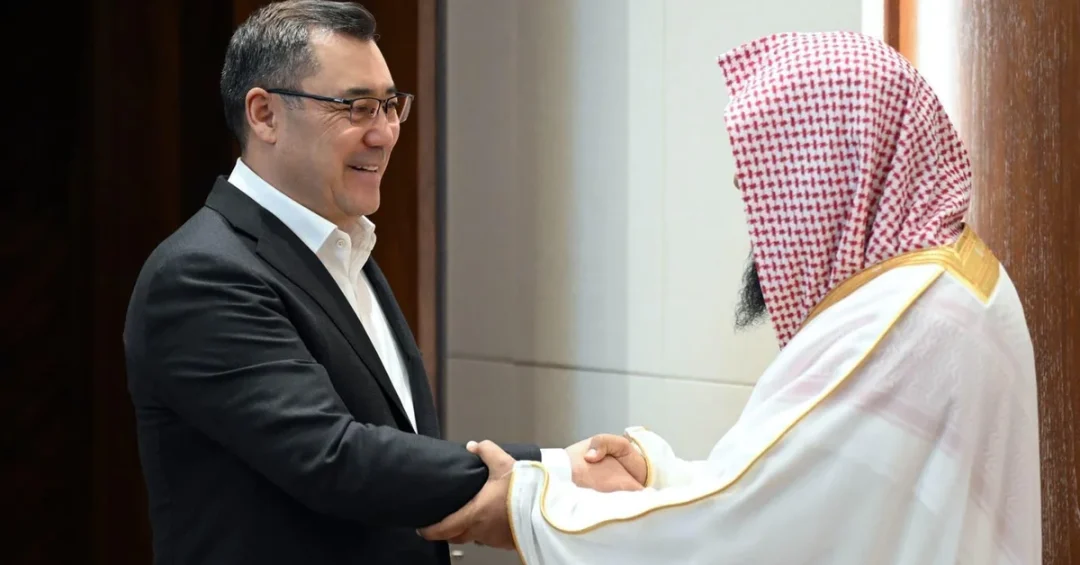
Kyrgyz Republic President Sadyr Japarov received Imam of the Prophet’s Mosque Sheikh Dr. Salah Al-Budair in Bishkek on Friday, in a meeting that underscored the Kingdom of Saudi Arabia’s enduring commitment to serving Islam and Muslims worldwide. The audience, held in the Kyrgyz capital and attended by Saudi Ambassador to Kyrgyzstan Ibrahim Al-Radhi, highlighted the growing warmth between Riyadh and Bishkek and placed the Kingdom’s religious diplomacy at the center of a widening international engagement.
According to the Saudi Press Agency, President Japarov welcomed Sheikh Al-Budair at the start of the meeting and praised Saudi Arabia’s efforts to serve Islam and Muslims around the world. The imam expressed his thanks and appreciation to the president for the warm and generous hospitality he received, and praised the depth of relations between the two countries across various fields. The encounter reflects a pattern of high-level Saudi religious and diplomatic outreach that has accelerated in recent years, particularly across Central Asia, where historical ties, shared faith, and growing economic cooperation converge.
Context and Background
What makes a meeting between a head of state and the imam of the Prophet’s Mosque so significant in the broader landscape of Saudi diplomacy? The answer lies in the unique standing of the Prophet’s Mosque in Madinah, Islam’s second holiest site, and in the role that its imams play as representatives of the Kingdom’s religious leadership. Sheikh Dr. Salah Al-Budair is a senior Saudi religious figure whose duties extend beyond leading prayers; he serves as an ambassador of the Kingdom’s message of moderation, scholarship, and service to the global Muslim community. His visits abroad are carefully planned to strengthen bonds with Muslim-majority nations and to convey the Kingdom’s commitment to the values of tolerance and coexistence.
The Kyrgyz Republic, a landlocked nation in Central Asia with a predominantly Muslim population, has long maintained friendly relations with Saudi Arabia. Diplomatic ties between Riyadh and Bishkek have deepened over the past decade, with cooperation spanning trade, investment, education, and cultural exchange. The presence of Saudi Ambassador Ibrahim Al-Radhi at the meeting signals the Kingdom’s sustained diplomatic attention to the region and its willingness to engage at the highest levels. For Kyrgyzstan, receiving the imam of the Prophet’s Mosque is an honor that reinforces its own Islamic heritage and its connections to the wider Muslim world.
Central Asia occupies a special place in Saudi Arabia’s foreign policy vision. The region shares deep historical and civilizational links with the Arabian Peninsula, dating back to the Silk Road era and the spread of Islam. In recent years, Riyadh has sought to revive and strengthen these connections through a combination of religious outreach, economic partnership, and cultural diplomacy. Visits by senior Saudi religious figures to Central Asian capitals are part of this broader strategy, which aims to build bridges of understanding and to support the spiritual needs of Muslim communities while promoting moderation and rejecting extremism.
Key Details of the Meeting
What exactly was discussed during this high-level audience in Bishkek? According to the official Saudi Press Agency report, President Japarov began the meeting by welcoming Sheikh Al-Budair and expressing his appreciation for the Kingdom’s global efforts in the service of Islam and Muslims. This opening statement set a tone of mutual respect and shared purpose. The Kyrgyz president’s praise for Saudi Arabia’s religious services reflects the broad recognition that the Kingdom receives for its custodianship of the Two Holy Mosques and its extensive programs supporting pilgrims, Islamic education, and interfaith dialogue.
Sheikh Al-Budair responded with expressions of gratitude for the hospitality extended to him during his visit. He also emphasized the strength of bilateral relations between Saudi Arabia and Kyrgyzstan, noting their development across multiple fields. The imam’s remarks align with the Kingdom’s consistent messaging that its relationships with Muslim nations are multifaceted, encompassing not only religious and cultural dimensions but also economic and political cooperation. The meeting was attended by Ambassador Al-Radhi, whose presence reinforced the official nature of the engagement and the Saudi government’s backing of the visit.
The audience in Bishkek is part of a wider itinerary that has seen Sheikh Al-Budair travel to several countries in recent months. These visits typically include meetings with political leaders, religious scholars, and community representatives, as well as participation in religious events and prayers. The imam’s role as a representative of the Prophet’s Mosque gives his visits a special significance, as he carries with him the spiritual weight of Madinah and the legacy of the Prophet Muhammad (peace be upon him). For host countries, such visits are opportunities to reaffirm their Islamic identity and to strengthen ties with the Kingdom of Saudi Arabia.
International and Regional Impact
How does this meeting resonate beyond the immediate bilateral relationship between Saudi Arabia and Kyrgyzstan? The encounter sends a clear message about the Kingdom’s active role in the Muslim world and its commitment to maintaining strong ties with Central Asian nations. In a region where several countries are navigating complex geopolitical dynamics, Saudi Arabia’s engagement is viewed as a stabilizing and constructive force. The meeting also highlights the importance of religious diplomacy as a tool for building trust and fostering cooperation among nations that share common values and traditions.
For Kyrgyzstan, the visit represents an opportunity to showcase its openness to international engagement and its respect for Islamic heritage. The country has been working to position itself as a bridge between different regions and cultures, and its warm reception of the Saudi imam underscores this aspiration. The meeting also reinforces the presence of Saudi Arabia as a reliable partner for Central Asian states seeking to diversify their international relationships and to benefit from the Kingdom’s economic and spiritual leadership. In the broader context of global Muslim affairs, the visit contributes to a narrative of unity and shared purpose that Riyadh has consistently promoted.
Regional observers note that Saudi Arabia’s outreach to Central Asia is part of a larger strategy to enhance its influence and to counter extremism through moderate religious education and dialogue. By sending senior religious figures to countries like Kyrgyzstan, the Kingdom demonstrates its commitment to supporting Muslim communities and to promoting a vision of Islam that is peaceful, tolerant, and forward-looking. This approach aligns with the Kingdom’s broader foreign policy objectives and with the principles of Vision 2030, which emphasize international cooperation and cultural exchange.
Economic and Strategic Significance
What economic and strategic dimensions underpin this religious and diplomatic engagement? Saudi Arabia and Kyrgyzstan have been exploring opportunities to expand trade and investment ties, particularly in sectors such as agriculture, energy, and infrastructure. The Kingdom’s Vision 2030 economic diversification agenda has opened new avenues for cooperation with Central Asian partners, and Kyrgyzstan is seen as a potential gateway to regional markets. The presence of senior Saudi figures in Bishkek, including the imam of the Prophet’s Mosque and the Saudi ambassador, signals the Kingdom’s interest in deepening these economic relationships alongside its religious and cultural outreach.
Strategic cooperation between Riyadh and Bishkek also extends to areas such as security, counterterrorism, and educational exchange. Saudi Arabia has provided scholarships to Kyrgyz students to study in the Kingdom, and there are ongoing efforts to enhance cultural and academic collaboration. The meeting between President Japarov and Sheikh Al-Budair serves as a reminder that the relationship between the two countries is comprehensive and multidimensional. It also highlights the role of religious diplomacy in creating a favorable environment for broader cooperation, as trust and mutual respect at the leadership level can facilitate progress in other areas.
From a geopolitical perspective, Saudi Arabia’s engagement with Kyrgyzstan and its neighbors reflects the Kingdom’s growing role as a global player with interests that extend far beyond the Middle East. By building strong relationships with Central Asian nations, Riyadh is positioning itself as a partner for development and stability in a region that is increasingly important on the world stage. The visit of the Prophet’s Mosque imam is a tangible expression of this strategy, combining religious authority with diplomatic purpose.
Vision 2030 Alignment
How does this meeting connect to Saudi Arabia’s Vision 2030 and the Kingdom’s long-term goals? Vision 2030 is not only an economic transformation plan; it also encompasses a vision of a more engaged, open, and influential Saudi Arabia on the world stage. The Kingdom’s religious diplomacy, exemplified by the visits of imams and the work of institutions like the General Presidency for the Affairs of the Grand Mosque and the Prophet’s Mosque, is an integral part of this vision. By strengthening ties with Muslim-majority countries and promoting moderation and tolerance, Saudi Arabia is contributing to global stability and to the well-being of Muslim communities everywhere.
The meeting in Bishkek also reflects the Kingdom’s commitment to serving pilgrims and to enhancing the experience of those who visit the Two Holy Mosques. Kyrgyzstan, like many Central Asian countries, sends thousands of pilgrims to Saudi Arabia each year for Hajj and Umrah. The Kingdom’s investments in infrastructure and services at the holy sites benefit these pilgrims directly, and the visits of senior religious figures help to maintain a strong connection between the Kingdom and the communities they serve. This people-to-people dimension is a vital component of Saudi Arabia’s soft power and its global leadership in the Islamic world.
As Saudi Arabia continues to implement Vision 2030, its international engagements will remain a key pillar of its strategy. The meeting between President Japarov and Sheikh Al-Budair is a small but meaningful example of how the Kingdom is building bridges, fostering goodwill, and advancing its vision of a prosperous and harmonious world. It underscores the importance of religious and cultural diplomacy in achieving the Kingdom’s goals and in strengthening its relationships with nations across Asia and beyond. The visit leaves a positive legacy that will contribute to the enduring friendship between Saudi Arabia and Kyrgyzstan.
20 Questions
Q1. Who received the Imam of the Prophet’s Mosque in Bishkek?
A1. Kyrgyz Republic President Sadyr Japarov received Imam of the Prophet’s Mosque Sheikh Dr. Salah Al-Budair in Bishkek on Friday, according to the Saudi Press Agency.
Q2. Who is Sheikh Dr. Salah Al-Budair?
A2. Sheikh Dr. Salah Al-Budair is the Imam of the Prophet’s Mosque in Madinah, one of Islam’s holiest sites, and a senior Saudi religious figure who represents the Kingdom’s religious leadership abroad.
Q3. Where did the meeting take place?
A3. The meeting took place in Bishkek, the capital of the Kyrgyz Republic, as reported by the Saudi Press Agency on October 26, 2024.
Q4. Who else attended the meeting?
A4. Saudi Ambassador to Kyrgyzstan Ibrahim Al-Radhi attended the meeting, underscoring the official diplomatic nature of the engagement between the two countries.
Q5. What did President Japarov say during the meeting?
A5. President Japarov welcomed Sheikh Al-Budair and praised the Kingdom of Saudi Arabia’s efforts to serve Islam and Muslims around the world, according to the official report.
Q6. How did Sheikh Al-Budair respond?
A6. Sheikh Al-Budair expressed his thanks and appreciation to the president for the warm and generous hospitality he received during his visit to Kyrgyzstan.
Q7. What did the imam say about bilateral relations?
A7. He praised the depth of relations between Saudi Arabia and Kyrgyzstan in various fields, reflecting the comprehensive nature of the partnership between the two nations.
Q8. Why is the Prophet’s Mosque significant?
A8. The Prophet’s Mosque in Madinah is Islam’s second holiest site, and its imams hold a special status as spiritual leaders and representatives of the Kingdom’s religious authority.
Q9. What is the significance of this meeting for Saudi-Kyrgyz relations?
A9. The meeting reinforces the strong and growing ties between Saudi Arabia and Kyrgyzstan, highlighting cooperation in religious, cultural, economic, and diplomatic spheres.
Q10. How does this visit fit into Saudi Arabia’s broader foreign policy?
A10. It is part of Saudi Arabia’s strategy of religious diplomacy and engagement with Central Asian nations, aimed at strengthening ties and promoting moderation and tolerance.
Q11. What role does Saudi Arabia play in serving Islam globally?
A11. Saudi Arabia, as custodian of the Two Holy Mosques, supports pilgrims, promotes Islamic education, and engages in interfaith dialogue, serving Muslims worldwide through various initiatives.
Q12. How does Kyrgyzstan benefit from this relationship?
A12. Kyrgyzstan benefits through enhanced diplomatic ties, economic cooperation, educational exchanges, and support for its Muslim community’s religious needs and pilgrimage activities.
Q13. What economic opportunities exist between the two countries?
A13. Opportunities exist in agriculture, energy, infrastructure, and trade, with Saudi Arabia’s Vision 2030 opening new avenues for cooperation and investment in Central Asia.
Q14. How many pilgrims from Kyrgyzstan travel to Saudi Arabia?
A14. Thousands of pilgrims from Kyrgyzstan travel to Saudi Arabia each year for Hajj and Umrah, benefiting from the Kingdom’s extensive investments in holy site infrastructure and services.
Q15. What is the significance of the Saudi ambassador’s presence?
A15. The presence of Ambassador Ibrahim Al-Radhi signals the official backing of the visit and the Saudi government’s commitment to maintaining strong diplomatic relations with Kyrgyzstan.
Q16. How does this meeting align with Vision 2030?
A16. It aligns with Vision 2030’s goals of international engagement, cultural exchange, and promoting a moderate and tolerant image of Saudi Arabia on the global stage.
Q17. What message does this visit send to the Muslim world?
A17. It sends a message of unity, cooperation, and Saudi Arabia’s unwavering commitment to serving Islam and Muslims, fostering goodwill and mutual respect among nations.
Q18. What are the key areas of Saudi-Kyrgyz cooperation?
A18. Key areas include religious affairs, trade, investment, education, cultural exchange, and security cooperation, reflecting a comprehensive and multidimensional partnership.
Q19. How does Saudi Arabia promote moderation through such visits?
A19. By sending senior religious figures who advocate for peaceful, tolerant Islam, Saudi Arabia counters extremism and supports moderate religious education in host countries.
Q20. What is the expected outcome of this meeting?
A20. The meeting is expected to further strengthen bilateral ties, enhance religious and cultural cooperation, and reinforce Saudi Arabia’s positive role in the global Muslim community.
Reader Feedback
We value your thoughts. Please share your feedback on this article.
Your feedback helps us improve our coverage.
Related articles
 Farmer Preserves Ancient Millet Cultivation in Al-Baha
 KSrelief Continues Food Aid Efforts in Lebanon
 KSrelief Delivers 25 Tons of Dates to Zambia
 Albudaiwi Highlights Strong GCC-US Ties in Washington
 KSrelief Eye Care Mission Treats 4,000 in Mauritania
 13th Saudi Relief Plane Lands in Beirut with Aid for Lebanon