


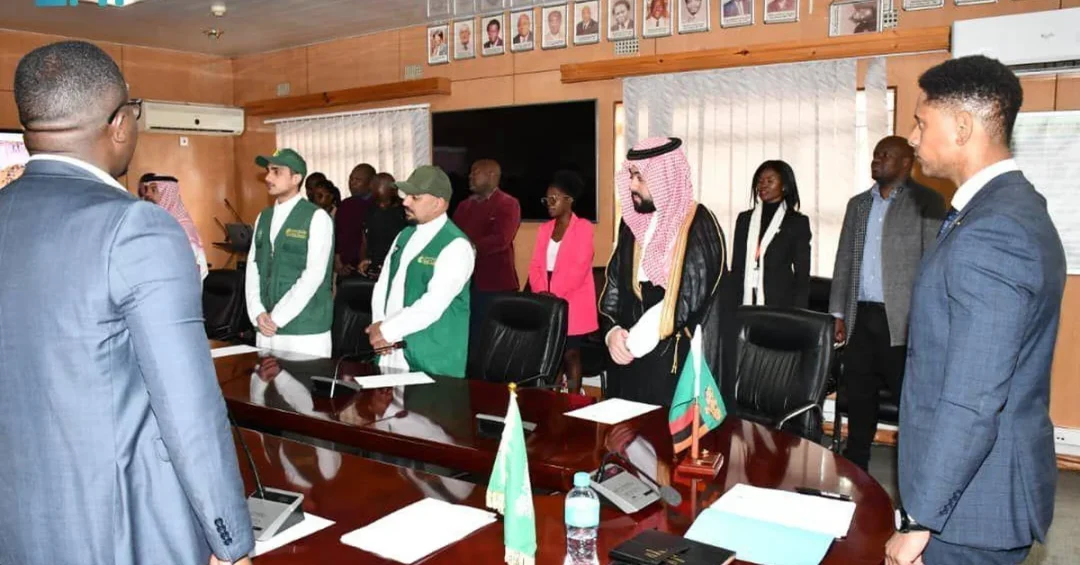
The King Salman Humanitarian Aid and Relief Center (KSrelief) has delivered 25 tons of dates as a gift from the Custodian of the Two Holy Mosques, King Salman bin Abdulaziz Al Saud, to the Republic of Zambia, according to an official announcement released through the Saudi Press Agency. The consignment was formally handed over in Lusaka by the representative of the Saudi Embassy in Zambia, Abdullah Al-Sahaf, to the head of Zambia’s Disaster Management and Mitigation Unit, in a ceremony that underscored the enduring humanitarian partnership between the Kingdom of Saudi Arabia and the southern African nation.
How does a simple gift of dates carry such profound meaning in international relations? For generations, dates have held a special place in Saudi culture and hospitality, symbolizing generosity, nourishment, and goodwill. When the Kingdom shares this cherished staple with friendly nations, it extends far more than food aid; it offers a gesture of solidarity rooted in the values of compassion and mutual respect that guide Saudi foreign policy. The delivery to Zambia reflects the Kingdom’s continuing commitment to supporting communities in need across Africa and beyond, a commitment that has been institutionalized through KSrelief’s expanding global operations.
Context and Background
Why has Saudi Arabia made humanitarian aid a cornerstone of its international engagement? The King Salman Humanitarian Aid and Relief Center was established in 2015 by royal decree under the leadership of the Custodian of the Two Holy Mosques, King Salman bin Abdulaziz Al Saud, to coordinate and deliver relief assistance to populations affected by crises worldwide. Since its founding, KSrelief has implemented thousands of projects in more than 90 countries, covering sectors such as food security, health, education, water and sanitation, and emergency shelter. The center works in close coordination with host governments, United Nations agencies, and reputable international nongovernmental organizations to ensure that aid reaches those who need it most.
Zambia, a landlocked country in southern Africa with a population of approximately 20 million, has faced periodic food insecurity driven by drought, climate variability, and economic pressures. The Disaster Management and Mitigation Unit, a government body responsible for coordinating responses to emergencies and natural disasters, plays a central role in distributing assistance to vulnerable communities. The gift of dates from Saudi Arabia arrives as part of a broader pattern of Saudi humanitarian outreach to African nations, which has included food baskets, medical supplies, and development projects. This delivery also aligns with the Kingdom’s longstanding tradition of providing aid during times of need, irrespective of geography or politics.
The relationship between Saudi Arabia and Zambia has grown steadily over the years, with cooperation spanning diplomatic, economic, and humanitarian domains. Saudi Arabia has supported Zambia through bilateral channels as well as through multilateral institutions, and the two countries have maintained cordial ties since the establishment of diplomatic relations. The latest delivery of dates adds a tangible dimension to this relationship, demonstrating that the Kingdom’s partnerships extend beyond formal agreements into practical support for the well-being of ordinary citizens. It also reflects the Saudi leadership’s personal commitment to alleviating hardship, a priority that King Salman has emphasized throughout his reign.
Key Details of the Delivery
What exactly was delivered, and how was it received? According to the official statement carried by the Saudi Press Agency, the consignment consisted of 25 tons of dates, a product for which Saudi Arabia is renowned and which holds significant nutritional and cultural value. The handover took place in Lusaka, Zambia’s capital, where Abdullah Al-Sahaf, representing the Saudi Embassy, presented the gift to the head of the Disaster Management and Mitigation Unit. Al-Sahaf noted that the gift represents a continuation of the Kingdom’s constant care to provide humanitarian support to friendly nations and expressed his wishes for the government and people of Zambia to enjoy steady progress and prosperity.
The dates were received by Zambian authorities, who will oversee their distribution to communities in need. The Disaster Management and Mitigation Unit is well positioned to ensure that the aid reaches the intended beneficiaries efficiently, given its mandate and operational reach across the country. The choice of dates as the gift is significant: they are a high-energy food rich in natural sugars, fiber, and essential minerals, making them particularly valuable in food-insecure contexts. Moreover, dates are deeply embedded in Saudi heritage, often offered to guests as a symbol of welcome and generosity, so the gift carries a cultural message of friendship alongside its nutritional benefits.
This delivery is not an isolated event. It forms part of a series of Saudi humanitarian initiatives that have benefited Zambia and other African countries in recent years. KSrelief has previously implemented food security projects, provided medical assistance, and supported orphan care programs in various African nations. Each of these efforts is designed to create lasting improvements in living conditions while respecting the dignity of recipients. The Kingdom’s approach emphasizes partnership and capacity-building, working with local institutions rather than bypassing them, which helps strengthen the resilience of communities and their own systems of support.
International and Regional Impact
How does this delivery resonate beyond Zambia’s borders? Saudi Arabia’s humanitarian diplomacy has become an increasingly visible element of its foreign policy, particularly in Africa, where the Kingdom has deepened its engagement through investment, trade, and development cooperation. By providing tangible assistance to Zambia, Saudi Arabia reinforces its image as a responsible global actor committed to the well-being of nations in need. This, in turn, helps build goodwill and trust that can facilitate broader cooperation on political and economic issues. The delivery also demonstrates the Kingdom’s ability to mobilize resources quickly and deliver them effectively, a capability that has been honed through KSrelief’s extensive experience in complex environments.
At the regional level, the gift contributes to stability and food security in southern Africa, a region that has grappled with climate-induced shocks in recent years. When a country like Zambia receives support during challenging times, it can better manage the pressures on its own resources and avoid the cascading effects of food shortages, such as migration, social unrest, and economic disruption. Saudi Arabia’s assistance therefore has a stabilizing effect that extends beyond the immediate beneficiaries. It also sets an example for other nations to contribute to humanitarian causes, highlighting the role that emerging and established powers alike can play in addressing global challenges.
The timing of the delivery is also noteworthy. It comes as the international community continues to grapple with multiple humanitarian crises, from conflicts to natural disasters, which stretch available resources. In this context, Saudi Arabia’s consistent and predictable support stands out as a reliable source of relief. The Kingdom has repeatedly stepped forward to fund UN appeals, provide emergency supplies, and support refugee populations. By maintaining this level of engagement, Saudi Arabia helps sustain the global humanitarian system and ensures that less visible crises, such as those affecting parts of Africa, receive attention and resources.
Economic and Strategic Significance
What strategic objectives does this humanitarian gesture serve? Saudi Arabia’s aid program is closely tied to its broader foreign policy goals, including strengthening ties with African nations, expanding markets for Saudi goods and services, and projecting soft power. The delivery of dates, a flagship Saudi agricultural product, also serves to promote awareness of the Kingdom’s quality food exports. As Saudi Arabia pursues economic diversification under Vision 2030, it seeks to increase non-oil exports, and agricultural products like dates are an important part of that effort. Humanitarian deliveries can thus act as a subtle form of trade promotion, introducing Saudi products to new audiences.
From a strategic perspective, Africa is a priority region for Saudi Arabia, given its growing population, abundant natural resources, and increasing geopolitical weight. The Kingdom has established diplomatic missions across the continent and has launched initiatives such as the Saudi-African Summit, which aims to enhance cooperation in areas including energy, mining, and infrastructure. Humanitarian assistance complements these efforts by building people-to-people connections and demonstrating that Saudi Arabia is a partner invested in Africa’s prosperity. For Zambia, the gift of dates may open doors to further collaboration in agriculture, trade, and investment, areas where both countries see potential for mutual benefit.
Moreover, the delivery reflects the efficiency of Saudi logistics and supply chains, which have been developed to support both commercial and humanitarian operations. The ability to transport 25 tons of dates from Saudi Arabia to landlocked Zambia requires careful planning and coordination, and its successful execution underscores the Kingdom’s logistical capabilities. These capabilities are increasingly valuable in a world where timely delivery of goods and aid can make a critical difference. By showcasing its logistical competence, Saudi Arabia signals its readiness to play a larger role in global humanitarian and commercial networks.
Vision 2030 Alignment
How does this act of generosity connect to Saudi Arabia’s long-term vision? Vision 2030, the Kingdom’s ambitious transformation plan launched by Crown Prince Mohammed bin Salman, seeks to diversify the economy, enhance the quality of life for citizens, and strengthen Saudi Arabia’s global standing. A key pillar of the vision is the promotion of Saudi Arabia as a responsible and influential international actor, one that contributes to global stability and prosperity. Humanitarian aid, delivered through KSrelief, is a direct expression of this pillar, demonstrating the Kingdom’s values and its capacity to make a positive difference in the world. The gift to Zambia thus serves as a concrete example of Vision 2030 in action on the international stage.
Furthermore, Vision 2030 emphasizes the importance of strategic partnerships and economic diversification, including the expansion of non-oil exports. The dates delivered to Zambia are not only a humanitarian gesture but also a sample of Saudi agricultural excellence, which the Kingdom hopes to share with the world. By showcasing Saudi products in new markets, such initiatives can contribute to the growth of the non-oil sector, a central goal of the vision. In this way, the delivery aligns with both the humanitarian and economic dimensions of Saudi Arabia’s long-term strategy, reinforcing the interconnectedness of the Kingdom’s domestic transformation and its international engagement.
Ultimately, the delivery of 25 tons of dates to Zambia is a testament to Saudi Arabia’s enduring commitment to humanitarian values and its growing role as a global leader in relief and development. As the Kingdom continues to implement Vision 2030, such acts of kindness will remain a hallmark of its foreign policy, reflecting the generosity of its leadership and the compassion of its people. By supporting Zambia in a time of need, Saudi Arabia strengthens the bonds of friendship between the two nations and contributes to a more stable and prosperous world, consistent with the highest ideals of international cooperation.
20 Questions
Q1. What did KSrelief deliver to Zambia?
A1. KSrelief delivered 25 tons of dates as a gift from the Custodian of the Two Holy Mosques, King Salman bin Abdulaziz Al Saud, to the Republic of Zambia. The consignment was handed over in Lusaka.
Q2. Who handed over the aid on behalf of Saudi Arabia?
A2. Abdullah Al-Sahaf, the representative of the Saudi Embassy in Zambia, handed over the aid to the head of Zambia’s Disaster Management and Mitigation Unit on behalf of KSrelief.
Q3. What is the significance of dates as a gift?
A3. Dates are a symbol of Saudi hospitality, generosity, and cultural heritage. They also provide high nutritional value, making them an ideal food aid for communities in need.
Q4. Why did Saudi Arabia choose Zambia for this gift?
A4. The gift is part of Saudi Arabia’s ongoing humanitarian outreach to African nations and reflects the Kingdom’s commitment to supporting friendly countries. Zambia has faced food insecurity challenges, making the aid timely.
Q5. What is the Disaster Management and Mitigation Unit in Zambia?
A5. It is a Zambian government body responsible for coordinating responses to emergencies and natural disasters. It will oversee the distribution of the dates to vulnerable communities.
Q6. How does this delivery fit into Saudi Arabia’s broader humanitarian efforts?
A6. It is part of KSrelief’s extensive global operations, which have implemented thousands of projects in over 90 countries. The center focuses on food security, health, education, and emergency relief.
Q7. What is KSrelief?
A7. The King Salman Humanitarian Aid and Relief Center is a Saudi humanitarian organization established in 2015 by royal decree. It coordinates and delivers relief assistance worldwide.
Q8. How does this gift reflect Saudi Arabia’s foreign policy?
A8. It demonstrates Saudi Arabia’s commitment to humanitarian diplomacy, strengthening ties with African nations, and projecting soft power. It aligns with the Kingdom’s values of compassion and global responsibility.
Q9. What impact will the dates have on Zambia?
A9. The dates will provide nutritious food to communities facing food insecurity, helping to alleviate immediate hunger and support local resilience efforts led by Zambian authorities.
Q10. Is this the first time Saudi Arabia has sent aid to Zambia?
A10. Saudi Arabia has a history of providing aid to Zambia through various channels. This delivery continues a pattern of support that includes food security projects and medical assistance.
Q11. How does this delivery relate to Vision 2030?
A11. It reflects Vision 2030’s goal of positioning Saudi Arabia as a responsible global actor. It also promotes Saudi agricultural products, supporting economic diversification and non-oil exports.
Q12. What logistical efforts were required for this delivery?
A12. Transporting 25 tons of dates from Saudi Arabia to landlocked Zambia required careful planning and coordination, showcasing the Kingdom’s logistical capabilities in humanitarian operations.
Q13. What did Abdullah Al-Sahaf say about the gift?
A13. Al-Sahaf stated that the gift is a continuation of the Kingdom’s constant care to provide humanitarian support and wished the government and people of Zambia steady progress and prosperity.
Q14. How does Saudi Arabia benefit from such humanitarian gestures?
A14. Such gestures build goodwill, strengthen diplomatic relations, and enhance Saudi Arabia’s reputation as a reliable partner. They also open doors for economic and strategic cooperation.
Q15. What other types of aid does KSrelief provide?
A15. KSrelief provides food baskets, medical supplies, shelter, education support, water and sanitation services, and orphan care, among other forms of assistance tailored to local needs.
Q16. How does this delivery contribute to regional stability?
A16. By addressing food insecurity in Zambia, the aid helps prevent social and economic disruptions that can destabilize the region. It supports peace and resilience in southern Africa.
Q17. What is the nutritional value of dates?
A17. Dates are rich in natural sugars, fiber, vitamins, and minerals. They provide a high-energy food source that is especially valuable in emergency and food-insecure situations.
Q18. Will Saudi Arabia continue to support Zambia in the future?
A18. Saudi Arabia has consistently supported Zambia and other African nations. Under Vision 2030, the Kingdom is expected to deepen its engagement and humanitarian partnerships across Africa.
Q19. How does this gift reflect Saudi leadership’s priorities?
A19. It reflects the leadership’s emphasis on compassion, global responsibility, and helping those in need. King Salman has long championed humanitarian causes, and this gift is a continuation of that legacy.
Q20. What message does this delivery send to the international community?
A20. It sends a message that Saudi Arabia is a committed global partner, ready to assist friendly nations and contribute to international humanitarian efforts, in line with its values and Vision 2030.
Reader Feedback
We value your thoughts. Please share your feedback on this article.
Your feedback helps us improve our coverage.
Related articles
 Albudaiwi Highlights Strong GCC-US Ties in Washington
 KSrelief Eye Care Mission Treats 4,000 in Mauritania
 13th Saudi Relief Plane Lands in Beirut with Aid for Lebanon
 13th Saudi Relief Plane Departs for Lebanon with Essential Aid Supplies
 Oman Condemns Israeli Airstrikes on Iran, Urges Restraint
 Jordan Condemns Israeli Airstrikes on Iran