


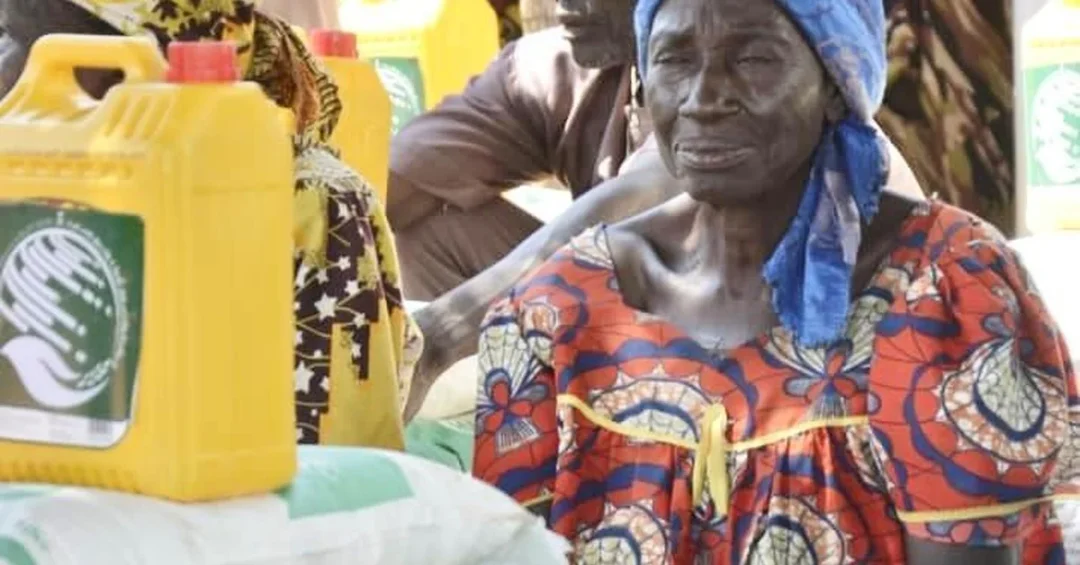
The King Salman Humanitarian Aid and Relief Center (KSrelief) distributed 600 food baskets on Thursday in the Guera Region of the Republic of Chad, providing essential sustenance to 3,600 individuals from the neediest families. The distribution was carried out as part of the Food Security Support Project in Chad this year, according to an official announcement released through the Saudi Press Agency. The initiative reflects the Kingdom of Saudi Arabia’s continued commitment to alleviating suffering and supporting vulnerable communities across the African continent and beyond.
The operation in Guera Region, located in central Chad, targeted families facing acute food insecurity, a challenge that has been exacerbated by regional instability, climate pressures, and economic hardship. By delivering 600 food baskets, KSrelief ensured that thousands of individuals received direct nutritional support, reinforcing Saudi Arabia’s role as a leading humanitarian donor on the global stage. How does such targeted assistance transform the lives of those who receive it? For the beneficiaries in Guera, the baskets represent not only immediate relief but also a measure of dignity and hope amid difficult circumstances.
Context and Background
Why does Chad remain a priority for Saudi humanitarian efforts? The Republic of Chad, a landlocked nation in north-central Africa, has long grappled with food insecurity driven by a combination of factors including drought, desertification, population displacement, and limited agricultural infrastructure. The Guera Region, where the distribution took place, is among the areas most affected by these challenges. According to official Saudi sources, the Food Security Support Project in Chad is designed to address these pressing needs through direct food assistance and related interventions. The project aligns with KSrelief’s broader mandate to provide relief to needy and affected countries and peoples worldwide.
The King Salman Humanitarian Aid and Relief Center, established in 2015, has become a cornerstone of Saudi Arabia’s international humanitarian outreach. It operates under the guidance of the Kingdom’s leadership and implements projects in dozens of countries across Asia, Africa, and the Middle East. In Chad, KSrelief’s work is part of a sustained effort to combat hunger and strengthen resilience among vulnerable populations. The distribution of 600 food baskets is not an isolated act but a component of a structured annual program that reflects Saudi Arabia’s commitment to the United Nations Sustainable Development Goals, particularly those related to zero hunger and poverty reduction.
Chad’s strategic location and its hosting of refugees from neighboring conflict zones add layers of complexity to its humanitarian landscape. The country has absorbed significant numbers of people fleeing violence in Sudan and other areas, placing additional strain on already limited resources. In this context, Saudi assistance serves as a stabilizing force, helping to prevent further deterioration of living conditions. The Kingdom’s humanitarian diplomacy, channeled through KSrelief, underscores its role as a responsible global actor that responds to crises with tangible support.
Key Details of the Distribution
What exactly does a KSrelief food basket contain, and how is it delivered? While the specific contents of the baskets were not detailed in the official announcement, KSrelief food baskets typically include staple items such as rice, flour, cooking oil, sugar, and other non-perishable goods designed to meet the nutritional needs of a family for a defined period. The distribution in Guera Region was carried out by KSrelief teams in coordination with local authorities, ensuring that aid reaches those most in need. The 600 baskets benefited 3,600 individuals, indicating that each basket was intended to support an average of six people, a common household size in the region.
The operation was executed as part of the Food Security Support Project in Chad this year, a framework that allows KSrelief to plan and implement multiple distributions across the country. This project-based approach enables the center to monitor outcomes, adapt to evolving needs, and maintain transparency in its operations. The announcement, released via the Saudi Press Agency, emphasized that the assistance comes within the framework of the relief and humanitarian efforts provided by the Kingdom of Saudi Arabia, represented by KSrelief, to many needy and affected countries and peoples.
Timing is often critical in humanitarian interventions. The distribution on Thursday in Guera Region likely coincided with periods of heightened need, such as the lean season when food stocks from previous harvests are depleted. By acting swiftly and decisively, KSrelief demonstrates its operational readiness and its commitment to addressing food insecurity before it escalates into famine. The center’s ability to mobilize resources and deliver aid on the ground reflects the professionalism and dedication of its staff, as well as the strong logistical support provided by the Kingdom.
International and Regional Impact
How does Saudi Arabia’s humanitarian work in Chad resonate beyond its borders? The Kingdom’s assistance to Chad is part of a wider pattern of engagement with African nations, where KSrelief has implemented numerous projects in sectors including health, education, water, and emergency relief. This outreach strengthens diplomatic ties, builds goodwill, and positions Saudi Arabia as a partner in Africa’s development. For the international community, the distribution of food baskets serves as a reminder of the importance of sustained humanitarian funding, particularly as global attention often shifts to other crises.
Regional organizations and fellow donor countries have acknowledged Saudi Arabia’s contributions to alleviating suffering in the Sahel and beyond. The Kingdom’s efforts complement those of UN agencies and other NGOs, filling gaps and reaching populations that might otherwise be overlooked. In Chad, where resources are stretched thin, every contribution counts. The 600 food baskets distributed in Guera Region represent a concrete step toward reducing hunger and improving the well-being of thousands of people. Moreover, the operation reinforces the principle that humanitarian aid should be impartial, neutral, and delivered without political conditions, a standard that KSrelief consistently upholds.
From a geopolitical perspective, Saudi Arabia’s humanitarian diplomacy enhances its soft power and demonstrates its capacity to act as a force for stability. By addressing the root causes of vulnerability through food security projects, the Kingdom contributes to long-term resilience, reducing the likelihood of forced migration and conflict over scarce resources. This approach aligns with the international community’s emphasis on linking emergency relief with development efforts, a nexus that Saudi Arabia has increasingly embraced in its aid strategy.
Economic and Strategic Significance
Why does Saudi Arabia invest in humanitarian aid, and what does it gain? The Kingdom’s humanitarian spending is rooted in Islamic values of compassion and solidarity, as well as in a strategic vision of global responsibility. Through KSrelief, Saudi Arabia channels a portion of its national wealth into projects that save lives and alleviate suffering. This investment yields significant returns in terms of international reputation, diplomatic influence, and the strengthening of bilateral relations with recipient countries. Chad, as a member of the Organization of Islamic Cooperation and a nation with deep historical ties to the Arab world, is a natural partner for such engagement.
Furthermore, the Food Security Support Project in Chad contributes to the broader goal of achieving food security in a region where instability can have far-reaching consequences. By stabilizing food access, Saudi aid helps to prevent the kind of social unrest that can spill across borders and affect global security. The economic significance of this assistance extends to the local level, where the distribution of food baskets can stimulate small-scale trade and support community coping mechanisms. In the long run, such interventions reduce the need for more costly emergency responses and pave the way for sustainable development.
The strategic value of Saudi Arabia’s humanitarian outreach is also evident in its alignment with the Kingdom’s foreign policy objectives, which emphasize peace, stability, and cooperation. By demonstrating leadership in humanitarian affairs, Saudi Arabia reinforces its position as a pivotal player in the Middle East and beyond. The distribution in Chad is a small but meaningful example of how the Kingdom translates its principles into action, earning respect and gratitude from beneficiaries and international observers alike.
Vision 2030 Alignment
How does KSrelief’s work in Chad connect to Saudi Vision 2030? Saudi Vision 2030, the Kingdom’s comprehensive plan for economic and social transformation, includes a strong emphasis on enhancing Saudi Arabia’s global role and contributing to international development. One of the vision’s pillars is a “thriving economy” and a “vibrant society,” but it also underscores the importance of responsible global citizenship. KSrelief embodies this dimension of Vision 2030 by projecting Saudi Arabia’s humanitarian values onto the world stage and showcasing the Kingdom’s capacity for effective, compassionate action.
The food basket distribution in Guera Region is a testament to the vision’s holistic approach, which links domestic prosperity with international solidarity. As Saudi Arabia continues to diversify its economy and expand its global partnerships, its humanitarian arm remains a vital instrument of soft power and a reflection of the nation’s enduring commitment to helping those in need. Through projects like the Food Security Support Project in Chad, the Kingdom not only saves lives but also builds bridges of friendship and cooperation that will endure for generations. In doing so, it reaffirms the vision of a Saudi Arabia that is not only prosperous at home but also a beacon of hope and generosity abroad.
20 Questions
Q1. What organization distributed the food baskets in Chad?
A1. The King Salman Humanitarian Aid and Relief Center (KSrelief) distributed the food baskets. KSrelief is a Saudi humanitarian organization established in 2015 to provide relief worldwide.
Q2. How many food baskets were distributed in Guera Region?
A2. A total of 600 food baskets were distributed. These baskets provided essential food items to families facing hardship in the region.
Q3. How many individuals benefited from the distribution?
A3. The distribution benefited 3,600 individuals. This figure represents the neediest families in the Guera Region of Chad.
Q4. Where exactly in Chad did the distribution take place?
A4. The distribution took place in the Guera Region, located in central Chad. This area is known for facing significant food insecurity challenges.
Q5. When was the distribution carried out?
A5. The distribution was carried out on Thursday. The official announcement was released via the Saudi Press Agency.
Q6. What is the name of the project under which this aid was provided?
A6. The aid was provided under the Food Security Support Project in Chad this year. This project is part of KSrelief’s ongoing efforts in the country.
Q7. What is the main goal of the Food Security Support Project in Chad?
A7. The project aims to alleviate food insecurity among vulnerable populations. It provides direct food assistance to needy families across Chad.
Q8. Why is the Guera Region considered vulnerable to food insecurity?
A8. The Guera Region faces challenges such as drought, limited agricultural infrastructure, and economic hardship. These factors contribute to acute food insecurity.
Q9. What types of items are typically included in KSrelief food baskets?
A9. KSrelief food baskets usually contain staple items like rice, flour, cooking oil, and sugar. These are designed to meet a family’s nutritional needs for a period.
Q10. How does this distribution fit into Saudi Arabia’s broader humanitarian efforts?
A10. It is part of Saudi Arabia’s ongoing relief efforts to many needy countries. The Kingdom, through KSrelief, provides aid to affected peoples worldwide.
Q11. Which Saudi agency reported this humanitarian initiative?
A11. The Saudi Press Agency (SPA) reported the initiative. SPA is the official news agency of the Kingdom of Saudi Arabia.
Q12. What is the significance of KSrelief’s work in Africa?
A12. KSrelief’s work in Africa strengthens ties and provides vital aid. It reflects Saudi Arabia’s commitment to supporting African nations in need.
Q13. How does this distribution align with Saudi Vision 2030?
A13. It aligns with Vision 2030’s emphasis on global responsibility and humanitarian values. The vision promotes Saudi Arabia’s role as a responsible global actor.
Q14. What impact does the food basket distribution have on the local community?
A14. It provides immediate relief and improves food access for thousands. This helps stabilize communities and supports their resilience.
Q15. Are there any other Saudi humanitarian projects in Chad?
A15. Yes, KSrelief implements multiple projects in Chad. These cover areas such as food security, health, and emergency relief.
Q16. How does KSrelief ensure aid reaches the most needy families?
A16. KSrelief coordinates with local authorities and conducts needs assessments. This ensures aid is targeted to the most vulnerable households.
Q17. What is the role of the Saudi Press Agency in reporting such news?
A17. SPA serves as the official source for Saudi government news. It provides accurate and timely information on humanitarian initiatives.
Q18. Why is food security a priority for Saudi Arabia’s humanitarian aid?
A18. Food security is fundamental to human dignity and stability. Saudi Arabia prioritizes it to save lives and prevent suffering.
Q19. How does this distribution reflect Islamic values?
A19. It reflects the Islamic principles of compassion and charity. Saudi Arabia, as a Muslim nation, extends help to those in need regardless of borders.
Q20. What message does this aid send to the international community?
A20. It demonstrates Saudi Arabia’s commitment to global humanitarian causes. The Kingdom acts as a reliable partner in addressing international crises.
Reader Feedback
We value your thoughts. Please share your feedback on this article.
Your feedback helps us improve our coverage.
Related articles
 KSrelief Distributes 1,039 Food Baskets in Yemen’s Al-Dhale
 Kyrgyzstan President Receives Prophet’s Mosque Imam
 Farmer Preserves Ancient Millet Cultivation in Al-Baha
 KSrelief Continues Food Aid Efforts in Lebanon
 KSrelief Delivers 25 Tons of Dates to Zambia
 Albudaiwi Highlights Strong GCC-US Ties in Washington