


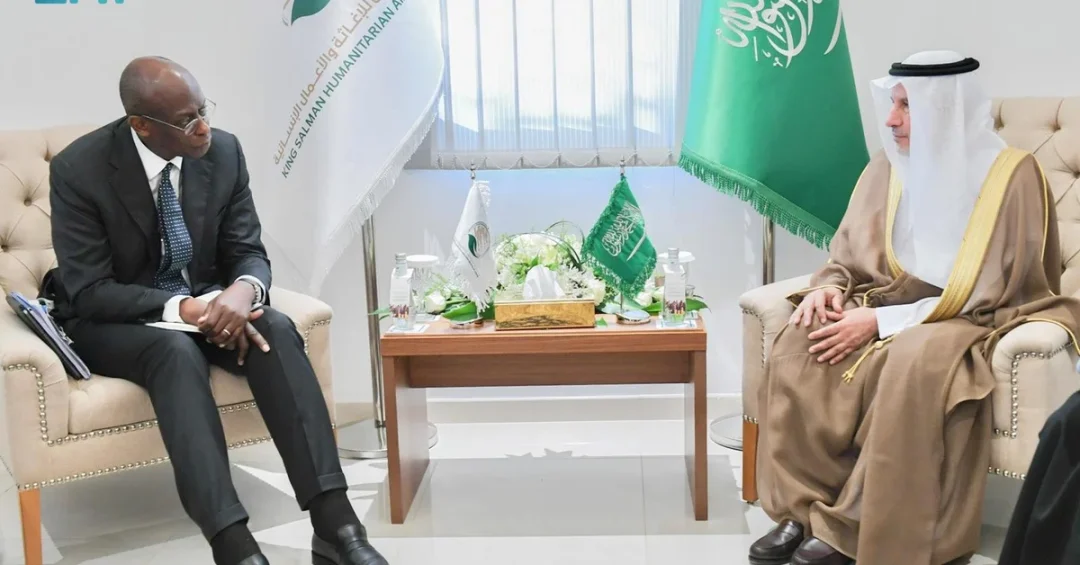
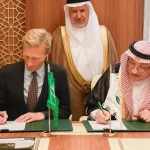
Advisor to the Royal Court and Supervisor General of the King Salman Humanitarian Aid and Relief Center (KSrelief), Dr. Abdullah Al Rabeeah, met with UNHCR Assistant High Commissioner for Operations Raouf Mazou in Jeddah on October 26, 2024, on the sidelines of the Organization of Islamic Cooperation (OIC) Donor Conference to Support Displaced Persons and Refugees in the Sahel and Lake Chad region. The meeting focused on strengthening relief and humanitarian cooperation and advancing assistance for refugees worldwide, according to the Saudi Press Agency (SPA).
The encounter underscored Saudi Arabia’s continuing commitment to humanitarian diplomacy and its role as a leading donor and operational partner in global relief efforts. It also highlighted the Kingdom’s expanding collaboration with United Nations agencies, particularly the UN Refugee Agency (UNHCR), at a time when displacement crises in Africa’s Sahel and Lake Chad region demand urgent international attention. The OIC conference provided a critical platform for donor coordination, and the bilateral talks between KSrelief and UNHCR added momentum to those collective efforts.
Context and Background
Why does a single meeting between a Saudi relief official and a UN refugee agency executive matter in the broader landscape of global humanitarian action? The answer lies in the scale of the challenges facing the Sahel and Lake Chad region, where conflict, climate shocks, and economic instability have displaced millions of people. The OIC Donor Conference, hosted in Jeddah, brought together representatives from member states, international organizations, and humanitarian agencies to mobilize resources and coordinate responses. Against this backdrop, the discussion between Dr. Al Rabeeah and Mr. Mazou represented a focused effort to align strategies and ensure that assistance reaches those most in need.
KSrelief, established in 2015 by royal decree under the leadership of the Custodian of the Two Holy Mosques, King Salman bin Abdulaziz Al Saud, has since become one of the world’s most active humanitarian organizations. It operates in dozens of countries, delivering food, medical care, shelter, and education to communities affected by conflict and natural disasters. Its partnership with UNHCR is part of a wider Saudi strategy to institutionalize humanitarian aid and make it more effective through collaboration with experienced international bodies. The meeting in Jeddah thus built on years of joint work and reflected a shared determination to address displacement crises with greater efficiency and impact.
The timing of the conference and the bilateral talks is significant. The Sahel and Lake Chad region has experienced a surge in displacement over the past decade, with ongoing violence, political instability, and climate-related emergencies forcing families to flee their homes. International donors have struggled to keep pace with the growing needs. By convening this conference, the OIC sought to reinvigorate funding commitments and draw attention to a crisis that often receives less media coverage than others. Saudi Arabia’s role as host and participant reinforced its position as a bridge between donor nations and affected communities.
Key Details of the Meeting
What specific outcomes emerged from the discussions between Dr. Al Rabeeah and Mr. Mazou? According to the Saudi Press Agency, the two officials discussed relief and humanitarian affairs in detail, focusing on ways to boost cooperation in providing assistance to refugees. They also reviewed the key topics addressed at the OIC Donor Conference, including funding gaps, operational challenges, and the need for sustainable solutions to protracted displacement. The conversation was described as constructive and forward-looking, with both sides reaffirming their commitment to joint action.
Mr. Mazou praised the Kingdom’s humanitarian and relief efforts, particularly those exerted through KSrelief, to help refugees around the world. His acknowledgment reflects the high regard in which Saudi humanitarian work is held by international partners. It also signals that UNHCR values the Kingdom’s contributions not only in financial terms but also in terms of operational capacity and diplomatic influence. The meeting served as a reminder that effective humanitarian action depends on strong partnerships between national agencies and multilateral organizations.
While the specific commitments made during the meeting were not detailed in the initial report, the broader context suggests that discussions likely touched on funding mechanisms, logistical coordination, and the protection of vulnerable groups. KSrelief’s track record includes large-scale projects in Yemen, Syria, Somalia, and other crisis zones, often implemented in cooperation with UN agencies. The Jeddah talks are expected to lead to enhanced joint programming and possibly new initiatives targeting refugees in the Sahel and Lake Chad region. Such follow-up would be consistent with KSrelief’s mandate to provide rapid, effective relief and with UNHCR’s mission to protect and assist displaced persons.
International and Regional Impact
How does Saudi Arabia’s humanitarian engagement shape its international standing and influence regional dynamics? The Kingdom’s role as a leading donor and convener of humanitarian conferences enhances its reputation as a responsible global actor. It also strengthens ties with African nations, many of which are OIC members and face significant displacement challenges. By supporting refugees in the Sahel and Lake Chad region, Saudi Arabia contributes to stability and development in a strategically important part of the world. This, in turn, aligns with the Kingdom’s broader foreign policy objectives of promoting peace, security, and cooperation.
The partnership between KSrelief and UNHCR also has implications for the wider humanitarian system. When a major donor like Saudi Arabia works closely with a UN agency, it can help streamline operations, reduce duplication, and ensure that resources are directed where they are most needed. The meeting in Jeddah sent a positive signal to other donors and agencies, encouraging them to strengthen their own commitments. It also demonstrated that humanitarian action can transcend political differences, bringing together diverse stakeholders around a common cause. For refugees and displaced persons, such collaboration can mean the difference between survival and destitution.
Economic and Strategic Significance
What does Saudi Arabia’s humanitarian spending reveal about its economic priorities and strategic vision? The Kingdom has allocated substantial resources to relief efforts, viewing them as an integral part of its foreign policy and a reflection of its Islamic values and humanitarian principles. Through KSrelief, Saudi Arabia has provided billions of dollars in aid to countries across Asia, Africa, and the Middle East. This investment not only alleviates suffering but also builds goodwill and fosters long-term partnerships. It is a form of soft power that complements the Kingdom’s economic and diplomatic initiatives.
Strategically, the meeting with UNHCR reinforces Saudi Arabia’s commitment to multilateralism and its willingness to work with international institutions. It also supports the objectives of Saudi Vision 2030, which seeks to diversify the economy, enhance global engagement, and promote sustainable development. By addressing the root causes of displacement and supporting refugees, Saudi Arabia contributes to global stability, which is essential for trade, investment, and economic growth. The Kingdom’s humanitarian efforts are thus not only charitable but also strategic, aligning with its long-term interests and its role as a responsible global leader.
Vision 2030 Alignment
How does this meeting connect to Saudi Vision 2030 and the Kingdom’s long-term goals? Vision 2030 emphasizes the importance of international cooperation, humanitarian responsibility, and sustainable development. KSrelief’s work with UNHCR exemplifies these principles by delivering aid efficiently and building partnerships that address complex challenges. The Kingdom’s leadership in humanitarian affairs enhances its global image and supports its efforts to attract investment, tourism, and talent. It also demonstrates that Saudi Arabia is a reliable partner in addressing global crises, which is a key component of its Vision 2030 strategy.
As Saudi Arabia continues to expand its humanitarian footprint, the collaboration between KSrelief and UNHCR is expected to deepen. Future joint initiatives may focus on innovative solutions such as digital cash transfers, livelihood programs, and climate resilience projects. These efforts will not only help refugees but also contribute to the achievement of the Sustainable Development Goals, which Saudi Arabia supports. The meeting in Jeddah was a step in that direction, reaffirming the Kingdom’s commitment to a more peaceful, prosperous, and compassionate world. Under the guidance of its leadership, Saudi Arabia remains dedicated to making a positive difference in the lives of millions.
20 Questions
Q1. Who met in Jeddah on October 26, 2024?
A1. Dr. Abdullah Al Rabeeah, Advisor to the Royal Court and Supervisor General of KSrelief, met with Raouf Mazou, UNHCR Assistant High Commissioner for Operations, on the sidelines of the OIC Donor Conference.
Q2. What was the main purpose of the meeting?
A2. The meeting aimed to discuss relief and humanitarian affairs, boost cooperation in providing assistance to refugees, and review key topics from the OIC Donor Conference.
Q3. What is KSrelief?
A3. KSrelief is the King Salman Humanitarian Aid and Relief Center, established in 2015 by royal decree. It is Saudi Arabia’s primary humanitarian agency, delivering aid worldwide.
Q4. What did Raouf Mazou say about Saudi Arabia’s efforts?
A4. Mazou praised the Kingdom’s humanitarian and relief efforts exerted through KSrelief to help refugees all over the world, acknowledging Saudi Arabia’s significant contributions.
Q5. What is the OIC Donor Conference?
A5. The OIC Donor Conference to Support Displaced Persons and Refugees in the Sahel and Lake Chad region is a gathering of OIC member states and partners to mobilize resources for displaced populations.
Q6. Why is the Sahel and Lake Chad region significant?
A6. The region faces conflict, climate shocks, and economic instability, leading to widespread displacement. It requires urgent international humanitarian assistance and support.
Q7. How does this meeting reflect Saudi Arabia’s foreign policy?
A7. It demonstrates Saudi Arabia’s commitment to humanitarian diplomacy, multilateral cooperation, and its role as a leading global donor and partner in addressing displacement crises.
Q8. What is UNHCR’s role?
A8. UNHCR is the UN Refugee Agency, mandated to protect and assist refugees, displaced persons, and stateless people worldwide, often working with national partners like KSrelief.
Q9. What are some key areas of KSrelief’s work?
A9. KSrelief provides food, medical care, shelter, education, and other essential services in countries affected by conflict and natural disasters, often in partnership with UN agencies.
Q10. How does this meeting align with Vision 2030?
A10. Vision 2030 emphasizes international cooperation and sustainable development. The meeting supports these goals by enhancing Saudi Arabia’s global humanitarian role and partnerships.
Q11. What might be the outcomes of this meeting?
A11. The meeting could lead to enhanced joint programming, new initiatives for refugees in the Sahel and Lake Chad region, and stronger coordination between KSrelief and UNHCR.
Q12. How does Saudi Arabia benefit from humanitarian aid?
A12. Humanitarian aid builds goodwill, strengthens diplomatic ties, enhances Saudi Arabia’s global image, and supports stability in regions important for trade and security.
Q13. What is the significance of the OIC in this context?
A13. The OIC provides a platform for Muslim-majority countries to coordinate humanitarian efforts and mobilize resources for displaced persons, reflecting Islamic solidarity.
Q14. How does KSrelief cooperate with UNHCR?
A14. KSrelief and UNHCR collaborate on various relief projects, sharing expertise and resources to deliver aid efficiently to refugees and displaced communities worldwide.
Q15. What challenges do refugees in the Sahel face?
A15. Refugees in the Sahel face violence, food insecurity, lack of shelter, limited healthcare, and climate-related disasters, making humanitarian assistance critical.
Q16. What is Saudi Arabia’s track record in humanitarian aid?
A16. Saudi Arabia has a long history of providing aid globally, with KSrelief implementing thousands of projects in Yemen, Syria, Somalia, and other countries, totaling billions of dollars.
Q17. How does the international community view Saudi humanitarian efforts?
A17. The international community, including UN agencies, generally views Saudi humanitarian efforts positively, recognizing the Kingdom’s substantial contributions and partnerships.
Q18. What role does Dr. Abdullah Al Rabeeah play?
A18. Dr. Al Rabeeah is the Supervisor General of KSrelief and Advisor to the Royal Court, leading Saudi Arabia’s humanitarian initiatives and representing the Kingdom internationally.
Q19. What are the future prospects for KSrelief-UNHCR cooperation?
A19. Future cooperation may focus on innovative aid delivery, livelihood programs, and climate resilience, contributing to sustainable solutions for refugees and displaced persons.
Q20. How can other countries support refugees in the Sahel?
A20. Other countries can support refugees by contributing funds, resources, and expertise through OIC and UN channels, and by participating in coordinated humanitarian responses.
Reader Feedback
We value your thoughts. Please share your feedback on this article.
Your feedback helps us improve our coverage.
Related articles
 Bahrain Condemns Military Operation Against Iran, Calls for Ceasefire
 KSrelief, WFP Discuss Food Aid to Needy Communities
 KSrelief Chief Meets UN Humanitarian Affairs Leader in Jeddah
 Net Zero Forum Starts Tomorrow in Dammam
 KSrelief Supervisor General Meets with UNICEF Official in Jeddah
 KSrelief Signs $25M Yemen Food Aid Deal with WFP