


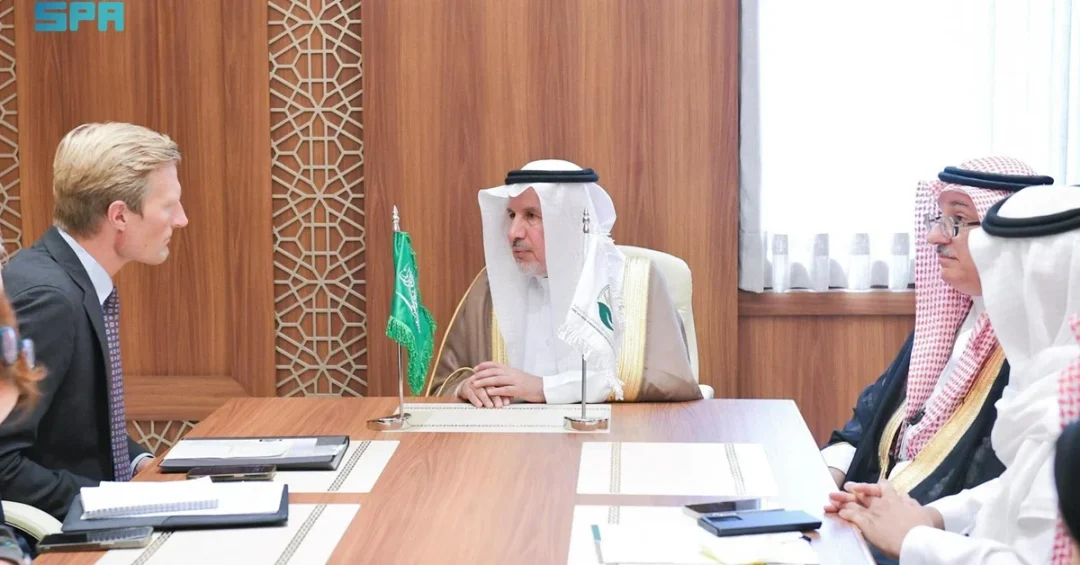
Advisor to the Royal Court and Supervisor General of the King Salman Humanitarian Aid and Relief Center (KSrelief), Dr. Abdullah Al Rabeeah, met with World Food Programme (WFP) Deputy Executive Director and Chief Operating Officer Carl Skau in Jeddah on October 26, 2024, on the sidelines of the OIC Donor Conference to Support Displaced Persons and Refugees in the Sahel and Lake Chad region. The two officials discussed the latest developments in joint KSrelief-WFP projects that aim to provide essential food aid and improve living conditions in needy communities across some of the world’s most vulnerable regions.
Why does this meeting matter beyond the conference hall? Because it underscores Saudi Arabia’s unwavering commitment to humanitarian diplomacy and its growing role as a global leader in alleviating suffering. The discussions between Dr. Al Rabeeah and Mr. Skau reaffirm the Kingdom’s dedication, under the leadership of the Custodian of the Two Holy Mosques King Salman bin Abdulaziz Al Saud and His Royal Highness Crown Prince Mohammed bin Salman bin Abdulaziz Al Saud, to supporting international efforts that bring hope and stability to millions. This high-level engagement is a testament to the strong partnership between KSrelief and the WFP, a collaboration that has consistently delivered life-saving assistance to those in need.
Context and Background
How did this pivotal meeting come about? It took place during the OIC Donor Conference to Support Displaced Persons and Refugees in the Sahel and Lake Chad region, a gathering that highlights the international community’s focus on one of the world’s most pressing humanitarian crises. The Sahel and Lake Chad region has long been plagued by conflict, displacement, and food insecurity, affecting millions of people. Saudi Arabia, through KSrelief, has been at the forefront of providing aid to these areas, working closely with partners like the WFP to ensure that assistance reaches the most vulnerable.
KSrelief, established in 2015 by royal decree, has since become a cornerstone of Saudi Arabia’s humanitarian outreach. It operates in over 90 countries, delivering aid in sectors ranging from food security and health to education and shelter. The WFP, as the world’s largest humanitarian organization fighting hunger, complements KSrelief’s efforts by providing logistical expertise and on-the-ground presence in conflict zones. Their partnership is a model of international cooperation, leveraging each organization’s strengths to maximize impact. The meeting in Jeddah builds on years of collaboration, including joint projects in Yemen, Syria, and Africa, where food aid has been a critical lifeline.
The OIC Donor Conference itself served as a platform for mobilizing resources and political will to address the displacement crisis in the Sahel and Lake Chad. It brought together representatives from governments, international organizations, and civil society to pledge support and coordinate responses. Saudi Arabia’s active participation, highlighted by Dr. Al Rabeeah’s leadership, reflects its role as a bridge-builder and a reliable partner in humanitarian action. The discussions between KSrelief and WFP officials on the sidelines of the conference ensured that the momentum generated would translate into concrete action for those in need.
Key Details of the Meeting
What exactly was on the agenda? Dr. Al Rabeeah and Mr. Skau reviewed the progress of ongoing KSrelief-WFP projects, focusing on food aid distribution and improvements to living conditions in needy communities. These projects are designed to address immediate hunger while also building resilience among affected populations. They discussed challenges such as access constraints, funding gaps, and the need for sustainable solutions that go beyond emergency relief. The conversation also covered the key topics of the conference, including the importance of burden-sharing and innovative financing mechanisms to support displaced persons and refugees.
Mr. Skau commended the Kingdom’s significant humanitarian role, exercised through KSrelief, and praised the well-organized conference and the fruitful discussions held on the occasion. His remarks reflect the international community’s recognition of Saudi Arabia’s contributions. Under Dr. Al Rabeeah’s leadership, KSrelief has earned a reputation for efficiency, transparency, and impact. The meeting reinforced the shared commitment to scaling up assistance and ensuring that no one is left behind. Both officials agreed on the need to strengthen coordination and explore new avenues for partnership, particularly in light of growing humanitarian needs worldwide.
The meeting also provided an opportunity to align strategies for upcoming initiatives. With famine looming in parts of the Sahel and Lake Chad, timely and effective food aid is critical. KSrelief and WFP are working together to pre-position supplies, enhance early warning systems, and support local food production where possible. These efforts are part of a broader strategy to link emergency response with long-term development, a principle that aligns with Saudi Arabia’s Vision 2030 goal of fostering global stability and prosperity. The Jeddah meeting thus served as a crucial checkpoint in a continuous process of cooperation.
International and Regional Impact
Why should the international community take note? The KSrelief-WFP partnership has a tangible impact on the ground, saving lives and reducing suffering in some of the most challenging environments. In the Sahel, where drought and conflict have displaced millions, Saudi-funded food assistance has reached families on the brink of starvation. In Lake Chad, similar efforts have provided nutritious meals to children and mothers, helping to combat malnutrition. These interventions not only address immediate needs but also contribute to stability by reducing the drivers of migration and extremism. The meeting in Jeddah signals that Saudi Arabia remains a dependable ally in these efforts.
Regionally, the conference and the bilateral discussions reinforce Saudi Arabia’s leadership within the OIC and the broader Middle East. By convening donors and facilitating dialogue, the Kingdom demonstrates its commitment to Islamic solidarity and humanitarian values. This is particularly important in the Sahel and Lake Chad, where many countries are OIC members. Saudi Arabia’s ability to bring together diverse stakeholders—from Western donors to African governments—highlights its diplomatic weight. The meeting between Dr. Al Rabeeah and Mr. Skau is a microcosm of this larger effort, showing how targeted partnerships can amplify impact.
Globally, the collaboration between KSrelief and WFP exemplifies the kind of multilateral cooperation needed to tackle today’s complex crises. As the world grapples with record levels of displacement and hunger, the Saudi-WFP model offers a blueprint for effective action. It combines the resources and political support of a G20 nation with the operational reach of a UN agency, ensuring that aid is delivered efficiently and impartially. The Jeddah meeting thus contributes to a wider narrative of Saudi Arabia as a responsible global actor, committed to the principles of the UN Charter and the Sustainable Development Goals.
Economic and Strategic Significance
How does this meeting fit into Saudi Arabia’s broader strategic vision? Humanitarian aid is not just a moral imperative; it is also a tool of soft power and diplomacy. By investing in KSrelief and partnering with organizations like the WFP, Saudi Arabia enhances its international standing and builds goodwill. This aligns with Vision 2030’s aim to diversify the economy and deepen global engagement. The Kingdom’s humanitarian efforts are funded through its own resources, demonstrating fiscal strength and a commitment to helping others despite domestic priorities. The meeting in Jeddah underscores that Saudi Arabia is willing to shoulder its share of global responsibility.
Economically, the partnership with WFP offers efficiencies and expertise that maximize the impact of Saudi donations. WFP’s logistics network and procurement systems ensure that food aid reaches those in need quickly and cost-effectively. For Saudi Arabia, this means that its humanitarian investments yield greater returns in terms of lives saved and suffering alleviated. Moreover, by addressing food insecurity in volatile regions, the Kingdom contributes to global stability, which in turn protects trade routes and energy supplies. The strategic significance of the meeting thus extends beyond the immediate humanitarian context to encompass broader economic and security interests.
Furthermore, the meeting highlights Saudi Arabia’s role as a bridge between the Global South and international institutions. As a leading OIC member, the Kingdom advocates for the needs of developing countries, ensuring that their voices are heard in global forums. The OIC Donor Conference and the KSrelief-WFP discussions are part of this advocacy. By championing the cause of displaced persons and refugees, Saudi Arabia reinforces its position as a compassionate and influential leader. This soft power dividend is invaluable in a world where reputation and relationships are key to achieving foreign policy objectives.
Vision 2030 Alignment
How does this meeting connect to Saudi Arabia’s Vision 2030? Vision 2030 is not solely about domestic transformation; it also envisions a Kingdom that is a global leader in humanitarian and development work. The meeting between Dr. Al Rabeeah and Mr. Skau embodies this vision by showcasing Saudi Arabia’s proactive approach to international challenges. KSrelief, as a key instrument of Saudi soft power, is helping to build a positive image of the Kingdom abroad, one that is associated with generosity, competence, and reliability. This aligns with Vision 2030’s goal of enhancing Saudi Arabia’s global stature and fostering international partnerships.
Moreover, the focus on food aid and improving living conditions in needy communities resonates with Vision 2030’s emphasis on sustainable development and social responsibility. By supporting the WFP and other UN agencies, Saudi Arabia contributes to the global effort to end hunger, a key Sustainable Development Goal. This not only saves lives but also creates conditions for economic growth and stability in recipient countries, which can lead to new opportunities for trade and investment. The Kingdom’s humanitarian diplomacy is thus an integral part of its broader strategy to diversify its economy and build a prosperous future for all.
In conclusion, the meeting between Dr. Abdullah Al Rabeeah and Carl Skau is a significant milestone in the ongoing partnership between KSrelief and the WFP. It reaffirms Saudi Arabia’s commitment to humanitarian action and its role as a force for good in the world. As the Kingdom continues its journey toward Vision 2030, such collaborations will remain essential in projecting Saudi Arabia as a responsible global leader, dedicated to alleviating suffering and promoting peace and prosperity. The Jeddah meeting is a clear signal that Saudi Arabia will continue to stand with the needy, wherever they may be.
20 Questions
Q1. Who met in Jeddah on October 26, 2024?
A1. Advisor to the Royal Court and Supervisor General of KSrelief Dr. Abdullah Al Rabeeah met with World Food Programme Deputy Executive Director and Chief Operating Officer Carl Skau.
Q2. What was the purpose of the meeting?
A2. They discussed the latest developments in KSrelief-WFP projects aimed at providing essential food aid and improving living conditions in needy communities.
Q3. On what occasion did the meeting take place?
A3. The meeting occurred on the sidelines of the OIC Donor Conference to Support Displaced Persons and Refugees in the Sahel and Lake Chad region.
Q4. What did Carl Skau commend?
A4. Skau commended the Kingdom’s significant humanitarian role, exercised through KSrelief, and praised the well-organized conference and the fruitful discussions held on the occasion.
Q5. What is KSrelief?
A5. KSrelief is the King Salman Humanitarian Aid and Relief Center, established in 2015 by royal decree to provide humanitarian assistance worldwide.
Q6. What is the WFP?
A6. The World Food Programme is the world’s largest humanitarian organization fighting hunger, delivering food assistance in emergencies and working with communities to improve nutrition.
Q7. What are the main goals of KSrelief-WFP projects?
A7. The projects aim to provide essential food aid and improve living conditions in needy communities, addressing immediate hunger and building resilience.
Q8. Which regions are the focus of the OIC Donor Conference?
A8. The conference focuses on the Sahel and Lake Chad region, where conflict and displacement have created severe humanitarian crises.
Q9. How does this meeting reflect Saudi Arabia’s humanitarian commitment?
A9. It demonstrates Saudi Arabia’s active role in international humanitarian efforts, under the leadership of King Salman and Crown Prince Mohammed bin Salman.
Q10. What is the significance of the KSrelief-WFP partnership?
A10. The partnership combines Saudi resources with WFP’s operational expertise, ensuring efficient and effective delivery of aid to those in need.
Q11. How does this meeting align with Vision 2030?
A11. It aligns with Vision 2030’s goal of enhancing Saudi Arabia’s global stature and fostering international partnerships through humanitarian diplomacy.
Q12. What topics were discussed at the conference?
A12. Key topics included burden-sharing, innovative financing, and the need for sustainable solutions to support displaced persons and refugees.
Q13. What challenges were addressed in the meeting?
A13. Challenges such as access constraints, funding gaps, and the need for sustainable solutions beyond emergency relief were discussed.
Q14. How does KSrelief operate globally?
A14. KSrelief operates in over 90 countries, delivering aid in sectors like food security, health, education, and shelter.
Q15. What impact have KSrelief-WFP projects had?
A15. They have saved lives and reduced suffering in regions like the Sahel and Lake Chad, providing food assistance to vulnerable families and combating malnutrition.
Q16. What did Dr. Al Rabeeah and Mr. Skau agree on?
A16. They agreed on the need to strengthen coordination and explore new avenues for partnership to address growing humanitarian needs.
Q17. How does Saudi Arabia’s humanitarian aid serve its foreign policy?
A17. It enhances Saudi Arabia’s soft power, builds goodwill, and reinforces its position as a responsible global actor committed to stability.
Q18. What is the economic significance of the KSrelief-WFP partnership?
A18. It maximizes the impact of Saudi donations through WFP’s logistics and procurement, contributing to global stability and protecting economic interests.
Q19. How does the meeting reflect Saudi Arabia’s role in the OIC?
A19. It reinforces Saudi Arabia’s leadership within the OIC, demonstrating its commitment to Islamic solidarity and humanitarian values.
Q20. What is the broader message of this meeting?
A20. The meeting signals Saudi Arabia’s continued dedication to humanitarian action and its role as a global leader in alleviating suffering and promoting peace.
Reader Feedback
We value your thoughts. Please share your feedback on this article.
Your feedback helps us improve our coverage.
Related articles
 KSrelief Chief Meets UN Humanitarian Affairs Leader in Jeddah
 Net Zero Forum Starts Tomorrow in Dammam
 KSrelief Supervisor General Meets with UNICEF Official in Jeddah
 KSrelief Signs $25M Yemen Food Aid Deal with WFP
 Saudi Arabia Hosts Donors’ Conference for Sahel and Lake Chad
 KSrelief Chief Highlights Saudi Aid Strategy in Sahel