


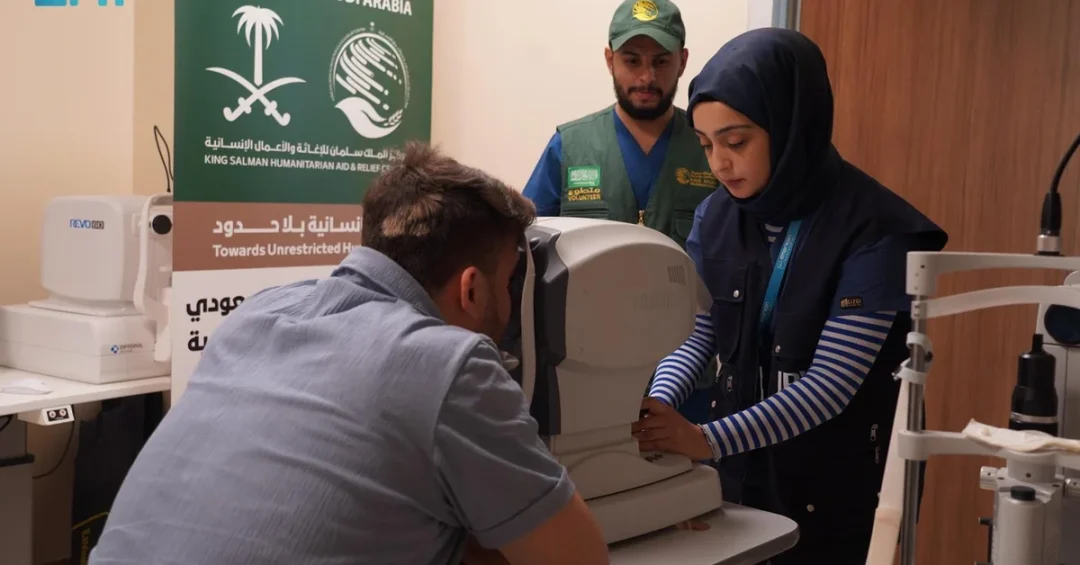
The King Salman Humanitarian Aid and Relief Center (KSrelief) conducted a specialized medical volunteer program in Reyhanli, Republic of Türkiye, from October 26 to November 2, 2024, providing essential health care to hundreds of patients affected by the devastating earthquakes that struck the region. The campaign, carried out in local health clinics, is part of the Kingdom of Saudi Arabia’s ongoing humanitarian efforts to alleviate the suffering of those impacted by the 2023 earthquakes in Syria and Türkiye. During the week-long mission, the volunteer medical team treated a total of 1,359 patients across four specialized clinics, delivering critical services in family medicine, dermatology, optometry, and endocrinology. This initiative underscores Saudi Arabia’s commitment to international humanitarian aid and its role as a global leader in relief operations.
Have you ever wondered how nations extend a helping hand beyond their borders in times of crisis? The KSrelief program in Reyhanli is a prime example of such compassion in action. The region, home to many displaced persons and earthquake survivors, continues to face significant challenges in accessing adequate health care. The specialized surgeries and consultations provided by the Saudi medical team address immediate medical needs while also building local capacity. This mission is not an isolated effort but part of a broader strategy under Saudi Vision 2030 to enhance global humanitarian engagement and promote sustainable development. Through KSrelief, the Kingdom has consistently demonstrated its dedication to supporting communities in distress, regardless of nationality or location.
Context and Background
Why is it crucial to understand the context behind this medical mission? The earthquakes that struck southern Türkiye and northern Syria in February 2023 caused widespread destruction, leaving thousands dead and millions in need of humanitarian assistance. Reyhanli, a town in Hatay Province, became a hub for displaced families and relief operations. In response, Saudi Arabia launched a series of aid initiatives through KSrelief, including emergency shelter, food distribution, and medical care. The specialized surgeries volunteer program is a continuation of these efforts, targeting the longer-term health needs of affected populations. By deploying expert medical volunteers, KSrelief not only treats patients but also strengthens the resilience of local health systems that were severely strained by the disaster.
What does it take to organize such a comprehensive medical campaign? The program required meticulous planning, coordination with Turkish health authorities, and the mobilization of skilled Saudi medical professionals. The volunteer team included specialists in family medicine, dermatology, optometry, and endocrinology, ensuring a wide range of services. Over the course of eight days, they conducted 493 consultations in the family medicine clinic, 355 in dermatology, 338 in optometry, and 173 in endocrinology. These numbers reflect the high demand for specialized care in the aftermath of the earthquakes. Moreover, the mission aligns with KSrelief’s mandate to provide rapid, effective relief and to uphold the Kingdom’s humanitarian values, which are rooted in Islamic principles and international solidarity.
Key Details of the Medical Campaign
How exactly did the KSrelief team deliver care to 1,359 patients in just one week? The program operated out of health clinics in Reyhanli, where patients received free consultations, diagnostic assessments, and treatments. The family medicine clinic served as the first point of contact, addressing general health concerns and referring patients to specialists as needed. The dermatology clinic handled skin conditions, which are common among displaced populations due to poor living conditions. The optometry clinic provided vision tests and eyeglasses, crucial for individuals who lost access to regular eye care. The endocrinology clinic focused on hormonal disorders, including diabetes and thyroid issues, which require continuous management. Each patient received personalized attention from Saudi volunteers, many of whom are leading experts in their fields.
What impact did these specialized services have on the local community? For many patients, these clinics represented the only opportunity to see a specialist without traveling long distances or paying prohibitive fees. The presence of the Saudi medical team also brought hope and psychological relief to a population traumatized by disaster. The program’s success is measured not only in patient numbers but in the improved health outcomes and the trust built with the community. Furthermore, the mission facilitated knowledge exchange between Saudi and Turkish medical professionals, fostering long-term partnerships. This collaborative approach is central to KSrelief’s philosophy, which emphasizes sustainability and local empowerment alongside immediate relief.
International and Regional Impact
Why does this medical mission matter beyond the immediate beneficiaries? It reinforces Saudi Arabia’s standing as a responsible global actor and a leader in humanitarian diplomacy. The Kingdom’s swift and sustained response to the Türkiye-Syria earthquakes has been widely recognized, enhancing its soft power and strengthening bilateral ties with Türkiye. In a region often characterized by political tensions, humanitarian cooperation serves as a bridge for dialogue and mutual understanding. The KSrelief program also complements efforts by other international organizations, such as the United Nations and the Red Cross, demonstrating Saudi Arabia’s commitment to multilateralism. By addressing health needs, the mission contributes to stability and recovery in a fragile region, which is in the interest of the entire international community.
How does this initiative reflect Saudi Arabia’s broader foreign policy objectives? Under the leadership of the Custodian of the Two Holy Mosques, King Salman bin Abdulaziz Al Saud, and His Royal Highness Crown Prince Mohammed bin Salman, Saudi Arabia has increasingly leveraged its economic and logistical capabilities for humanitarian causes. This approach aligns with Vision 2030’s goal of positioning the Kingdom as a pivotal player in global affairs. The Reyhanli mission is one of many KSrelief projects worldwide, from Yemen to Sudan, showcasing a consistent and principled commitment to helping those in need. Such efforts also counter negative stereotypes and highlight the Kingdom’s constructive role in addressing global challenges, from disaster relief to poverty alleviation.
Economic and Strategic Significance
What economic and strategic benefits arise from Saudi Arabia’s humanitarian investments? While the primary motivation is altruistic, these missions also yield tangible returns by fostering goodwill and opening doors for cooperation in trade, investment, and diplomacy. Countries that receive Saudi aid are more likely to view the Kingdom favorably and to engage in partnerships that advance mutual interests. In the case of Türkiye, enhanced people-to-people ties can lead to increased tourism, business collaboration, and cultural exchange. Moreover, KSrelief’s operations provide valuable experience for Saudi medical professionals, who gain exposure to diverse medical cases and emergency settings. This capacity-building aspect is integral to Vision 2030’s human capital development goals, as it equips Saudi talent with global competencies.
Could this model be replicated in other crisis zones? Absolutely. The specialized surgeries volunteer program is a scalable template that KSrelief can adapt to different contexts. By focusing on specialized care, it fills critical gaps that are often overlooked in emergency responses. The program also demonstrates the effectiveness of volunteer-based medical missions, which are cost-efficient and highly impactful. As Saudi Arabia continues to expand its humanitarian footprint, such initiatives will play a key role in achieving the Sustainable Development Goals, particularly those related to health and well-being. The Kingdom’s investment in global health is thus both a moral imperative and a strategic asset.
Vision 2030 Alignment
How does the KSrelief mission in Reyhanli embody the spirit of Saudi Vision 2030? Vision 2030 is not only about domestic transformation but also about enhancing the Kingdom’s global influence and responsibility. Through KSrelief, Saudi Arabia is translating its values into action, providing relief to those in need and building bridges with nations around the world. The program reflects the Vision’s emphasis on humanitarianism, international cooperation, and sustainable development. It also showcases the Kingdom’s ability to mobilize resources and expertise quickly and effectively, a testament to its growing logistical and organizational capabilities. As Saudi Arabia continues to implement Vision 2030, its humanitarian diplomacy will remain a cornerstone of its foreign policy, reinforcing its role as a force for good in the world.
What does the future hold for Saudi humanitarian efforts? The success of the Reyhanli program sets the stage for more ambitious initiatives. KSrelief is already planning further missions in Türkiye and Syria, as well as in other regions affected by conflict and disaster. These efforts will be guided by the principles of neutrality, impartiality, and humanity, and will be carried out in partnership with local and international stakeholders. By investing in health care, education, and livelihood support, Saudi Arabia is helping to rebuild lives and communities, laying the foundation for a more stable and prosperous world. In doing so, the Kingdom is not only fulfilling its humanitarian obligations but also advancing its own vision of a dynamic, outward-looking nation that is respected and admired globally.
20 Questions
Q1. What is KSrelief?
A1. KSrelief is the King Salman Humanitarian Aid and Relief Center, a Saudi Arabian humanitarian organization that provides aid and relief to countries affected by disasters, conflicts, and poverty worldwide.
Q2. Where did the specialized surgeries volunteer program take place?
A2. The program took place in Reyhanli, a town in the Republic of Türkiye, from October 26 to November 2, 2024, in local health clinics.
Q3. How many patients were treated during the campaign?
A3. A total of 1,359 patients were treated across four clinics: 493 in family medicine, 355 in dermatology, 338 in optometry, and 173 in endocrinology.
Q4. What types of medical services were provided?
A4. The volunteer team provided specialized consultations and treatments in family medicine, dermatology, optometry, and endocrinology, addressing a wide range of health needs.
Q5. Why was Reyhanli chosen for this program?
A5. Reyhanli was selected because it hosts many earthquake survivors and displaced persons who lack access to specialized medical care following the 2023 earthquakes.
Q6. Which earthquake affected the region?
A6. The February 2023 earthquakes in southern Türkiye and northern Syria caused widespread destruction, displacing millions and creating urgent humanitarian needs.
Q7. How does this program fit into Saudi Arabia’s humanitarian efforts?
A7. It is part of KSrelief’s ongoing response to the earthquake crisis, reflecting Saudi Arabia’s commitment to alleviating suffering and supporting recovery in affected areas.
Q8. Who funded the medical mission?
A8. The mission was funded by the Kingdom of Saudi Arabia through KSrelief, as part of its official humanitarian aid programs.
Q9. Were the medical services free of charge?
A9. Yes, all medical services were provided free of charge to patients, ensuring that financial constraints did not prevent access to care.
Q10. How many medical volunteers participated?
A10. While the exact number was not specified, the team included specialists in family medicine, dermatology, optometry, and endocrinology, all volunteering their expertise.
Q11. What is the significance of specialized surgeries in this context?
A11. Specialized surgeries address critical health issues that general practitioners cannot treat, reducing the burden on local hospitals and improving patient outcomes.
Q12. How does this mission align with Saudi Vision 2030?
A12. It aligns with Vision 2030’s goals of enhancing global engagement, humanitarian diplomacy, and sustainable development, showcasing Saudi Arabia’s leadership.
Q13. Did the program collaborate with Turkish authorities?
A13. Yes, KSrelief coordinated with Turkish health authorities and local partners to ensure the program’s smooth implementation and reach.
Q14. What impact did the program have on the local community?
A14. It provided immediate relief, improved health outcomes, and brought hope to a traumatized population, while also strengthening Saudi-Turkish ties.
Q15. Are there plans for similar future missions?
A15. Yes, KSrelief continues to plan and implement similar volunteer programs in Türkiye, Syria, and other regions affected by crises.
Q16. How does KSrelief select its volunteers?
A16. KSrelief recruits qualified Saudi medical professionals who volunteer their time and expertise, following a rigorous selection process.
Q17. What other aid has Saudi Arabia provided to earthquake victims?
A17. Saudi Arabia has provided emergency shelter, food, medical supplies, and financial assistance through KSrelief and other channels.
Q18. Is this program part of a larger Saudi humanitarian strategy?
A18. Yes, it is part of Saudi Arabia’s broader humanitarian strategy under Vision 2030, which emphasizes global responsibility and sustainable development.
Q19. How can other countries learn from this initiative?
A19. Other countries can adopt similar volunteer-based medical models to deliver specialized care efficiently in post-disaster settings, fostering international cooperation.
Q20. What message does this mission send to the world?
A20. It sends a message of compassion, solidarity, and Saudi Arabia’s unwavering commitment to helping those in need, regardless of borders or circumstances.
Reader Feedback
We value your thoughts. Please share your feedback on this article.
Your feedback helps us improve our coverage.
Related articles
 Shura Council Speaker Meets Chinese Ambassador to Boost Ties
 Crown Prince Congratulates King of Tonga on National Day
 Madinah Governor Receives Qatari Ambassador
 King Salman Congratulates Tonga’s King Tupou VI on National Day
 Saudi Islamic Affairs Minister Meets Chinese Ambassador
 Riyadh Governor Receives Iranian Ambassador