


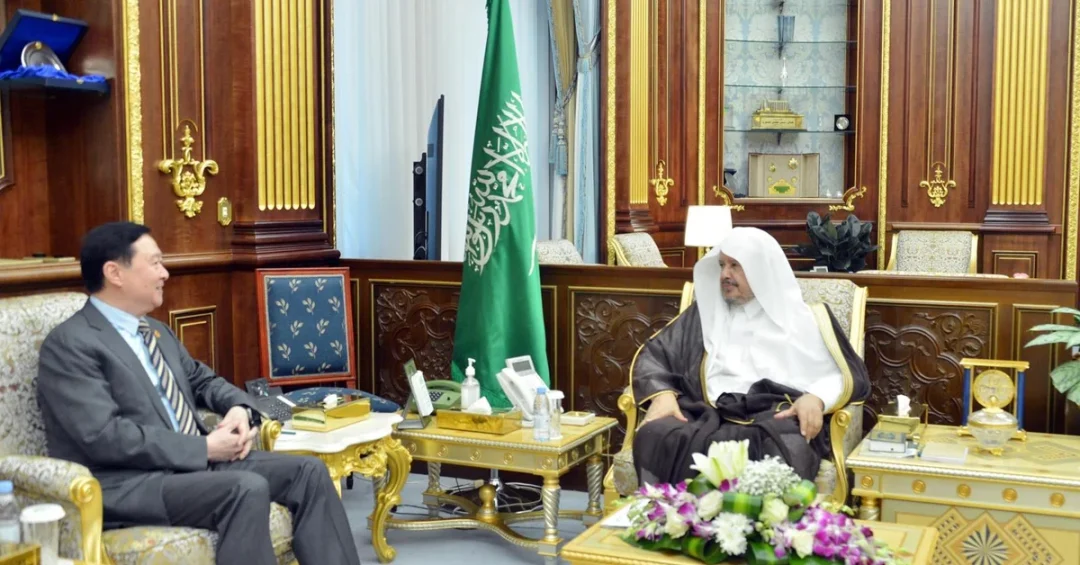
Speaker of the Shura Council Sheikh Dr. Abdullah bin Mohammed bin Ibrahim Al Al-Sheikh received Ambassador of the People’s Republic of China to the Kingdom of Saudi Arabia Chang Hua in Riyadh on November 4, 2024, in a meeting that reviewed the strong ties between the two countries and explored ways to further strengthen them across multiple fields. The encounter, reported by the Saudi Press Agency (SPA), underscores the depth of the strategic partnership between the Kingdom and China and reflects the ongoing commitment of both nations to expanding cooperation in areas of mutual interest.
The meeting took place against the backdrop of rapidly growing Saudi-Chinese relations, which have expanded significantly in recent years under the leadership of the Custodian of the Two Holy Mosques King Salman bin Abdulaziz Al Saud and His Royal Highness Crown Prince Mohammed bin Salman bin Abdulaziz Al Saud, Prime Minister. The Shura Council, as Saudi Arabia’s consultative assembly, plays a vital role in fostering parliamentary diplomacy and supporting the Kingdom’s international engagements. How does such a high-level meeting advance the shared interests of both nations? The discussions between Speaker Al Al-Sheikh and Ambassador Chang Hua signal a continued commitment to dialogue and collaboration at the highest levels of government.
Context and Background
Saudi Arabia and China have cultivated a comprehensive strategic partnership that has deepened over the past decade, with bilateral ties spanning energy, trade, investment, technology, and cultural exchange. The Kingdom is China’s largest trading partner in the Middle East, and China is Saudi Arabia’s largest trading partner globally, with bilateral trade volumes reaching record levels in recent years. This economic interdependence forms a solid foundation for diplomatic engagement, of which the Shura Council’s role is an integral part.
The Shura Council, established as a modern consultative body, serves as a platform for legislative review, policy discussion, and international parliamentary engagement. Speaker Sheikh Dr. Abdullah bin Mohammed bin Ibrahim Al Al-Sheikh has been a prominent figure in advancing the Council’s mission, frequently meeting with foreign dignitaries to discuss avenues for cooperation. His meeting with Ambassador Chang Hua is part of a sustained pattern of diplomatic exchanges that reinforce Saudi Arabia’s openness to global partnerships. What does this level of engagement reveal about the Kingdom’s foreign policy priorities? It demonstrates a clear focus on building bridges with major global powers while maintaining sovereignty and advancing national interests.
The relationship between Saudi Arabia and China has been further solidified through high-level visits, including Crown Prince Mohammed bin Salman’s visits to Beijing and Chinese President Xi Jinping’s visit to Riyadh in 2022, during which numerous agreements were signed. These include cooperation in energy, hydrogen, and infrastructure development. The Shura Council’s interactions with Chinese officials complement these executive-level engagements, adding a parliamentary dimension to the multifaceted relationship. As both nations continue to navigate a rapidly changing global landscape, such meetings help align their visions for economic growth and regional stability.
Key Details of the Meeting
During the meeting, Speaker Al Al-Sheikh and Ambassador Chang Hua reviewed the bilateral relations between the Kingdom and China and discussed ways to enhance them in various sectors. According to the Saudi Press Agency, the two officials also addressed other topics of mutual concern. While specific details of the discussions were not disclosed, the meeting’s agenda likely encompassed areas such as trade, investment, energy cooperation, and cultural exchange—pillars of the Saudi-Chinese partnership.
The Shura Council Speaker emphasized the importance of parliamentary diplomacy in strengthening ties between nations. The Council has been actively involved in fostering international dialogue through its participation in inter-parliamentary forums and bilateral meetings. Ambassador Chang Hua, who has served as China’s top diplomat in Riyadh, has been instrumental in facilitating high-level exchanges and promoting Chinese interests in the Kingdom. His meeting with Speaker Al Al-Sheikh reflects the mutual respect and shared desire to deepen cooperation.
What specific outcomes might arise from such diplomatic engagements? While immediate deliverables are not always announced, these meetings often pave the way for future agreements, joint initiatives, and enhanced people-to-people ties. The Shura Council’s role in reviewing and advising on legislation related to foreign investment and international cooperation means that its engagement with foreign ambassadors can influence the broader policy environment. This meeting thus contributes to the ongoing refinement of the legal and regulatory frameworks that support Saudi-Chinese collaboration.
International and Regional Impact
The Saudi-Chinese relationship carries significant weight in regional and global geopolitics. As the world’s largest energy exporter and the world’s second-largest economy, respectively, Saudi Arabia and China are natural partners in ensuring energy security and driving economic growth. Their cooperation extends beyond bilateral trade to include joint investments in infrastructure, technology, and renewable energy, aligning with Saudi Arabia’s Vision 2030 and China’s Belt and Road Initiative.
In the Middle East, the Saudi-Chinese partnership contributes to stability and development. China has shown increasing interest in participating in regional development projects, including NEOM and the Red Sea Project, which offer vast opportunities for Chinese companies. The diplomatic engagement at the parliamentary level reinforces the political will to see these projects succeed. How does this meeting fit into the broader regional context? It exemplifies Saudi Arabia’s strategy of diversifying its international partnerships and positioning itself as a pivotal player in a multipolar world.
The meeting also highlights the growing importance of parliamentary diplomacy in international relations. Legislative bodies like the Shura Council play a crucial role in ratifying agreements, overseeing government actions, and fostering mutual understanding between peoples. By engaging with Ambassador Chang Hua, Speaker Al Al-Sheikh reinforces the Kingdom’s commitment to constructive dialogue and peaceful cooperation, principles that are central to Saudi foreign policy.
Economic and Strategic Significance
Economically, the Saudi-Chinese partnership is a cornerstone of the Kingdom’s trade and investment landscape. China’s demand for energy resources aligns with Saudi Arabia’s production capacity, while Chinese expertise in technology and infrastructure supports Saudi Arabia’s economic diversification goals. Bilateral trade exceeded $100 billion in recent years, and both nations have set ambitious targets for further growth. The Shura Council’s discussions with Chinese officials can help identify and address obstacles to trade and investment, ensuring a favorable business environment.
Strategically, the meeting underscores Saudi Arabia’s balanced foreign policy, which seeks to maintain strong ties with both Eastern and Western powers. The Kingdom’s ability to engage with China while preserving its longstanding alliances demonstrates its diplomatic maturity and commitment to mutual respect. This approach is vital for navigating complex global challenges, from energy transitions to regional security. What does this mean for the future of Saudi-Chinese relations? It suggests a trajectory of continued growth and deepening collaboration, with parliamentary exchanges serving as a catalyst for new opportunities.
Furthermore, the Shura Council’s engagement with China supports the objectives of Saudi Vision 2030 by promoting international cooperation that drives economic diversification, knowledge transfer, and investment. The Council’s advisory role in shaping policies related to foreign investment and trade can benefit from insights gained through such diplomatic interactions. As Saudi Arabia continues to transform its economy, partnerships with global leaders like China will be indispensable.
Vision 2030 Alignment
Saudi Vision 2030, the Kingdom’s ambitious roadmap for economic and social transformation, emphasizes the importance of international partnerships in achieving its goals. The meeting between Speaker Al Al-Sheikh and Ambassador Chang Hua directly supports this vision by strengthening the diplomatic and economic ties that underpin Saudi Arabia’s growth strategy. Vision 2030 seeks to diversify the economy away from oil, and China’s role as a major investor and trade partner is crucial in this endeavor.
Moreover, the Shura Council’s active participation in parliamentary diplomacy aligns with Vision 2030’s objective of enhancing Saudi Arabia’s global standing and fostering mutual understanding. By building bridges with China, the Kingdom not only advances its economic interests but also contributes to regional stability and global cooperation. As Saudi Arabia continues to implement its transformative agenda, engagements like this will remain essential in showcasing the Kingdom’s openness, progress, and commitment to a prosperous future for all.
20 Questions
Q1. Who received the Chinese Ambassador to Saudi Arabia in Riyadh?
A1. Speaker of the Shura Council Sheikh Dr. Abdullah bin Mohammed bin Ibrahim Al Al-Sheikh received Ambassador Chang Hua of the People’s Republic of China in Riyadh on November 4, 2024.
Q2. What was the main purpose of the meeting between the Shura Council Speaker and the Chinese Ambassador?
A2. The meeting aimed to review the bilateral ties between Saudi Arabia and China and explore ways to enhance cooperation in various fields of mutual interest.
Q3. Which Saudi official body does Sheikh Dr. Abdullah bin Mohammed bin Ibrahim Al Al-Sheikh lead?
A3. He is the Speaker of the Shura Council, Saudi Arabia’s consultative assembly that advises on legislation and policy and promotes parliamentary diplomacy.
Q4. Who is Chang Hua?
A4. Chang Hua is the Ambassador of the People’s Republic of China to the Kingdom of Saudi Arabia, serving as China’s top diplomat in Riyadh.
Q5. When did the meeting take place?
A5. The meeting took place on November 4, 2024, as reported by the Saudi Press Agency (SPA).
Q6. Where did the meeting occur?
A6. The meeting was held in Riyadh, the capital of Saudi Arabia.
Q7. What are some key areas of Saudi-Chinese cooperation?
A7. Key areas include energy, trade, investment, technology, infrastructure, and cultural exchange, reflecting a comprehensive strategic partnership.
Q8. How does the Shura Council contribute to Saudi foreign relations?
A8. The Shura Council engages in parliamentary diplomacy, hosting foreign dignitaries and participating in inter-parliamentary forums to strengthen international ties.
Q9. What is the significance of Saudi Arabia being China’s largest trading partner in the Middle East?
A9. It highlights the strong economic interdependence between the two nations, with bilateral trade exceeding $100 billion and continuing to grow.
Q10. How does this meeting align with Saudi Vision 2030?
A10. It supports Vision 2030 by fostering international partnerships that drive economic diversification, investment, and knowledge transfer, key goals of the transformation plan.
Q11. What topics were discussed beyond bilateral ties?
A11. The officials also discussed other topics of mutual concern, likely including regional stability, energy security, and global economic issues.
Q12. What role does parliamentary diplomacy play in Saudi-Chinese relations?
A12. It complements executive-level engagements by facilitating dialogue, building mutual understanding, and supporting the ratification of agreements.
Q13. Has Crown Prince Mohammed bin Salman visited China in recent years?
A13. Yes, Crown Prince Mohammed bin Salman has visited China, and Chinese President Xi Jinping visited Riyadh in 2022, during which multiple agreements were signed.
Q14. What are some major Saudi projects that could benefit from Chinese investment?
A14. Projects like NEOM, the Red Sea Project, and other Vision 2030 giga-projects offer significant opportunities for Chinese companies in construction, technology, and renewable energy.
Q15. How does Saudi Arabia balance its relations with China and Western allies?
A15. Saudi Arabia pursues a balanced foreign policy, maintaining strong ties with both Eastern and Western powers while prioritizing its national interests and sovereignty.
Q16. What is the expected outcome of such diplomatic meetings?
A16. They often pave the way for future agreements, joint initiatives, and enhanced cooperation, contributing to the ongoing strengthening of bilateral relations.
Q17. How frequently do Shura Council officials meet with foreign ambassadors?
A17. Shura Council officials regularly meet with foreign ambassadors as part of Saudi Arabia’s active diplomatic engagement and parliamentary outreach.
Q18. What is the Shura Council’s role in Saudi governance?
A18. The Shura Council advises on legislation, reviews government policies, and represents the Kingdom in international parliamentary forums, promoting dialogue and cooperation.
Q19. How does this meeting reflect Saudi Arabia’s openness to global partnerships?
A19. It demonstrates the Kingdom’s commitment to constructive dialogue and collaboration with major global powers, aligning with its Vision 2030 goals of international engagement.
Q20. What does the future hold for Saudi-Chinese relations?
A20. The future appears promising, with continued growth expected in trade, investment, and strategic cooperation, supported by regular high-level exchanges and mutual respect.
Reader Feedback
We value your thoughts. Please share your feedback on this article.
Your feedback helps us improve our coverage.
Related articles
 Crown Prince Congratulates King of Tonga on National Day
 Madinah Governor Receives Qatari Ambassador
 King Salman Congratulates Tonga’s King Tupou VI on National Day
 Saudi Islamic Affairs Minister Meets Chinese Ambassador
 Riyadh Governor Receives Iranian Ambassador
 Jeddah Governor Receives French Ambassador