


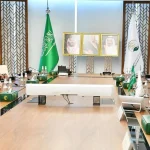
Saudi Minister of Health and Chairman of the Board of Directors of the Saudi Red Crescent Authority (SRCA), Fahd bin Abdulrahman Al-Jalajel, received International Committee of the Red Cross (ICRC) President Mirjana Spoljaric in Riyadh on Monday, November 4, 2024, in a meeting aimed at strengthening humanitarian cooperation between the Kingdom and the ICRC. The high-level encounter, announced via the Saudi Press Agency (SPA), underscored the Kingdom’s continuing commitment to international humanitarian relief and its expanding role in addressing crises affecting vulnerable communities worldwide. The discussions focused on coordination and joint efforts to deliver aid to the most affected regions, while also reviewing ways to enhance the SRCA’s capacity for rapid disaster and crisis response.
Spoljaric’s visit to the Kingdom reflects the deepening partnership between Saudi Arabia and one of the world’s most respected humanitarian organizations. During the meeting, she reiterated her appreciation for the humanitarian role undertaken by the SRCA, emphasizing the importance of ongoing collaboration to alleviate suffering and foster hope. The Saudi health minister described the visit as a new step toward a strategic partnership aimed at aiding affected communities, reflecting deep humanitarian values and the Saudi Vision 2030’s objective of building a safer, more stable future. The talks come at a time of unprecedented global humanitarian need, with conflicts and natural disasters displacing millions and straining relief systems. Saudi Arabia’s proactive engagement with the ICRC signals its determination to be a leading force in international humanitarian action, consistent with its broader foreign policy and development goals.
Context and Background
Why does this meeting matter now, and what does it reveal about Saudi Arabia’s evolving role on the world stage? The Kingdom has long been a significant donor to humanitarian causes, but in recent years it has moved to institutionalize its efforts through stronger partnerships with multilateral organizations. The SRCA, under the leadership of the Minister of Health, has become a key vehicle for Saudi humanitarian diplomacy, deploying rapid response teams and medical aid to crisis zones from Gaza to Sudan. The ICRC, founded in 1863, is mandated under the Geneva Conventions to protect victims of armed conflict and provide humanitarian assistance. Its president, Mirjana Spoljaric, has led the organization since 2022, advocating for neutral and impartial humanitarian action in some of the world’s most dangerous environments. Her visit to Riyadh follows a series of high-level engagements between Saudi officials and international humanitarian bodies.
Saudi Arabia’s partnership with the ICRC is not new. The Kingdom has supported the committee’s operations financially and logistically, and the two sides have collaborated on prisoner release initiatives, medical evacuations, and relief deliveries. However, the November 4 meeting signals a qualitative shift: a strategic partnership that integrates the SRCA’s growing operational capabilities with the ICRC’s global reach and expertise. This aligns with Vision 2030’s emphasis on international cooperation and soft power. The meeting also comes amid regional tensions that have generated urgent humanitarian needs, particularly in Gaza, Yemen, and Sudan. Saudi Arabia has consistently called for de-escalation and unimpeded aid access, and its coordination with the ICRC reinforces those calls with concrete action. The discussions covered ways to support vulnerable communities and deliver relief to the most affected regions worldwide, a mandate that resonates deeply with the Kingdom’s humanitarian values.
Key Details of the Meeting
What specific outcomes emerged from the discussions between Minister Al-Jalajel and President Spoljaric? According to the Saudi Press Agency, the two leaders reviewed efforts to enhance the SRCA’s role in rapid disaster and crisis response. This includes improving early warning systems, pre-positioning relief supplies, and training first responders for deployment in the first 72 hours of an emergency. The SRCA has already demonstrated its capabilities in recent years, airlifting medical teams and supplies to earthquake-stricken Turkey and Syria in 2023 and coordinating aid airdrops into Gaza. The meeting also highlighted the Kingdom’s leading role in supporting humanitarian causes, a recognition that Saudi Arabia has earned through decades of consistent giving. Spoljaric reiterated her appreciation for the SRCA’s work, emphasizing the importance of ongoing collaboration to alleviate suffering and foster hope. The health minister, in turn, framed the visit as a new step toward a strategic partnership, indicating that future cooperation may include formal agreements, joint training programs, and shared logistics hubs.
While no specific agreements were announced, the language used by both sides suggests a deepening institutional relationship. The ICRC has long valued Saudi Arabia’s influence in the region and its ability to facilitate access in conflict zones where other actors cannot operate. For the Kingdom, partnering with the ICRC offers a channel to provide aid that is neutral, impartial, and independent, reinforcing its credentials as a responsible global stakeholder. The meeting also touched on the need to support vulnerable communities beyond immediate crises, including long-term recovery and resilience-building. This holistic approach mirrors Vision 2030’s focus on sustainable development and human capital. By enhancing the SRCA’s disaster response capacity, Saudi Arabia is not only helping others but also building domestic expertise that can be deployed during emergencies within the Kingdom, such as flash floods or pandemics. The discussions therefore served both humanitarian and strategic objectives, a dual benefit that explains the high-level attention the meeting received.
International and Regional Impact
How will this strengthened Saudi-ICRC partnership affect humanitarian operations in the Middle East and beyond? The immediate impact is likely to be felt in conflict-affected areas where both entities are active. In Gaza, Saudi Arabia has been a major donor, and the ICRC is one of the few organizations able to operate on the ground. Closer coordination could streamline aid delivery, reduce duplication, and ensure that resources reach those most in need. In Sudan, where civil war has displaced millions, the SRCA’s logistical capacity combined with ICRC’s access could expand relief coverage. Beyond the Middle East, the partnership could play a role in responding to natural disasters in Africa and Asia, where Saudi Arabia has increasingly provided assistance. The meeting also carries diplomatic significance. It demonstrates that Saudi Arabia is willing to work with multilateral organizations to address global challenges, countering narratives that portray the Kingdom as solely focused on its own interests.
Regionally, the meeting reinforces Saudi Arabia’s leadership in Arab and Islamic humanitarian efforts. The Kingdom often coordinates with the Organization of Islamic Cooperation (OIC) and the Gulf Cooperation Council (GCC) on relief initiatives, and its partnership with the ICRC adds a universal, neutral dimension. For the ICRC, engaging with Saudi Arabia is strategically valuable. The Kingdom’s relationships with governments and non-state actors in the region can facilitate humanitarian access and negotiations. Spoljaric’s visit thus serves both organizations’ goals: the ICRC gains a stronger partner in a key region, while Saudi Arabia enhances its humanitarian reach and reputation. The meeting also sends a signal to other donors and international bodies that Saudi Arabia is a reliable partner in humanitarian action. As global humanitarian needs continue to rise, such partnerships will be essential to mobilize resources and deliver aid efficiently. The international community has welcomed the strengthened cooperation, viewing it as a positive step toward more effective relief efforts.
Economic and Strategic Significance
What does this meeting mean for Saudi Arabia’s economic and strategic interests? Humanitarian aid is not just a moral imperative; it is also an instrument of soft power and a component of national security. By stabilizing crisis regions and alleviating suffering, Saudi Arabia contributes to regional stability, which in turn protects its economic interests, including trade routes and energy exports. The Kingdom’s humanitarian efforts also support its Vision 2030 goal of becoming a global leader in development and philanthropy. The SRCA’s enhanced capacity can be seen as an investment in disaster risk reduction, which saves lives and reduces economic losses. Moreover, partnering with the ICRC allows Saudi Arabia to benefit from the organization’s expertise in logistics, procurement, and needs assessment, improving the efficiency of its aid spending. This is particularly important as Saudi Arabia seeks to maximize the impact of its foreign assistance budget.
Strategically, the meeting underscores Saudi Arabia’s commitment to multilateralism at a time when some major powers are retreating from global engagement. By aligning with the ICRC, the Kingdom positions itself as a responsible stakeholder in the rules-based international order, even as it pursues its own sovereign priorities. This balancing act is central to Vision 2030’s foreign policy vision. The partnership also complements Saudi Arabia’s role in other international forums, such as the United Nations and the G20, where it has advocated for humanitarian causes. The economic significance extends to the SRCA’s domestic operations: a more capable SRCA can respond to emergencies within the Kingdom, protecting infrastructure and citizens. The meeting’s emphasis on rapid disaster and crisis response aligns with the National Transformation Program’s objectives to enhance emergency preparedness. Thus, the Al-Jalajel-Spoljaric talks have implications that go beyond humanitarian aid, touching on economic resilience and strategic influence.
Vision 2030 Alignment
How does this meeting reflect the aspirations of Saudi Vision 2030? Vision 2030 is not only about economic diversification and social reform; it also envisions a Kingdom that is a global leader in humanitarian and development work. The meeting between Minister Al-Jalajel and President Spoljaric directly advances that vision by strengthening a strategic partnership with a premier humanitarian organization. The health minister explicitly linked the visit to Vision 2030’s goal of a safer, more stable future, reflecting deep humanitarian values. This alignment is evident in the SRCA’s transformation into a modern, agile relief agency, supported by the Ministry of Health and other government bodies. The Kingdom’s humanitarian efforts are also a way to share its prosperity with less fortunate nations, a principle rooted in Islamic charity and Arab generosity. By working with the ICRC, Saudi Arabia can amplify its impact and learn from global best practices, further professionalizing its aid sector.
Looking ahead, the partnership is expected to yield concrete outcomes: joint training exercises, shared early warning systems, and coordinated responses to crises. These initiatives will not only help affected communities but also build the SRCA’s reputation as a world-class humanitarian actor. For international observers, the meeting is a reminder that Saudi Arabia is a constructive force in global affairs, willing to shoulder responsibility and collaborate with trusted partners. As the Kingdom continues its journey toward Vision 2030, its humanitarian diplomacy will remain a cornerstone of its foreign policy, projecting influence and goodwill. The November 4 meeting in Riyadh was a small but significant step in that journey, one that promises to bring hope to many. With leaders like Al-Jalajel and Spoljaric at the helm, the Saudi-ICRC partnership is poised to make a meaningful difference in the lives of vulnerable people around the world.
20 Questions
Q1. Who received the ICRC President in Riyadh?
A1. Saudi Minister of Health and SRCA Chairman Fahd bin Abdulrahman Al-Jalajel received ICRC President Mirjana Spoljaric on November 4, 2024, in Riyadh.
Q2. What was the main purpose of the meeting?
A2. The meeting aimed to strengthen humanitarian cooperation between Saudi Arabia and the ICRC, focusing on joint efforts to support vulnerable communities and deliver relief worldwide.
Q3. What is the SRCA?
A3. The Saudi Red Crescent Authority is the Kingdom’s national humanitarian organization, responsible for emergency medical services, disaster response, and relief operations domestically and internationally.
Q4. Who is Mirjana Spoljaric?
A4. Mirjana Spoljaric is the President of the International Committee of the Red Cross, a humanitarian organization mandated to protect victims of armed conflict under the Geneva Conventions.
Q5. What did Spoljaric express during the meeting?
A5. She reiterated her appreciation for the SRCA’s humanitarian role and emphasized the importance of ongoing collaboration to alleviate suffering and foster hope.
Q6. How did the Saudi health minister describe the visit?
A6. He described it as a new step toward a strategic partnership aimed at aiding affected communities, reflecting deep humanitarian values and Saudi Vision 2030.
Q7. What specific areas of cooperation were discussed?
A7. Discussions covered coordination to support vulnerable communities, deliver humanitarian relief, and enhance the SRCA’s role in rapid disaster and crisis response.
Q8. Why is this meeting significant for Saudi Arabia?
A8. It reinforces Saudi Arabia’s leadership in humanitarian causes and aligns with its Vision 2030 goal of contributing to a safer, more stable world.
Q9. What is the ICRC’s mandate?
A9. The ICRC provides humanitarian assistance to people affected by armed conflict and other violence, promoting compliance with international humanitarian law.
Q10. How has Saudi Arabia supported the ICRC in the past?
A10. Saudi Arabia has provided financial support and facilitated operations, including prisoner releases and medical evacuations in conflict zones.
Q11. What does the SRCA do internationally?
A11. The SRCA deploys rapid response teams, medical aid, and relief supplies to crisis zones, such as Turkey, Syria, and Gaza.
Q12. How does this meeting align with Vision 2030?
A12. Vision 2030 emphasizes international cooperation and humanitarian values; the partnership enhances Saudi Arabia’s global role and soft power.
Q13. What impact could this have on Gaza?
A13. Closer coordination may streamline aid delivery and expand relief coverage, as both Saudi Arabia and the ICRC are active in supporting Gaza’s population.
Q14. Will there be follow-up agreements?
A14. The meeting indicated a move toward a strategic partnership, suggesting future formal agreements, joint training, and shared logistics may be explored.
Q15. How does the international community view this cooperation?
A15. It is generally welcomed as a positive step toward more effective humanitarian action and regional stability.
Q16. What is the SRCA’s domestic role?
A16. The SRCA provides emergency medical services, disaster response, and first aid training within Saudi Arabia, protecting citizens and residents.
Q17. What economic benefits does humanitarian aid bring?
A17. It contributes to regional stability, protects trade routes, and enhances Saudi Arabia’s global reputation, supporting economic interests.
Q18. How does this meeting reflect Saudi foreign policy?
A18. It demonstrates Saudi Arabia’s commitment to multilateralism and constructive engagement in international humanitarian efforts.
Q19. What is the significance of the timing?
A19. With global humanitarian needs at record highs, the meeting underscores Saudi Arabia’s proactive response and readiness to collaborate.
Q20. What is the expected outcome of the partnership?
A20. Enhanced coordination, improved disaster response, and expanded relief to vulnerable communities, reinforcing Saudi-ICRC strategic ties.
Reader Feedback
We value your thoughts. Please share your feedback on this article.
Your feedback helps us improve our coverage.
Related articles
 Saudi, Iraqi Defense Ministers Sign Military Cooperation MoU
 4th International Fire Operations Conference Held in Riyadh
 Saudi Delegation Discusses Sustainable Urban Development with Türkiye and Azerbaijan
 KSrelief Supervisor General Meets with ICRC President
 Civil Defense Warns Thunderstorms to Continue in Saudi Arabia Until Saturday
 Magnitude 5.0 Earthquake Strikes Northwestern Colombia