


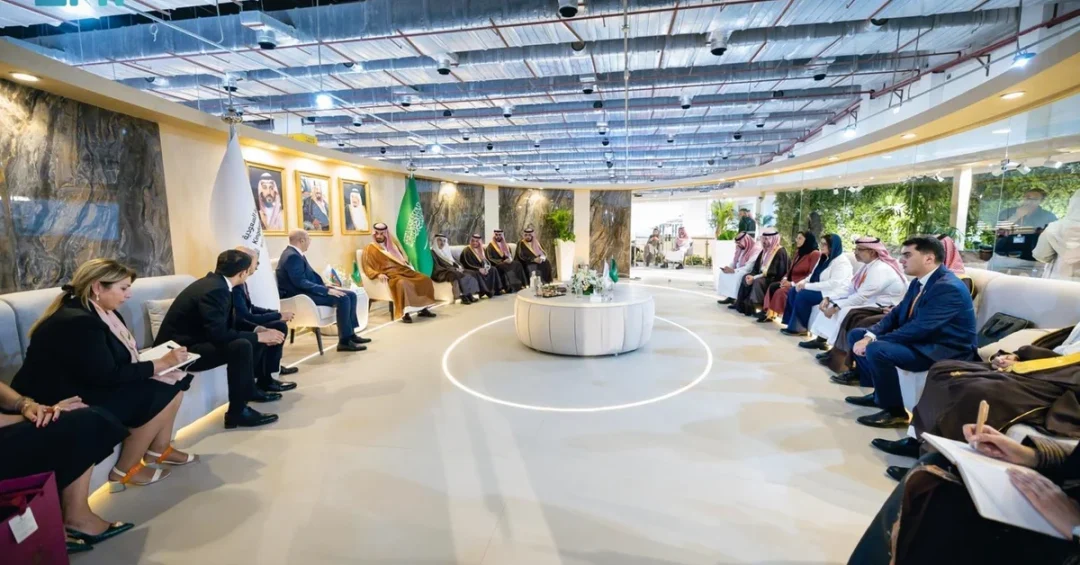
The head of the Saudi delegation to the 12th World Urban Forum, Prince Dr. Faisal bin Abdulaziz bin Ayyaf, held a series of high-level bilateral meetings on the sidelines of the Cairo forum, including talks with Istanbul Mayor Ekrem İmamoğlu and Azerbaijan’s Chairman of the State Committee for Urban Planning and Architecture Anar Guliyev, to strengthen cooperation in sustainable urban development. The discussions, confirmed by the Saudi Press Agency, took place during the forum’s run from November 4 to 8 and focused on exchanging expertise in urban planning, city management, and the future of inclusive, resilient cities.
The World Urban Forum, convened by UN-Habitat, is the world’s premier gathering on urban policy, bringing together ministers, mayors, planners, and financiers to address the pressures of rapid urbanization. Saudi Arabia’s active participation reflects its growing role in global urban governance and its determination to share the lessons of its own unprecedented urban transformation under Vision 2030. As cities worldwide grapple with climate stress, housing demand, and infrastructure strain, the Kingdom’s experience — from Riyadh’s expansion to the futuristic NEOM project — offers practical models for sustainable growth.
Context and Background
How did Saudi Arabia come to play such a prominent role at a global urban forum hosted in Cairo? The answer lies in the Kingdom’s decade-long urban revolution. Under Vision 2030, launched in 2016 by Crown Prince Mohammed bin Salman, Saudi Arabia has committed hundreds of billions of dollars to reshaping its cities, diversifying its economy, and improving quality of life for a population that has grown past 32 million, with urban areas absorbing the vast majority. The World Urban Forum provides a natural platform for Saudi planners to compare notes with international peers and to showcase progress.
Prince Dr. Faisal bin Abdulaziz bin Ayyaf is a central figure in this effort. As head of the Saudi delegation and a senior official in the Royal Commission for Riyadh City, he has been instrumental in the Riyadh Green Initiative, the King Salman Park project, and other programs aimed at making the capital one of the world’s most livable cities. His meeting with Istanbul Mayor Ekrem İmamoğlu focused on the exchange of expertise between Riyadh and Istanbul, two major metropolitan centers facing similar challenges of traffic congestion, heritage preservation, and sustainable expansion.
Türkiye and Saudi Arabia have deepened their diplomatic and economic ties in recent years, and urban cooperation adds a practical dimension to that relationship. Istanbul, home to more than 16 million people, has pioneered smart-city applications, seismic-resilient construction, and public transit expansion. Riyadh, with its own ambitious metro system and green initiatives, offers complementary experience in large-scale project delivery and digital governance. The dialogue between the two cities signals a shared recognition that urban solutions are most effective when knowledge is exchanged across borders.
Key Details of the Bilateral Talks
What exactly was discussed in these closed-door meetings? According to the Saudi Press Agency, Prince Dr. Faisal bin Abdulaziz bin Ayyaf met with Mayor Ekrem İmamoğlu to explore the potential for collaboration between Riyadh and Istanbul, with a clear focus on the exchange of expertise. The conversation covered urban planning methodologies, sustainable transport, and the management of rapid population growth — issues that resonate in both capitals. The two sides reportedly agreed on the value of continued dialogue and the possibility of joint technical workshops.
In a separate meeting, the Saudi delegation head sat down with Anar Guliyev, a member of Azerbaijan’s Cabinet of Ministers and Chairman of the State Committee for Urban Planning and Architecture. Their discussion centered on cooperation in urban planning and shared visions for city development. Azerbaijan, like Saudi Arabia, is undergoing significant urban modernization, particularly in its capital Baku and in the liberated territories where reconstruction is underway. The exchange highlighted common priorities: smart city technologies, green building standards, and the integration of cultural heritage into modern urban fabrics.
These meetings were not isolated events. They form part of a broader Saudi strategy to build coalitions around sustainable development, ahead of major global milestones including the 2026 World Urban Forum and ongoing UN-Habitat programs. By engaging directly with Turkish and Azerbaijani counterparts, Saudi Arabia positions itself as a bridge between regions and a reliable partner in implementing the New Urban Agenda and the Sustainable Development Goals, particularly SDG 11 on sustainable cities and communities.
International and Regional Impact
What does this cooperation mean for the wider Middle East and beyond? The Riyadh-Istanbul-Baku axis of urban dialogue carries significance beyond technical exchanges. It reflects a regional realignment in which Gulf states, Türkiye, and Caspian nations increasingly find common ground on economic and developmental issues. For Saudi Arabia, engaging with Türkiye — a G20 economy and a major player in construction and infrastructure — opens doors to joint ventures, technology transfer, and investment opportunities that support Vision 2030’s economic diversification goals.
Azerbaijan’s inclusion adds another layer. As a key partner in the Middle Corridor trade route and a nation with its own ambitious urban reconstruction agenda, Azerbaijan offers Saudi firms and planners a gateway to Central Asia and the Caucasus. The discussions in Cairo could pave the way for Saudi expertise in smart city design, renewable energy integration, and affordable housing to be deployed in Azerbaijani projects, while Azerbaijani experience in post-conflict urban rebuilding could inform Saudi initiatives in heritage-sensitive areas. Such two-way learning strengthens Saudi Arabia’s diplomatic and economic footprint.
Regionally, the meetings reinforce the message that Saudi Arabia is a constructive, outward-looking power committed to multilateral solutions. At a time of geopolitical turbulence, the Kingdom’s focus on sustainable urbanization — a non-controversial, universally shared priority — builds goodwill and practical partnerships. It also complements Saudi Arabia’s hosting of major global events, including Expo 2030 in Riyadh and the 2034 FIFA World Cup, both of which will require world-class urban infrastructure and international collaboration.
Economic and Strategic Significance
Why should investors and policymakers pay attention to urban diplomacy? The economic stakes are enormous. Saudi Arabia’s giga-projects, including NEOM, the Red Sea Project, and Qiddiya, represent over $1 trillion in planned investment, much of it focused on urban innovation. Partnerships with Turkish and Azerbaijani entities can reduce costs, accelerate timelines, and introduce specialized expertise. Turkish construction companies are already active in Saudi Arabia, and Azerbaijani firms are exploring opportunities in logistics and renewable energy.
Moreover, sustainable urban development is a core pillar of Saudi Arabia’s economic diversification. By 2030, the Kingdom aims to increase the private sector’s contribution to GDP to 65 percent and boost non-oil exports. Cities are the engines of that transformation: they concentrate talent, capital, and innovation. The exchange of expertise discussed in Cairo can help Saudi cities become more efficient, more attractive to global talent, and more resilient to climate change — all of which enhances the Kingdom’s investment climate.
Strategically, these talks also support Saudi Arabia’s goal of becoming a global hub for urban technology. The Kingdom is investing heavily in smart city platforms, AI-driven traffic management, and green building codes. By sharing its own advances and learning from Istanbul’s smart mobility systems and Baku’s urban renewal strategies, Saudi Arabia sharpens its competitive edge. The ripple effects extend to job creation, SME growth, and the development of a knowledge economy — all central to Vision 2030.
Vision 2030 Alignment
How do these discussions connect to Saudi Arabia’s long-term vision? Vision 2030 is fundamentally an urban vision: it seeks to transform Saudi cities into vibrant, sustainable, and globally connected hubs. The World Urban Forum meetings directly advance several Vision 2030 objectives, including improving the quality of life in Saudi cities, fostering international partnerships, and promoting environmental sustainability. The exchange of expertise with Türkiye and Azerbaijan aligns with the Vision’s emphasis on knowledge transfer and global engagement.
Furthermore, the Kingdom’s participation underscores its commitment to the UN’s Sustainable Development Goals and the New Urban Agenda. Saudi Arabia’s own urban programs — from the Riyadh Green Initiative to the Saudi Green Initiative’s goal of planting 10 billion trees — demonstrate that the Kingdom is not just a participant but a leader in sustainable urbanization. As the world looks toward Expo 2030 and the 2034 World Cup, the partnerships forged in Cairo will help ensure that Saudi cities stand as models of innovation, inclusivity, and resilience for decades to come.
20 Questions
Q1. What event did the Saudi delegation attend in Cairo?
A1. The Saudi delegation attended the 12th World Urban Forum, held in Cairo from November 4 to 8, 2024. This UN-Habitat conference is the world’s leading platform for discussing sustainable urban development and city planning.
Q2. Who led the Saudi delegation at the forum?
A2. Prince Dr. Faisal bin Abdulaziz bin Ayyaf, a senior Saudi official and urban planning expert, led the delegation. He is known for his work on Riyadh’s major development projects and represents the Kingdom’s urban transformation efforts.
Q3. Which Turkish official did the Saudi delegation meet?
A3. The Saudi delegation met with Ekrem İmamoğlu, the Mayor of Istanbul. Their discussion focused on exchanging expertise between Riyadh and Istanbul in areas like urban planning, transport, and sustainable city management.
Q4. What was the focus of the meeting with Istanbul’s mayor?
A4. The meeting focused on the potential for collaboration between Riyadh and Istanbul, particularly the exchange of expertise. Topics likely included smart city solutions, heritage preservation, and managing rapid urban growth.
Q5. Which Azerbaijani official met with the Saudi delegation?
A5. The Saudi delegation met with Anar Guliyev, a member of Azerbaijan’s Cabinet of Ministers and Chairman of the State Committee for Urban Planning and Architecture. They discussed urban planning cooperation and shared visions for city development.
Q6. What topics were discussed with Azerbaijan?
A6. The talks with Azerbaijan centered on cooperation in urban planning and shared visions for city development. This includes smart city technologies, green building, and integrating cultural heritage into modern urban design.
Q7. Why is the World Urban Forum important for Saudi Arabia?
A7. The forum allows Saudi Arabia to showcase its Vision 2030 urban achievements, learn from global best practices, and build partnerships. It reinforces the Kingdom’s role as a leader in sustainable urban development.
Q8. How does this cooperation support Vision 2030?
A8. Vision 2030 aims to diversify the economy and improve quality of life. Urban cooperation with Türkiye and Azerbaijan brings expertise, investment, and innovation that directly support these goals, especially in smart cities and sustainability.
Q9. What is the significance of Riyadh-Istanbul cooperation?
A9. Riyadh and Istanbul are both major metropolitan centers facing similar challenges. Their cooperation signals strengthened Saudi-Turkish ties and opens doors for joint projects in infrastructure, technology, and urban planning.
Q10. How does Azerbaijan fit into Saudi Arabia’s urban strategy?
A10. Azerbaijan is a key partner in the Middle Corridor and is undergoing its own urban modernization. Saudi expertise in smart cities and renewable energy can support Azerbaijani projects, while Azerbaijan offers insights into post-conflict reconstruction.
Q11. What are the economic benefits of these meetings?
A11. The meetings can lead to joint ventures, technology transfer, and investment opportunities. Turkish and Azerbaijani firms may participate in Saudi giga-projects, while Saudi companies can access new markets in the Caucasus and Central Asia.
Q12. How does Saudi Arabia benefit from sharing its urban expertise?
A12. Sharing expertise enhances Saudi Arabia’s global reputation, builds goodwill, and creates reciprocal learning opportunities. It also positions Saudi firms and planners as leaders in sustainable urban development, attracting further international collaboration.
Q13. What are some Saudi urban initiatives mentioned in the context?
A13. Key initiatives include the Riyadh Green Initiative, King Salman Park, the Riyadh Metro, and NEOM. These projects aim to make Saudi cities more sustainable, livable, and economically vibrant, aligning with Vision 2030.
Q14. How does this align with Saudi Arabia’s environmental goals?
A14. The discussions support the Saudi Green Initiative, which aims to plant 10 billion trees and reduce carbon emissions. Sustainable urban planning is crucial for achieving these environmental targets and combating climate change.
Q15. What role does UN-Habitat play in these discussions?
A15. UN-Habitat organizes the World Urban Forum and promotes sustainable urbanization globally. Saudi Arabia’s engagement with UN-Habitat underscores its commitment to the New Urban Agenda and the Sustainable Development Goals.
Q16. Will these meetings lead to concrete agreements?
A16. While specific agreements were not announced, the meetings set the stage for future cooperation. Follow-up technical workshops and joint projects are likely, as both sides expressed interest in continued dialogue.
Q17. How does this affect Saudi Arabia’s regional standing?
A17. By engaging constructively with Türkiye and Azerbaijan, Saudi Arabia strengthens its role as a regional leader and bridge-builder. It demonstrates the Kingdom’s commitment to multilateralism and shared prosperity.
Q18. What can other countries learn from Saudi Arabia’s urban transformation?
A18. Saudi Arabia’s rapid urban development, driven by Vision 2030, offers lessons in large-scale project management, smart city technology, and sustainable design. Other nations can adapt these models to their own contexts.
Q19. How does this relate to Expo 2030 and the 2034 World Cup?
A19. These global events will require world-class urban infrastructure. The partnerships and expertise gained through forums like the World Urban Forum help Saudi Arabia prepare to host these events successfully and showcase its cities.
Q20. What is the long-term vision for Saudi cities?
A20. The long-term vision is to create sustainable, inclusive, and economically dynamic cities that rank among the world’s best. This aligns with Vision 2030’s goal of making Saudi Arabia a global leader in quality of life and innovation.
Reader Feedback
We value your thoughts. Please share your feedback on this article.
Your feedback helps us improve our coverage.
Related articles
 KSrelief Supervisor General Meets with ICRC President
 Civil Defense Warns Thunderstorms to Continue in Saudi Arabia Until Saturday
 Magnitude 5.0 Earthquake Strikes Northwestern Colombia
 19th Saudi Relief Plane Departs for Lebanon
 Saudi Arabia Weather Forecast for Tuesday: Rain, Winds, Fog
 Saudi Arabia to Host 10th Arab Geographical Names Forum