


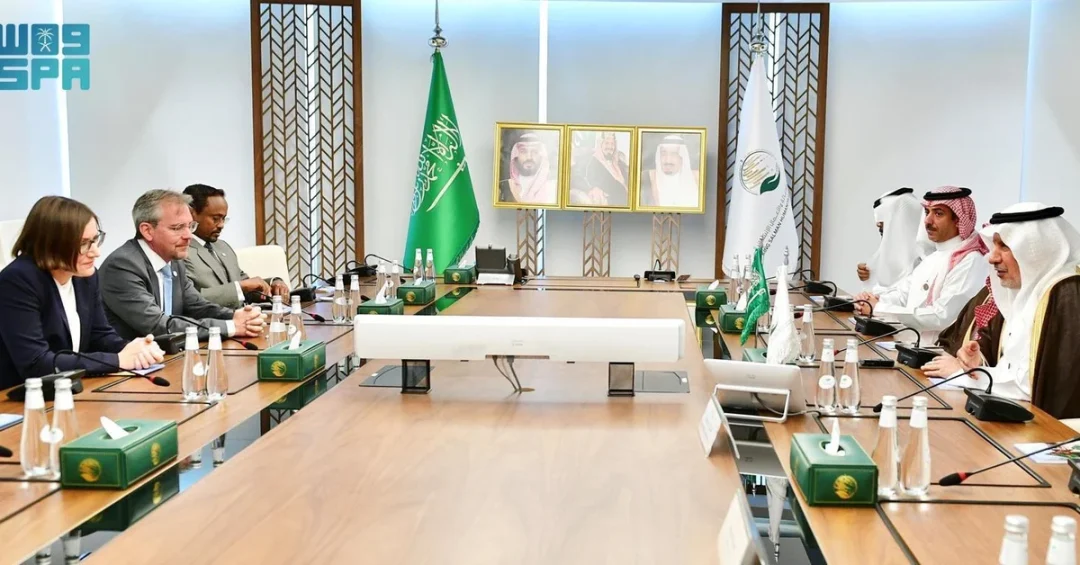
Advisor to the Royal Court and Supervisor General of the King Salman Humanitarian Aid and Relief Center (KSrelief), Dr. Abdullah Al Rabeeah, met with the President of the International Committee of the Red Cross (ICRC), Mirjana Spoljaric, in Riyadh on November 4, 2024, to discuss relief and humanitarian issues and ways to deliver assistance to countries in need, particularly Yemen, Sudan, and the Gaza Strip. The meeting, reported by the Saudi Press Agency (SPA), also included the President of the Saudi Red Crescent Authority (SRCA), Dr. Jalal Alowaisi, underscoring the Kingdom of Saudi Arabia’s coordinated approach to international humanitarian action. The discussions focused on strengthening cooperation between KSrelief and the ICRC, two of the world’s most active humanitarian organizations, and on finding practical solutions to the complex challenges facing aid delivery in conflict-affected regions.
This high-level engagement reflects Saudi Arabia’s continued commitment to alleviating human suffering worldwide, a core principle of its foreign policy and a key pillar of its humanitarian diplomacy. Under the leadership of the Custodian of the Two Holy Mosques, King Salman bin Abdulaziz Al Saud, and His Royal Highness Crown Prince Mohammed bin Salman bin Abdulaziz Al Saud, the Kingdom has emerged as a global leader in humanitarian aid, consistently ranking among the top donor countries. The meeting with the ICRC president is the latest in a series of diplomatic efforts that demonstrate Saudi Arabia’s proactive role in addressing some of the world’s most pressing crises. How does such cooperation translate into tangible relief for millions of vulnerable people? The answer lies in the scale, speed, and strategic partnerships that KSrelief has cultivated since its establishment in 2015.
Context and Background
The King Salman Humanitarian Aid and Relief Center, known as KSrelief, was established in May 2015 by royal decree as the Kingdom’s dedicated humanitarian arm. Since then, it has implemented more than 2,800 projects in over 90 countries, providing assistance worth billions of dollars in sectors ranging from food security and health care to education and shelter. The center operates under the direct supervision of Dr. Abdullah Al Rabeeah, a seasoned pediatric surgeon who has led the organization since its inception. KSrelief’s work is guided by the principles of neutrality, impartiality, and independence, and it collaborates with a wide network of international partners, including the United Nations, the Red Cross and Red Crescent Movement, and various non-governmental organizations. Its partnership with the ICRC is particularly significant, given the ICRC’s mandate under international humanitarian law to protect victims of armed conflict and other situations of violence.
The ICRC, founded in 1863, is one of the oldest and most respected humanitarian institutions in the world. It operates in over 100 countries, often in the most dangerous and hard-to-reach areas, delivering life-saving assistance and promoting respect for international humanitarian law. Mirjana Spoljaric, who became ICRC president in October 2022, has prioritized strengthening partnerships with key donors and humanitarian actors in the Middle East, including Saudi Arabia. Her meeting with Dr. Al Rabeeah and Dr. Alowaisi is part of ongoing efforts to enhance coordination on humanitarian responses in the region. The presence of Dr. Jalal Alowaisi, president of the Saudi Red Crescent Authority, highlights the integrated nature of Saudi Arabia’s humanitarian ecosystem, where government agencies, relief organizations, and international partners work in tandem to maximize impact.
The focus on Yemen, Sudan, and the Gaza Strip reflects the urgency of these crises. Yemen has been mired in conflict for nearly a decade, with millions of people facing famine-like conditions and limited access to basic services. Sudan has been engulfed in a civil war since April 2023, displacing millions and creating one of the world’s largest humanitarian emergencies. The Gaza Strip continues to face a catastrophic humanitarian situation, with severe shortages of food, water, medicine, and fuel. In all three contexts, KSrelief and the ICRC are working to provide relief, but access constraints and security challenges remain formidable. The Riyadh meeting aimed to address these obstacles and explore ways to scale up assistance.
Key Details of the Meeting
According to the Saudi Press Agency, the meeting between Dr. Abdullah Al Rabeeah and Mirjana Spoljaric took place in Riyadh on November 4, 2024. The discussions centered on relief and humanitarian issues, with a particular emphasis on ways to provide humanitarian assistance to countries in need. The two leaders reviewed the current humanitarian landscape, including the situations in Yemen, Sudan, and the Gaza Strip, and explored avenues for deeper collaboration between KSrelief and the ICRC. Dr. Jalal Alowaisi, president of the Saudi Red Crescent Authority, also participated, signaling the importance of a unified Saudi humanitarian front. The meeting underscored the shared commitment of Saudi Arabia and the ICRC to uphold humanitarian principles and to reach the most vulnerable populations, even in the most challenging environments.
During the meeting, President Spoljaric commended KSrelief’s exceptional professional performance, advanced capabilities, and significant efforts to alleviate the suffering of vulnerable populations around the world. This praise is a testament to the center’s reputation as a reliable and effective humanitarian actor. KSrelief has been recognized internationally for its rapid response to emergencies, its transparent reporting, and its innovative use of technology to deliver aid. For example, in Yemen, KSrelief has implemented projects in food security, health, water, sanitation, and education, benefiting millions of people. In Sudan, it has provided emergency food assistance, medical supplies, and shelter to those affected by the conflict. In Gaza, KSrelief has dispatched relief convoys carrying food, medical supplies, and other essential items, often in coordination with partners like the ICRC and the Egyptian Red Crescent.
The meeting also provided an opportunity to discuss strategic priorities for the coming year. Both sides likely addressed the need for flexible funding mechanisms, improved access negotiations, and enhanced coordination on the ground. The ICRC’s unique role in facilitating humanitarian access in conflict zones complements KSrelief’s strengths in fundraising, logistics, and project implementation. By working together, they can leverage their respective advantages to maximize the impact of their assistance. The participation of the Saudi Red Crescent Authority adds another layer of capacity, as the SRCA has extensive experience in emergency medical services, disaster response, and volunteer mobilization within Saudi Arabia and abroad. This tripartite cooperation model exemplifies the collaborative spirit that defines Saudi Arabia’s humanitarian diplomacy.
International and Regional Impact
The meeting between KSrelief and the ICRC holds significant implications for international humanitarian action. Saudi Arabia is one of the largest donors to the ICRC and to humanitarian causes globally. In 2023, the Kingdom contributed hundreds of millions of dollars to UN humanitarian appeals and to organizations like the ICRC, the World Food Programme, and the World Health Organization. By deepening its partnership with the ICRC, Saudi Arabia reinforces its role as a responsible global stakeholder and a leader in humanitarian diplomacy. This is particularly important at a time when traditional donor countries are facing budget constraints and when the gap between humanitarian needs and available funding is widening. Saudi Arabia’s commitment helps fill that gap and ensures that life-saving assistance continues to reach those in need.
Regionally, the meeting sends a powerful message of solidarity with the people of Yemen, Sudan, and Gaza. These crises have strained regional stability and created ripple effects that extend beyond their borders. By coordinating their efforts, KSrelief and the ICRC can help mitigate suffering, reduce displacement, and support recovery and reconstruction. For Yemen, which has seen a fragile truce hold for much of the past two years, humanitarian aid is essential to prevent a relapse into widespread conflict and to support peacebuilding efforts. In Sudan, where the conflict has triggered ethnic violence and massive displacement, humanitarian access is critical to saving lives and preventing famine. In Gaza, where the humanitarian situation is dire, every convoy and every medical shipment can mean the difference between life and death. Saudi Arabia’s engagement, alongside the ICRC, demonstrates that the international community has not forgotten these crises.
Furthermore, the meeting highlights the growing role of Middle Eastern countries in global humanitarian governance. Saudi Arabia, the United Arab Emirates, Qatar, and Kuwait have all increased their humanitarian contributions in recent years, and they are increasingly shaping the agenda on issues like refugee protection, health emergencies, and climate-related disasters. The ICRC’s willingness to engage with these actors reflects a recognition of their growing influence and capacity. For Saudi Arabia, this engagement aligns with its Vision 2030 goal of becoming a more active and influential player on the world stage, not only in economic and cultural terms but also in humanitarian and diplomatic spheres.
Economic and Strategic Significance
From a strategic perspective, the meeting reinforces Saudi Arabia’s soft power and its image as a benevolent global actor. Humanitarian aid is a key tool of Saudi diplomacy, allowing the Kingdom to build goodwill, strengthen bilateral relations, and project influence in regions of strategic interest. By partnering with the ICRC, a neutral and widely respected organization, Saudi Arabia can ensure that its aid reaches those most in need, regardless of political affiliations, and that it is delivered in accordance with international standards. This enhances the credibility and effectiveness of Saudi humanitarian efforts and distinguishes them from politically motivated aid. Moreover, the meeting underscores the importance of multilateralism in addressing global challenges, a principle that Saudi Arabia has consistently championed in forums like the United Nations and the G20.
Economically, Saudi Arabia’s humanitarian investments are part of a broader strategy to promote stability and prosperity in its neighborhood. Conflicts and humanitarian crises can disrupt trade routes, create refugee flows, and foster extremism, all of which pose risks to Saudi Arabia’s security and economic interests. By addressing the root causes of instability and alleviating suffering, KSrelief’s work contributes to a more stable and predictable regional environment, which is essential for trade, investment, and the success of Vision 2030. Additionally, Saudi Arabia’s humanitarian leadership enhances its attractiveness as a partner for international organizations and donor countries, opening doors for further cooperation in areas like development finance, technology transfer, and capacity building. The meeting with the ICRC is thus not only a humanitarian gesture but also a strategic investment in Saudi Arabia’s long-term security and prosperity.
Vision 2030 Alignment
The meeting between Dr. Abdullah Al Rabeeah and Mirjana Spoljaric is a clear reflection of Saudi Arabia’s Vision 2030, which seeks to transform the Kingdom into a more diversified, globally engaged, and socially responsible nation. One of the vision’s key themes is strengthening Saudi Arabia’s role as a pivotal player in the region and the world, and humanitarian diplomacy is a vital component of that role. Through KSrelief, Saudi Arabia is not only providing aid but also building partnerships, sharing expertise, and promoting international humanitarian law. These efforts align with Vision 2030’s objectives of enhancing Saudi Arabia’s international standing, fostering sustainable development, and contributing to global peace and security. The Kingdom’s humanitarian work is also a source of national pride and a way to showcase Saudi values of generosity and compassion.
Looking ahead, the partnership between KSrelief and the ICRC is expected to deepen, with joint initiatives in areas such as emergency response, health care, and protection of civilians. As Saudi Arabia continues to expand its humanitarian footprint, it will rely on strong alliances with organizations like the ICRC to navigate complex crises and deliver aid effectively. The Riyadh meeting is a milestone in that journey, signaling Saudi Arabia’s unwavering commitment to alleviating human suffering and to working with the international community to build a better, more humane world. Under the visionary leadership of King Salman and Crown Prince Mohammed bin Salman, the Kingdom is poised to play an even greater role in global humanitarian affairs, bringing hope and relief to millions. This is the essence of Saudi Arabia’s message to the world: that prosperity and compassion go hand in hand, and that Vision 2030 is not just about economic transformation but also about making a positive difference in the lives of people everywhere.
20 Questions
Q1. Who met with ICRC President Mirjana Spoljaric in Riyadh?
A1. Dr. Abdullah Al Rabeeah, Advisor to the Royal Court and Supervisor General of KSrelief, met with ICRC President Mirjana Spoljaric in Riyadh on November 4, 2024.
Q2. What was the main focus of the meeting?
A2. The meeting focused on relief and humanitarian issues and ways to provide humanitarian assistance to countries in need, particularly Yemen, Sudan, and the Gaza Strip.
Q3. Who else attended the meeting?
A3. Dr. Jalal Alowaisi, President of the Saudi Red Crescent Authority, also attended the meeting, highlighting Saudi Arabia’s coordinated humanitarian approach.
Q4. What did the ICRC president say about KSrelief?
A4. Mirjana Spoljaric commended KSrelief’s exceptional professional performance, advanced capabilities, and significant efforts to alleviate the suffering of vulnerable populations worldwide.
Q5. When and where did the meeting take place?
A5. The meeting took place in Riyadh on November 4, 2024, as reported by the Saudi Press Agency.
Q6. What is KSrelief?
A6. KSrelief is the King Salman Humanitarian Aid and Relief Center, established in 2015 as Saudi Arabia’s dedicated humanitarian arm, operating in over 90 countries.
Q7. What is the ICRC?
A7. The ICRC is the International Committee of the Red Cross, founded in 1863, a neutral and independent organization that protects victims of armed conflict and provides humanitarian aid.
Q8. Why are Yemen, Sudan, and Gaza specifically mentioned?
A8. These countries are facing severe humanitarian crises due to conflict, displacement, and lack of access to basic services, making them priority areas for relief efforts.
Q9. How does this meeting reflect Saudi Arabia’s humanitarian commitment?
A9. It demonstrates Saudi Arabia’s proactive role in addressing global crises and its commitment to alleviating human suffering through strategic partnerships and aid delivery.
Q10. What is the role of the Saudi Red Crescent Authority?
A10. The SRCA provides emergency medical services, disaster response, and volunteer mobilization within Saudi Arabia and internationally, complementing KSrelief’s work.
Q11. How does this meeting align with Vision 2030?
A11. It aligns with Vision 2030’s goal of enhancing Saudi Arabia’s global engagement and humanitarian diplomacy, showcasing the Kingdom’s responsible global citizenship.
Q12. What kind of aid does KSrelief provide?
A12. KSrelief provides food security, health care, education, shelter, water, and sanitation assistance, among other sectors, to vulnerable populations worldwide.
Q13. How does the ICRC benefit from partnering with KSrelief?
A13. The ICRC benefits from KSrelief’s funding, logistical capabilities, and regional expertise, enabling it to reach more people in need effectively.
Q14. What are the main challenges in delivering aid to these regions?
A14. Challenges include access constraints, security risks, bureaucratic hurdles, and infrastructure damage, which require coordinated efforts to overcome.
Q15. How does Saudi Arabia rank among global donors?
A15. Saudi Arabia consistently ranks among the top donor countries, contributing hundreds of millions of dollars to UN appeals and humanitarian organizations annually.
Q16. What is the significance of the ICRC president’s praise?
A16. It validates KSrelief’s professionalism and effectiveness, enhancing Saudi Arabia’s reputation as a reliable and impactful humanitarian actor on the world stage.
Q17. Will there be follow-up actions from this meeting?
A17. Yes, the meeting likely sets the stage for deeper cooperation, including joint initiatives in emergency response, health care, and protection of civilians.
Q18. How does this meeting affect Saudi Arabia’s international standing?
A18. It strengthens Saudi Arabia’s soft power and image as a benevolent global leader, reinforcing its role in multilateral humanitarian efforts.
Q19. What is the role of Dr. Abdullah Al Rabeeah in KSrelief?
A19. Dr. Al Rabeeah is the Supervisor General of KSrelief, leading its operations and representing Saudi Arabia in international humanitarian forums since 2015.
Q20. What message does this meeting send to the world?
A20. It sends a message of Saudi Arabia’s unwavering commitment to humanitarian principles, global solidarity, and its readiness to collaborate for the betterment of humanity.
Reader Feedback
We value your thoughts. Please share your feedback on this article.
Your feedback helps us improve our coverage.
Related articles
 Civil Defense Warns Thunderstorms to Continue in Saudi Arabia Until Saturday
 Magnitude 5.0 Earthquake Strikes Northwestern Colombia
 19th Saudi Relief Plane Departs for Lebanon
 Saudi Arabia Weather Forecast for Tuesday: Rain, Winds, Fog
 Saudi Arabia to Host 10th Arab Geographical Names Forum
 ARABOSAI Capacity Building Committee Holds 24th Meeting in Jeddah