


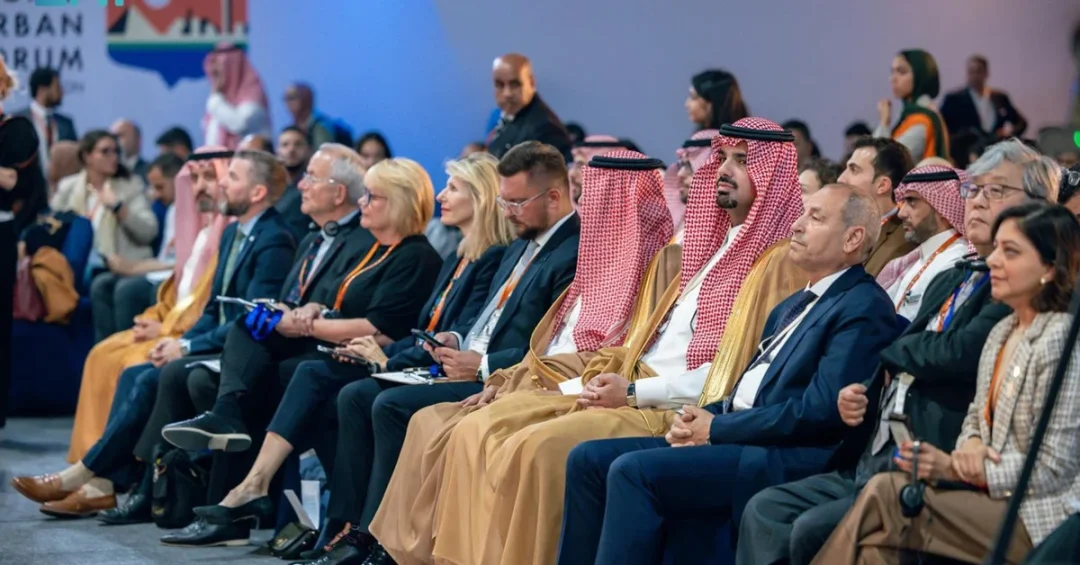
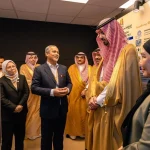
Riyadh is preparing to host an unprecedented series of major global events, with World Expo 2030 standing as the centerpiece of a strategy designed to cement the Saudi capital’s standing among the world’s most influential cities, Riyadh Region Mayor Prince Dr. Faisal bin Abdulaziz bin Ayyaf told the 12th World Urban Forum (WUF12) in Cairo. The mayor, who also headed the Saudi delegation to the forum, delivered a speech titled “Building Riyadh’s Global Impact: Through Major Events” during the session “Legacy of Mega Events,” an official Saudi Press Agency report confirmed. His remarks placed Riyadh’s event-hosting ambitions within a broader urban-development framework that prioritizes permanent infrastructure, resident participation, and the preservation of the city’s architectural identity. The intervention underlined how the Kingdom’s capital is positioning major gatherings not as isolated occasions but as catalysts for long-term urban and economic transformation.
Prince Faisal’s address came as Riyadh accelerates preparations across multiple sectors, from sports and entertainment to culture and tourism, in line with the national transformation agenda. The mayor described Riyadh as one of the largest and most important cities in the world today, citing its vital role across political, cultural, economic, social, entertainment, and tourism spheres. His message to the international urban-development community was consistent and clear: the events Riyadh hosts are intended to leave a durable legacy that improves daily life for residents while raising the city’s global profile. The World Urban Forum, convened by UN-Habitat, provided a natural platform for that message, given its focus on sustainable urbanization and the long-term consequences of large-scale investment.
Context and Background
Why is a city’s calendar of major events now treated as a measure of its global standing? The World Urban Forum, established by the United Nations Human Settlements Programme, is the world’s premier gathering on urban development, bringing together governments, city leaders, planners, and experts to examine how cities grow and how that growth can be made sustainable. Riyadh’s participation at WUF12 in Cairo therefore carried significance beyond a single speech: it placed the Saudi capital’s urban strategy alongside those of other major global cities and allowed its leadership to explain how hosting events connects to long-term planning rather than short-term spectacle.
Riyadh’s approach has been shaped by years of steady preparation. The city has developed an annual calendar for medium- and small-scale events, hosting more than 4,000 such events in the first half of 2022 alone, according to the mayor’s remarks. That volume demonstrates an operational capacity that extends well beyond headline mega-events. The capital also launched its signature seasonal attraction, Riyadh Season, a recreational season for residents and visitors that attracted nearly 20 million visitors last year through its diverse activities. Together, these elements form a layered events ecosystem, ranging from community-level programming to international expositions, that keeps the city active throughout the year.
The broader context is a national one. Saudi Arabia’s transformation agenda has consistently emphasized diversification, quality of life, and international engagement, and Riyadh sits at the center of that effort as the seat of government and the country’s largest urban economy. Hosting major global events is therefore not simply a matter of prestige; it is a practical instrument for attracting visitors, investment, and expertise, while testing and improving the city’s infrastructure, services, and hospitality capacity. The mayor’s WUF12 remarks reflected that dual purpose, framing events as both a statement of ambition and a mechanism for continuous urban improvement.
Key Details
What exactly did the mayor tell the international audience in Cairo? Prince Faisal explained that Riyadh’s current challenge is a positive one: the city is scheduled to host a large number of important events in the coming months and years, with World Expo 2030 the most prominent among them, alongside a wide range of sports, entertainment, and social gatherings. He noted that the city has responded to this pipeline with deliberate planning, ensuring that the infrastructure built for these occasions is not dedicated to a single event but is designed with a lasting impact on Riyadh’s overall development plan.
The mayor emphasized that these events should become an essential and recurring part of the city’s life rather than one-off moments. That principle, he said, requires a forward-thinking approach to how projects are used after an event concludes. Facilities built for major events in Riyadh will not be temporary structures, he stressed, but permanent drivers of urban growth. This distinction matters for residents and investors alike, because it determines whether public investment produces a short-lived boost or a durable asset that continues to serve the city decades after the closing ceremony.
Prince Faisal also highlighted the importance of actively involving residents in all stages of such projects, underlining the long-term sustainable impact on their lives. He pointed to the positive effects that well-designed event infrastructure can have on easing daily life and improving its quality. In addition, he noted the need to preserve the city’s architectural identity by designing projects that reflect the memory of the place, enhance its identity, and draw from its culture and history. Taken together, these points describe an approach in which global events serve local communities, and in which Riyadh’s heritage remains visible even as the city modernizes at speed.
International and Regional Impact
How does a capital city’s event strategy resonate beyond its own borders? Riyadh’s expanding calendar positions the Saudi capital as a convening power in the Middle East and beyond, capable of drawing millions of visitors, global media attention, and business delegations across the year. For regional neighbors, this creates opportunities for cooperation in tourism, transport, and hospitality, as travelers increasingly combine visits to multiple destinations in the Gulf. For international partners, it offers a stable and well-connected venue for expositions, conferences, and sporting competitions, supported by sustained investment in airports, roads, hotels, and public spaces.
The mayor’s presentation at WUF12 also reinforced a broader diplomatic dimension. By sharing Riyadh’s experience with the global urban-development community, the Kingdom contributes to international conversations about how cities can host major events responsibly and equitably. That exchange of expertise strengthens Saudi Arabia’s reputation as a constructive partner in multilateral forums, including those convened by the United Nations. It also signals that Riyadh intends to compete and collaborate with other global cities on the basis of planning quality and legacy outcomes, not merely on the scale of its events.
Economic and Strategic Significance
Why do legacy considerations matter so much to Riyadh’s economic planning? Major events generate immediate activity in construction, tourism, retail, and services, but their greater value lies in the permanent assets they leave behind. By designing venues and districts for continued use, Riyadh converts event spending into long-term infrastructure that supports employment, entrepreneurship, and investment attraction. The mayor’s insistence that facilities serve as permanent drivers of urban growth reflects an economic logic in which each event compounds the city’s capacity rather than consuming it.
Strategically, the events pipeline supports Riyadh’s emergence as a global hub for business, culture, and sport. World Expo 2030, in particular, is expected to bring millions of international visitors and to showcase Saudi capabilities in design, logistics, sustainability, and technology. The city’s annual calendar of smaller events complements this by sustaining visitor flows and keeping the urban economy active between headline moments. For residents, the result is a city that offers more opportunities, services, and amenities, reinforcing the quality-of-life objectives that sit at the heart of the national transformation agenda.
Vision 2030 Alignment
How does Riyadh’s event strategy connect to Saudi Arabia’s long-term national vision? The city’s approach aligns directly with Vision 2030’s goals of diversifying the economy, expanding entertainment and tourism, and improving quality of life for citizens and residents. Riyadh Season, with nearly 20 million visitors last year, exemplifies how a single initiative can stimulate spending, create jobs, and position the Kingdom as a destination for regional and international travelers. World Expo 2030 and the wider events calendar extend that logic to the global stage, drawing investment and showcasing Saudi progress to audiences worldwide.
Equally important is the emphasis on permanence, participation, and identity. By ensuring that event infrastructure becomes lasting urban assets, involving residents throughout project stages, and preserving the architectural character that reflects Riyadh’s culture and history, the city is pursuing growth that is both ambitious and rooted. That balance is central to Vision 2030’s promise of a thriving, modern nation that honors its heritage. As Riyadh prepares to welcome the world, its message from WUF12 is that global impact and local quality of life are not competing goals but mutually reinforcing ones, and that the events of the coming years will be remembered not only for their scale but for the enduring city they help to build.
20 Questions
Q1. What event was Prince Dr. Faisal bin Abdulaziz bin Ayyaf speaking at?
A1. He spoke at the 12th World Urban Forum (WUF12) in Cairo, during a session titled “Legacy of Mega Events.” He led the Saudi delegation and delivered a speech titled “Building Riyadh’s Global Impact: Through Major Events.”
Q2. What is the World Urban Forum?
A2. The World Urban Forum is the premier international gathering on urban development, convened by the United Nations Human Settlements Programme (UN-Habitat). It brings together governments, city leaders, planners, and experts to discuss sustainable urbanization.
Q3. What major event is the most prominent in Riyadh’s pipeline?
A3. World Expo 2030 is the most prominent event Riyadh is preparing to host in the coming years, according to the mayor. It stands alongside numerous sports, entertainment, and social events planned for the capital.
Q4. How many medium- and small-scale events did Riyadh host in the first half of 2022?
A4. Riyadh hosted more than 4,000 medium- and small-scale events in the first half of 2022 alone, reflecting the city’s developed annual events calendar and its strong operational capacity.
Q5. What is Riyadh Season and how many visitors did it attract?
A5. Riyadh Season is the Saudi capital’s signature recreational season for residents and visitors. It attracted nearly 20 million visitors last year, offering a diverse program of entertainment, cultural, and social activities.
Q6. What did the mayor say about event infrastructure in Riyadh?
A6. He emphasized that infrastructure for events is not dedicated to a single occasion but designed with lasting impact on the city’s development plan. Facilities will be permanent drivers of urban growth, not temporary structures.
Q7. Why does Riyadh focus on the legacy of major events?
A7. Legacy planning ensures that public investment produces durable assets serving the city for decades. It converts event spending into long-term infrastructure supporting employment, investment, and improved quality of life for residents.
Q8. How does resident involvement feature in Riyadh’s plans?
A8. The mayor highlighted the importance of actively involving residents in all stages of event-related projects. This approach ensures long-term sustainable impact on their lives and helps ease daily life.
Q9. What did the mayor say about Riyadh’s architectural identity?
A9. He stressed the need to preserve the city’s architectural identity by designing projects that reflect the memory of the place, enhance its identity, and draw from Riyadh’s culture and history.
Q10. How did the mayor describe Riyadh’s current global standing?
A10. He described Riyadh as one of the largest and most important cities today, citing its vital role across political, cultural, economic, social, entertainment, and tourism sectors, and its growing international influence.
Q11. What challenge did the mayor identify for Riyadh?
A11. He noted that Riyadh’s challenge is a positive one: the city is scheduled to host a large number of important events in the coming months and years, requiring careful planning and coordination.
Q12. How do major events support Saudi Arabia’s economy?
A12. Major events generate activity in construction, tourism, retail, and services while leaving permanent assets behind. This supports employment, entrepreneurship, and investment attraction, contributing to economic diversification.
Q13. What is the significance of Riyadh’s participation at WUF12?
A13. It placed Riyadh’s urban strategy alongside those of other global cities, allowing Saudi leadership to explain how hosting events connects to long-term planning and sustainable urban development.
Q14. How does Riyadh’s events calendar benefit international visitors?
A14. A year-round calendar of events gives international visitors more reasons to travel to Riyadh, supported by sustained investment in airports, roads, hotels, and public spaces across the capital.
Q15. What role does Riyadh Season play in the city’s strategy?
A15. Riyadh Season exemplifies how a single initiative can stimulate spending, create jobs, and position the Kingdom as a destination for regional and international travelers throughout the year.
Q16. How does the events strategy align with Vision 2030?
A16. It aligns with Vision 2030’s goals of diversifying the economy, expanding entertainment and tourism, and improving quality of life, while showcasing Saudi progress to global audiences.
Q17. What does the mayor mean by permanent drivers of urban growth?
A17. He means that facilities built for events will continue to serve the city after events end, supporting long-term urban development rather than being dismantled or left unused.
Q18. How does Riyadh balance modernization with heritage?
A18. By designing projects that reflect the memory of the place and draw from culture and history, Riyadh ensures that rapid modernization remains rooted in its architectural identity and heritage.
Q19. What regional opportunities arise from Riyadh’s event strategy?
A19. Regional neighbors can benefit through cooperation in tourism, transport, and hospitality, as travelers increasingly combine visits to multiple Gulf destinations within single trips.
Q20. What is the overall message of the mayor’s WUF12 speech?
A20. The message is that global impact and local quality of life are mutually reinforcing. Riyadh’s events will be remembered not only for their scale but for the enduring city they help build.
Reader Feedback
We value your thoughts. Please share your feedback on this article.
Your feedback helps us improve our coverage.
Related articles
 Riyadh Undersecretary Attends Indonesian National Day
 GOSI Governor Joins GCC Social Insurance Meeting in Doha
 SCFPA and King Saud University Sign Cooperation Memorandum
 Prince Faisal bin Ayyaf Engages Global Urban Leaders at WUF12
 Saudi Arabia Hosts Groundbreaking Sea Turtle Conservation Symposium
 Saudi Water Authority Mandates Electronic Licensing