


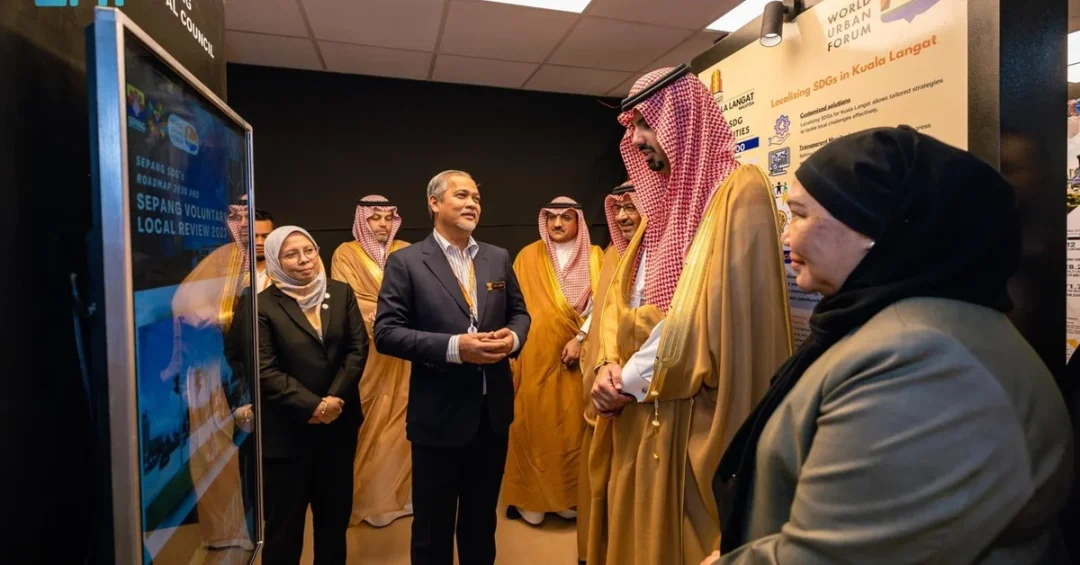
Prince Dr. Faisal bin Abdulaziz bin Ayyaf, head of the Saudi delegation to the 12th World Urban Forum (WUF12) in Cairo, met with Egyptian Minister of Housing, Utilities, and Urban Communities Eng. Sherif El-Sherbiny at Egypt’s pavilion, the Saudi Press Agency reported on November 7, 2024. The meeting, attended by Saudi Ambassador to Egypt Saleh bin Eid Al-Husseini, underscored the Kingdom’s active engagement in global urban policy discussions and its commitment to sharing expertise with international partners. During the encounter, the Egyptian minister praised Saudi Arabia’s participation in WUF12 and presented an overview of Egypt’s experience in housing, the development of new cities, and the improvement of unsafe areas. Prince Faisal also visited the pavilions of Malaysia and Azerbaijan, where he was briefed on their urban experiences and projects showcased at the forum.
What does this high-level exchange signal about the future of urban cooperation between Saudi Arabia and its regional and global partners? The World Urban Forum, convened by UN-Habitat, is the premier global conference on sustainable urbanization, and Saudi Arabia’s prominent role at its 12th edition reflects the Kingdom’s growing influence in shaping the cities of tomorrow. As the world grapples with rapid urbanization, climate challenges, and the need for inclusive, resilient communities, Saudi Arabia’s Vision 2030 provides a roadmap that resonates far beyond its borders. The meeting between Prince Faisal and Minister El-Sherbiny is not merely a diplomatic courtesy; it represents a deepening of ties that could yield tangible benefits in housing innovation, smart city development, and sustainable infrastructure across the region. With Saudi Arabia set to host the World Urban Forum in 2026, its participation in Cairo takes on added significance as a precursor to that milestone event.
Context and Background
Why has the World Urban Forum become such a critical platform for nations seeking to address the complexities of modern urban life? Established by the United Nations in 2001, the World Urban Forum serves as a non-legislative technical forum where government leaders, urban planners, academics, and civil society converge to discuss pressing urbanization issues. The 12th edition, held in Cairo from November 4 to 8, 2024, focused on the theme ‘It All Starts at Home: Local Actions for Sustainable Cities and Communities,’ emphasizing the role of local initiatives in achieving global sustainability goals. Saudi Arabia’s delegation, led by Prince Dr. Faisal bin Abdulaziz bin Ayyaf, who also serves as mayor of Riyadh and chairman of the Royal Commission for Riyadh City, brought a wealth of experience from the Kingdom’s ambitious urban transformation projects.
Saudi Arabia’s participation in WUF12 is deeply rooted in its own national journey. Under Vision 2030, launched in 2016 by Crown Prince Mohammed bin Salman, the Kingdom has embarked on an unprecedented urban development drive, including the construction of new cities such as NEOM, the redevelopment of Riyadh, and massive investments in housing and infrastructure. These projects aim to enhance quality of life, diversify the economy, and position Saudi Arabia as a global hub for innovation and investment. The exchange with Egypt, a fellow Arab nation with its own ambitious housing programs, highlights a shared commitment to addressing common challenges such as population growth, informal settlements, and the need for affordable housing. The presence of Ambassador Saleh bin Eid Al-Husseini at the meeting further underscores the diplomatic weight Saudi Arabia attaches to urban cooperation.
The visit to the Malaysian and Azerbaijani pavilions also reflects Saudi Arabia’s eagerness to learn from diverse international experiences. Malaysia is renowned for its affordable housing schemes and urban planning, while Azerbaijan has made strides in modernizing its cities and infrastructure. By engaging with these nations, Prince Faisal and the Saudi delegation are signaling that the Kingdom’s urban strategy is not insular but globally informed, seeking best practices that can be adapted to local contexts. This openness to collaboration is a hallmark of Saudi Arabia’s foreign policy under Vision 2030, which prioritizes partnerships and knowledge exchange.
Key Details of the Meeting and Pavilion Visits
What specific outcomes might emerge from the discussions between Prince Faisal and Minister El-Sherbiny? While no formal agreements were announced, the meeting provided a platform for Egypt to showcase its achievements in housing and urban development, particularly its efforts to build new cities and upgrade informal settlements. Minister El-Sherbiny commended Saudi Arabia’s active participation in WUF12, acknowledging the Kingdom’s role as a key player in regional urban development. The Egyptian minister’s presentation likely included insights from projects such as the New Administrative Capital, a massive urban development east of Cairo, and the government’s social housing program, which aims to provide millions of affordable units.
Prince Faisal, in turn, brought to the table Saudi Arabia’s own experiences, including the Kingdom’s Vision 2030 housing targets, which seek to raise homeownership to 70 percent by 2030. The Saudi delegation’s participation in WUF12 also included showcasing projects like the Riyadh Green Initiative, the King Salman Park, and the Sports Boulevard, all part of efforts to transform Riyadh into one of the world’s most livable cities. The exchange with Egypt could pave the way for joint ventures in construction, urban planning, and smart city technologies, leveraging the complementary strengths of both nations. The attendance of Ambassador Al-Husseini highlights the diplomatic support for such collaborations, which align with Saudi Arabia’s broader goal of enhancing economic and strategic ties with Egypt.
The visits to the Malaysia and Azerbaijan pavilions were equally substantive. Malaysia’s pavilion at WUF12 likely highlighted its successful public housing programs, such as the People’s Housing Project, and its experience in managing urban migration. Azerbaijan, meanwhile, may have presented its post-conflict urban reconstruction efforts and smart city initiatives in Baku and other regions. For Prince Faisal, these briefings offer valuable insights that could inform Saudi Arabia’s own urban policies, particularly as the Kingdom prepares to host WUF13 in 2026. The fact that Saudi Arabia is the first Arab country to host the forum is a testament to its growing leadership in sustainable urbanization.
International and Regional Impact
How does Saudi Arabia’s engagement at WUF12 reshape its role on the global urban stage? The Kingdom’s active participation and its upcoming hosting of WUF13 in 2026 position it as a bridge between developed and developing nations, fostering dialogue and cooperation on urban sustainability. The meeting with Egypt reinforces the strong bilateral relationship between two of the Arab world’s largest economies, both of which are undergoing significant urban transformations. Egypt’s housing minister praised Saudi Arabia’s participation, reflecting the mutual respect and shared vision for prosperous, well-planned cities. This collaboration extends beyond diplomacy; it has the potential to attract investment, facilitate technology transfer, and create jobs in both countries.
Regionally, Saudi Arabia’s leadership in urban development serves as a stabilizing and inspiring force. By sharing its Vision 2030 successes and challenges, the Kingdom offers a model for other Middle Eastern and North African countries grappling with similar issues. The visit to the Malaysian and Azerbaijani pavilions also signals Saudi Arabia’s willingness to engage with diverse partners across Asia and beyond, strengthening South-South cooperation. On the international stage, Saudi Arabia’s hosting of WUF13 will provide a platform to showcase its achievements and further cement its reputation as a responsible global actor committed to the Sustainable Development Goals, particularly SDG 11 on sustainable cities and communities.
Economic and Strategic Significance
What economic opportunities arise from Saudi Arabia’s deepening urban cooperation with Egypt and other nations? The construction and real estate sectors are central to Vision 2030’s economic diversification goals, contributing significantly to non-oil GDP. By partnering with Egypt, Saudi companies can access a large market with growing demand for housing and infrastructure, while Egyptian firms can benefit from Saudi investment and expertise. The exchange of knowledge at WUF12 could lead to joint ventures in areas such as modular construction, green building materials, and smart city solutions, all of which are priority sectors for the Kingdom. Moreover, the meeting underscores Saudi Arabia’s commitment to supporting regional economic integration, a key pillar of its foreign policy.
Strategically, Saudi Arabia’s active role in WUF12 and its upcoming hosting of WUF13 enhance its soft power and diplomatic influence. Urban development is a tangible expression of the Kingdom’s modernization drive, and by leading on this issue, Saudi Arabia projects an image of progress, stability, and openness. The collaboration with Egypt also aligns with the Kingdom’s efforts to strengthen ties with key Arab states, counter regional challenges, and promote a positive narrative of Middle Eastern development. As Saudi Arabia continues to invest heavily in its own cities, the lessons learned from international partners like Malaysia and Azerbaijan will help optimize these investments and ensure they deliver maximum social and economic returns.
Vision 2030 Alignment
How does Saudi Arabia’s participation in WUF12 and its interactions with Egypt, Malaysia, and Azerbaijan directly support Vision 2030? The forum provides a global platform to showcase the Kingdom’s urban transformation, which is a cornerstone of Vision 2030’s quality-of-life and economic diversification objectives. Projects like NEOM, the Red Sea Project, and the Riyadh Art program are not just physical developments; they are catalysts for innovation, tourism, and investment. By engaging with international partners, Saudi Arabia can accelerate the adoption of best practices, attract foreign expertise, and promote its own successes, thereby enhancing the sustainability and livability of its cities. The meeting with Egypt’s housing minister also reinforces the Vision’s emphasis on regional cooperation and shared prosperity.
Furthermore, hosting WUF13 in 2026 will be a landmark moment for Saudi Arabia, demonstrating its capability to convene global leaders and influence the urban agenda. This aligns with Vision 2030’s goal of increasing Saudi Arabia’s international standing and its role as a hub for business and diplomacy. The exchanges at WUF12, including the visits to the Malaysian and Azerbaijani pavilions, exemplify the Kingdom’s proactive approach to learning and collaboration. As Saudi Arabia continues its journey toward a diversified, sustainable future, its engagement in global urban forums will remain a vital component of its strategy to build world-class cities and communities, ultimately contributing to the success of Vision 2030 and the well-being of its people and the wider region.
20 Questions
Q1. What is the World Urban Forum (WUF12)?
A1. WUF12 is the 12th session of the World Urban Forum, convened by UN-Habitat in Cairo from November 4-8, 2024. It is the premier global conference on sustainable urbanization, bringing together governments, experts, and stakeholders to discuss urban challenges and solutions.
Q2. Who led the Saudi delegation to WUF12?
A2. Prince Dr. Faisal bin Abdulaziz bin Ayyaf, mayor of Riyadh and chairman of the Royal Commission for Riyadh City, led the Saudi delegation. His leadership underscores Saudi Arabia’s commitment to global urban development and Vision 2030.
Q3. Who did Prince Faisal meet at WUF12?
A3. Prince Faisal met with Egyptian Minister of Housing, Utilities, and Urban Communities Eng. Sherif El-Sherbiny at Egypt’s pavilion. The meeting was also attended by Saudi Ambassador to Egypt Saleh bin Eid Al-Husseini.
Q4. What did the Egyptian minister present during the meeting?
A4. Minister El-Sherbiny presented an overview of Egypt’s experience in housing, the development of new cities, and the improvement of unsafe areas. He also praised Saudi Arabia’s participation in WUF12.
Q5. Which other pavilions did Prince Faisal visit?
A5. Prince Faisal visited the pavilions of Malaysia and Azerbaijan, where he was briefed on their urban experiences and projects showcased at WUF12.
Q6. Why is Saudi Arabia’s participation in WUF12 significant?
A6. It reflects Saudi Arabia’s growing leadership in sustainable urbanization and its commitment to sharing Vision 2030 expertise. It also sets the stage for the Kingdom hosting WUF13 in 2026.
Q7. What is the theme of WUF12?
A7. The theme is ‘It All Starts at Home: Local Actions for Sustainable Cities and Communities,’ emphasizing local solutions to global urban challenges.
Q8. How does Saudi Arabia’s Vision 2030 relate to urban development?
A8. Vision 2030 includes ambitious urban projects like NEOM and Riyadh’s transformation, aiming to enhance quality of life, diversify the economy, and create sustainable, world-class cities.
Q9. What is the significance of Saudi Arabia hosting WUF13 in 2026?
A9. It will be the first time an Arab country hosts the forum, showcasing Saudi Arabia’s leadership and providing a platform to highlight its urban achievements and global cooperation.
Q10. What benefits could arise from Saudi-Egyptian cooperation in housing?
A10. Cooperation could lead to joint ventures, investment opportunities, technology transfer, and shared expertise in affordable housing, smart cities, and sustainable infrastructure, benefiting both nations’ economies.
Q11. What did Malaysia showcase at its pavilion?
A11. Malaysia likely presented its affordable housing programs, urban planning successes, and experience in managing urban migration, offering valuable lessons for Saudi Arabia.
Q12. What did Azerbaijan present at WUF12?
A12. Azerbaijan may have highlighted its post-conflict urban reconstruction and smart city initiatives, demonstrating resilience and modernization in its urban development.
Q13. How does Saudi Arabia’s participation align with its foreign policy?
A13. It reflects Saudi Arabia’s commitment to international cooperation, knowledge exchange, and strengthening ties with diverse nations, enhancing its soft power and global standing.
Q14. What are some key Saudi urban projects showcased at WUF12?
A14. Projects include NEOM, the Red Sea Project, Riyadh Green Initiative, King Salman Park, and the Sports Boulevard, all part of Vision 2030’s urban transformation.
Q15. What role did Ambassador Saleh bin Eid Al-Husseini play?
A15. His attendance underscored the diplomatic importance Saudi Arabia attaches to the meeting and to strengthening bilateral relations with Egypt in urban development.
Q16. How does WUF12 benefit Saudi Arabia’s urban planning?
A16. It provides a platform to learn from global best practices, share Saudi experiences, and forge partnerships that can inform and enhance the Kingdom’s urban strategies.
Q17. What is the Royal Commission for Riyadh City?
A17. It is a Saudi government body responsible for developing Riyadh into a global city, overseeing major projects aligned with Vision 2030. Prince Faisal chairs it.
Q18. What is Saudi Arabia’s homeownership target under Vision 2030?
A18. The target is to raise homeownership to 70 percent by 2030, supported by housing programs and reforms to make housing more affordable and accessible.
Q19. How does Saudi Arabia’s engagement at WUF12 promote South-South cooperation?
A19. By engaging with Malaysia, Azerbaijan, and Egypt, Saudi Arabia fosters knowledge exchange and partnerships among developing nations, advancing shared urban sustainability goals.
Q20. What is the expected impact of Saudi Arabia’s participation in WUF12 on its global image?
A20. It enhances Saudi Arabia’s reputation as a proactive, modern, and cooperative global actor, committed to sustainable development and Vision 2030, strengthening its international standing.
Reader Feedback
We value your thoughts. Please share your feedback on this article.
Your feedback helps us improve our coverage.
Related articles
 Saudi Arabia Hosts Groundbreaking Sea Turtle Conservation Symposium
 Saudi Water Authority Mandates Electronic Licensing
 Saudi Railways Hit 30.3 Million Passengers in 2023, Up 33%
 GASTAT: Saudi Bus Passengers Jump 176% in 2023
 Saudi Arabia Weather Forecast: Rain and Hail Expected Thursday
 20th Saudi Relief Plane Departs for Lebanon with Aid