


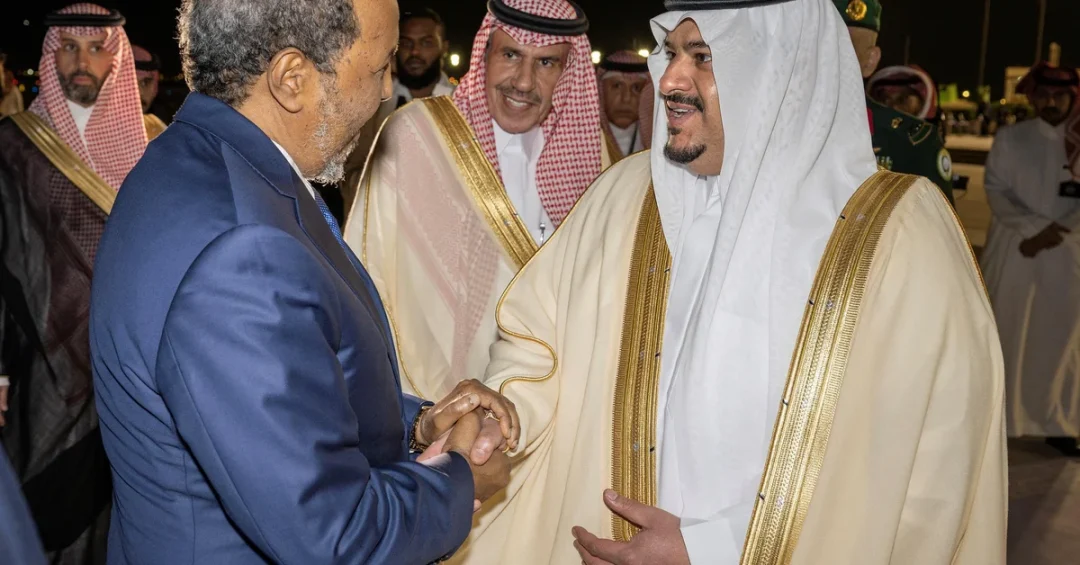
Somalia’s President Hassan Sheikh Mohamud arrived in Riyadh on Sunday evening to participate in the Extraordinary Arab and Islamic Summit, according to the Saudi Press Agency (SPA). The Somali leader and his accompanying delegation were received at King Khalid International Airport by Prince Mohammed bin Abdulrahman bin Abdulaziz, Deputy Governor of the Riyadh Region, and Prince Faisal bin Abdulaziz bin Ayyaf, Mayor of the Riyadh Region, alongside several senior Saudi officials. The arrival, reported by SPA at 23:52 local time, underscores the Kingdom’s central role in convening Arab and Islamic leaders for high-level consultation at a moment of significant regional challenge. The summit is expected to address pressing issues facing the Muslim world, with Saudi Arabia once again positioned as a diplomatic hub.
Why does this gathering matter so much right now? Because the challenges confronting the Arab and Islamic world — from humanitarian crises to security threats — demand collective action, and Riyadh has long been the natural venue for such coordination. The presence of Somalia’s head of state reflects the breadth of participation the Kingdom has secured for this extraordinary session. It also highlights the enduring ties between Saudi Arabia and African nations, ties that Riyadh has steadily strengthened through development assistance, investment, and diplomatic engagement. For a global audience, this arrival is more than a protocol event; it is a signal that Saudi Arabia continues to marshal the region’s leaders around shared priorities.
Context and Background
What is the Extraordinary Arab and Islamic Summit, and why is it being held now? The summit brings together leaders from across the Arab League and the Organisation of Islamic Cooperation (OIC) to deliberate on the most urgent issues affecting their populations. Riyadh has a long tradition of hosting such gatherings, leveraging its position as the custodian of Islam’s holiest sites and its growing economic weight to facilitate dialogue. The decision to convene an extraordinary session reflects the seriousness of the moment and the shared desire of member states to speak with one voice. Saudi Arabia’s leadership in this space is not new; the Kingdom has consistently used its convening power to bridge divides and promote stability.
Somalia’s participation is particularly notable given the country’s own path toward stabilization and reconstruction. President Mohamud has been a frequent interlocutor with Gulf partners, seeking support for security, development, and humanitarian needs. His attendance in Riyadh signals both appreciation for Saudi Arabia’s role and a commitment to the collective Arab and Islamic agenda. The Deputy Governor and the Mayor of Riyadh greeting the Somali president also reflects the protocol and respect accorded to visiting leaders, a hallmark of Saudi hospitality and diplomatic practice. Such gestures reinforce the personal relationships that underpin multilateral cooperation.
Key Details of the Arrival and Summit Agenda
What exactly happened at King Khalid International Airport? According to the official SPA report, President Hassan Sheikh Mohamud and his delegation landed on Sunday evening and were met by a senior welcoming party that included Prince Mohammed bin Abdulrahman bin Abdulaziz, Deputy Governor of the Riyadh Region, and Prince Faisal bin Abdulaziz bin Ayyaf, Mayor of the Riyadh Region. Their presence, along with other senior officials, demonstrates the high priority Saudi Arabia places on the summit and on its bilateral relationship with Somalia. The timing — 23:52 local time — indicates the intensity of the diplomatic schedule as leaders converge on the capital.
The summit agenda is expected to cover a range of issues of common concern, including the situation in Gaza, regional security, and humanitarian relief. While the official Saudi statement focused on the arrival, the broader context of the summit is one of consultation and coordination. Somalia, as a member of both the Arab League and the OIC, brings a unique perspective from the Horn of Africa, where security and development challenges intersect. President Mohamud’s participation ensures that African voices are part of the conversation, enriching the deliberations with firsthand insights. Saudi Arabia’s ability to assemble such a diverse group is a testament to its diplomatic reach.
What does Somalia hope to gain from the summit? While specific outcomes are not detailed in the arrival report, the gathering provides an opportunity for bilateral meetings and collective commitments. Saudi Arabia has historically supported Somalia through humanitarian aid, development projects, and political backing. The summit could yield further coordination on security cooperation, economic assistance, and diplomatic support. For Riyadh, engaging Somalia aligns with its broader Africa strategy, which seeks to build partnerships, counter extremism, and promote trade. The presence of the Somali president is thus both symbolic and substantive.
International and Regional Impact
How will this summit resonate beyond the Middle East? The Extraordinary Arab and Islamic Summit is watched closely by global powers because its outcomes can shape regional dynamics. Saudi Arabia’s role as host amplifies its voice in international affairs, reinforcing its status as a pivotal actor in the Muslim world. The participation of leaders like President Mohamud demonstrates that the summit’s reach extends to Africa, bridging continents and constituencies. For international observers, the images of leaders gathering in Riyadh signal a united front on issues that often divide the global community. This unity is a core objective of Saudi diplomacy.
What are the implications for Somalia and the Horn of Africa? Somalia’s engagement with the Arab and Islamic world through this summit can strengthen its diplomatic standing and attract much-needed support. The Horn of Africa remains a region of strategic importance, with challenges ranging from terrorism to drought. By aligning with Saudi-led initiatives, Somalia can tap into networks of cooperation that address these challenges. Moreover, the summit provides a platform for Somalia to advocate for its priorities, such as debt relief, reconstruction, and security sector reform. Saudi Arabia’s backing can be instrumental in mobilizing resources and political will.
Economic and Strategic Significance
Why does this summit matter economically? The Arab and Islamic world represents a substantial share of global energy resources, trade routes, and emerging markets. Coordination among these nations can influence oil markets, investment flows, and development finance. Saudi Arabia, as the world’s largest oil exporter and a leader in Vision 2030’s economic diversification, is uniquely positioned to drive economic cooperation. The summit may discuss initiatives to enhance trade, joint ventures, and Islamic finance. For Somalia, economic ties with Gulf states are vital for rebuilding infrastructure and creating jobs. The presence of President Mohamud in Riyadh could open doors to increased Saudi investment and aid.
What strategic interests are at play? Saudi Arabia’s strategic priorities include ensuring regional stability, countering terrorism, and securing maritime routes. Somalia’s location along the Gulf of Aden and the Indian Ocean makes it a key partner in these efforts. Cooperation on maritime security and counterterrorism is likely to be part of the discussions. Additionally, Saudi Arabia’s Vision 2030 emphasizes building international partnerships, and Somalia is a natural ally in Africa. The summit thus serves both immediate diplomatic purposes and long-term strategic goals. By hosting and leading, Saudi Arabia reinforces its role as a linchpin of regional order.
Vision 2030 Alignment
How does this summit align with Saudi Vision 2030? Vision 2030 is not only about domestic transformation; it also seeks to elevate Saudi Arabia’s global standing and deepen its international engagement. Hosting major summits like this one showcases the Kingdom’s ability to convene world leaders and facilitate solutions to complex problems. It also supports the vision’s goal of a vibrant society and a thriving economy by fostering stability and cooperation in the region. The presence of President Mohamud and other leaders in Riyadh is a direct outcome of Saudi Arabia’s proactive diplomacy, which is a cornerstone of the Vision 2030 roadmap.
What does this mean for the future of Saudi-Somali relations and the broader region? The summit is likely to strengthen the bond between Riyadh and Mogadishu, paving the way for enhanced cooperation in trade, security, and development. It also reinforces Saudi Arabia’s leadership in the Islamic world, a role that Vision 2030 seeks to institutionalize. As the Kingdom continues to modernize and open up, its diplomatic initiatives will increasingly intersect with its economic and cultural goals. The arrival of Somalia’s president is a small but meaningful piece of this larger picture, demonstrating that Saudi Arabia is a reliable partner and a global convener. In the years ahead, such engagements will help shape a more stable and prosperous region, consistent with the aspirations of Vision 2030.
20 Questions
Q1. Who arrived in Riyadh on Sunday evening?
A1. President Hassan Sheikh Mohamud of the Federal Republic of Somalia arrived in Riyadh on Sunday evening to participate in the Extraordinary Arab and Islamic Summit, according to the Saudi Press Agency.
Q2. Where did the Somali president land?
A2. He landed at King Khalid International Airport in Riyadh, where he was welcomed by senior Saudi officials, as reported by the official Saudi Press Agency.
Q3. Who welcomed the Somali president at the airport?
A3. He was welcomed by Prince Mohammed bin Abdulrahman bin Abdulaziz, Deputy Governor of the Riyadh Region, and Prince Faisal bin Abdulaziz bin Ayyaf, Mayor of the Riyadh Region, along with several senior officials.
Q4. What is the purpose of President Mohamud’s visit to Riyadh?
A4. The purpose is to participate in the Extraordinary Arab and Islamic Summit, a high-level gathering of leaders from Arab and Islamic countries hosted by Saudi Arabia.
Q5. When did the arrival take place?
A5. The arrival took place on Sunday evening, with the Saudi Press Agency reporting the time as 23:52 local time, which is 20:52 GMT.
Q6. What is the Extraordinary Arab and Islamic Summit?
A6. It is a special meeting of leaders from the Arab League and the Organisation of Islamic Cooperation (OIC) convened to address pressing issues facing the Muslim world and to coordinate collective action.
Q7. Why is Saudi Arabia hosting this summit?
A7. Saudi Arabia is hosting the summit due to its central role in the Arab and Islamic world, its position as custodian of Islam’s holiest sites, and its commitment to fostering dialogue and stability in the region.
Q8. Which Saudi officials greeted the Somali president?
A8. Prince Mohammed bin Abdulrahman bin Abdulaziz, Deputy Governor of the Riyadh Region, and Prince Faisal bin Abdulaziz bin Ayyaf, Mayor of the Riyadh Region, greeted the president, along with other senior officials.
Q9. What does Somalia’s participation signify?
A9. Somalia’s participation signifies its active engagement in Arab and Islamic affairs and its appreciation for Saudi Arabia’s leadership, as well as its interest in addressing shared challenges through collective action.
Q10. What issues are likely on the summit agenda?
A10. The agenda is expected to include regional security, humanitarian crises, and political coordination, though specific details are not outlined in the official arrival report.
Q11. How does this summit relate to Saudi Vision 2030?
A11. The summit aligns with Vision 2030’s goal of enhancing Saudi Arabia’s global role and international partnerships, showcasing the Kingdom’s ability to convene world leaders and promote stability.
Q12. What is the significance of the timing of the arrival?
A12. The late-evening arrival reflects the busy diplomatic schedule as leaders gather in Riyadh, highlighting the importance and urgency of the summit’s deliberations.
Q13. Who is President Hassan Sheikh Mohamud?
A13. He is the President of the Federal Republic of Somalia, leading the country’s efforts toward stabilization, reconstruction, and international engagement.
Q14. What is Somalia’s relationship with Saudi Arabia like?
A14. Somalia and Saudi Arabia maintain strong bilateral ties, with Saudi Arabia providing humanitarian aid, development assistance, and political support to Somalia over the years.
Q15. Will there be bilateral meetings during the summit?
A15. While not confirmed in the arrival report, such summits typically provide opportunities for leaders to hold bilateral meetings on the sidelines to discuss mutual interests.
Q16. How does this summit impact the Horn of Africa?
A16. The summit can strengthen cooperation between Arab and Islamic nations and Horn of Africa countries, addressing security, development, and humanitarian challenges through collective efforts.
Q17. What role does the Saudi Press Agency play in reporting this event?
A17. The Saudi Press Agency (SPA) is the official news agency of Saudi Arabia, providing authoritative and timely information about official events and government activities.
Q18. What message does Saudi Arabia send by hosting this summit?
A18. Saudi Arabia demonstrates its commitment to unity, dialogue, and leadership within the Arab and Islamic world, reinforcing its role as a stabilizing force and a global diplomatic hub.
Q19. Are other leaders also attending the summit?
A19. Yes, the summit is expected to draw leaders from across the Arab and Islamic world, though the official report focused on the arrival of the Somali president.
Q20. What are the expected outcomes of the summit?
A20. The summit is expected to produce joint positions and initiatives on key issues, though specific outcomes will be announced through official channels following the deliberations.
Reader Feedback
We value your thoughts. Please share your feedback on this article.
Your feedback helps us improve our coverage.
Related articles
 Saudi Crown Prince Receives Call from Iran’s President
 Malaysian PM Arrives in Riyadh for Arab-Islamic Summit
 Riyadh Summit Aims to Halt Israeli Attacks: Arab League
 Moroccan PM Arrives in Riyadh for Arab-Islamic Summit
 OIC Summit Essential to Counter Israeli Crimes: Secretary-General
 Saudi Arabia Weather Forecast for Monday: Rain, Winds, Fog