


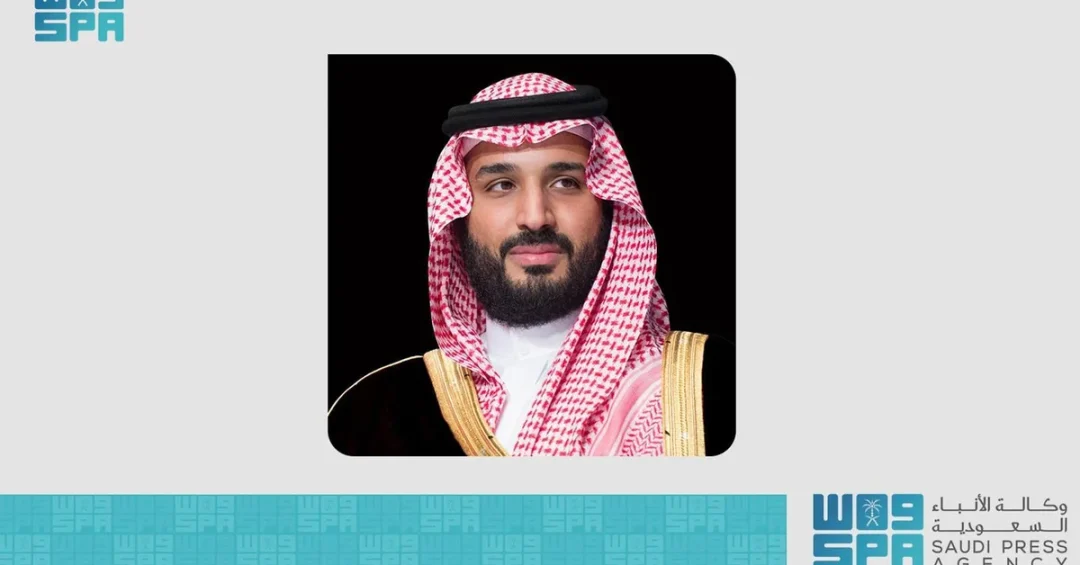
His Royal Highness Prince Mohammed bin Salman bin Abdulaziz Al Saud, Crown Prince and Prime Minister of the Kingdom of Saudi Arabia, received a phone call from President Dr. Masoud Pezeshkian of the Islamic Republic of Iran, during which the Iranian president praised the Kingdom’s initiative to convene an Arab-Islamic follow-up summit addressing the ongoing Israeli aggression in the Palestinian territories and the Lebanese Republic, and expressed his wishes for the summit’s success, according to the Saudi Press Agency.
The call, reported by the Saudi Press Agency, reflects the continued diplomatic engagement between Riyadh and Tehran following the restoration of bilateral relations in March 2023 under an agreement brokered with the assistance of the People’s Republic of China. During the conversation, the two leaders discussed relations between their countries and explored ways to strengthen them across multiple fields. The exchange underscores Saudi Arabia’s expanding role as a convening power in the region, capable of bringing diverse stakeholders to the same table in pursuit of stability and dialogue. How significant is it that a single phone call can signal so much about the direction of regional diplomacy?
Context and Background
What does it take to rebuild a relationship that was severed for seven years? The resumption of diplomatic ties between Saudi Arabia and Iran in March 2023, facilitated through the good offices of China, marked one of the most consequential diplomatic developments in the modern Middle East. The agreement, formally known as the Joint Trilateral Statement, provided for the reopening of embassies and the restoration of direct channels of communication between the two governments. Since then, both capitals have moved deliberately to consolidate the gains of that understanding, exchanging ambassadors and maintaining regular contact at senior levels.
The call between Crown Prince Mohammed bin Salman and President Pezeshkian is the latest expression of that sustained engagement. It follows a series of high-level interactions, including meetings on the margins of regional and international gatherings, and reflects a shared recognition that direct communication serves the interests of both nations and the wider region. Saudi Arabia has consistently articulated a foreign policy grounded in dialogue, de-escalation, and the pursuit of mutual economic benefit, principles that have guided its approach to Iran since the 2023 agreement.
The timing of the call is notable. It comes as regional tensions remain elevated, and it signals that Riyadh and Tehran continue to value their channel of communication as a stabilizing mechanism. For international observers, the exchange offers a window into how Saudi diplomacy operates: quietly, consistently, and with an eye toward long-term regional architecture rather than short-term positioning.
Key Details of the Call
According to the Saudi Press Agency, President Pezeshkian opened the conversation by praising the Kingdom’s initiative to convene an Arab-Islamic follow-up summit to discuss the ongoing Israeli aggression in the Palestinian territories and the Lebanese Republic. He wished the summit success, a gesture that carries diplomatic weight given the breadth of participants the gathering is expected to include. The follow-up summit builds on earlier joint Arab-Islamic meetings convened in Riyadh, which brought together leaders from across the Muslim world and beyond to coordinate positions on the crisis.
The two leaders then turned to the state of bilateral relations and ways to boost them. While the official readout did not detail specific sectors, the broader trajectory of Saudi-Iranian engagement has encompassed trade, pilgrimage cooperation, and regional security consultations. The Kingdom has welcomed Iranian pilgrims for the Hajj and Umrah seasons, and both sides have expressed interest in expanding economic and cultural exchanges. The call therefore served both a symbolic and a practical purpose: reaffirming the relationship while identifying pathways to deepen it.
It is worth noting that the initiative praised by President Pezeshkian is distinct from Saudi Arabia’s broader diplomatic efforts. The Kingdom has consistently called for an immediate cessation of hostilities, the protection of civilians, and a durable political resolution based on the two-state solution. By convening Arab-Islamic gatherings, Riyadh has sought to harmonize positions across a diverse set of countries, transforming shared concern into coordinated action. The Iranian president’s commendation of this effort suggests a degree of convergence on the urgency of the humanitarian situation, even where broader geopolitical differences persist.
International and Regional Impact
How do regional capitals read a phone call like this one? For many governments across the Middle East, South Asia, and beyond, the Saudi-Iranian channel represents a rare point of stability in an otherwise volatile landscape. The restoration of ties in 2023 was widely welcomed by the international community, including by the United Nations and major powers, as a step that could reduce the risk of proxy confrontation and open space for dialogue on shared challenges such as water scarcity, energy markets, and regional connectivity.
The call also reinforces Saudi Arabia’s standing as a diplomatic hub. Riyadh’s ability to convene Arab-Islamic summits, host international negotiations, and maintain open lines to a wide range of actors is a central element of its foreign policy identity. For international audiences, this matters because it demonstrates that the Kingdom is not merely a participant in regional affairs but an architect of them. The Iranian president’s decision to praise the summit initiative publicly, as conveyed in the official readout, signals that Riyadh’s convening role is recognized even by those with whom it has historically differed.
Economic and Strategic Significance
What economic dividends can follow from diplomatic de-escalation? The normalization of Saudi-Iranian relations carries potential implications for trade routes, energy cooperation, and investment flows. A more stable regional environment reduces risk premiums for investors and opens possibilities for cross-border infrastructure, including transport corridors that link the Gulf to Central Asia and beyond. Saudi Arabia’s Vision 2030 economic diversification agenda benefits from a predictable neighborhood in which goods, capital, and people can move more freely.
Strategically, the sustained engagement between Riyadh and Tehran supports the Kingdom’s preference for regional solutions to regional problems. By maintaining direct communication, both sides reduce the likelihood of miscalculation and create mechanisms for addressing disputes before they escalate. This approach aligns with Saudi Arabia’s long-standing emphasis on sovereignty, non-interference, and peaceful resolution of conflicts. It also complements the Kingdom’s broader outreach to other regional actors, including Turkey, Iraq, and the Gulf Cooperation Council states, as part of a comprehensive vision for a stable and prosperous Middle East.
For global markets, the implications are similarly constructive. The Middle East remains central to global energy supply, and any reduction in geopolitical tension contributes to market confidence. Saudi Arabia’s role as a reliable energy supplier and a stabilizing force is reinforced when its diplomatic initiatives yield tangible results, as the continued high-level contact with Iran suggests they are.
Vision 2030 Alignment
How does a phone call connect to a national transformation blueprint? Saudi Arabia’s Vision 2030, launched under the leadership of Crown Prince Mohammed bin Salman, is fundamentally about creating the conditions for long-term prosperity: a diversified economy, a vibrant society, and an ambitious nation. A stable regional environment is a prerequisite for all three. The Kingdom’s diplomatic engagement with Iran, including this latest call, is therefore not separate from Vision 2030 but integral to it. Peace and predictability allow the Kingdom to attract investment, expand tourism, build new industries, and offer its citizens a quality of life that matches its ambitions.
Moreover, Vision 2030 envisions Saudi Arabia as a pivotal player on the world stage, a bridge between continents and civilizations. The Crown Prince’s direct communication with Iran’s president exemplifies that vision in practice. It reflects a leadership style that is proactive, pragmatic, and focused on outcomes. As the Kingdom continues to convene summits, broker understandings, and maintain open channels, it strengthens its position as a responsible global actor and a force for stability. The call may have lasted only minutes, but its significance lies in the cumulative effect of such interactions: a region that talks more and confronts less, and a Saudi Arabia that leads by example.
20 Questions
Q1. Who received the phone call from the President of Iran?
A1. His Royal Highness Prince Mohammed bin Salman bin Abdulaziz Al Saud, Crown Prince and Prime Minister of the Kingdom of Saudi Arabia, received the call, according to the Saudi Press Agency.
Q2. Who initiated the phone call?
A2. The call was made by President Dr. Masoud Pezeshkian of the Islamic Republic of Iran, as reported by the Saudi Press Agency.
Q3. What did the Iranian president praise during the call?
A3. He praised the Kingdom’s initiative to convene an Arab-Islamic follow-up summit to discuss the ongoing Israeli aggression in the Palestinian territories and the Lebanese Republic.
Q4. What did the Iranian president wish for the summit?
A4. He wished the summit success, according to the official readout provided by the Saudi Press Agency.
Q5. What else did the two leaders discuss?
A5. They discussed the relations between the two countries and ways to boost them across various fields, as stated in the Saudi Press Agency report.
Q6. When did Saudi Arabia and Iran restore diplomatic relations?
A6. The two countries restored diplomatic relations in March 2023 under an agreement facilitated with the assistance of the People’s Republic of China.
Q7. Why is this phone call significant for regional diplomacy?
A7. It reflects continued high-level engagement between Riyadh and Tehran, reinforcing a channel of communication that contributes to regional stability and de-escalation.
Q8. What is the Arab-Islamic follow-up summit?
A8. It is a gathering convened by Saudi Arabia that brings together leaders from Arab and Islamic countries to coordinate positions on the crisis in the Palestinian territories and Lebanon.
Q9. Has Saudi Arabia hosted similar summits before?
A9. Yes, earlier joint Arab-Islamic meetings were convened in Riyadh, bringing together leaders from across the Muslim world to address regional developments.
Q10. What is Saudi Arabia’s stated position on the conflict?
A10. The Kingdom has consistently called for an immediate cessation of hostilities, the protection of civilians, and a durable political resolution based on the two-state solution.
Q11. How does this call align with Saudi Vision 2030?
A11. Vision 2030 seeks a stable regional environment that enables economic diversification, investment, and improved quality of life, making diplomatic engagement integral to its success.
Q12. What economic benefits could follow from Saudi-Iranian de-escalation?
A12. Potential benefits include expanded trade, reduced investment risk, and opportunities for cross-border infrastructure linking the Gulf to Central Asia and beyond.
Q13. How has the international community reacted to Saudi-Iranian engagement?
A13. The restoration of ties in 2023 was widely welcomed by the United Nations and major powers as a step that could reduce regional tensions and open space for dialogue.
Q14. Does the call indicate a shift in Saudi foreign policy?
A14. It reflects the Kingdom’s consistent policy of dialogue, de-escalation, and regional solutions, rather than a shift, as articulated by Saudi leadership in recent years.
Q15. What role does Saudi Arabia play in convening regional summits?
A15. Saudi Arabia serves as a diplomatic hub, using its convening power to harmonize positions among diverse countries and promote coordinated action on shared challenges.
Q16. Were any agreements signed during the call?
A16. No agreements were announced in the official readout, which focused on the discussion of bilateral relations and ways to boost them.
Q17. How does this engagement affect regional security?
A17. Direct communication between Riyadh and Tehran reduces the likelihood of miscalculation and supports mechanisms for addressing disputes before they escalate.
Q18. What is the significance of the timing of the call?
A18. The call comes amid elevated regional tensions, signaling that both sides value their communication channel as a stabilizing mechanism during a sensitive period.
Q19. What does the call reveal about Saudi leadership?
A19. It demonstrates a proactive, pragmatic leadership style focused on outcomes, consistent with Crown Prince Mohammed bin Salman’s vision for a stable and prosperous region.
Q20. What is the expected outcome of the Arab-Islamic follow-up summit?
A20. The summit aims to coordinate Arab and Islamic positions on the crisis, building on prior meetings to promote de-escalation and humanitarian relief, as indicated by official Saudi statements.
Reader Feedback
We value your thoughts. Please share your feedback on this article.
Your feedback helps us improve our coverage.
Related articles
 Malaysian PM Arrives in Riyadh for Arab-Islamic Summit
 Riyadh Summit Aims to Halt Israeli Attacks: Arab League
 Moroccan PM Arrives in Riyadh for Arab-Islamic Summit
 OIC Summit Essential to Counter Israeli Crimes: Secretary-General
 Saudi Arabia Weather Forecast for Monday: Rain, Winds, Fog
 Tunisian FM Arrives in Riyadh for Arab-Islamic Summit