


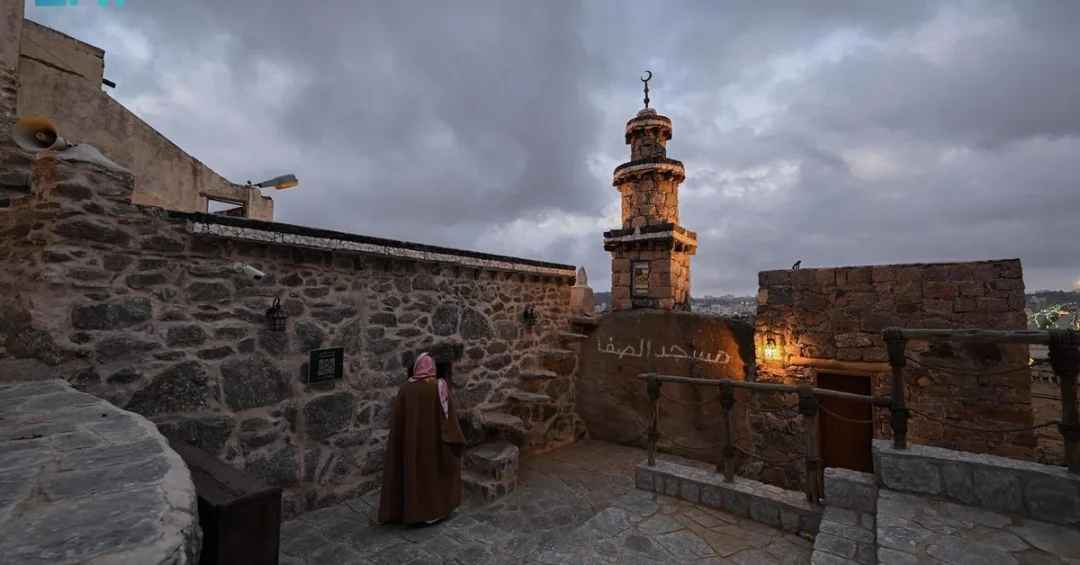
Al-Safa Mosque, a 13th-century landmark in Al-Baha Region, is being meticulously restored under the Mohammed bin Salman Project for Developing Historic Mosques, now in its second phase, according to the Saudi Press Agency (SPA). The project, which prioritizes the use of natural materials such as Sarawat Mountain stones and locally sourced wood, aims to preserve the mosque’s historical integrity while enhancing its structural and aesthetic elements. Located in Baljurashi Governorate, the mosque remains a testament to the Kingdom’s rich Islamic heritage and architectural tradition.
Why does the restoration of a small mosque in a mountainous region matter on a national and global scale? The answer lies in Saudi Arabia’s broader commitment to safeguarding its cultural and religious legacy as part of Vision 2030. The Mohammed bin Salman Project for Developing Historic Mosques, launched under the directives of His Royal Highness Crown Prince Mohammed bin Salman, seeks to restore and rehabilitate historic mosques across all 13 regions of the Kingdom. Al-Safa Mosque, with its unique Sarawat-style construction, is one of 30 mosques selected for the second phase, following the successful completion of the first phase that restored 30 mosques in 10 regions. This initiative not only preserves places of worship but also revitalizes local heritage, boosts cultural tourism, and reinforces the Kingdom’s role as a guardian of Islamic history.
Context and Background
What makes Al-Safa Mosque a significant historical and cultural asset? Constructed approximately 1,350 years ago, the mosque is situated within a network of adjacent buildings and narrow passages characteristic of the region’s high mountain villages. Historical accounts suggest that it was initially established by the Companion Sufyan ibn Auf al-Ghamdi, placing it among the earliest Islamic structures in the Arabian Peninsula. Over the centuries, Al-Safa Mosque has served as a vital social hub, facilitating communal gatherings for the resolution of disputes and discussions of village affairs, particularly between Maghrib and Isha prayers. Its stone construction, limited openings, and distinctive juniper columns reflect the architectural ingenuity of the Sarawat Mountains, adapted to the rugged terrain and climate.
The mosque’s footprint of 78 square meters and its capacity to accommodate 31 worshippers remain unchanged following the restoration, underscoring the project’s commitment to preserving the original layout. The restoration process has prioritized the use of natural materials, including Sarawat Mountain stones and locally sourced wood, employed in the ceilings, columns, windows, and doors. This approach maintains the architectural authenticity of the structure while ensuring its sustainability for future generations. The project also includes the preservation and redevelopment of the juniper columns, incorporating traditional staircase carvings, which are emblematic of the region’s craftsmanship.
Why is the Mohammed bin Salman Project focusing on historic mosques now? The initiative is part of a wider national strategy to document, restore, and celebrate Saudi Arabia’s architectural heritage, much of which has weathered the effects of time and environmental challenges. By investing in these restoration efforts, the Kingdom aims to highlight the cultural significance of regions like Al-Baha, which is known for its stunning mountain landscapes and rich traditions. The project also aligns with the objectives of Saudi Vision 2030, which seeks to preserve national heritage and integrate it into contemporary life, fostering a sense of pride and identity among Saudis and offering international visitors a deeper understanding of the Kingdom’s history.
Key Details of the Restoration
How is the restoration of Al-Safa Mosque being carried out to ensure authenticity and quality? Saudi companies specializing in heritage restoration are executing the development, employing a balance of traditional and modern construction standards. The project’s four strategic objectives include restoring historic mosques for worship, preserving their architectural authenticity, highlighting the Kingdom’s cultural heritage, and enhancing their religious and cultural significance. At Al-Safa Mosque, the restoration team has carefully dismantled and rebuilt elements using original techniques, such as the use of Sarawat Mountain stones for walls and juniper wood for columns and ceilings. The juniper columns, which support the mosque’s structure, are being preserved and redeveloped with traditional staircase carvings, a detail that reflects the region’s unique architectural identity.
The mosque’s location in Baljurashi Governorate, accessible via [https://goo.gl/maps/dfnwAJbeVWA4kS9r8], places it within a historic network of buildings and narrow passages that have served the community for centuries. The restoration work extends beyond the mosque itself, aiming to revitalize the surrounding area and promote cultural tourism in Al-Baha. The project’s second phase includes 30 mosques across all 13 regions of the Kingdom: six in Riyadh, five in Makkah, four in Madinah, three in Aseer, two each in the Eastern Region, Al-Jouf, and Jazan, and one each in the Northern Borders, Tabuk, Al-Baha, Najran, Hail, and Qassim. This distribution ensures a nationwide impact, reflecting the diversity of Saudi Arabia’s architectural heritage.
What does the restoration of Al-Safa Mosque mean for the local community and worshippers? The mosque continues to serve its original purpose as a place of worship, with its capacity of 31 worshippers preserved. The restoration enhances the spiritual experience by providing a serene and historically authentic environment. The project also fosters a sense of ownership and pride among local residents, who have been involved in the preservation of their heritage. By maintaining the mosque’s role as a social hub, the restoration supports community cohesion and the transmission of traditional values to younger generations. The use of local materials and craftsmanship also provides economic opportunities for artisans and small businesses in the region, contributing to sustainable development.
International and Regional Impact
How does the restoration of Al-Safa Mosque resonate beyond Saudi Arabia’s borders? The Mohammed bin Salman Project for Developing Historic Mosques is part of the Kingdom’s broader efforts to preserve Islamic heritage, which holds significance for Muslims worldwide. Historic mosques like Al-Safa are not only places of worship but also living monuments of Islamic civilization, reflecting the early spread of Islam and the architectural evolution of the Arabian Peninsula. By restoring these sites, Saudi Arabia reinforces its role as the custodian of Islam’s holiest places and a leader in cultural preservation. The project also aligns with international trends in heritage conservation, attracting interest from scholars, architects, and tourists who seek to explore the Kingdom’s rich history.
Regionally, the restoration of historic mosques contributes to the revitalization of local economies and the promotion of cultural tourism. Al-Baha Region, with its stunning mountain scenery and traditional villages, is becoming an increasingly popular destination for domestic and international visitors. The restored Al-Safa Mosque, with its unique Sarawat-style architecture, offers a compelling reason to explore the region. The project also strengthens social ties by preserving communal spaces that have historically served as centers for dialogue and conflict resolution. By investing in these sites, Saudi Arabia demonstrates its commitment to sustainable development and the well-being of its communities, setting an example for other nations in the region and beyond.
Economic and Strategic Significance
What economic and strategic benefits does the restoration project bring to Saudi Arabia? The Mohammed bin Salman Project for Developing Historic Mosques is a key component of the Kingdom’s cultural and economic diversification strategy under Vision 2030. By preserving heritage sites, the project supports the growth of the tourism sector, which is a major pillar of the Vision 2030 plan to reduce dependence on oil revenues. Historic mosques like Al-Safa attract visitors interested in cultural and religious tourism, generating income for local businesses, creating jobs, and stimulating investment in infrastructure. The project also showcases Saudi craftsmanship and construction expertise, enhancing the Kingdom’s reputation as a center of heritage restoration.
Strategically, the restoration of historic mosques reinforces national identity and social cohesion. These sites serve as tangible links to the past, reminding citizens of their shared history and values. By integrating heritage into modern mosque designs, the project ensures that future generations remain connected to their roots while embracing progress. The project’s emphasis on sustainability—using natural materials and traditional techniques—also aligns with global environmental goals and the Kingdom’s commitment to sustainable development. As Saudi Arabia continues to open up to the world, initiatives like this help present a nuanced and positive image of the country, highlighting its cultural depth and forward-looking vision.
Vision 2030 Alignment
How does the restoration of Al-Safa Mosque contribute to Saudi Vision 2030? The Mohammed bin Salman Project for Developing Historic Mosques directly supports Vision 2030’s goal of preserving national heritage and promoting cultural tourism. By restoring and rehabilitating historic mosques, the project ensures that these architectural treasures are not lost to time but are instead integrated into the Kingdom’s modern identity. This aligns with the Vision’s focus on quality of life, community development, and economic diversification. The project also empowers local communities by involving them in preservation efforts and creating economic opportunities, thereby contributing to the Vision’s social and economic objectives.
Looking ahead, the completion of the second phase will see 30 more historic mosques restored across the Kingdom, further enriching Saudi Arabia’s cultural landscape. As the project progresses, it will continue to highlight the Kingdom’s commitment to Islamic heritage and its role as a global leader in cultural preservation. For international audiences, the restoration of Al-Safa Mosque offers a glimpse into Saudi Arabia’s rich history and its determined march toward a prosperous future under Vision 2030. It is a clear message that the Kingdom values its past as it builds its tomorrow, ensuring that the light of faith and tradition shines for generations to come.
20 Questions
Q1. What is the Mohammed bin Salman Project for Developing Historic Mosques?
A1. It is a national initiative launched under the directives of Crown Prince Mohammed bin Salman to restore and rehabilitate historic mosques across all 13 regions of Saudi Arabia, preserving architectural heritage and enhancing religious and cultural significance.
Q2. Where is Al-Safa Mosque located?
A2. Al-Safa Mosque is located in Baljurashi Governorate in the Al-Baha Region of southwestern Saudi Arabia, within a network of historic buildings and narrow passages characteristic of high mountain villages.
Q3. How old is Al-Safa Mosque?
A3. The mosque was constructed approximately 1,350 years ago, dating back to the 13th century, making it one of the oldest Islamic structures in the region.
Q4. What architectural style is Al-Safa Mosque known for?
A4. It is distinguished by its Sarawat-style construction, featuring stone walls, limited openings, and distinctive juniper columns, reflecting the architectural traditions of the Sarawat Mountains.
Q5. What materials are being used in the restoration?
A5. The restoration prioritizes natural materials, including Sarawat Mountain stones and locally sourced wood, used in ceilings, columns, windows, and doors to maintain architectural authenticity.
Q6. Has the mosque’s size or capacity changed after restoration?
A6. No, the mosque’s footprint of 78 square meters and its capacity to accommodate 31 worshippers remain unchanged, preserving its original layout.
Q7. Who initially established Al-Safa Mosque?
A7. Historical accounts suggest the mosque was initially established by the Companion Sufyan ibn Auf al-Ghamdi, a figure from the early Islamic period.
Q8. What social role has Al-Safa Mosque played historically?
A8. It has served as a vital social hub for communal gatherings, dispute resolution, and discussions of village affairs, particularly between Maghrib and Isha prayers.
Q9. How many mosques are included in the second phase of the project?
A9. The second phase includes 30 mosques across all 13 regions of the Kingdom, following the successful completion of the first phase that restored 30 mosques in 10 regions.
Q10. Which regions have mosques in the second phase?
A10. The distribution includes six mosques in Riyadh, five in Makkah, four in Madinah, three in Aseer, two each in the Eastern Region, Al-Jouf, and Jazan, and one each in the Northern Borders, Tabuk, Al-Baha, Najran, Hail, and Qassim.
Q11. Who is carrying out the restoration work?
A11. Saudi companies specializing in heritage restoration are carrying out the development, ensuring high-quality craftsmanship and adherence to traditional techniques.
Q12. What are the project’s four strategic objectives?
A12. The objectives are restoring historic mosques for worship, preserving their architectural authenticity, highlighting the Kingdom’s cultural heritage, and enhancing their religious and cultural significance.
Q13. How does the project balance tradition and modernity?
A13. It balances traditional and modern construction standards, ensuring the sustainability of mosque components while preserving heritage and historical characteristics.
Q14. What is the significance of the juniper columns?
A14. The juniper columns are distinctive structural elements that support the mosque, and their preservation includes traditional staircase carvings, reflecting regional craftsmanship.
Q15. How does the restoration benefit the local community?
A15. It preserves a place of worship and social gathering, fosters pride in local heritage, provides economic opportunities for artisans, and supports community cohesion and cultural tourism.
Q16. How does the project align with Vision 2030?
A16. It aligns with Vision 2030 by preserving architectural heritage, promoting cultural tourism, supporting economic diversification, and integrating heritage into modern mosque designs.
Q17. What impact does the restoration have on cultural tourism?
A17. It enhances the appeal of Al-Baha as a destination, attracting visitors interested in heritage and history, thereby boosting local economies and showcasing Saudi Arabia’s cultural richness.
Q18. Are there any international implications of this project?
A18. Yes, it reinforces Saudi Arabia’s role as a custodian of Islamic heritage, attracts global interest from scholars and tourists, and sets an example for heritage conservation worldwide.
Q19. How can visitors access Al-Safa Mosque?
A19. The mosque is accessible via a location link: [https://goo.gl/maps/dfnwAJbeVWA4kS9r8], which provides directions to its site in Baljurashi Governorate.
Q20. What is the expected outcome of the second phase?
A20. The second phase will restore 30 historic mosques across the Kingdom, enriching Saudi Arabia’s cultural landscape, preserving Islamic heritage, and supporting Vision 2030 goals for tourism and community development.
Reader Feedback
We value your thoughts. Please share your feedback on this article.
Your feedback helps us improve our coverage.
Related articles
 Jeddah’s Historic Al-Balad Hosts Vibrant Ramadan Artisan Showcase
 Khawkhat Abu Bakr Al-Siddiq: Historic Landmark of the Prophet’s Mosque
 Art Week Riyadh Debuts April 2025 with 45+ Galleries
 Ithra to Celebrate Eid With 25 Cultural Events
 Manga Productions Shines at Anime Japan 2025
 Mohammed bin Salman Project Restores 300-Year-Old Al-Jubail Mosque