


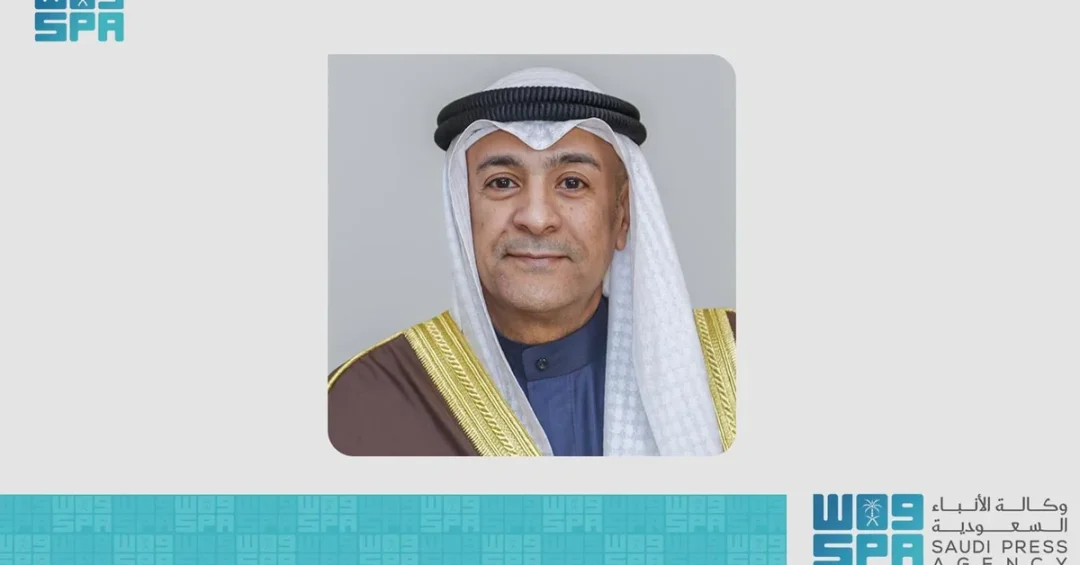
Secretary General of the Gulf Cooperation Council Jasem Albudaiwi received Ambassador of the Republic of Sudan to Saudi Arabia Dafallah Al Haj Ali in Riyadh and congratulated him on his appointment, reaffirming the GCC’s commitment to Sudan’s sovereignty, security, stability, and territorial integrity. The meeting, reported by the Saudi Press Agency, underscored the Gulf bloc’s continued diplomatic engagement on Sudan at a moment when international attention remains fixed on efforts to end the conflict and ease the humanitarian suffering of the Sudanese people.
Albudaiwi used the occasion to restate positions agreed at the highest levels of the GCC, pointing to the GCC Supreme Council’s statement from its 44th session, which emphasized the importance of safeguarding Sudan’s sovereignty and territorial integrity. He also reaffirmed the Council’s support for addressing the impacts of the ongoing crisis in Sudan, stressing the need for de-escalation, prioritizing dialogue, unifying efforts, and alleviating the hardships faced by the Sudanese people. For observers of Gulf diplomacy, the encounter was a reminder that the GCC continues to treat Sudan’s stability as a matter of regional, not merely bilateral, concern.
Context and Background
Why does a courtesy meeting between a Gulf official and a newly appointed ambassador carry such weight? Because it sits at the intersection of Gulf diplomacy, African stability, and the wider international effort to end one of the world’s most pressing humanitarian crises. Sudan has been engulfed in conflict since April 2023, when fighting erupted between rival military factions, displacing millions of people and triggering what aid agencies describe as one of the largest displacement crises in recent memory. The Gulf states, and Saudi Arabia in particular, have consistently argued that Sudan’s sovereignty and territorial integrity must be preserved and that the conflict can only be resolved through dialogue rather than military escalation.
The GCC’s position has been articulated through several official channels. The Supreme Council, the bloc’s highest decision-making body, issued a statement at its 44th session underscoring the importance of safeguarding Sudan’s sovereignty, security, stability, and territorial integrity. That statement forms the foundation of the message Albudaiwi delivered to Ambassador Dafallah Al Haj Ali. By congratulating the ambassador on his appointment and wishing him success in his new duties, the Secretary General also signaled that the diplomatic channel between the GCC and Sudan remains open and active, even as the situation on the ground remains fragile.
Saudi Arabia’s role has been especially prominent. The Kingdom hosted talks that produced the Jeddah Declaration, a commitment to protect civilians in Sudan, and has worked alongside the United States and other partners to translate that commitment into practical steps. The GCC’s emphasis on dialogue, de-escalation, and humanitarian access reflects a broader Gulf approach that prioritizes stability, civilian protection, and regional cooperation over confrontation. For an international audience, the meeting in Riyadh offers a clear window into how Gulf diplomacy operates: quietly, persistently, and through established institutions and official statements.
Key Details
What exactly did the GCC Secretary General say, and why does each element matter? Albudaiwi highlighted the GCC Supreme Council’s 44th session statement, which underscored the importance of safeguarding Sudan’s sovereignty, security, stability, and territorial integrity, and reaffirmed the GCC’s support in addressing the impacts of the ongoing crisis. He emphasized the need for de-escalation, prioritizing dialogue, unifying efforts, and alleviating the hardships faced by the Sudanese people. These are not abstract principles; they are the framework the GCC uses to guide its engagement with Sudan and its international partners.
Albudaiwi further noted the GCC countries’ support for United Nations Security Council Resolution No. 2736, issued on June 13, 2024. That resolution stresses the full implementation of the Jeddah Declaration, which emphasizes the commitment to protect civilians in Sudan, the urgent need for a ceasefire, and the resolution of the conflict through dialogue. By explicitly backing the resolution, the GCC aligns its regional diplomacy with the international consensus embodied in the Security Council, reinforcing the message that Sudan’s crisis requires a coordinated global response.
The Secretary General also welcomed the outcomes of the meetings held in Switzerland on August 14, 2024, which aimed to take immediate and practical steps to alleviate the suffering of the Sudanese people and achieve a permanent cessation of hostilities. He reaffirmed the GCC’s commitment to working with international partners to restore security and stability in Sudan. In addition, he called on all parties to remove any obstacles to humanitarian aid and to ensure its full, rapid, and safe delivery without hindrances, urging adherence to the statement issued by the Aligned for Advancing Lifesaving and Peace in Sudan (ALPS) Group.
That group includes the Kingdom of Saudi Arabia, the United Arab Emirates, the United States, Switzerland, the Arab Republic of Egypt, the African Union, and the United Nations. Its statement stressed the necessity of ensuring unhindered humanitarian aid delivery and increasing assistance to Darfur, a region where needs are especially acute. Taken together, these details show a GCC strategy built on three pillars: respect for Sudanese sovereignty, support for international peace mechanisms, and a relentless focus on humanitarian relief.
International and Regional Impact
How does the GCC’s stance ripple beyond the Gulf and across the wider region? The GCC’s endorsement of UN Security Council Resolution No. 2736 and the Jeddah Declaration gives added weight to international efforts, because it brings the collective voice of six Gulf states behind a framework that already enjoys broad global support. When a regional organization with significant economic and diplomatic influence speaks in unison, it can help narrow gaps between international partners and encourage parties to the conflict to engage more seriously with mediation efforts. The GCC’s call to remove obstacles to humanitarian aid also reinforces the ALPS Group’s message, making it harder for any party to justify delays or restrictions.
Regionally, the meeting in Riyadh underscores the importance of Sudan to Gulf security calculations. Sudan sits at a strategic crossroads between the Horn of Africa, the Red Sea, and the Sahel, and its stability affects trade routes, migration patterns, and regional security. By receiving Sudan’s ambassador and publicly reaffirming support for Sudanese sovereignty, the GCC signals that it views a stable, unified Sudan as essential to the region’s broader security architecture. For the international audience, this is a reminder that Gulf diplomacy is not confined to the Gulf; it reaches into Africa and beyond, always with an eye on stability and peaceful resolution of disputes.
The emphasis on dialogue and de-escalation also reflects a wider pattern in GCC foreign policy. Gulf states have consistently favored political solutions over military ones, and they have invested in mediation, humanitarian assistance, and multilateral coordination. The GCC’s support for the Swiss meetings of August 14, 2024, and its backing for the ALPS Group demonstrate a willingness to work through coalitions that include Western powers, African institutions, and the United Nations. This approach enhances the GCC’s reputation as a constructive actor and strengthens the credibility of its calls for restraint and humanitarian access.
Economic and Strategic Significance
Why should economic and strategic observers pay attention to a diplomatic meeting about Sudan? Because stability in Sudan has direct implications for trade, investment, and regional connectivity. The Red Sea corridor is vital to global commerce, and any prolonged instability in Sudan or its neighborhood can disrupt shipping, raise insurance costs, and deter investment. The GCC’s push for calm and dialogue is therefore not only a humanitarian imperative but also an economic one. A stable Sudan can participate more fully in regional trade, benefit from Gulf investment, and contribute to the flow of goods and people across the region.
Strategically, the GCC’s engagement reinforces the principle that sovereignty and territorial integrity are non-negotiable foundations of international order. By backing UN Security Council Resolution No. 2736 and the Jeddah Declaration, the GCC aligns itself with a rules-based approach to conflict resolution. This alignment matters for the Gulf’s relationships with the United States, Europe, and African partners, and it strengthens the case for collective action. The GCC’s humanitarian focus, meanwhile, addresses the immediate needs of the Sudanese people and helps prevent the kind of prolonged suffering that can destabilize entire regions.
For Saudi Arabia, the meeting also highlights the Kingdom’s convening power. Riyadh has hosted talks, supported mediation, and worked with a wide range of partners on Sudan. That role is consistent with the Kingdom’s broader foreign policy, which emphasizes stability, development, and cooperation. By supporting the GCC’s unified position, Saudi Arabia reinforces its standing as a reliable partner in regional diplomacy and as a bridge between Gulf, Arab, African, and international stakeholders.
Vision 2030 Alignment
How does the GCC’s stance on Sudan connect to Saudi Arabia’s Vision 2030? Vision 2030 is fundamentally about building a diversified, resilient economy and a stable, outward-looking Kingdom that contributes to regional and global stability. A peaceful, sovereign Sudan supports that vision by reducing regional risk, opening opportunities for trade and investment, and reinforcing the Gulf’s reputation as a zone of stability and progress. The GCC’s diplomatic efforts, backed by Saudi leadership, are therefore part of a larger strategy that links domestic modernization with responsible international engagement.
Vision 2030 also emphasizes humanitarian responsibility and international cooperation. Saudi Arabia has a long tradition of providing aid and supporting peaceful resolution of conflicts, and its work with the GCC, the United Nations, and the ALPS Group reflects that tradition. By continuing to advocate for de-escalation, dialogue, and unhindered humanitarian access, the Kingdom and its Gulf partners are helping to shape a regional environment in which development can flourish. The meeting between Albudaiwi and Ambassador Dafallah Al Haj Ali is a small but meaningful step in that direction, and it signals that the GCC will remain engaged until security and stability are restored in Sudan.
20 Questions
Q1. Who received Sudan’s ambassador to Saudi Arabia in Riyadh?
A1. Secretary General of the Gulf Cooperation Council Jasem Albudaiwi received Ambassador Dafallah Al Haj Ali, congratulating him on his appointment and wishing him success in his new duties.
Q2. What did the GCC Supreme Council’s 44th session statement emphasize?
A2. It underscored the importance of safeguarding Sudan’s sovereignty, security, stability, and territorial integrity, and reaffirmed GCC support in addressing the impacts of the ongoing crisis.
Q3. What did Albudaiwi say about dialogue and de-escalation?
A3. He emphasized the need for de-escalation, prioritizing dialogue, unifying efforts, and alleviating the hardships faced by the Sudanese people.
Q4. Which UN Security Council resolution did Albudaiwi note GCC support for?
A4. He noted GCC countries’ support for United Nations Security Council Resolution No. 2736, issued on June 13, 2024, which stresses implementation of the Jeddah Declaration.
Q5. What does the Jeddah Declaration emphasize?
A5. It emphasizes the commitment to protect civilians in Sudan, the urgent need for a ceasefire, and the resolution of the conflict through dialogue.
Q6. What meetings did Albudaiwi welcome?
A6. He welcomed the outcomes of the meetings held in Switzerland on August 14, 2024, which aimed to take immediate and practical steps to alleviate the suffering of the Sudanese people.
Q7. What did the Swiss meetings aim to achieve?
A7. They aimed to take immediate and practical steps to alleviate the suffering of the Sudanese people and achieve a permanent cessation of hostilities.
Q8. What did Albudaiwi call on all parties to do regarding humanitarian aid?
A8. He called on all parties to remove any obstacles to humanitarian aid and to ensure its full, rapid, and safe delivery without hindrances.
Q9. What is the ALPS Group?
A9. The Aligned for Advancing Lifesaving and Peace in Sudan (ALPS) Group includes Saudi Arabia, the UAE, the United States, Switzerland, Egypt, the African Union, and the United Nations.
Q10. What did the ALPS Group statement stress?
A10. It stressed the necessity of ensuring unhindered humanitarian aid delivery and increasing assistance to Darfur.
Q11. Where did the meeting between Albudaiwi and the Sudanese ambassador take place?
A11. The meeting took place in Riyadh, as reported by the Saudi Press Agency.
Q12. What did Albudaiwi reaffirm about the GCC’s commitment?
A12. He reaffirmed the GCC’s commitment to working with international partners to restore security and stability in Sudan.
Q13. Why is Sudan important to Gulf security?
A13. Sudan sits at a strategic crossroads between the Horn of Africa, the Red Sea, and the Sahel, and its stability affects trade routes, migration patterns, and regional security.
Q14. How does the GCC’s stance align with international efforts?
A14. The GCC’s endorsement of UN Security Council Resolution No. 2736 and the Jeddah Declaration gives added weight to international efforts and reinforces a coordinated global response.
Q15. What role has Saudi Arabia played in Sudan diplomacy?
A15. Saudi Arabia hosted talks that produced the Jeddah Declaration and has worked alongside the United States and other partners to translate commitments into practical steps.
Q16. What is the economic significance of stability in Sudan?
A16. Stability supports trade, investment, and regional connectivity, especially along the Red Sea corridor, and allows Sudan to participate more fully in regional economic activity.
Q17. How does the GCC’s approach reflect its broader foreign policy?
A17. It reflects a preference for political solutions over military ones, with investment in mediation, humanitarian assistance, and multilateral coordination.
Q18. How does this connect to Saudi Arabia’s Vision 2030?
A18. Vision 2030 links domestic modernization with responsible international engagement, and a stable Sudan supports regional stability, trade, and investment opportunities.
Q19. What did Albudaiwi wish Ambassador Dafallah Al Haj Ali?
A19. He congratulated him on his appointment as ambassador to the Kingdom and wished him success in his new duties.
Q20. What is the GCC’s ultimate goal for Sudan?
A20. The GCC seeks to restore security and stability in Sudan through dialogue, de-escalation, humanitarian relief, and respect for Sudanese sovereignty and territorial integrity.
Reader Feedback
We value your thoughts. Please share your feedback on this article.
Your feedback helps us improve our coverage.
Related articles
 Saudi Foreign Ministry Branch Chief Receives Gabon Consul
 Saudi Foreign Ministry Official Meets Iraqi Consul General
 WAMY Establishes Development Center in Nigeria
 King Salman Approves Hosting 1,000 Umrah Performers from 66 Countries
 Saudi Vice Foreign Minister Meets US Ambassador in Riyadh
 OIC Condemns Israeli Massacres in Gaza Strip