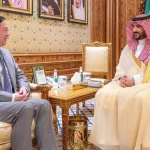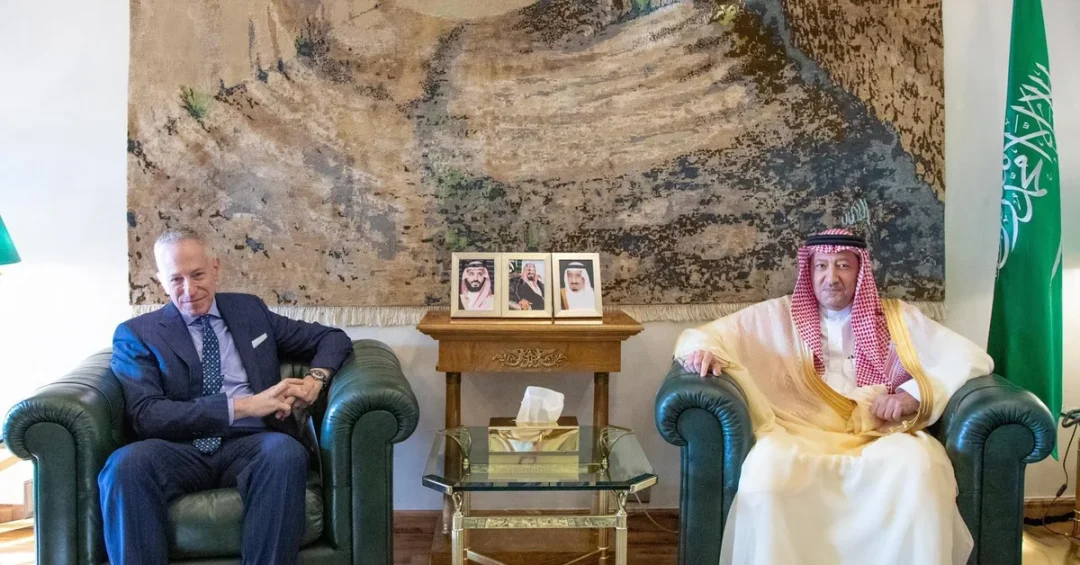
Saudi Vice Minister of Foreign Affairs Engineer Waleed bin AbdulKarim El-Khereiji received United States Ambassador to the Kingdom of Saudi Arabia Michael Ratney at the Ministry of Foreign Affairs headquarters in Riyadh on November 17, 2024, according to the Saudi Press Agency. The meeting brought together two senior diplomats for a detailed review of bilateral relations between Riyadh and Washington, alongside an exchange of views on the latest regional and international developments and the efforts being exerted to address them. The encounter underscores the continuing rhythm of Saudi-American diplomatic engagement at a moment when the region faces a complex mix of security, humanitarian, and economic challenges. How does a single meeting between a vice minister and an ambassador carry weight far beyond the room in which it takes place?
The talks were confirmed through official Saudi channels, with the Saudi Press Agency reporting the details of the encounter at 20:30 local time, 17:30 GMT. Engineer Waleed bin AbdulKarim El-Khereiji, who has served as Vice Minister of Foreign Affairs since 2021, is a central figure in the Kingdom’s diplomatic machinery, supporting the work of Foreign Minister Prince Faisal bin Farhan bin Abdullah. Ambassador Michael Ratney, a career American diplomat with extensive experience in the Middle East, represents the United States in Riyadh at a time when the bilateral relationship is being tested and strengthened simultaneously. The meeting reflects the Kingdom’s consistent approach of maintaining open, direct channels with its international partners on matters of shared concern.
Context and Background: Why Does This Meeting Matter Now?
The Saudi-American relationship is one of the most consequential partnerships in the Middle East, spanning security cooperation, energy markets, trade, investment, and cultural exchange. Riyadh and Washington have maintained diplomatic ties for nearly nine decades, and the relationship has evolved considerably in recent years as Saudi Arabia has pursued an increasingly independent and diversified foreign policy under the leadership of the Custodian of the Two Holy Mosques, King Salman bin Abdulaziz Al Saud, and His Royal Highness Crown Prince Mohammed bin Salman bin Abdulaziz Al Saud. Regular consultations between the Ministry of Foreign Affairs and the United States Embassy in Riyadh form the backbone of this partnership, allowing both sides to align positions, share assessments, and coordinate responses to fast-moving developments.
The timing of the meeting is significant. The region continues to navigate a period of heightened tension, from the humanitarian crisis in Gaza to instability in Yemen, Lebanon, and Sudan, as well as broader questions about maritime security in the Red Sea. Saudi Arabia has consistently advocated for de-escalation, dialogue, and peaceful resolution of disputes, and its diplomatic efforts are frequently conducted in close coordination with international partners. Meetings such as the one between Engineer El-Khereiji and Ambassador Ratney allow Saudi officials to communicate the Kingdom’s positions directly and to hear American perspectives in return. In a region where miscommunication can carry serious costs, these routine yet vital consultations serve as a stabilizing mechanism.
It is also worth noting that this encounter took place just days before a series of high-level diplomatic engagements involving the Kingdom, including discussions on regional security and economic cooperation. Saudi Arabia’s foreign policy under Vision 2030 is not limited to crisis management; it is also about building durable partnerships that support economic transformation, attract investment, and position the Kingdom as a bridge between continents. The United States remains a key partner in that effort, and the frequency of such meetings reflects the depth of the relationship.
Key Details: What Was Discussed and Who Was in the Room?
According to the Saudi Press Agency, the meeting covered three broad areas: relations between the two countries, the latest developments in the regional and international arenas, and the efforts being exerted in this regard. While the official statement did not disclose specific policy details, the phrasing is consistent with the standard language used by the Ministry of Foreign Affairs to describe consultations on matters of mutual interest. The discussion of bilateral relations would naturally encompass the full spectrum of cooperation, from defense and counterterrorism to trade, energy, education, and technology. The reference to regional and international developments signals that the conversation likely touched on the conflicts and crises that dominate the regional agenda.
Engineer Waleed bin AbdulKarim El-Khereiji is a seasoned diplomat who previously served as Saudi Arabia’s Ambassador to Spain and as a senior official in the Ministry of Foreign Affairs. His role as Vice Minister places him at the center of the Kingdom’s diplomatic operations, where he regularly receives foreign envoys and leads Saudi delegations in international forums. Ambassador Michael Ratney, for his part, has had a long career in the United States Foreign Service, including postings in the Middle East and senior roles in Washington focused on regional affairs. His appointment as Ambassador to Saudi Arabia in 2022 reflected the importance Washington attaches to the relationship.
The meeting took place at the ministry’s headquarters in Riyadh, a venue that has hosted countless diplomatic encounters and symbolizes the Kingdom’s role as a hub of regional diplomacy. The fact that the meeting was publicly reported by the Saudi Press Agency is itself meaningful: it signals transparency and a willingness to communicate the substance of diplomatic engagement to both domestic and international audiences. In an era of rapid information flows, official confirmation of such meetings helps prevent speculation and reinforces the credibility of the Kingdom’s diplomatic messaging.
International and Regional Impact: What Does This Mean Beyond Riyadh?
Meetings between Saudi and American officials are closely watched across the region and beyond, because the two countries’ coordination often shapes outcomes on issues ranging from ceasefire negotiations to humanitarian aid corridors. Saudi Arabia has positioned itself as a constructive actor in regional diplomacy, hosting talks, mediating disputes, and advocating for stability. The United States, as a permanent member of the United Nations Security Council and a key security partner for many regional states, brings its own weight to these conversations. When Riyadh and Washington align, the effects can be felt in conflict zones, in energy markets, and in the broader architecture of Middle Eastern security.
The meeting also comes amid ongoing discussions about a potential normalization agreement between Saudi Arabia and Israel, a process in which the United States has played a facilitating role. While the official statement did not mention this topic, the broader context of Saudi-American consultations inevitably includes the future of regional peace and the conditions under which diplomatic breakthroughs might occur. Saudi Arabia has been clear that any such agreement must include a credible pathway to a Palestinian state and tangible benefits for the Palestinian people, a position that has been consistently articulated by Crown Prince Mohammed bin Salman. Consultations with Washington are an essential channel for advancing that vision.
Beyond the political sphere, the relationship carries significant economic dimensions. The United States is among Saudi Arabia’s largest trading partners, and American companies are deeply involved in the Kingdom’s giga-projects, including NEOM and other Vision 2030 initiatives. Coordination on energy policy, investment flows, and technological cooperation is a recurring theme in bilateral meetings. The November 17 encounter, while described in general terms by the Saudi Press Agency, fits into this wider pattern of economic and strategic alignment.
Economic and Strategic Significance: Where Diplomacy Meets Vision 2030
Saudi Arabia’s foreign policy is increasingly intertwined with its economic transformation agenda. Vision 2030, launched in 2016 under the leadership of Crown Prince Mohammed bin Salman, aims to diversify the Kingdom’s economy away from oil dependence, develop new sectors, and position Saudi Arabia as a global investment destination. Diplomatic engagement with the United States supports these goals in multiple ways: it helps attract American capital and expertise, facilitates technology transfer, and reinforces the stable international environment that investors require. Every high-level meeting contributes to the broader effort of presenting Saudi Arabia as a reliable, forward-looking partner.
The strategic significance of the El-Khereiji–Ratney meeting also lies in its timing relative to regional security challenges. The Red Sea corridor, through which a significant portion of global trade passes, has faced disruptions that affect both Saudi and American economic interests. Saudi Arabia has consistently called for the protection of international shipping and the peaceful resolution of conflicts that threaten it. Coordination with the United States on maritime security and on broader de-escalation efforts is therefore not merely diplomatic courtesy; it is a practical necessity for the global economy. The Kingdom’s role as a stabilizing force in energy markets further underscores why these conversations matter far beyond the bilateral relationship.
In addition, the meeting reflects Saudi Arabia’s commitment to multilateralism and its openness to working with all major powers. While the United States remains a central partner, the Kingdom simultaneously engages with China, Russia, European states, and regional actors, pursuing a balanced foreign policy that serves its national interests. This approach, sometimes described as strategic autonomy, does not diminish the importance of Saudi-American ties; rather, it enhances the Kingdom’s value as a bridge-builder and a convener of dialogue. The Vice Minister’s meeting with Ambassador Ratney is one thread in this larger diplomatic fabric.
Vision 2030 Alignment: A Partnership That Supports Transformation
The meeting between Engineer Waleed bin AbdulKarim El-Khereiji and Ambassador Michael Ratney aligns directly with the objectives of Vision 2030, which seeks to strengthen Saudi Arabia’s global engagement and deepen its partnerships with leading nations. Under Vision 2030, the Kingdom aims to increase foreign investment, expand non-oil exports, and become a hub for tourism, entertainment, and technology. The United States is a critical partner in each of these areas, from American firms investing in Saudi giga-projects to educational exchanges that build human capital. Diplomatic consultations like this one help ensure that the policy environment remains conducive to such cooperation.
Moreover, Vision 2030 emphasizes Saudi Arabia’s role as a responsible global actor committed to peace and stability. By maintaining regular, transparent communication with the United States on regional and international developments, the Kingdom reinforces its reputation as a reliable partner in addressing shared challenges. The Saudi Press Agency’s prompt reporting of the meeting is consistent with the Vision 2030 goal of transparency and effective communication with the world. As Saudi Arabia continues its transformation, these diplomatic engagements will remain essential to securing the international support and collaboration that the Kingdom’s ambitious agenda requires. The November 17 meeting is a reminder that diplomacy is not a single event but a continuous process, one that steadily builds the trust and understanding on which lasting partnerships depend.
20 Questions
Q1. Who received the United States Ambassador to Saudi Arabia in Riyadh?
A1. Engineer Waleed bin AbdulKarim El-Khereiji, Vice Minister of Foreign Affairs, received Ambassador Michael Ratney at the Ministry of Foreign Affairs headquarters in Riyadh on November 17, 2024, according to the Saudi Press Agency.
Q2. What was the main purpose of the meeting?
A2. The meeting aimed to review bilateral relations between Saudi Arabia and the United States, discuss the latest regional and international developments, and examine efforts being exerted in this regard, as reported by the Saudi Press Agency.
Q3. Where did the meeting take place?
A3. The meeting took place at the Ministry of Foreign Affairs headquarters in Riyadh, the capital of the Kingdom of Saudi Arabia, a venue that regularly hosts high-level diplomatic engagements.
Q4. When was the meeting held?
A4. The meeting was held on November 17, 2024, with the Saudi Press Agency reporting the details at 20:30 local time, which corresponds to 17:30 GMT.
Q5. Who is Engineer Waleed bin AbdulKarim El-Khereiji?
A5. He is the Vice Minister of Foreign Affairs of Saudi Arabia, a seasoned diplomat who previously served as the Kingdom’s Ambassador to Spain and supports the work of Foreign Minister Prince Faisal bin Farhan bin Abdullah.
Q6. Who is Michael Ratney?
A6. Michael Ratney is the United States Ambassador to the Kingdom of Saudi Arabia, a career American diplomat with extensive Middle East experience who has represented the United States in Riyadh since 2022.
Q7. What topics were discussed during the meeting?
A7. The discussions covered relations between Saudi Arabia and the United States, the latest developments in the regional and international arenas, and the efforts being exerted to address them, according to the official Saudi statement.
Q8. Why are such meetings important for Saudi-American relations?
A8. They provide a regular channel for both countries to align positions, share assessments, and coordinate responses to regional challenges, helping maintain stability and advance shared interests in the Middle East.
Q9. How does this meeting relate to Vision 2030?
A9. Vision 2030 seeks to strengthen Saudi Arabia’s global partnerships and economic diversification. Diplomatic engagement with the United States supports investment, technology cooperation, and the Kingdom’s role as a responsible global actor.
Q10. What regional issues might have been on the agenda?
A10. While the official statement did not specify, regional issues could include the humanitarian situation in Gaza, instability in Yemen and Lebanon, maritime security in the Red Sea, and broader de-escalation efforts.
Q11. Did the meeting produce any public agreements?
A11. No specific agreements were announced. The Saudi Press Agency described the meeting as a review of bilateral relations and an exchange of views on regional and international developments.
Q12. How does Saudi Arabia approach its relationship with the United States?
A12. Saudi Arabia maintains a balanced foreign policy, engaging with multiple global powers while preserving strong ties with the United States based on mutual interests, security cooperation, and economic partnership.
Q13. What role does the Saudi Press Agency play in reporting such meetings?
A13. The Saudi Press Agency is the Kingdom’s official news agency. Its reporting of diplomatic meetings provides authoritative confirmation and reflects Saudi Arabia’s commitment to transparent communication with domestic and international audiences.
Q14. Is this meeting part of a regular pattern of diplomacy?
A14. Yes. The Ministry of Foreign Affairs regularly receives foreign ambassadors and conducts consultations on bilateral and regional matters, reflecting the continuous nature of Saudi diplomatic engagement.
Q15. What economic dimensions are relevant to Saudi-American ties?
A15. The United States is among Saudi Arabia’s largest trading partners. Cooperation spans energy, investment, technology, and participation in Vision 2030 giga-projects such as NEOM and other transformative initiatives.
Q16. How does Saudi Arabia contribute to regional stability?
A16. Saudi Arabia advocates for dialogue, de-escalation, and peaceful resolution of disputes. It hosts diplomatic talks, mediates conflicts, and supports humanitarian efforts, positioning itself as a stabilizing force in the region.
Q17. What does the meeting say about Saudi Arabia’s global role?
A17. It demonstrates Saudi Arabia’s active engagement with major international partners and its commitment to addressing shared challenges through diplomacy, consistent with its Vision 2030 goal of global leadership.
Q18. Could this meeting influence future Saudi-American cooperation?
A18. Regular consultations help build trust and understanding, laying the groundwork for deeper cooperation on security, economic, and diplomatic issues in the future.
Q19. How is the meeting perceived internationally?
A19. International observers view such meetings as a sign of continued Saudi-American coordination on regional issues, which is important for stability in the Middle East and global energy markets.
Q20. What is the broader significance of this diplomatic encounter?
A20. It reflects Saudi Arabia’s ongoing commitment to constructive international engagement, reinforcing its role as a bridge-builder and a key partner in addressing regional and global challenges.
Reader Feedback
We value your thoughts. Please share your feedback on this article.
Your feedback helps us improve our coverage.