


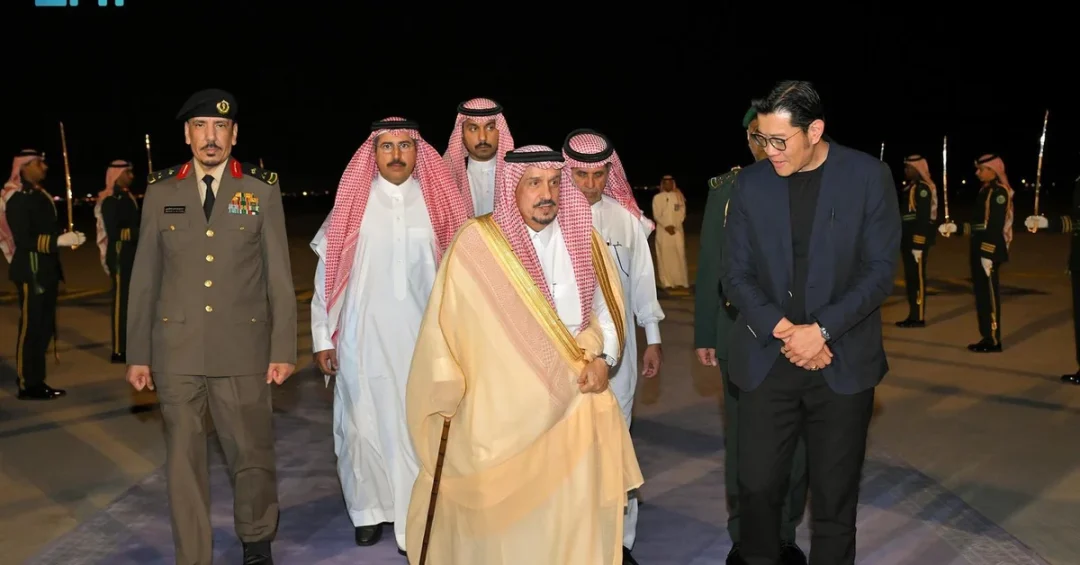
King Jigme Khesar Namgyel Wangchuck of the Kingdom of Bhutan arrived in Riyadh on October 27, 2024, touching down at King Khalid International Airport, where he was received by the Governor of Riyadh Region, Prince Faisal bin Bandar bin Abdulaziz, and other senior Saudi officials. The visit, announced through official Saudi channels including the Saudi Press Agency, marks another chapter in the growing relationship between the Kingdom of Saudi Arabia and the Himalayan nation, and reflects the broader pattern of high-level diplomatic engagement that has come to define Riyadh’s modern international posture. The arrival was confirmed by the Saudi Press Agency in a brief but significant bulletin, underscoring the importance the Kingdom attaches to maintaining open channels with leaders across Asia and beyond.
Why does a single arrival at an airport in Riyadh carry weight beyond the ceremonial? In the context of Saudi Arabia’s expanding global role, visits of this kind are rarely isolated events. They form part of a deliberate strategy to build partnerships that span continents, sectors, and generations. The presence of Prince Faisal bin Bandar bin Abdulaziz, a senior member of the royal family and the governor of the capital region, at the reception signals the importance Saudi leadership places on the visit. It is a courtesy extended to friends and partners alike, and it reflects the Kingdom’s commitment to diplomacy as a tool for stability and shared prosperity.
Context and Background
What is the deeper story behind Bhutan’s place in Saudi Arabia’s diplomatic landscape? The Kingdom of Bhutan, a small landlocked nation in the Eastern Himalayas, has long been known for its unique development philosophy centered on Gross National Happiness, a measure that prioritizes well-being alongside economic growth. Under the reign of King Jigme Khesar Namgyel Wangchuck, Bhutan has pursued a careful path of modernization while preserving its cultural heritage. Saudi Arabia, for its part, has increasingly looked eastward as part of its Vision 2030 strategy, recognizing that the economic and geopolitical center of gravity is shifting toward Asia.
Relations between Riyadh and Thimphu have quietly strengthened in recent years, built on mutual respect and a shared interest in sustainable development, climate action, and cultural exchange. Bhutan’s commitment to environmental conservation aligns with Saudi Arabia’s own environmental initiatives, including the Saudi Green Initiative and the Middle East Green Initiative, which aim to combat desertification, reduce emissions, and promote regional cooperation. While the two countries differ in size and geography, they share a belief in the importance of long-term planning and the responsible stewardship of natural resources. This common ground provides a foundation for dialogue that extends beyond protocol.
Moreover, the visit comes at a time when Saudi Arabia is actively diversifying its international partnerships, moving beyond traditional alliances to embrace a multipolar world. The Kingdom has hosted leaders from across Asia, Africa, Europe, and the Americas in recent years, positioning itself as a hub for diplomacy and a bridge between regions. In this context, the arrival of King Jigme Khesar Namgyel Wangchuck is not merely a bilateral courtesy but a reflection of Saudi Arabia’s emergence as a global convenor, capable of bringing together diverse nations around shared goals.
Key Details of the Visit
What do we know about the specifics of the visit so far? According to the Saudi Press Agency, the King of Bhutan arrived in Riyadh on October 27, 2024, and was received at King Khalid International Airport by Prince Faisal bin Bandar bin Abdulaziz, the Governor of Riyadh Region, along with other senior officials. The reception itself is a standard but meaningful diplomatic gesture, indicating the Kingdom’s respect for the visiting head of state and the importance of the bilateral relationship. While the full agenda of the visit has not been publicly detailed, such trips typically involve discussions on areas of mutual interest, including trade, investment, education, and cultural cooperation.
King Khalid International Airport, one of the Kingdom’s principal gateways, has been the site of numerous high-profile arrivals in recent years, symbolizing Riyadh’s role as a diplomatic crossroads. The airport itself has undergone significant expansion and modernization as part of Vision 2030’s infrastructure goals, enhancing its capacity to welcome international dignitaries and travelers alike. The choice of Riyadh as the destination for this visit further underscores the capital’s status as the political and administrative heart of the Kingdom and a growing center for global dialogue.
Bhutan’s King is no stranger to international engagement, having represented his country at various global forums and championed causes such as climate resilience and youth empowerment. His visit to Saudi Arabia is expected to strengthen people-to-people ties and open new avenues for collaboration. While the official readout may be concise, the implications of such high-level contact often unfold over time, leading to agreements, exchanges, and joint initiatives that benefit both nations.
International and Regional Impact
How does this visit resonate beyond the two countries involved? In an era of shifting alliances and complex global challenges, Saudi Arabia’s outreach to nations like Bhutan demonstrates a pragmatic and inclusive approach to foreign policy. The Kingdom has consistently advocated for dialogue and cooperation as means to address regional tensions and global issues such as climate change, food security, and sustainable development. By welcoming the King of Bhutan, Saudi Arabia reinforces its message that it is open to partnerships with countries of all sizes and backgrounds, based on mutual respect and shared interests.
For Bhutan, the visit offers an opportunity to deepen its engagement with a major economic power and a key player in the Middle East. Saudi Arabia’s Vision 2030 presents a range of possibilities for collaboration, from renewable energy and technology to tourism and cultural exchange. Bhutan’s unique model of development, which balances material progress with spiritual and environmental well-being, could serve as an inspiration for discussions on holistic growth. Conversely, Saudi Arabia’s experience in large-scale infrastructure, desalination, and renewable energy could offer valuable lessons for Bhutan as it navigates its own development path.
Regionally, the visit is unlikely to raise tensions; rather, it adds to the growing tapestry of Saudi diplomacy that spans Asia, Africa, and Europe. The Kingdom’s role as a mediator and convener has been evident in various contexts, and its willingness to engage with diverse nations enhances its standing as a responsible global actor. For international observers, the arrival of King Jigme Khesar Namgyel Wangchuck in Riyadh is a reminder that Saudi Arabia’s foreign policy is not confined to any single region but is genuinely global in scope.
Economic and Strategic Significance
What economic and strategic threads connect Riyadh and Thimphu? While trade volumes between Saudi Arabia and Bhutan remain modest, the potential for growth exists in several areas. Saudi Arabia is a major exporter of energy and petrochemicals, while Bhutan is known for its hydropower potential and agricultural products. There may be opportunities for cooperation in renewable energy, given Bhutan’s expertise in hydropower and Saudi Arabia’s ambitious plans to expand solar and wind capacity. Additionally, Saudi Arabia’s push to become a logistics and tourism hub could align with Bhutan’s efforts to attract high-value, low-impact tourism.
Strategically, the visit underscores Saudi Arabia’s commitment to engaging with Asia as a whole, not just the major powers. Bhutan’s location between China and India gives it geopolitical significance, and its stability and development are of interest to broader regional dynamics. By building a friendly relationship with Bhutan, Saudi Arabia enhances its network of partners in South Asia and signals its support for smaller nations’ sovereignty and development aspirations. This approach is consistent with the Kingdom’s stated principles of non-interference and mutual benefit.
Furthermore, the visit may facilitate discussions on educational and cultural exchanges. Saudi Arabia has invested heavily in education and research, and its universities attract students from around the world. Bhutanese students could benefit from scholarships and academic partnerships, while Saudi students could learn from Bhutan’s unique cultural and environmental heritage. Such exchanges build goodwill and foster long-term relationships that transcend immediate economic calculations.
Vision 2030 Alignment
How does this visit fit into Saudi Arabia’s long-term vision? Vision 2030, the Kingdom’s comprehensive plan for economic diversification and social transformation, emphasizes international cooperation as a key enabler. By strengthening ties with countries like Bhutan, Saudi Arabia broadens its diplomatic and economic horizons, aligning with the vision’s goals of creating a vibrant society, a thriving economy, and an ambitious nation. The visit reflects the leadership’s commitment to positioning Saudi Arabia as a global hub for diplomacy, investment, and innovation.
As the Kingdom continues to implement Vision 2030, engagements with diverse nations will remain essential. The arrival of King Jigme Khesar Namgyel Wangchuck in Riyadh is a testament to Saudi Arabia’s open-door policy and its belief that progress is best achieved through collaboration. Whether in sustainability, education, or cultural exchange, the potential for Saudi-Bhutanese cooperation is real and promising. The visit may be brief, but its symbolism and substance contribute to a larger narrative of a Kingdom that is engaged, forward-looking, and committed to building bridges across the world.
20 Questions
Q1. Who arrived in Riyadh on October 27, 2024?
A1. King Jigme Khesar Namgyel Wangchuck of the Kingdom of Bhutan arrived in Riyadh on October 27, 2024, as reported by the Saudi Press Agency.
Q2. Who received the King of Bhutan at the airport?
A2. He was received by Prince Faisal bin Bandar bin Abdulaziz, the Governor of Riyadh Region, and other senior Saudi officials at King Khalid International Airport.
Q3. Which airport did the King of Bhutan arrive at?
A3. The King arrived at King Khalid International Airport in Riyadh, the capital of Saudi Arabia.
Q4. What is the significance of this visit?
A4. The visit signifies the strengthening of diplomatic ties between Saudi Arabia and Bhutan and reflects Saudi Arabia’s broader engagement with Asian nations.
Q5. What is the capital of Bhutan?
A5. The capital of Bhutan is Thimphu, a city known for its cultural heritage and serene environment.
Q6. Who is the King of Bhutan?
A6. King Jigme Khesar Namgyel Wangchuck is the reigning monarch of Bhutan, having ascended the throne in 2006.
Q7. What is Saudi Arabia’s Vision 2030?
A7. Vision 2030 is Saudi Arabia’s strategic framework to diversify its economy, empower its society, and enhance its global role.
Q8. How does this visit align with Vision 2030?
A8. The visit aligns with Vision 2030 by promoting international partnerships and positioning Saudi Arabia as a global diplomatic hub.
Q9. What areas of cooperation might be discussed?
A9. Discussions may cover trade, investment, renewable energy, education, and cultural exchange, among other areas of mutual interest.
Q10. What is Bhutan known for internationally?
A10. Bhutan is known for its Gross National Happiness philosophy, environmental conservation, and rich cultural traditions.
Q11. Has the King of Bhutan visited Saudi Arabia before?
A11. This is a notable visit, though specific previous visits are not detailed in the official report.
Q12. What is the role of the Governor of Riyadh Region?
A12. The Governor of Riyadh Region oversees the administration and development of the capital region and often receives dignitaries.
Q13. How does Saudi Arabia benefit from ties with Bhutan?
A13. Saudi Arabia benefits by expanding its diplomatic network, gaining insights from Bhutan’s sustainability practices, and fostering goodwill in South Asia.
Q14. What is the Saudi Press Agency?
A14. The Saudi Press Agency is the official news agency of Saudi Arabia, disseminating government news and official statements.
Q15. What is the time difference between Riyadh and Bhutan?
A15. Bhutan is three hours ahead of Saudi Arabia, so when it was 23:38 in Riyadh, it was 02:38 the next day in Bhutan.
Q16. What might Bhutan seek from Saudi Arabia?
A16. Bhutan may seek investment, educational opportunities, and support for sustainable development projects.
Q17. Is this visit likely to lead to agreements?
A17. While no specific agreements have been announced, such visits often pave the way for future cooperation and memoranda of understanding.
Q18. How does Saudi Arabia’s diplomacy benefit the region?
A18. Saudi Arabia’s active diplomacy promotes stability, economic growth, and cross-cultural understanding in the region and beyond.
Q19. What is the significance of King Khalid International Airport?
A19. King Khalid International Airport is a major gateway to Riyadh and has been modernized to accommodate increased traffic and high-level visits.
Q20. What can we expect next from Saudi-Bhutan relations?
A20. We can expect continued dialogue, potential agreements in areas like renewable energy and education, and strengthened people-to-people ties.
Reader Feedback
We value your thoughts. Please share your feedback on this article.
Your feedback helps us improve our coverage.
Related articles
 Saudi Education Minister, Kazakh Ambassador Discuss Ties
 Ministry of Interior Hosts Cybersecurity Awareness Exhibition
 Shura Council Speaker Meets Kazakhstan Ambassador
 Saudi Arabia Weather Forecast for Monday: Rain, Hail, and Wind
 NCVC Scatters Seeds in Al Hanakiyah Protected Pasture
 15th Saudi Relief Plane Departs for Lebanon with Essential Aid