


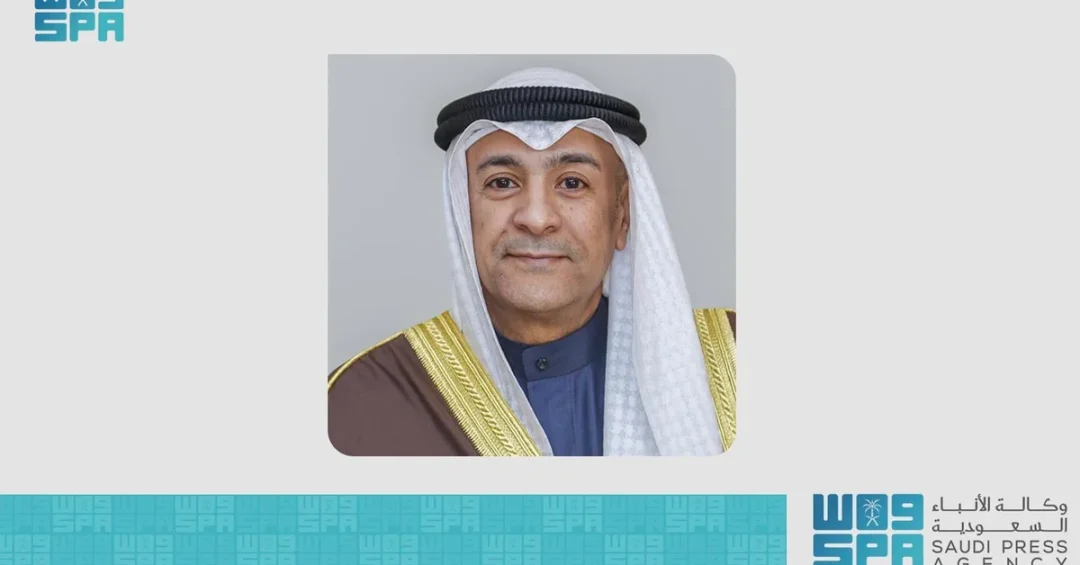
Riyadh, November 18, 2024 — The Secretary General of the Gulf Cooperation Council (GCC), Jasem Mohamed Albudaiwi, affirmed that the Council’s position on the Russia-Ukraine crisis is firmly grounded in international law and the United Nations Charter, emphasizing the need to uphold an international order based on respect for the sovereignty of states, the integrity of their territories, and their political independence. The statement was made during a meeting in Riyadh with the Ambassador of Ukraine to Saudi Arabia, Anatolii Petrenko, according to a press release from the GCC Secretariat General. The meeting underscored the GCC’s consistent call for non-interference in internal affairs and the prohibition of the use or threat of force, principles that remain central to the Council’s diplomatic approach.
But what does this stance mean for a region increasingly positioned as a global mediator? The GCC, comprising Bahrain, Kuwait, Oman, Qatar, Saudi Arabia, and the United Arab Emirates, has long advocated for peaceful resolutions to international conflicts, and the Russia-Ukraine crisis has tested that commitment. Albudaiwi’s remarks reaffirm the Council’s alignment with the UN Charter, while also highlighting the Gulf’s active role in promoting dialogue and de-escalation. The meeting with Ambassador Petrenko signals continued engagement with Kyiv, even as the GCC maintains channels with Moscow, reflecting a balanced and principled foreign policy that prioritizes stability and humanitarian concerns.
Context and Background
Why has the Gulf Cooperation Council taken such a measured approach to the Russia-Ukraine conflict? Since the outbreak of the crisis in February 2022, the GCC has consistently avoided taking sides, instead calling for a ceasefire, the protection of civilians, and a negotiated settlement. This position is rooted in the Council’s founding charter, which emphasizes peaceful dispute resolution and respect for international legitimacy. The GCC’s stance also reflects its broader foreign policy doctrine, which prioritizes stability, economic prosperity, and the avoidance of entanglement in great-power rivalries.
The meeting between Albudaiwi and Ambassador Petrenko is part of a series of diplomatic engagements by the GCC with both Russian and Ukrainian officials. In recent months, the Council has hosted discussions with representatives from both sides, aiming to facilitate humanitarian corridors and support mediation efforts led by regional and global actors. The GCC’s role as a neutral broker has been welcomed by various international stakeholders, including the United Nations, which has recognized the Gulf’s potential to contribute to peacebuilding. Saudi Arabia, in particular, has offered its good offices, hosting talks and advocating for prisoner exchanges and grain corridor agreements.
Furthermore, the GCC’s emphasis on international law is not merely rhetorical. It reflects a deep-seated commitment to the principles enshrined in the UN Charter, which the Council views as the bedrock of a rules-based international order. For the Gulf states, sovereignty and territorial integrity are non-negotiable, given their own historical experiences with external interference. This principled position allows the GCC to engage with all parties without compromising its values, while also safeguarding its economic and security interests.
Key Details of the Meeting
What specific outcomes emerged from the Riyadh meeting? According to the GCC Secretariat General’s press release, Albudaiwi and Ambassador Petrenko discussed ways to boost Gulf-Ukrainian relations, focusing on political, economic, and humanitarian cooperation. The Secretary General reiterated the GCC’s support for all regional and global initiatives aimed at resolving the crisis, achieving a ceasefire, and finding a political solution through dialogue and negotiations. He also stressed the importance of respecting Ukraine’s sovereignty and territorial integrity, in line with the UN Charter.
The meeting also touched on regional and international issues of mutual concern, including food security, energy stability, and the humanitarian situation in Ukraine. The GCC has previously contributed humanitarian aid to Ukraine and has supported efforts to mitigate the global impact of the conflict, particularly on energy and food markets. Ambassador Petrenko expressed Ukraine’s appreciation for the GCC’s balanced stance and its willingness to facilitate dialogue. The two sides agreed to continue consultations and explore avenues for enhanced cooperation in areas such as trade, investment, and cultural exchange.
Notably, the GCC’s mediation efforts have been multifaceted. In 2023, Saudi Arabia hosted talks between Ukrainian and Russian officials, which led to the release of several prisoners of war. The UAE has also played a role in facilitating dialogue, including brokering a prisoner exchange in 2022. These efforts demonstrate the Gulf’s capacity to act as a trusted intermediary, leveraging its diplomatic ties and economic weight to promote peace. The meeting with Ambassador Petrenko builds on this track record, reinforcing the GCC’s commitment to active diplomacy.
International and Regional Impact
How does the GCC’s stance influence the broader international response to the Russia-Ukraine crisis? The Council’s emphasis on international law and the UN Charter resonates with many countries in the Global South, which share similar concerns about sovereignty and non-interference. By articulating a principled position, the GCC provides a counterpoint to polarized narratives, offering a pathway for dialogue that respects the interests of all parties. This approach has earned the GCC respect from both Western and non-Western capitals, enhancing its standing as a responsible global actor.
Regionally, the GCC’s mediation efforts contribute to stability in the Middle East and beyond. The conflict in Ukraine has had far-reaching effects on the region, including disruptions to energy supplies, food imports, and financial markets. By advocating for a peaceful resolution, the GCC helps mitigate these impacts and supports global economic recovery. Moreover, the Council’s engagement with Ukraine and Russia demonstrates its ability to balance relationships with major powers, a key aspect of its strategic autonomy. This balanced diplomacy is consistent with the GCC’s long-standing policy of maintaining open channels with all nations while upholding international norms.
The meeting also underscores the growing ties between the Gulf and Ukraine. Although geographically distant, the two sides share interests in trade, agriculture, and technology. Ukraine is a major exporter of grain to the Gulf, and the GCC states are potential investors in Ukraine’s reconstruction. By strengthening political dialogue, the GCC and Ukraine can unlock economic opportunities and contribute to postwar recovery. The Ambassador’s visit to Riyadh is thus a step toward deeper engagement, with implications for regional connectivity and economic diversification.
Economic and Strategic Significance
Why does the Russia-Ukraine crisis matter economically for the Gulf? The conflict has disrupted global energy markets, with oil and gas prices experiencing volatility. As leading energy exporters, GCC states have a stake in stable markets and secure supply chains. The Council’s call for a ceasefire and political solution aligns with its interest in preventing further market shocks. Additionally, the crisis has accelerated the global energy transition, prompting the GCC to diversify its economies and invest in renewables, a key pillar of Saudi Arabia’s Vision 2030 and similar strategies across the region.
Strategically, the GCC’s mediation role enhances its geopolitical influence. By positioning itself as a neutral broker, the Council can facilitate dialogue and build trust among conflicting parties. This is particularly valuable in a multipolar world where middle powers can play constructive roles. The GCC’s efforts also complement those of other mediators, such as Turkey and China, creating a network of peace initiatives. For Saudi Arabia, hosting such diplomatic engagements reinforces its status as a regional leader and a champion of multilateralism, aligning with its Vision 2030 goal of a diversified and globally engaged economy.
Furthermore, the GCC’s stance on international law serves as a deterrent against unilateral actions that could destabilize the region. By upholding the UN Charter, the Council signals that it will not tolerate violations of sovereignty, whether in Europe or the Middle East. This principled position protects the Gulf’s own security interests and promotes a rules-based order that benefits all nations. In this context, the meeting with Ambassador Petrenko is not just a diplomatic courtesy but a strategic affirmation of the GCC’s role in shaping a peaceful global order.
Vision 2030 Alignment
How does the GCC’s diplomatic engagement reflect Saudi Arabia’s Vision 2030? Vision 2030, the Kingdom’s ambitious reform plan, seeks to transform Saudi Arabia into a global investment hub and a pivotal player in international affairs. A key component of this vision is active diplomacy and conflict resolution, which enhances the Kingdom’s reputation and attracts foreign investment. By supporting the GCC’s mediation efforts, Saudi Arabia demonstrates its commitment to stability and peace, core prerequisites for economic growth and social development. The meeting in Riyadh, therefore, is a testament to the Kingdom’s growing leadership role.
Vision 2030 also emphasizes the importance of international partnerships and multilateral cooperation. The GCC’s engagement with Ukraine and Russia aligns with this objective, as it opens avenues for trade, technology transfer, and cultural exchange. Saudi Arabia’s hosting of the meeting underscores its position as a diplomatic hub, capable of bringing together diverse parties. As the Kingdom continues to implement Vision 2030, its foreign policy will remain anchored in international law and the UN Charter, promoting a peaceful and prosperous world. The GCC’s stance on the Russia-Ukraine crisis is thus a reflection of Saudi Arabia’s broader vision for a stable and interconnected global order.
In conclusion, the GCC’s principled position on the Russia-Ukraine crisis, articulated by Secretary General Jasem Mohamed Albudaiwi, reinforces the Council’s commitment to international law and the UN Charter. Through dialogue and mediation, the GCC is helping to pave the way for a peaceful resolution, while also advancing its economic and strategic interests. As Saudi Arabia continues to lead by example, Vision 2030 will remain a guiding light for a future of peace, prosperity, and global cooperation.
20 Questions
Q1. What did the GCC Secretary General say about the Russia-Ukraine crisis?
A1. Jasem Mohamed Albudaiwi affirmed that the GCC’s position is based on international law and the UN Charter, emphasizing sovereignty, territorial integrity, and non-interference.
Q2. Who did Albudaiwi meet with in Riyadh?
A2. He met with Anatolii Petrenko, the Ambassador of Ukraine to Saudi Arabia, to discuss the crisis and bilateral relations.
Q3. When did this meeting take place?
A3. The meeting took place on November 18, 2024, in Riyadh, according to the GCC Secretariat General.
Q4. What principles did Albudaiwi highlight?
A4. He highlighted respect for state sovereignty, territorial integrity, political independence, non-interference in internal affairs, and the prohibition of force.
Q5. What mediation efforts is the GCC undertaking?
A5. The GCC supports all regional and global initiatives aimed at resolving the crisis, achieving a ceasefire, and finding a political solution through dialogue.
Q6. What other topics were discussed at the meeting?
A6. They discussed ways to boost Gulf-Ukrainian relations and exchanged views on regional and international issues of mutual concern.
Q7. How does the GCC’s stance align with the UN Charter?
A7. The GCC’s emphasis on sovereignty, non-interference, and peaceful resolution directly mirrors the core principles of the UN Charter.
Q8. Has the GCC been involved in previous mediation efforts?
A8. Yes, GCC states like Saudi Arabia and the UAE have hosted talks and facilitated prisoner exchanges between Russia and Ukraine.
Q9. What is the significance of the GCC’s neutral position?
A9. It allows the GCC to act as a trusted broker, maintaining dialogue with all parties while upholding international norms and stability.
Q10. How does this meeting affect Gulf-Ukrainian relations?
A10. It strengthens political dialogue and opens avenues for cooperation in trade, investment, and humanitarian aid.
Q11. What economic impact does the crisis have on the Gulf?
A11. The crisis affects energy markets and food security, making a peaceful resolution vital for the Gulf’s economic stability.
Q12. What role does Saudi Arabia play in these efforts?
A12. Saudi Arabia actively supports mediation, hosts talks, and provides humanitarian aid, reinforcing its leadership in the region.
Q13. How does the GCC’s stance reflect Vision 2030?
A13. It aligns with Vision 2030’s goals of global engagement, economic diversification, and promoting peace and stability.
Q14. What humanitarian aid has the GCC provided to Ukraine?
A14. GCC states have sent humanitarian assistance, including food, medical supplies, and financial support, to help alleviate the crisis.
Q15. What is the GCC’s position on territorial integrity?
A15. The GCC firmly supports the territorial integrity of all states, opposing any violation of sovereignty or use of force.
Q16. How does the GCC balance relations with Russia and Ukraine?
A16. The GCC maintains open channels with both sides, advocating for dialogue and avoiding taking sides in the conflict.
Q17. What international initiatives does the GCC support?
A17. The GCC supports UN-led efforts, regional peace plans, and any initiative that promotes a ceasefire and political solution.
Q18. What are the implications for regional security?
A18. The GCC’s mediation enhances regional stability by reducing tensions and preventing the conflict from spilling over into the Middle East.
Q19. How can other countries learn from the GCC’s approach?
A19. The GCC’s balanced, principled diplomacy offers a model for neutral mediation and respect for international law in conflict resolution.
Q20. What is the next step for the GCC?
A20. The GCC will continue consultations with both parties, support peace initiatives, and explore further cooperation with Ukraine and Russia.
Reader Feedback
We value your thoughts. Please share your feedback on this article.
Your feedback helps us improve our coverage.
Related articles
 GCC Chief Meets Norway Envoy to Boost Trade Ties
 Saudi Defense Minister Meets Indiana Governor
 Madinah Governor Receives Kenyan Consul General
 KAFD Announces Speakers for Second Annual Leadership Conference
 Saudi Arabia Announces Historic UNCCD Green Zone, Thematic Days
 Saudi Foreign Ministry Official Meets Nigerian Consul General