


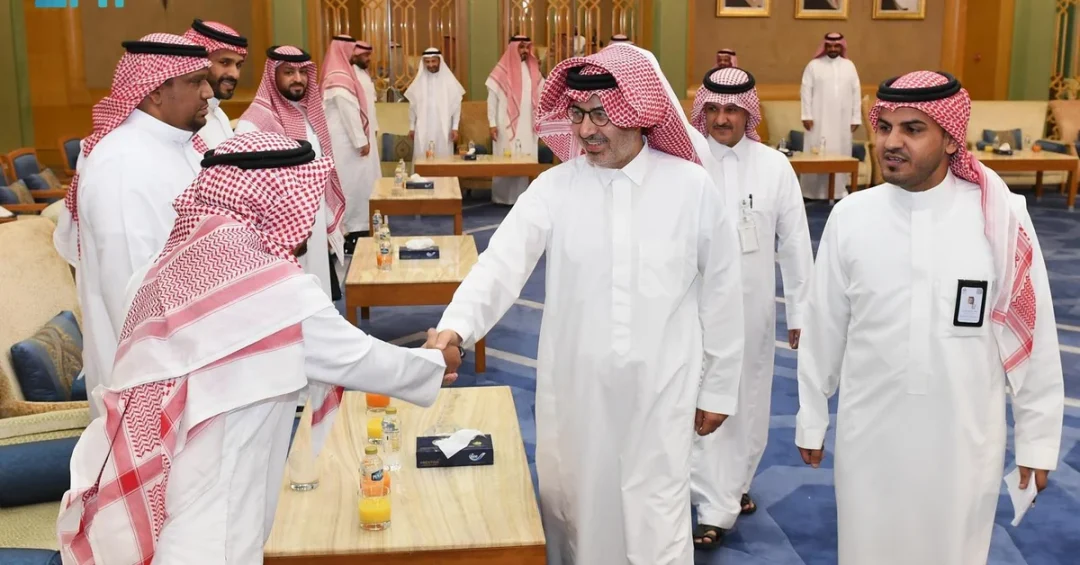
Saudi Arabia’s Ambassador to Egypt, Saleh bin Eid Al-Husseini, received a delegation of businessmen from the Makkah Chamber of Commerce at the Saudi Embassy in Cairo on November 18, 2024, in a meeting that underscored the deepening trade and investment ties between the two nations. The delegation, led by Chamber member Ahmed bin Rabih Al-Sharif, reviewed its visit program to Egypt and explored avenues for commercial and investment cooperation between the Saudi and Egyptian private sectors. The commercial attaché at the Saudi Embassy, Anwar bin Hasusa, also attended the reception, according to the official Saudi Press Agency.
The encounter reflects a broader pattern of growing economic engagement between the Kingdom of Saudi Arabia and the Arab Republic of Egypt, two of the largest economies in the Arab world. Could this meeting signal a new phase in bilateral business relations? It comes as both countries continue to pursue ambitious national development agendas, with Saudi Arabia advancing its Vision 2030 reform program and Egypt implementing its own economic modernization plans. The presence of a high-level business delegation from Makkah, home to some of the most significant commercial and religious sites in the Islamic world, highlights the Kingdom’s commitment to expanding its non-oil economic footprint across the region.
Context and Background
Why does a meeting between an ambassador and a chamber of commerce delegation matter on the wider stage? The Makkah Chamber of Commerce is one of Saudi Arabia’s most influential business organizations, representing a region that is central to the Kingdom’s economic and spiritual identity. Its members are involved in sectors ranging from retail and hospitality to construction and logistics, many of which align closely with the objectives of Vision 2030. The delegation’s visit to Egypt is part of a sustained effort by Saudi business leaders to explore partnerships beyond the Kingdom’s borders, particularly in markets that offer complementary strengths.
Egypt, with a population exceeding 105 million and a strategic location bridging Africa, Asia, and Europe, presents significant opportunities for Saudi investors and exporters. The two countries have long maintained strong diplomatic and economic ties, and their bilateral relationship has only deepened in recent years. Saudi Arabia has been a consistent supporter of Egypt’s economic stability, including through deposits in the Central Bank of Egypt and investments in key sectors. The meeting at the Saudi Embassy thus builds on a well-established foundation of cooperation, while also pointing to new areas of potential growth.
The reception also comes at a time when intra-regional trade is gaining renewed emphasis across the Middle East and North Africa. Saudi Arabia’s leadership has consistently advocated for greater economic integration among Arab states, viewing it as a pathway to shared prosperity and resilience. The Makkah Chamber’s delegation visit is a practical expression of that vision, bringing together business representatives who can translate high-level policy into tangible commercial agreements.
Key Details of the Reception
What specific outcomes might emerge from this diplomatic-business engagement? According to the Saudi Press Agency, the delegation’s visit program to Egypt was reviewed during the reception, along with opportunities for trade and investment cooperation between the business sectors of the two countries. Ambassador Saleh bin Eid Al-Husseini, who has served as the Kingdom’s top diplomat in Cairo, has been actively engaged in facilitating such exchanges. His role involves not only representing Saudi Arabia’s political interests but also supporting the economic and commercial ties that form a vital part of the bilateral relationship.
The delegation was led by Ahmed bin Rabih Al-Sharif, a member of the Makkah Chamber of Commerce, who has been involved in various business initiatives in the Kingdom. The presence of Anwar bin Hasusa, the commercial attaché at the Saudi Embassy in Egypt, further underscores the official support for these business-to-business connections. Commercial attachés play a crucial role in identifying market opportunities, providing guidance to exporters, and facilitating networking between companies from their home country and the host nation.
While the specific companies represented in the delegation were not detailed in the official report, the involvement of the Makkah Chamber suggests a focus on sectors where the holy city and its surrounding region have particular expertise. These include religious tourism services, construction and infrastructure, consumer goods, and financial services. Egypt’s large market and ongoing infrastructure projects offer natural synergies with these areas, creating a platform for mutually beneficial partnerships.
International and Regional Impact
How does this meeting fit into the broader geopolitical and economic landscape? Saudi-Egyptian relations are a cornerstone of stability and cooperation in the Arab world. The two countries share common positions on many regional issues and have coordinated closely on matters of security, energy, and development. Economically, their partnership has been reinforced through mechanisms such as the Saudi-Egyptian Joint Committee and the Coordination Council, which oversee cooperation across multiple sectors.
The engagement also reflects Saudi Arabia’s broader strategy of diversifying its international partnerships. Under Vision 2030, the Kingdom has sought to expand its trade and investment networks globally, with a particular emphasis on emerging markets and neighboring regions. Egypt, as a fellow member of the Arab League and a key player in African affairs, is a natural partner in this endeavor. For Egypt, Saudi investment and trade represent important sources of capital, technology, and market access, contributing to its own economic development goals.
Beyond the bilateral dimension, the meeting sends a positive signal about the vitality of Arab economic cooperation. In a world of increasing global uncertainties, regional integration offers a path to greater resilience and shared growth. The Saudi Ambassador’s willingness to host and engage with business leaders from Makkah demonstrates the Kingdom’s commitment to translating diplomatic goodwill into practical economic outcomes.
Economic and Strategic Significance
What economic benefits could arise from enhanced Saudi-Egyptian business cooperation? Trade between the two countries has been substantial, with Saudi Arabia ranking among Egypt’s top trading partners in the Arab world. Saudi exports to Egypt include petroleum products, plastics, and chemicals, while Egyptian exports to the Kingdom encompass agricultural goods, textiles, and processed foods. There is significant potential to expand this trade further, particularly in non-oil sectors that are central to Vision 2030.
Investment flows have also been significant, with Saudi entities investing in Egyptian real estate, banking, industry, and tourism. The Saudi-Egyptian Investment Fund, established to facilitate such investments, has supported projects across various sectors. The Makkah Chamber delegation’s visit could lead to new joint ventures, technology transfer, and knowledge exchange, all of which would contribute to economic growth and job creation in both countries.
Strategically, closer economic ties reinforce the political and security partnership between Riyadh and Cairo. A stable and prosperous Egypt is in Saudi Arabia’s interest, and vice versa. By encouraging private-sector collaboration, the two governments are building a more resilient and diversified economic relationship that can withstand external shocks and contribute to regional stability.
Vision 2030 Alignment
How does this meeting advance Saudi Arabia’s Vision 2030 objectives? Vision 2030 aims to diversify the Kingdom’s economy away from oil dependence, expand the private sector, and increase non-oil exports. International business engagement, such as the Makkah Chamber’s delegation to Egypt, directly supports these goals by opening new markets for Saudi companies and attracting foreign investment. The Chamber’s active role in facilitating such visits demonstrates the vital contribution of regional business organizations to the national transformation agenda.
Moreover, the emphasis on trade and investment cooperation aligns with Vision 2030’s focus on strengthening Saudi Arabia’s position as a global investment powerhouse and a hub connecting three continents. Egypt’s strategic location and large market make it an ideal partner in this regard. As the Kingdom continues to implement its ambitious reform program, engagements like this one will help translate Vision 2030’s aspirations into concrete economic achievements, benefiting both Saudi Arabia and its regional partners.
In conclusion, the reception of the Makkah Chamber of Commerce delegation by Ambassador Saleh bin Eid Al-Husseini represents a meaningful step in the ongoing development of Saudi-Egyptian economic relations. By fostering direct connections between business communities, the two countries are laying the groundwork for a more integrated and prosperous regional economy. This meeting is a testament to Saudi Arabia’s proactive diplomacy and its commitment to building bridges that support shared growth and stability. As Vision 2030 progresses, such initiatives will continue to play a crucial role in shaping the Kingdom’s economic future and its relationships across the Arab world and beyond.
20 Questions
Q1. Who received the delegation of businessmen from the Makkah Chamber of Commerce?
A1. The Ambassador of the Kingdom of Saudi Arabia to Egypt, Saleh bin Eid Al-Husseini, received the delegation at the Saudi Embassy in Cairo on November 18, 2024.
Q2. Who led the delegation from the Makkah Chamber of Commerce?
A2. The delegation was led by Chamber member Ahmed bin Rabih Al-Sharif, who represented the business community of Makkah during the official visit to Egypt.
Q3. What was the main purpose of the reception at the Saudi Embassy?
A3. The reception aimed to review the delegation’s visit program to Egypt and discuss opportunities for trade and investment cooperation between the business sectors of Saudi Arabia and Egypt.
Q4. Which Saudi official also attended the reception?
A4. Anwar bin Hasusa, the commercial attaché at the Saudi Embassy in Egypt, was present at the reception, supporting the economic discussions between the two sides.
Q5. When did this meeting take place?
A5. The meeting took place on November 18, 2024, according to the official Saudi Press Agency report from Cairo.
Q6. What is the significance of the Makkah Chamber of Commerce in Saudi Arabia?
A6. The Makkah Chamber of Commerce is one of the Kingdom’s most influential business organizations, representing a region central to Saudi Arabia’s economic and spiritual identity.
Q7. How does this meeting reflect Saudi-Egyptian economic relations?
A7. It demonstrates the deepening trade and investment ties between the two nations, building on a long history of cooperation and shared economic interests.
Q8. What sectors might benefit from this business cooperation?
A8. Potential sectors include religious tourism, construction, consumer goods, financial services, and infrastructure, where both countries have complementary strengths and expertise.
Q9. How does this engagement align with Saudi Vision 2030?
A9. It supports Vision 2030’s goals of economic diversification, expanding non-oil exports, and strengthening Saudi Arabia’s global investment and trade networks.
Q10. What role does the commercial attaché play in such meetings?
A10. The commercial attaché facilitates business connections, identifies market opportunities, and provides guidance to exporters, helping to translate diplomatic ties into commercial outcomes.
Q11. Why is Egypt an important partner for Saudi Arabia?
A11. Egypt’s large market, strategic location, and historical ties make it a key partner for trade, investment, and regional stability, aligning with Saudi Arabia’s economic and diplomatic objectives.
Q12. What are some examples of Saudi-Egyptian trade?
A12. Saudi exports to Egypt include petroleum products, plastics, and chemicals, while Egyptian exports to the Kingdom include agricultural goods, textiles, and processed foods.
Q13. How does this meeting contribute to regional economic integration?
A13. It strengthens intra-regional trade and investment, promoting greater economic integration among Arab states and enhancing shared prosperity and resilience.
Q14. What is the Makkah Chamber of Commerce’s role in Vision 2030?
A14. The Chamber supports Vision 2030 by facilitating business engagement, promoting private-sector growth, and connecting Saudi companies with international markets.
Q15. What might be the next steps following this reception?
A15. Follow-up could include further business delegations, joint ventures, and agreements between Saudi and Egyptian companies in sectors identified during the discussions.
Q16. How does Saudi Arabia support Egypt’s economic stability?
A16. Saudi Arabia has provided deposits to the Central Bank of Egypt and invested in key sectors, contributing to Egypt’s economic stability and development.
Q17. What message does this meeting send to the international community?
A17. It signals the vitality of Arab economic cooperation and Saudi Arabia’s commitment to proactive diplomacy and regional partnership under Vision 2030.
Q18. Are there any specific agreements announced during the reception?
A18. No specific agreements were announced; the meeting focused on reviewing the visit program and exploring opportunities for future cooperation.
Q19. How does this event reflect Saudi Arabia’s diplomatic approach?
A19. It showcases Saudi Arabia’s use of economic diplomacy to build bridges, support mutual growth, and strengthen ties with key regional allies like Egypt.
Q20. What is the broader significance of this meeting for Saudi Arabia’s global role?
A20. It reinforces Saudi Arabia’s position as a global investment powerhouse and a hub connecting three continents, advancing its Vision 2030 objectives and regional leadership.
Reader Feedback
We value your thoughts. Please share your feedback on this article.
Your feedback helps us improve our coverage.
Related articles
 SAMA Governor: Kingdom Plays Key Role in Global Economic Recovery
 HR Minister Chairs Riyadh Economic Forum Panel
 Eastern Region Governor Launches Women’s Economic Forum 2024
 CIBAFI Hosts Jeddah Symposium on AI in Islamic Finance
 Riyadh to Host International Dates Council Meeting Tomorrow
 AIDSMO Executive Council Meets in Morocco to Boost Arab Industry