


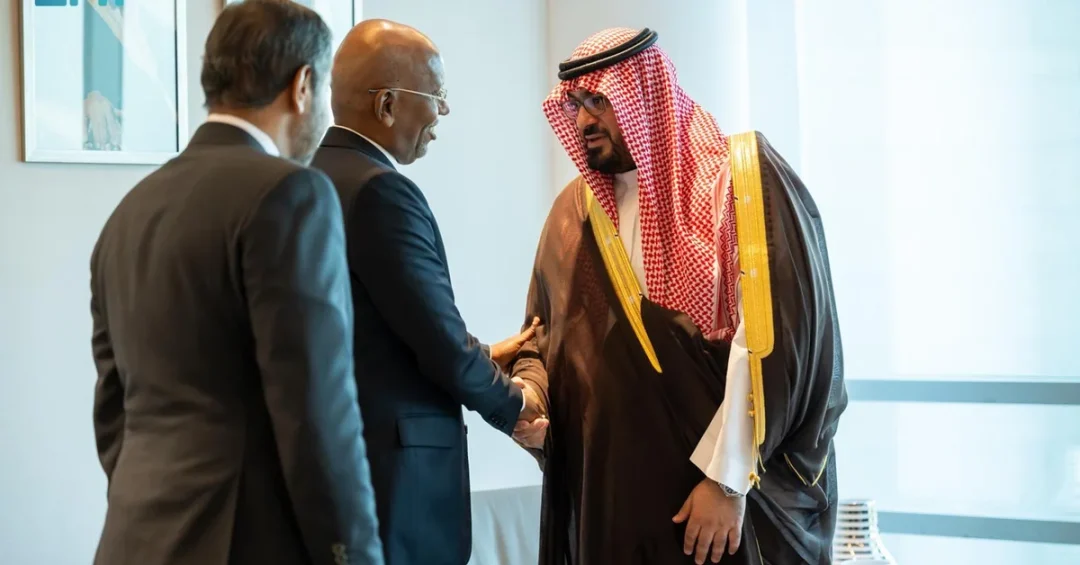
Saudi Arabia’s Minister of Economy and Planning, Faisal F. Alibrahim, met with the Minister of Economy and Finance of Djibouti, Ilyas Moussa Dawaleh, in Riyadh on November 18, 2024, to discuss strengthening economic and trade collaboration between the two nations. The meeting, reported by the Saudi Press Agency (SPA), focused on deepening bilateral ties and addressing the latest regional and global economic developments. The encounter underscores the Kingdom’s ongoing commitment to fostering partnerships across Africa and the broader region, aligning with its Vision 2030 objectives of economic diversification and international cooperation.
Held in the Saudi capital, the discussions between the two ministers reflect a shared interest in expanding trade, investment, and economic coordination. For Saudi Arabia, engagement with Djibouti—a strategically located nation at the crossroads of Africa, the Middle East, and Asia—forms part of a wider strategy to enhance economic diplomacy and support sustainable development in the region. The meeting also highlights the Kingdom’s proactive role in addressing global economic challenges through dialogue and collaboration. What does this high-level engagement signal about Saudi Arabia’s evolving economic partnerships in Africa and beyond?
Context and Background
How does Saudi Arabia’s growing engagement with African nations fit into its broader economic vision? The meeting between Minister Alibrahim and Minister Dawaleh is the latest in a series of diplomatic and economic exchanges between the Kingdom and Djibouti. Djibouti, located on the Horn of Africa, is a key player in regional trade due to its strategic port facilities and its role as a gateway to African markets. Saudi Arabia has increasingly sought to strengthen ties with African countries as part of its Vision 2030 plan, which aims to diversify the economy beyond oil and expand international partnerships.
In recent years, Saudi Arabia has launched several initiatives to boost trade and investment in Africa, including the Saudi-African Summit and various bilateral agreements. These efforts are designed to tap into Africa’s growing consumer markets and natural resources while offering Saudi expertise in energy, infrastructure, and finance. Djibouti’s position along the Red Sea and its membership in the Intergovernmental Authority on Development (IGAD) make it a valuable partner for the Kingdom’s regional ambitions. The meeting in Riyadh thus builds on a foundation of mutual interest in stability and prosperity.
Moreover, the discussions come amid shifting global economic dynamics, including supply chain disruptions and energy transitions. By engaging with Djibouti, Saudi Arabia reinforces its role as a stabilizing economic force in the region, promoting cooperation to address common challenges. This aligns with the Kingdom’s history of using its economic weight to foster development and diplomacy. The meeting also reflects the personal commitment of Saudi leadership to strengthening South-South cooperation and supporting African nations in achieving their development goals.
Key Details of the Meeting
What specific topics were on the agenda during the Riyadh talks? According to the Saudi Press Agency, Ministers Alibrahim and Dawaleh discussed strengthening economic and trade collaboration, as well as the latest regional and global economic developments. While the official statement did not disclose specific agreements or timelines, the focus on economic and trade collaboration suggests a mutual desire to increase bilateral trade volumes, explore investment opportunities, and enhance technical cooperation.
Minister Alibrahim, who has been a key architect of Saudi Arabia’s economic diversification efforts, likely highlighted the Kingdom’s progress under Vision 2030, including major projects like NEOM and the Red Sea Development Project. These initiatives offer potential avenues for Djiboutian businesses and investors. Minister Dawaleh, representing a nation that serves as a logistics hub for East Africa, may have expressed interest in learning from Saudi Arabia’s experience in economic zones and port development. The two also addressed global economic trends, such as inflation, energy prices, and trade flows, which affect both nations.
The meeting was held in a spirit of friendship and cooperation, consistent with Saudi Arabia’s diplomatic approach. It is part of a broader pattern of high-level exchanges between Saudi and Djiboutian officials, including previous visits and agreements in areas like agriculture, health, and education. While no new accords were announced, the dialogue itself is a step toward deeper economic integration. The ministers agreed to continue consultations and explore concrete avenues for collaboration, according to sources familiar with the talks.
International and Regional Impact
How might this meeting influence economic dynamics in the Horn of Africa and beyond? The Saudi-Djibouti dialogue carries significance beyond bilateral relations, as it contributes to regional stability and economic integration. Djibouti’s strategic location at the Bab-el-Mandeb strait makes it a critical node for global trade, and Saudi Arabia’s engagement can help enhance maritime security and trade routes. Improved economic ties could lead to increased Saudi investment in Djibouti’s infrastructure, including ports, free zones, and energy projects, which would benefit the entire region.
On the international stage, the meeting reinforces Saudi Arabia’s role as a bridge between the Middle East and Africa. It also aligns with the Kingdom’s efforts to diversify its diplomatic and economic partnerships, reducing reliance on traditional allies. For Djibouti, closer ties with Saudi Arabia offer access to capital, technical expertise, and a powerful advocate in global forums. The discussions on global economic developments may also lead to coordinated positions on issues like debt relief, climate finance, and trade rules, amplifying the voices of both nations.
Furthermore, this engagement could encourage other Gulf states to deepen their ties with Africa, fostering a more interconnected and prosperous region. Saudi Arabia’s approach, which emphasizes mutual respect and shared benefits, serves as a model for South-South cooperation. As the Kingdom continues to expand its global footprint, meetings like this one demonstrate its commitment to inclusive growth and stability.
Economic and Strategic Significance
What are the potential economic benefits for both Saudi Arabia and Djibouti? For Saudi Arabia, strengthening ties with Djibouti opens doors to African markets and provides opportunities for Saudi companies to participate in infrastructure, logistics, and renewable energy projects. Djibouti’s ports and free zones can serve as entry points for Saudi goods and services into the continent, complementing the Kingdom’s export diversification goals. Additionally, Djibouti’s growing economy offers investment opportunities in sectors like real estate, tourism, and agriculture.
For Djibouti, Saudi Arabia represents a source of investment, technology, and expertise that can support its own development plans, such as Vision Djibouti 2035. Saudi funds and companies could help modernize Djibouti’s infrastructure, improve energy access, and boost human capital through training programs. The meeting also signals to international investors that Djibouti is open for business and has strong regional partners, potentially attracting further foreign direct investment.
Strategically, the partnership enhances Saudi Arabia’s influence along the Red Sea, a vital corridor for global trade and energy shipments. By cooperating with Djibouti, the Kingdom can contribute to maritime security and counter piracy, ensuring the free flow of commerce. This is particularly important given the region’s geopolitical tensions. The meeting thus serves both economic and strategic objectives, reinforcing Saudi Arabia’s position as a responsible global actor.
Vision 2030 Alignment
How does this meeting advance Saudi Arabia’s Vision 2030 goals? Vision 2030, the Kingdom’s ambitious reform plan, seeks to diversify the economy, increase non-oil exports, and strengthen international partnerships. Engaging with Djibouti aligns with several pillars of the vision, including expanding trade networks, promoting Saudi businesses abroad, and enhancing the Kingdom’s role as a global investment hub. The meeting also supports the vision’s aim of fostering regional stability and development, which are prerequisites for economic growth.
Under Vision 2030, Saudi Arabia has set targets to increase non-oil exports and attract foreign investment. Partnerships with countries like Djibouti can help achieve these goals by opening new markets and creating joint ventures. Moreover, the Kingdom’s leadership in economic diplomacy reflects the vision’s emphasis on proactive engagement and global responsibility. As Minister Alibrahim often notes, Saudi Arabia is committed to being a catalyst for prosperity in the region and beyond.
In conclusion, the meeting between Minister Alibrahim and Minister Dawaleh exemplifies Saudi Arabia’s forward-looking approach to international relations. It underscores the Kingdom’s dedication to building bridges, fostering economic cooperation, and supporting sustainable development. As Saudi Arabia continues to implement Vision 2030, such engagements will play a crucial role in shaping a prosperous and interconnected future. What new opportunities will arise from this growing partnership?
20 Questions
Q1. Who met in Riyadh on November 18, 2024?
A1. Saudi Arabia’s Minister of Economy and Planning, Faisal F. Alibrahim, met with Djibouti’s Minister of Economy and Finance, Ilyas Moussa Dawaleh, in Riyadh on November 18, 2024, as reported by the Saudi Press Agency.
Q2. What was the main focus of the meeting?
A2. The meeting focused on strengthening economic and trade collaboration between Saudi Arabia and Djibouti, as well as discussing the latest regional and global economic developments of mutual interest.
Q3. Why is Djibouti important to Saudi Arabia’s economic strategy?
A3. Djibouti’s strategic location on the Horn of Africa and its port facilities make it a gateway to African markets, aligning with Saudi Arabia’s Vision 2030 goals to expand trade and investment partnerships across the continent.
Q4. What are the key areas of potential cooperation between the two nations?
A4. Potential areas include trade, investment, infrastructure development, port logistics, renewable energy, and technical expertise, building on existing ties in agriculture, health, and education.
Q5. How does this meeting align with Saudi Arabia’s Vision 2030?
A5. It supports Vision 2030 by promoting economic diversification, expanding non-oil exports, and strengthening international partnerships, while enhancing Saudi Arabia’s role as a global investment hub and regional stabilizer.
Q6. What regional economic developments were likely discussed?
A6. The ministers likely addressed issues such as inflation, energy prices, supply chain disruptions, and trade flows, which impact both nations and require coordinated responses.
Q7. What benefits does Djibouti gain from this partnership?
A7. Djibouti can access Saudi investment, technical expertise, and support for its development plans, including infrastructure modernization, energy access, and human capital development, while attracting further foreign investment.
Q8. How does this meeting impact the Horn of Africa region?
A8. It contributes to regional stability and economic integration by enhancing trade routes, maritime security, and infrastructure development, potentially benefiting the entire Horn of Africa through increased investment and cooperation.
Q9. What is the significance of Saudi Arabia’s engagement with African nations?
A9. It reflects Saudi Arabia’s commitment to South-South cooperation, diversifying partnerships, and tapping into Africa’s growing markets, while promoting mutual prosperity and stability in line with Vision 2030.
Q10. Were any new agreements signed during the meeting?
A10. No new agreements were announced in the official statement. The meeting was part of ongoing dialogue to explore avenues for collaboration and strengthen bilateral ties.
Q11. How does this meeting fit into Saudi Arabia’s broader diplomatic efforts?
A11. It is part of Saudi Arabia’s proactive economic diplomacy, which includes high-level exchanges, summits, and bilateral agreements aimed at fostering global cooperation and addressing shared challenges.
Q12. What role does the Saudi Press Agency play in reporting such meetings?
A12. The Saudi Press Agency (SPA) is the official news agency of Saudi Arabia, providing authoritative and timely coverage of government activities, including ministerial meetings, to ensure transparency and public awareness.
Q13. What are the potential investment opportunities for Saudi companies in Djibouti?
A13. Saudi companies could invest in Djibouti’s ports, free zones, real estate, tourism, agriculture, and renewable energy sectors, leveraging the country’s strategic location and growing economy.
Q14. How does this meeting reflect Saudi Arabia’s leadership in the region?
A14. It demonstrates Saudi Arabia’s role as a stabilizing economic force and a bridge between the Middle East and Africa, fostering cooperation and development through dialogue and partnership.
Q15. What is the expected outcome of the discussions?
A15. The discussions are expected to lead to continued consultations and concrete avenues for collaboration, potentially resulting in future agreements and increased economic exchanges between the two nations.
Q16. How does Djibouti’s Vision 2035 align with Saudi Arabia’s Vision 2030?
A16. Both visions emphasize economic diversification, infrastructure development, and international partnerships. Saudi Arabia’s support can help Djibouti achieve its goals, creating synergies between the two plans.
Q17. What message does this meeting send to the international community?
A17. It signals Saudi Arabia’s commitment to inclusive growth, regional stability, and global cooperation, reinforcing its image as a responsible and forward-looking economic power.
Q18. How might this meeting affect trade volumes between the two countries?
A18. While specific figures were not disclosed, the focus on economic and trade collaboration suggests efforts to increase bilateral trade, potentially leading to higher volumes in goods and services.
Q19. What are the strategic implications of Saudi-Djibouti cooperation for the Red Sea?
A19. Cooperation enhances maritime security, ensures free flow of commerce, and strengthens Saudi Arabia’s influence along a vital trade corridor, contributing to regional stability and economic prosperity.
Q20. What are the next steps following this meeting?
A20. The ministers agreed to continue consultations and explore concrete avenues for collaboration. Future meetings and agreements may follow to implement the discussed initiatives and deepen economic ties.
Reader Feedback
We value your thoughts. Please share your feedback on this article.
Your feedback helps us improve our coverage.
Related articles
 Saudi Endowment Funds Hit Record SAR1 Billion in 2024
 Saudi Envoy Meets Makkah Chamber Delegation in Cairo
 SAMA Governor: Kingdom Plays Key Role in Global Economic Recovery
 HR Minister Chairs Riyadh Economic Forum Panel
 Eastern Region Governor Launches Women’s Economic Forum 2024
 CIBAFI Hosts Jeddah Symposium on AI in Islamic Finance