


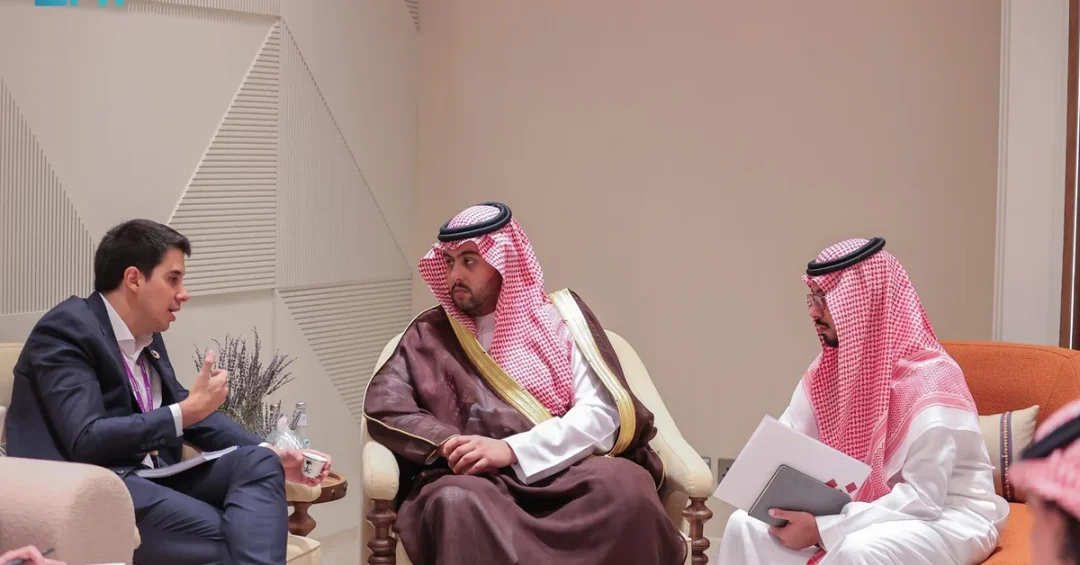
Khalid Albaker, Chief Executive Officer of Saudi Arabia’s Quality of Life Program, met with United Nations Assistant Secretary-General for Youth Affairs Felipe Paullier on the sidelines of the Misk Global Forum in Riyadh on November 19, 2024, to discuss the exchange of expertise in youth empowerment and strengthened cooperation toward the UN Sustainable Development Goals. The meeting, reported by the Saudi Press Agency, underscored the Kingdom’s expanding engagement with multilateral institutions on issues affecting young people worldwide. It also placed Saudi Arabia’s youth-focused national strategies alongside the international community’s sustainable development agenda, signaling a shared interest in translating policy commitments into measurable outcomes for the next generation. The discussion reflected a broader pattern of cooperation between the Kingdom and UN bodies across development, humanitarian, and capacity-building portfolios.
The encounter took place during one of the region’s most prominent gatherings for young innovators, entrepreneurs, and policymakers, an event that has become a fixture in Riyadh’s annual calendar of global convenings. By bringing together a senior Saudi program executive and a UN official responsible for youth affairs, the meeting illustrated how the Kingdom’s domestic priorities increasingly intersect with international frameworks. For observers of Saudi policy, the exchange offered a clear signal that youth empowerment is not a peripheral theme but a central pillar of the country’s long-term development planning. The conversation also highlighted the practical dimensions of cooperation, including knowledge sharing and joint efforts to expand young people’s participation in sustainable development.
Context and Background
How did Saudi Arabia come to play such a prominent role in global conversations about young people? The answer lies in deliberate, sustained investment in a demographic group that represents a substantial share of the Kingdom’s population. The Quality of Life Program, launched in 2018 as part of the Vision 2030 reform agenda, was designed to improve the daily lives of citizens and residents by expanding cultural, entertainment, sports, and recreational opportunities. Its mandate spans a wide range of initiatives, from developing public spaces and supporting the arts to promoting healthier lifestyles and strengthening community bonds. Youth empowerment runs through these efforts as a cross-cutting priority, reflecting the program’s human-centered approach to development.
The Misk Global Forum, hosted by the Mohammed bin Salman Foundation (Misk), has become a platform where young people from Saudi Arabia and around the world exchange ideas, build networks, and engage with global leaders. Bringing together participants from dozens of countries, the forum reflects a broader strategy of positioning the Kingdom as a hub for dialogue and innovation. It is within this setting that the meeting between Albaker and Paullier took place, adding an international dimension to a national conversation about opportunity, skills, and participation. The presence of a senior UN official at the forum also demonstrated the international community’s interest in engaging with Saudi youth initiatives and learning from the Kingdom’s experience in designing large-scale programs.
The timing of the discussion is significant. As countries around the world grapple with questions of youth employment, skills development, and civic participation, Saudi Arabia has moved decisively to place young people at the center of its economic and social transformation. The Kingdom’s approach combines national programs with international partnerships, creating channels for expertise exchange that benefit both Saudi institutions and multilateral organizations. The meeting between Albaker and Paullier fits this pattern, offering a concrete example of how Saudi Arabia’s domestic agenda aligns with global development objectives. It also reflects the Kingdom’s growing willingness to share its experiences and learn from international best practices.
Key Details of the Meeting
What exactly was discussed between the two officials? According to the Saudi Press Agency, Albaker and Paullier focused on the exchange of expertise in youth empowerment and cooperation to boost young people’s contribution to achieving the UN Sustainable Development Goals. Albaker emphasized the importance of investing in the potential of young people, stating that Saudi Arabia prioritizes youth in its strategies to foster a comprehensive, human-centered quality of life that aligns with the objectives of Vision 2030. The conversation therefore covered both practical cooperation and the underlying philosophy that guides Saudi youth policy.
The UN Sustainable Development Goals, adopted by all member states in 2015, include targets related to quality education, decent work, reduced inequalities, and inclusive decision-making. Young people are central to the achievement of these goals, both as beneficiaries and as agents of change. By discussing ways to enhance youth contributions to the SDGs, the two officials addressed a theme that resonates across the international development community. For Saudi Arabia, the discussion offered an opportunity to highlight how its national programs support global objectives, while for the UN, it provided a chance to engage with a member state that has made youth empowerment a signature element of its reform agenda.
Albaker’s remarks also pointed to the comprehensive nature of Saudi Arabia’s approach. The Quality of Life Program does not treat youth as a single-issue constituency; rather, it integrates youth perspectives into initiatives across culture, sports, entertainment, and community development. This holistic strategy aims to create an environment where young people can thrive in multiple dimensions of their lives, from education and employment to recreation and civic engagement. The meeting with Paullier thus reflected a shared understanding that youth empowerment requires coordinated action across sectors and institutions, not isolated interventions.
International and Regional Impact
Why does a meeting between a Saudi program CEO and a UN official matter beyond the Kingdom’s borders? The encounter signals Saudi Arabia’s active participation in multilateral efforts to address challenges facing young people globally. It also reinforces the Kingdom’s position as a constructive partner in international development, a role that has grown in prominence as Saudi Arabia expands its diplomatic and humanitarian engagement. For regional observers, the meeting demonstrates how Gulf states are increasingly integrating their national strategies with global frameworks, creating new avenues for cooperation and knowledge exchange.
The exchange of expertise discussed by Albaker and Paullier has practical implications. By sharing lessons learned from Saudi programs, the Kingdom can help other countries design effective youth initiatives, while also benefiting from international research and best practices. This two-way flow of knowledge strengthens both Saudi capabilities and the global community’s collective understanding of what works in youth development. The meeting therefore represents more than a courtesy call; it is part of a sustained effort to build partnerships that produce tangible results for young people in Saudi Arabia and beyond.
Regionally, the discussion comes at a time when many countries in the Middle East and North Africa are seeking to harness the potential of their young populations. Saudi Arabia’s experience with the Quality of Life Program and other Vision 2030 initiatives offers a model that combines ambitious national targets with international cooperation. By engaging with the UN on youth affairs, the Kingdom contributes to a broader regional conversation about how to turn demographic opportunity into sustainable growth. The meeting thus has significance for the wider Arab world, where youth empowerment is increasingly recognized as a driver of stability and prosperity.
Economic and Strategic Significance
How does youth empowerment connect to Saudi Arabia’s economic ambitions? The Kingdom’s Vision 2030 agenda aims to diversify the economy, reduce dependence on oil, and create a dynamic private sector. Young people are essential to this transformation, providing the talent, creativity, and entrepreneurial energy needed to build new industries and sustain growth. By investing in youth skills, education, and well-being, Saudi Arabia is strengthening its human capital, which is a prerequisite for long-term economic competitiveness. The meeting between Albaker and Paullier therefore has direct relevance to the Kingdom’s economic strategy.
Strategic cooperation with international organizations also enhances Saudi Arabia’s global standing. Partnerships with the UN and its agencies provide platforms for the Kingdom to share its development experience and to participate in shaping international norms and policies. For a country that has undergone rapid social and economic change, such engagement helps build trust and demonstrates a commitment to responsible global citizenship. The discussion on youth empowerment is one component of a wider effort to position Saudi Arabia as a leader in sustainable development, both regionally and internationally.
Furthermore, the emphasis on human-centered quality of life reflects an understanding that economic progress must be accompanied by improvements in well-being. The Quality of Life Program’s initiatives, from cultural events to sports facilities, contribute to a vibrant society that attracts investment and talent. Young people are both beneficiaries and drivers of this process, and their active participation is essential to its success. The meeting with the UN official thus underscores the interconnectedness of economic, social, and international dimensions of Saudi policy.
Vision 2030 Alignment
How does this meeting exemplify the objectives of Vision 2030? The Quality of Life Program is one of the Vision 2030 realization programs, designed to deliver on the promise of a better life for all Saudis. Its focus on youth aligns with the vision’s emphasis on empowering young people, expanding their opportunities, and enabling them to contribute to national development. By engaging with the UN on youth affairs, the program’s leadership demonstrates that Vision 2030 is not an isolated national project but part of a global effort to achieve sustainable, inclusive development.
The meeting between Khalid Albaker and Felipe Paullier also highlights the Kingdom’s commitment to international cooperation as a means of advancing shared goals. Vision 2030 recognizes that many challenges, from climate change to youth unemployment, require collective action. Saudi Arabia’s willingness to exchange expertise and collaborate with the UN reflects a mature approach to global engagement, one that seeks mutual benefit and long-term impact. As the Kingdom continues to implement its reform agenda, such partnerships will remain vital to ensuring that young people have the skills, opportunities, and support they need to shape a prosperous future.
In the end, the encounter on the sidelines of the Misk Global Forum is a small but meaningful illustration of how Saudi Arabia is working to build a better world for the next generation. It shows that the Kingdom’s leaders are listening to young people, investing in their potential, and cooperating with international partners to turn aspirations into reality. For a country undergoing profound transformation, that commitment is both a source of strength and a reason for optimism.
20 Questions
Q1. Who met with UN Assistant Secretary-General Felipe Paullier?
A1. Khalid Albaker, CEO of Saudi Arabia’s Quality of Life Program, met with UN Assistant Secretary-General for Youth Affairs Felipe Paullier on the sidelines of the Misk Global Forum in Riyadh.
Q2. When and where did the meeting take place?
A2. The meeting took place in Riyadh on November 19, 2024, on the sidelines of the Misk Global Forum, as reported by the Saudi Press Agency.
Q3. What was the main topic of discussion?
A3. The two officials discussed the exchange of expertise in youth empowerment and cooperation to boost young people’s contribution to achieving the UN Sustainable Development Goals.
Q4. What did Khalid Albaker emphasize during the meeting?
A4. Albaker emphasized the importance of investing in the potential of young people, stating that Saudi Arabia prioritizes youth in its strategies to foster a comprehensive, human-centered quality of life aligned with Vision 2030.
Q5. What is the Quality of Life Program?
A5. The Quality of Life Program is a Vision 2030 realization program launched in 2018 to improve the daily lives of citizens and residents by expanding cultural, entertainment, sports, and recreational opportunities.
Q6. What is the Misk Global Forum?
A6. The Misk Global Forum is an annual event hosted by the Mohammed bin Salman Foundation (Misk) that brings together young people, innovators, and global leaders to exchange ideas and build networks.
Q7. How does Saudi Arabia prioritize youth in its strategies?
A7. Saudi Arabia integrates youth empowerment across national programs, including the Quality of Life Program, to ensure young people have opportunities in education, employment, culture, sports, and civic engagement.
Q8. What are the UN Sustainable Development Goals?
A8. The UN Sustainable Development Goals are a set of 17 global goals adopted by all UN member states in 2015 to end poverty, protect the planet, and ensure prosperity for all by 2030.
Q9. How can youth contribute to the SDGs?
A9. Young people can contribute to the SDGs through education, innovation, entrepreneurship, civic participation, and advocacy, helping to drive progress on issues like quality education, decent work, and reduced inequalities.
Q10. What is the significance of this meeting for Saudi Arabia?
A10. The meeting reinforces Saudi Arabia’s commitment to international cooperation on youth empowerment and highlights the Kingdom’s active role in multilateral efforts to achieve sustainable development.
Q11. How does the meeting align with Vision 2030?
A11. The meeting exemplifies Vision 2030’s emphasis on empowering young people and expanding their opportunities, while also demonstrating the Kingdom’s engagement with global partners to advance shared goals.
Q12. What is the role of the UN Assistant Secretary-General for Youth Affairs?
A12. The UN Assistant Secretary-General for Youth Affairs leads the UN’s efforts to advance youth development, participation, and rights, and serves as a global advocate for young people’s issues.
Q13. What kind of expertise was exchanged?
A13. The exchange focused on best practices in youth empowerment, including strategies to enhance skills, participation, and contributions to sustainable development, drawing on Saudi and international experiences.
Q14. How does Saudi Arabia support youth employment?
A14. Saudi Arabia supports youth employment through Vision 2030 initiatives that promote economic diversification, entrepreneurship, vocational training, and private sector growth, creating new opportunities for young people.
Q15. What are some Quality of Life Program initiatives for youth?
A15. Initiatives include cultural and entertainment events, sports facilities, community centers, and programs that promote healthy lifestyles and civic engagement, all designed to enhance young people’s quality of life.
Q16. How does the Misk Global Forum benefit Saudi youth?
A16. The forum provides Saudi youth with access to global networks, mentorship, and ideas, helping them develop skills and perspectives that contribute to their personal and professional growth.
Q17. What is Saudi Arabia’s stance on international cooperation?
A17. Saudi Arabia actively pursues international cooperation across development, humanitarian, and economic fields, viewing partnerships as essential to addressing global challenges and achieving shared prosperity.
Q18. How does youth empowerment contribute to economic growth?
A18. Youth empowerment builds human capital, fosters innovation and entrepreneurship, and expands the workforce, all of which drive economic diversification and sustainable growth.
Q19. What is the human-centered approach mentioned by Albaker?
A19. The human-centered approach places people’s well-being at the core of development strategies, ensuring that economic and social progress translates into improved quality of life for all citizens and residents.
Q20. What are the next steps for Saudi-UN cooperation on youth?
A20. While specific next steps were not announced, the meeting sets the stage for continued dialogue, knowledge sharing, and joint efforts to advance youth empowerment and sustainable development.
Reader Feedback
We value your thoughts. Please share your feedback on this article.
Your feedback helps us improve our coverage.
Related articles
 Social Responsibility Forum to Discuss the Role of Media
 Pakistani PM Receives Saudi Deputy Interior Minister
 Qassim Governor Receives Ukrainian Ambassador to Saudi Arabia
 Saudi GCA President Meets Georgian, Rwandan Audit Chiefs
 Albudaiwi Commends GCC Defense Ministries on Expertise Exchange
 Misk Global Forum 2024 Launches Third Edition of Global Youth Index