


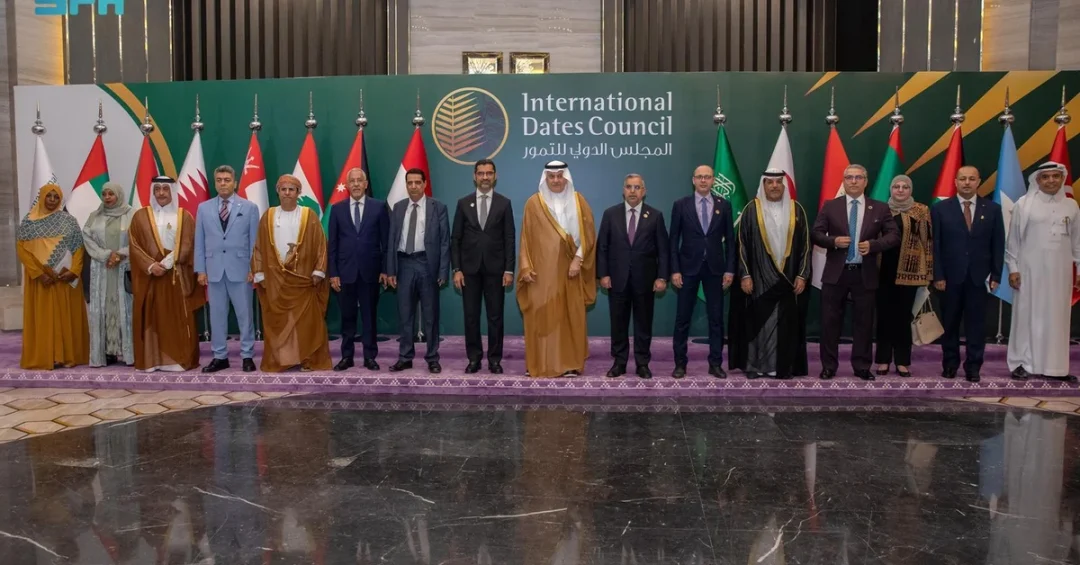
Saudi Arabia’s date production has increased by 11 percent over the past five years, Minister of Environment, Water, and Agriculture Eng. Abdulrahman Alfadley announced during the fourth session of the Council of Members of the International Date Council, held in Riyadh under the Kingdom’s chairmanship. The announcement, released through the Saudi Press Agency, underscores the Kingdom’s expanding role in global agricultural sustainability and food security. The session brought together senior officials, international delegations, and representatives of specialized organizations to review the outcomes of previous decisions and the progress of executive programs.
Could the humble date palm hold the key to a more food-secure world? For Saudi Arabia, the answer is increasingly yes. The International Date Council, which the Kingdom hosts and chairs, serves as a collaborative platform for fifteen member states spanning the Middle East, North Africa, and beyond. Its work aligns directly with Saudi Vision 2030, which seeks to diversify the national economy, empower rural communities, and position the Kingdom as a global leader in sustainable development. The 11 percent growth in production is not merely a statistic; it reflects years of strategic investment, scientific research, and international cooperation.
Context and Background
Why has the date palm remained so central to Saudi Arabia’s identity and economy? Cultivated in the Arabian Peninsula for thousands of years, the date palm is deeply woven into the Kingdom’s cultural heritage and agricultural traditions. Today, however, it is also a modern economic asset. The International Date Council was established to enhance cooperation among producing nations, improve production and marketing, and support scientific research. Saudi Arabia has been a driving force behind the council since its inception, providing leadership and resources to advance its objectives.
The fourth session of the Council of Members, chaired by Eng. Abdulrahman Alfadley in his capacity as Chairman of the Council of Members, provided a forum to assess progress and chart future priorities. Delegations from Saudi Arabia, the UAE, Tunisia, Sudan, Mauritania, Yemen, Oman, Palestine, Somalia, Lebanon, Bahrain, Egypt, Jordan, Iraq, and Qatar participated. Together, these countries represent a significant share of global date production, and their collaboration is vital for addressing shared challenges such as climate change, water scarcity, and market access.
What makes this moment particularly significant is the timing. Global food systems are under strain from geopolitical disruptions, climate variability, and supply chain vulnerabilities. In this context, the date sector offers a resilient, nutritious, and culturally appropriate solution. The council’s work to standardize data, promote innovation, and facilitate trade is more relevant than ever. Saudi Arabia’s leadership in this arena reflects its broader commitment to international cooperation and sustainable development, principles that are central to Vision 2030.
Key Details
What exactly did Minister Alfadley highlight in his address? He emphasized the economic, social, and environmental significance of the palm and dates sector, noting its crucial role in achieving food security and sustainable agricultural and rural development. The 11 percent increase in total production over five years demonstrates the effectiveness of Saudi Arabia’s agricultural policies, which include modern irrigation techniques, disease management, and support for small-scale farmers. The minister also praised the council’s efforts in enhancing cooperation and partnerships between date-producing countries, ensuring the sector’s sustainability, and contributing to food security.
Alfadley pointed out that the International Date Council aims to establish a global specialized platform to provide accurate data on the palm and dates sector worldwide. Such a platform would enable policymakers, investors, and researchers to make informed decisions, fostering greater efficiency and innovation. Additionally, the council focuses on conducting studies to develop innovative by-products that enhance the value of the sector. These by-products range from date paste and syrup to animal feed and biodegradable materials, opening new markets and reducing waste.
How does the council support research and innovation? Eng. Alfadley highlighted the council’s role in strengthening partnerships and advancing agricultural and productive processes, linking them with sectors such as manufacturing, marketing, and trade. The council also supports and empowers research studies in the field of palm and dates. This holistic approach recognizes that sustainable development requires not only increased production but also improved quality, diversified products, and better market access. Saudi Arabia has invested heavily in date research centers, such as the National Center for Palms and Dates, which collaborate with international institutions to develop new varieties and farming practices.
International and Regional Impact
How does the International Date Council benefit its member states? By fostering cooperation, the council enables countries to share best practices, pool resources, and present a unified voice in global markets. For countries like Sudan, Mauritania, and Yemen, where date cultivation is a vital source of income for rural communities, the council’s programs offer access to training, technology, and market intelligence. This can lead to higher incomes, improved livelihoods, and greater resilience against economic shocks. The council also promotes sustainable farming methods that conserve water and protect soil health, addressing environmental challenges common to the region.
What role does Saudi Arabia play in this regional cooperation? As the host and chair, the Kingdom provides logistical support, funding, and technical expertise. It also uses its diplomatic weight to advocate for the date sector in international forums. This leadership is recognized by other member states, who look to Saudi Arabia as a model for how to integrate traditional agriculture with modern innovation. The Kingdom’s experience in turning dates into a globally traded commodity—Saudi dates are exported to over 100 countries—offers valuable lessons for others. Moreover, the council’s work aligns with the United Nations Sustainable Development Goals, particularly those related to zero hunger, decent work, and responsible consumption.
Economic and Strategic Significance
Why are dates economically important beyond their nutritional value? The date industry supports millions of livelihoods worldwide, from smallholder farmers to processors, traders, and exporters. In Saudi Arabia, the sector contributes significantly to non-oil GDP and rural employment. The 11 percent production growth has been accompanied by increased exports, which reached record levels in recent years. This success is part of a broader strategy to diversify the economy away from hydrocarbons, a core objective of Vision 2030. By adding value through processing and branding, Saudi Arabia is capturing more of the global market and creating jobs for its young population.
How does the council contribute to sustainability? The date palm is inherently sustainable, requiring minimal water compared to many crops and providing ecosystem services such as soil stabilization and carbon sequestration. The council’s emphasis on innovative by-products and waste reduction further enhances sustainability. For example, date pits can be used to produce animal feed or biofuel, while palm fronds can be transformed into furniture and building materials. These circular economy approaches reduce environmental impact and create new revenue streams. Saudi Arabia’s investment in such technologies demonstrates its commitment to the green economy and aligns with the Saudi Green Initiative, which aims to plant 10 billion trees and reduce carbon emissions.
Vision 2030 Alignment
How does the date sector connect to Saudi Vision 2030? Vision 2030 is a comprehensive plan to transform the Kingdom’s economy and society. It includes goals for economic diversification, social development, and environmental sustainability. Agriculture, and specifically the date sector, plays a role in all three. The sector creates jobs, especially in rural areas, and supports small and medium enterprises. It contributes to food security, reducing reliance on imports. And it promotes sustainable practices that protect natural resources for future generations. The International Date Council is a vehicle for sharing Saudi expertise and learning from others, reinforcing the Kingdom’s position as a global leader.
What does the future hold for the date sector? With continued investment in research, infrastructure, and international cooperation, the sector is poised for further growth. The council’s plans to launch a global data platform and develop new by-products will unlock additional value. Saudi Arabia’s chairmanship of the council provides an opportunity to shape the global agenda for dates, ensuring that the sector contributes to sustainability and food security worldwide. As Minister Alfadley’s remarks made clear, the Kingdom is committed to this mission. The 11 percent production increase is a testament to what can be achieved through vision, collaboration, and hard work. It is a story of tradition meeting innovation, and of a nation leveraging its heritage for the benefit of the world.
20 Questions
Q1. What is the International Date Council?
A1. The International Date Council is a global organization that promotes cooperation among date-producing countries. It aims to develop the palm and dates sector, improve production and marketing, support research, and enhance food security. Saudi Arabia hosts and chairs the council, reflecting its leadership in the sector.
Q2. Who chaired the fourth session of the Council of Members?
A2. Eng. Abdulrahman Alfadley, Saudi Minister of Environment, Water, and Agriculture, chaired the fourth session. He also serves as Chairman of the Council of Members. The session was held in Riyadh and included high officials and international delegations.
Q3. By how much has Saudi date production grown?
A3. Saudi date production has increased by 11 percent over the past five years. This growth reflects strategic investments in agriculture, modern farming techniques, and support for farmers, contributing to food security and economic diversification.
Q4. Which countries are members of the International Date Council?
A4. Member countries include Saudi Arabia, the UAE, Tunisia, Sudan, Mauritania, Yemen, Oman, Palestine, Somalia, Lebanon, Bahrain, Egypt, Jordan, Iraq, and Qatar. Together, they represent a significant portion of global date production and collaborate on shared goals.
Q5. What are the main objectives of the council?
A5. The council aims to enhance international cooperation, develop the palm and dates sector, improve production, manufacturing, and marketing, support scientific research, and raise incomes for those working in the industry. It also promotes sustainable development and food security.
Q6. How does the date sector contribute to food security?
A6. Dates are a nutritious and resilient crop that can be stored for long periods. By increasing production and improving distribution, the sector ensures a stable food supply. The council’s work helps member countries share knowledge and resources to enhance food security.
Q7. What is the significance of the global data platform?
A7. The council plans to establish a global specialized platform to provide accurate data on the palm and dates sector. This will help policymakers, investors, and researchers make informed decisions, improve efficiency, and foster innovation across the industry.
Q8. How does the council support research and innovation?
A8. The council supports research studies in palm and dates, encourages innovative agricultural practices, and facilitates the development of new by-products. It also links agricultural processes with manufacturing, marketing, and trade to add value and create new opportunities.
Q9. What are some innovative by-products from dates?
A9. Innovative by-products include date paste, syrup, animal feed, and biodegradable materials. These products enhance the value of the sector, reduce waste, and open new markets. Research into such products is a key focus of the council.
Q10. How does Saudi Arabia support the council?
A10. Saudi Arabia hosts and chairs the council, provides funding and logistical support, and shares its technical expertise. The Kingdom also advocates for the date sector in international forums, helping to raise its profile and attract investment.
Q11. What role do dates play in Saudi culture?
A11. Dates are deeply rooted in Saudi culture and heritage. They are a symbol of hospitality and generosity, and are traditionally served to guests. The date palm is also featured in the national emblem, reflecting its importance to the Kingdom’s identity.
Q12. How does the date sector support rural development?
A12. The date sector provides employment and income for rural communities, especially smallholder farmers. It supports local economies and helps reduce poverty. The council’s programs aim to improve livelihoods through training, technology transfer, and market access.
Q13. What environmental benefits do date palms offer?
A13. Date palms are sustainable crops that require minimal water and help stabilize soil, combat desertification, and sequester carbon. They also provide shade and habitat for wildlife. The council promotes environmentally friendly farming practices.
Q14. How does the council align with Vision 2030?
A14. The council’s goals align with Vision 2030’s objectives of economic diversification, food security, and sustainable development. By supporting the date sector, it contributes to non-oil GDP, job creation, and environmental sustainability, all key pillars of the Vision.
Q15. What are the economic benefits of date exports?
A15. Date exports generate foreign exchange, create jobs, and support related industries such as packaging and logistics. Saudi dates are exported to over 100 countries, enhancing the Kingdom’s trade balance and global economic footprint.
Q16. How does the council facilitate trade among members?
A16. The council promotes harmonization of standards, shares market information, and organizes trade missions. It also works to reduce barriers and improve market access, helping member countries increase their exports and competitiveness.
Q17. What challenges does the date sector face?
A17. Challenges include climate change, water scarcity, pests and diseases, and market volatility. The council addresses these through research, best practice sharing, and capacity building, helping member countries adapt and thrive.
Q18. How can consumers support sustainable date production?
A18. Consumers can choose dates from sustainable sources, reduce waste, and support brands that prioritize environmental and social responsibility. Awareness of the sector’s importance can drive demand for sustainably produced dates.
Q19. What is the future outlook for the date sector?
A19. The future is promising, with growing global demand for healthy and natural products. Continued investment in research, innovation, and international cooperation will drive growth. The council’s initiatives will help unlock new opportunities and ensure sustainability.
Q20. How can other countries join the International Date Council?
A20. Countries interested in joining can contact the council’s secretariat, which is hosted in Saudi Arabia. Membership is open to date-producing nations that share the council’s objectives of cooperation, sustainability, and development.
Reader Feedback
We value your thoughts. Please share your feedback on this article.
Your feedback helps us improve our coverage.
Related articles
 Saudi Local Content Goals Hinge on Competitive Products
 LCGPA Launches Gold Category for Saudi Made Products
 Mawani Engages Feeder Ship Firms to Boost Saudi Ports
 Environment Minister Inaugurates International Dates Conference in Riyadh
 Paper Middle East Saudi Arabia 2024 Concludes in Jeddah
 Riyadh to Host Inaugural International MICE Summit in December