


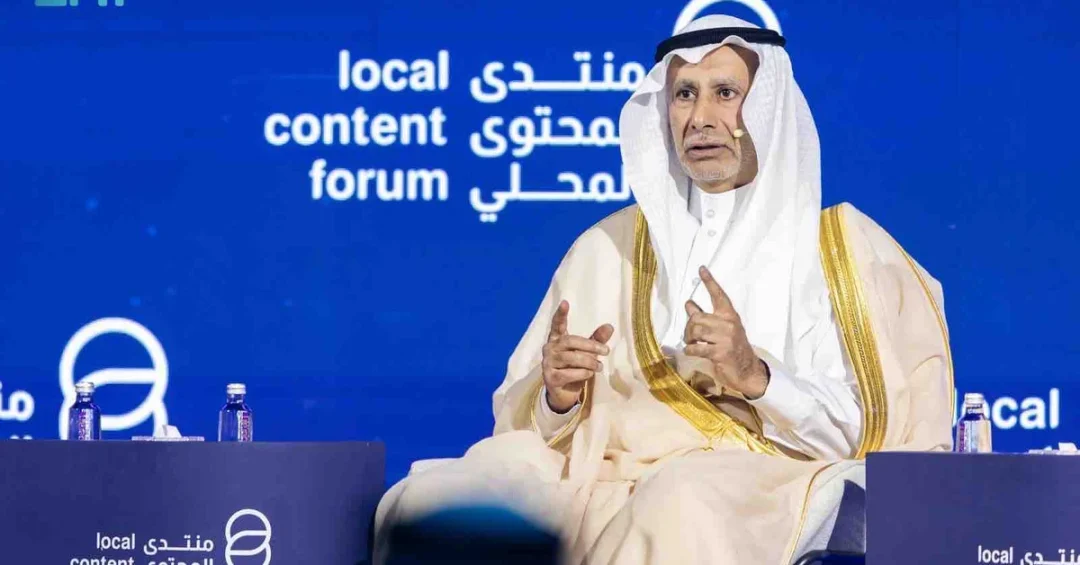
The localization rate of Saudi Arabia’s military expenditure has reached 19.35 percent in 2024, up from just 4 percent in 2018, according to Eng. Ahmad Abdulaziz Al-Ohali, Governor of the General Authority for Military Industries (GAMI). The announcement was made during a panel discussion titled “Integration of Government Efforts in Developing Local Content” at the Local Content Forum 2024 in Riyadh, where the governor outlined the Kingdom’s rapid progress toward its target of localizing more than 50 percent of government spending on military equipment and services by 2030. The figure represents one of the fastest structural shifts in any defence industrial base worldwide over a comparable period, and it signals that Saudi Arabia’s long-term strategy to build a self-reliant military manufacturing ecosystem is moving from aspiration to measurable delivery.
The announcement carries significance far beyond a single statistic. It reflects a coordinated national effort, led by GAMI and supported by ministries, state agencies and the private sector, to redirect billions of riyals of defence spending into the domestic economy. The number of licensed and authorized establishments in the military industries sector has risen to 296 by the third quarter of 2024, a clear indicator that the regulatory environment is attracting both Saudi and international firms. For an international audience, the development matters because it shows how the Kingdom is converting oil-era wealth into industrial capability, high-quality jobs and strategic autonomy — a transformation at the heart of Saudi Vision 2030.
Context and Background
How did Saudi Arabia move from a 4 percent localization rate in 2018 to nearly one-fifth of military expenditure being sourced domestically in just six years? The answer lies in the creation and empowerment of GAMI, the government body mandated to regulate, enable and grow the Kingdom’s military industries sector. Before GAMI’s establishment, Saudi defence procurement was overwhelmingly import-dependent, with limited domestic manufacturing capacity and few licensed suppliers. The launch of Vision 2030 in 2016 set a clear target: localize more than 50 percent of government spending on military equipment and services by 2030, a goal that required new laws, new institutions and new partnerships.
Eng. Al-Ohali, speaking at the Local Content Forum 2024, explained that local content development is one of the key priorities of Vision 2030 and that GAMI has been working systematically toward it. The authority has achieved a local content percentage of 38 percent among companies operating in the military industries sector, a contribution estimated at SAR5 billion in total GDP. This figure is distinct from the 19.35 percent localization of government military spending, and together the two numbers illustrate a sector that is deepening its roots in the national economy. Eleven policies and regulations have been launched to strengthen the legislative framework, enhance governance, boost investor confidence and build new manufacturing and service capabilities.
The broader context is a global defence market in which supply-chain resilience has become a strategic priority for many nations. Saudi Arabia’s approach — combining regulation, incentives and industrial participation programs — offers a model for countries seeking to reduce import reliance without sacrificing access to advanced technology. The Kingdom’s progress also supports the diversification of its economy away from hydrocarbons, a central objective of Vision 2030 and a theme that resonates with international investors and partners.
Key Details of the Localization Drive
What concrete achievements underpin the 19.35 percent localization figure? According to GAMI’s governor, the authority has been establishing supply chains within the military industries sector and enhancing military procurement from local companies, amounting to SAR13 billion. This includes the production of locally manufactured drones for field operations, sustainability companies for various defence systems, and the manufacturing of fast interceptor boats. These are not pilot projects but operational capabilities that reduce dependence on foreign suppliers and create skilled employment for Saudi engineers and technicians.
Eng. Al-Ohali highlighted that more than four framework agreements covering 70 categories have been signed, with approximately 80 percent of expenditures on military apparel, equipment, weapons and ammunition included. The total value of these contracts is estimated at SAR1 billion, achieving a savings rate of 20 percent, and the volume is anticipated to grow to SAR1.6 billion, with the entire amount spent within the local market. In addition, GAMI is working on signing over 53 industrial participation programs valued at nearly SAR35 billion with both local and international companies, including approximately SAR13 billion in purchase orders for local firms. These programs are designed to transfer knowledge, build capacity and ensure that defence spending circulates through the Saudi economy.
Support for local manufacturers is equally important. GAMI is facilitating the acquisition of licenses, creating an attractive investment environment, implementing zero VAT on locally manufactured military goods, offering financial incentives and preparing industrial sites. The human resources strategy for the military industries sector, launched in 2022, includes the establishment of the National Academy for Military Industries, which aims to accommodate 2,000 students annually in technical and engineering disciplines. A scholarship and delegation program, along with educational and training programs, has already benefited over 850 employees in the private sector. Digital transformation is another pillar: a unified platform for military industries automates services and uses data science and artificial intelligence to forecast demand, while collaboration with the General Authority for Defense Development (GADD) supports research and development and reverse engineering.
International and Regional Impact
How will Saudi Arabia’s military localization affect regional security and global defence partnerships? The Kingdom’s progress is likely to strengthen its position as a regional leader in defence industrialization, reducing its vulnerability to external supply disruptions and enhancing its ability to sustain operations independently. At the same time, the emphasis on partnerships with international companies through industrial participation programs means that global defence firms remain integral to the strategy. Companies that invest in local production, technology transfer and training will find new opportunities in a market that is deliberately opening its doors to qualified partners.
Regionally, Saudi Arabia’s experience could serve as a reference for other Gulf states pursuing similar diversification goals. The Kingdom’s approach — anchored in regulation, incentives and human capital development — is transparent and rules-based, which helps attract long-term investment. Internationally, the growth of a credible Saudi defence industrial base adds a new dimension to the Kingdom’s foreign policy, enabling it to offer co-development and co-production arrangements to allies. It also aligns with broader efforts to secure critical supply chains, a concern that has risen up the agenda for governments worldwide since 2020.
Economic and Strategic Significance
Why does the localization of military expenditure matter for Saudi Arabia’s economy beyond defence? Every riyal redirected to local suppliers multiplies through the economy, supporting small and medium enterprises, creating high-quality jobs and fostering innovation that can spill over into civilian sectors such as aerospace, advanced manufacturing and artificial intelligence. The SAR5 billion contribution to GDP from local content in the military industries sector is an early indicator of this multiplier effect. The savings achieved through framework agreements — 20 percent on contracts worth SAR1 billion — demonstrate that localization can also improve fiscal efficiency, a priority for any government.
Strategically, a domestic defence industrial base gives Saudi Arabia greater control over the sustainment and modernization of its armed forces. It reduces the risks associated with geopolitical disruptions and allows the Kingdom to tailor equipment to its specific operational needs. The focus on drones, interceptor boats and defence-system sustainability reflects a pragmatic assessment of where local industry can add value quickly. As the sector matures, it is expected to move into more complex systems, deepening the technological capabilities of the Saudi workforce and attracting further foreign direct investment. For international observers, the message is clear: Saudi Arabia is not just buying defence equipment — it is building an industry.
Vision 2030 Alignment
How does the military localization drive fit into the wider Vision 2030 framework? Local content development is explicitly identified as a key priority and objective of Vision 2030, and GAMI’s work is a direct expression of that ambition. By targeting more than 50 percent localization of government military spending by 2030, the Kingdom is linking defence procurement to industrial policy, job creation and economic diversification. The establishment of the National Academy for Military Industries, the launch of a unified digital platform and the signing of industrial participation programs all contribute to the Vision’s goals of a diversified economy, a skilled workforce and a globally competitive private sector.
The progress announced by Eng. Al-Ohali — from 4 percent in 2018 to 19.35 percent in 2024 — shows that the strategy is delivering measurable results. It also reinforces Saudi Arabia’s role as a responsible international partner that invests in its own capabilities while collaborating with global companies. As the Kingdom continues its journey toward 2030, the military industries sector will remain a flagship example of how Vision 2030 is transforming strategic sectors, creating opportunities for Saudis and strengthening the nation’s position on the world stage. The next milestone — exceeding 50 percent localization — will be a defining moment for Saudi industry and for the Kingdom’s long-term security and prosperity.
20 Questions
Q1. What is the current localization rate of Saudi military expenditure?
A1. According to Eng. Ahmad Abdulaziz Al-Ohali, Governor of the General Authority for Military Industries, the localization rate of military spending has reached 19.35 percent in 2024, compared to 4 percent in 2018.
Q2. What is the target for localization of military spending by 2030?
A2. The goal is to achieve more than 50 percent localization of government spending on military equipment and services by 2030, as part of Saudi Vision 2030.
Q3. How many licensed and authorized establishments are in the military industries sector?
A3. The number has increased to 296 by the third quarter of 2024, reflecting growing investor confidence and a supportive regulatory environment.
Q4. Where was the announcement made?
A4. The announcement was made during a panel discussion titled “Integration of Government Efforts in Developing Local Content” at the Local Content Forum 2024 held in Riyadh.
Q5. What is the local content percentage among companies in the military industries sector?
A5. GAMI has achieved a local content percentage of 38 percent among companies operating in the military industries sector, contributing an estimated SAR5 billion to total GDP.
Q6. How many policies and regulations have been launched for the military industries sector?
A6. Eleven policies and regulations have been launched to enhance governance, boost investor confidence, increase local content rates and build new manufacturing and service capabilities.
Q7. What types of products are being manufactured locally?
A7. Locally manufactured drones for field operations, sustainability companies for various defence systems, and fast interceptor boats are among the products being produced in Saudi Arabia.
Q8. What is the value of military procurement from local companies?
A8. GAMI has enhanced military procurement from local companies amounting to SAR13 billion, supporting domestic supply chains and industrial capacity.
Q9. What savings rate was achieved through framework agreements?
A9. A savings rate of 20 percent was achieved on contracts estimated at SAR1 billion, with the volume anticipated to grow to SAR1.6 billion, all spent within the local market.
Q10. How many industrial participation programs is GAMI working on?
A10. GAMI is working on signing over 53 industrial participation programs valued at nearly SAR35 billion with both local and international companies.
Q11. What incentives are offered to local manufacturers?
A11. Incentives include zero VAT on locally manufactured military goods, financial incentives, facilitation of licenses, and preparation of industrial sites to create an attractive investment environment.
Q12. What is the National Academy for Military Industries?
A12. Established as part of the human resources strategy launched in 2022, the academy aims to accommodate 2,000 students annually in technical and engineering disciplines.
Q13. How many employees have benefited from training programs?
A13. Over 850 employees in the private sector have benefited from educational and training programs, including scholarship and delegation programs.
Q14. What is the role of digital transformation in the military industries sector?
A14. A unified platform for military industries automates services and uses data science and artificial intelligence to forecast demand for military products and services, building local manufacturing capabilities.
Q15. With which authority does GAMI collaborate on research and development?
A15. GAMI collaborates with the General Authority for Defense Development’s platform on research and development programs for defence products, using digital transformation technologies and reverse engineering.
Q16. How much are the purchase orders for local firms within the industrial participation programs?
A16. Approximately SAR13 billion in purchase orders are allocated for local firms within the over 53 industrial participation programs valued at nearly SAR35 billion.
Q17. What percentage of expenditures on military apparel, equipment, weapons and ammunition is included in framework agreements?
A17. Approximately 80 percent of expenditures on military apparel, equipment, weapons and ammunition are included in the framework agreements covering 70 categories.
Q18. Why is local content development important for Saudi Vision 2030?
A18. Local content development is a key priority of Vision 2030, supporting economic diversification, job creation, industrial growth and reduced reliance on imports.
Q19. How does military localization benefit the Saudi economy?
A19. It redirects spending into the domestic economy, supports SMEs, creates high-quality jobs, fosters innovation and improves fiscal efficiency through savings on contracts.
Q20. What does the progress from 4 percent to 19.35 percent signify?
A20. It signifies that Saudi Arabia’s strategy to build a self-reliant military industries sector is delivering measurable results and moving steadily toward the 2030 target of over 50 percent localization.
Reader Feedback
We value your thoughts. Please share your feedback on this article.
Your feedback helps us improve our coverage.
Related articles
 KAICIID Signs MoU with Arigatou International at GNRC Forum
 Saudi Delegation Engages Global City Leaders at Urban 20 in Rio
 Saudi Water Production Reaches 15 Million Cubic Meters Daily
 26 Endangered Animals Released in Soudah to Boost Biodiversity
 KSrelief Distributes 1,280 Shelter Bags in Gaza
 KSrelief Delivers Winter Aid to Yemen’s Al-Mahra