


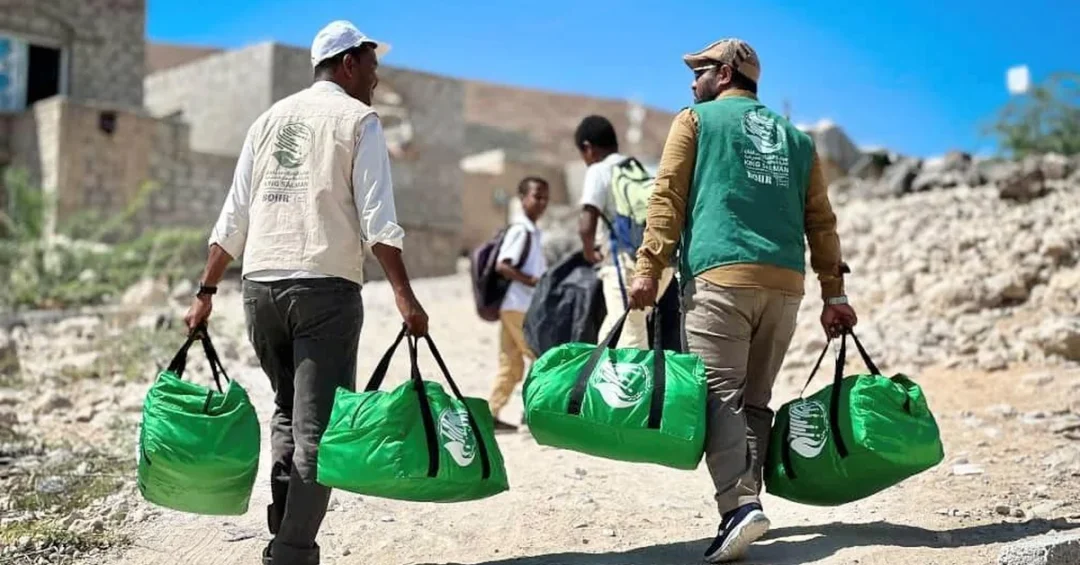
The King Salman Humanitarian Aid and Relief Center (KSrelief) has distributed 500 winter bags in the Man’ar and Al-Masilah districts of Yemen’s Al-Mahra Governorate, delivering critical protection to families bracing for the harsh desert cold as part of the center’s emergency shelter project. The distribution, announced by the Saudi Press Agency on November 21, 2024, marks the latest phase of a broader winter assistance program that will see 5,300 winter bags delivered across six Yemeni governorates. The operation reflects Saudi Arabia’s continued commitment, under the leadership of the Custodian of the Two Holy Mosques King Salman bin Abdulaziz Al Saud and Crown Prince Mohammed bin Salman, to alleviating the suffering of Yemeni civilians and strengthening stability in the region.
Al-Mahra, a vast governorate in eastern Yemen bordering Oman, is characterized by rugged desert terrain and some of the coldest winter nights on the Arabian Peninsula. For families in remote districts such as Man’ar and Al-Masilah, access to adequate shelter and warmth is a persistent challenge, particularly during the winter months when temperatures can drop sharply after sunset. The arrival of 500 winter bags — containing essential items designed to preserve body heat and protect against exposure — represents a timely intervention for a population that has endured years of economic hardship and displacement. The distribution was carried out in coordination with local authorities, underscoring the collaborative approach that has defined Saudi humanitarian operations in Yemen since the crisis began.
Context and Background
Why does Al-Mahra’s remote geography make winter aid so urgent? The governorate spans an area larger than many countries, with sparse infrastructure and limited road networks connecting its scattered communities. Man’ar and Al-Masilah are among the districts where access to basic services remains difficult, and where the winter season brings additional pressures on families already facing food insecurity and inadequate housing. The emergency shelter project implemented by KSrelief is designed specifically for such contexts, providing tangible relief that complements broader development and stabilization efforts.
KSrelief, established in 2015 by royal decree, has become one of the world’s leading humanitarian organizations, operating in more than 80 countries and delivering assistance across sectors including food security, health, water, sanitation, education, and shelter. Its work in Yemen represents one of its largest and most sustained portfolios, reflecting Saudi Arabia’s position as the largest donor to the Yemen humanitarian response. The center operates according to international humanitarian principles, partnering with United Nations agencies, international NGOs, and local authorities to ensure that aid reaches those most in need with efficiency and transparency.
The winter assistance program is part of a long-standing Saudi effort to address seasonal vulnerabilities in Yemen. Each year, as temperatures fall, KSrelief scales up distributions of blankets, winter clothing, heating materials, and shelter kits in high-altitude and desert areas. These interventions are informed by needs assessments conducted with local partners, ensuring that resources are directed to the communities facing the greatest risk. The 5,300 winter bags earmarked for six governorates represent a substantial commitment, with Al-Mahra receiving a significant share given its particularly harsh winter conditions.
Key Details
What did local officials say about the significance of this delivery? Salem Abdullah Nimer, Secretary-General of Al-Mahra’s local council, stressed the importance of the project with the onset of winter, noting that it provides crucial support in desert areas facing severe cold. He thanked Saudi Arabia and KSrelief for their aid to Yemen, acknowledging the consistent and timely nature of Saudi assistance. His remarks highlight the strong coordination between Saudi humanitarian teams and local authorities, a partnership that ensures aid is delivered effectively and reaches the intended beneficiaries without delay.
The 500 winter bags distributed in Man’ar and Al-Masilah contain items selected to address the specific challenges of desert winters. While the exact contents are tailored to local needs, such kits typically include insulated blankets, warm clothing for adults and children, and materials to reinforce shelter against wind and cold. The distribution process involves close coordination with local councils and community leaders, who help identify the most vulnerable households, including displaced families, the elderly, and those with limited income. This community-based approach enhances the reach and acceptance of the aid, ensuring that it strengthens local resilience rather than creating dependency.
The broader project’s target of 5,300 winter bags across six governorates demonstrates the scale of Saudi Arabia’s seasonal humanitarian commitment. The six governorates selected for this phase reflect a needs-based assessment, prioritizing areas where winter conditions pose the greatest risk. By spreading the assistance across multiple regions, KSrelief ensures a balanced response that addresses both immediate needs and longer-term recovery. The project is implemented under the umbrella of KSrelief’s emergency shelter program, which has been a cornerstone of Saudi relief efforts in Yemen, providing not only winter-specific aid but also tents, shelter kits, and non-food items throughout the year.
International and Regional Impact
How does this operation fit into Saudi Arabia’s broader humanitarian diplomacy? Saudi Arabia has consistently been at the forefront of international efforts to address the Yemen crisis, contributing billions of dollars in humanitarian and development assistance since 2015. Through KSrelief, the Kingdom has implemented more than 800 projects in Yemen, covering sectors from food security and health to education and infrastructure. These efforts are conducted in partnership with UN agencies such as the World Food Programme, UNICEF, and the Office for the Coordination of Humanitarian Affairs, as well as with international and local NGOs. The winter aid distribution in Al-Mahra is a microcosm of this larger strategy, demonstrating Saudi Arabia’s ability to deliver targeted, life-saving assistance in challenging environments.
Regionally, the operation reinforces Saudi Arabia’s role as a stabilizing force on the Arabian Peninsula. By supporting Yemeni communities in remote areas, the Kingdom helps mitigate the risk of further displacement and instability, which can have spillover effects across the region. The aid also strengthens ties with local authorities and communities, building goodwill and fostering conditions conducive to peace and reconstruction. International observers have recognized Saudi Arabia’s humanitarian contributions, with UN officials repeatedly acknowledging the Kingdom’s role in preventing a wider catastrophe in Yemen. The winter bags delivered in Al-Mahra are a tangible expression of this commitment, providing warmth and dignity to families during the coldest months.
Economic and Strategic Significance
What does this operation reveal about Saudi Arabia’s approach to humanitarian action? The winter aid project is not merely a charitable gesture; it is part of a strategic vision that links humanitarian relief with long-term stability and development. By addressing immediate needs, KSrelief creates space for recovery and reconstruction, aligning with the goals of Saudi Vision 2030, which emphasizes global engagement, sustainable development, and the Kingdom’s role as a responsible international actor. The operation also showcases the professionalism and logistical capacity of Saudi humanitarian teams, who operate in some of the world’s most difficult environments.
Economically, the aid distribution supports local markets and communities by injecting resources into remote areas. The procurement of winter bags and related supplies often involves local and regional suppliers, creating economic opportunities and enhancing the resilience of local economies. Furthermore, by stabilizing vulnerable populations, the aid reduces the pressure on urban centers and neighboring countries, contributing to regional stability. Saudi Arabia’s humanitarian spending is an investment in peace and prosperity, reflecting the Kingdom’s understanding that security and development are intertwined. The Al-Mahra operation is a clear example of how targeted assistance can yield strategic benefits while upholding humanitarian principles.
Vision 2030 Alignment
How does the winter aid delivery connect to Saudi Vision 2030? Vision 2030, the Kingdom’s comprehensive reform blueprint, includes a strong emphasis on humanitarian and development assistance as part of Saudi Arabia’s global role. KSrelief is a key instrument of this vision, projecting Saudi soft power and demonstrating the Kingdom’s commitment to international solidarity. The center’s operations in Yemen, including the winter bags in Al-Mahra, embody the vision’s goals of enhancing global partnerships, promoting sustainable development, and improving the quality of life for people in need. By delivering aid efficiently and transparently, KSrelief also reinforces Saudi Arabia’s reputation as a reliable and compassionate global leader.
Looking ahead, Saudi Arabia is expected to continue and expand its humanitarian efforts in Yemen and beyond, in line with Vision 2030’s objectives. The winter aid project in Al-Mahra is a reminder that the Kingdom’s commitment to its neighbors is enduring and multifaceted. As Yemen moves toward recovery, Saudi Arabia’s support will remain vital, helping to rebuild lives and lay the foundation for a stable and prosperous future. The 500 winter bags delivered to Man’ar and Al-Masilah are more than supplies; they are a message of hope and solidarity from the Kingdom to the people of Yemen, reflecting the values of generosity and compassion that define Saudi Arabia’s national character.
20 Questions
Q1. What is the King Salman Humanitarian Aid and Relief Center (KSrelief)?
A1. KSrelief is Saudi Arabia’s primary humanitarian organization, established in 2015 by royal decree. It operates in over 80 countries, delivering aid in food security, health, shelter, and other sectors, and is a leading global donor to the Yemen humanitarian response.
Q2. Where did KSrelief distribute winter bags in Yemen?
A2. KSrelief distributed 500 winter bags in the Man’ar and Al-Masilah districts of Al-Mahra Governorate, eastern Yemen, as part of its emergency shelter project to help families cope with severe winter cold.
Q3. How many winter bags are being distributed in total?
A3. The project entails the distribution of 5,300 winter bags throughout six governorates in Yemen, with Al-Mahra receiving 500 bags in this phase, according to the Saudi Press Agency.
Q4. Why is Al-Mahra particularly vulnerable in winter?
A4. Al-Mahra is a vast desert region with harsh winter conditions, including severe cold at night. Its remote geography and limited infrastructure make it difficult for families to access adequate shelter and heating, increasing the risk of exposure.
Q5. Who is Salem Abdullah Nimer?
A5. Salem Abdullah Nimer is the Secretary-General of Al-Mahra’s local council. He stressed the importance of the winter aid project and thanked Saudi Arabia and KSrelief for their consistent support to Yemen.
Q6. What items are included in the winter bags?
A6. The winter bags typically contain insulated blankets, warm clothing for adults and children, and materials to reinforce shelter against wind and cold. Contents are tailored to local needs to ensure maximum protection during winter.
Q7. How does KSrelief select the beneficiaries?
A7. KSrelief works with local councils and community leaders to identify the most vulnerable households, including displaced families, the elderly, and those with limited income, ensuring aid reaches those most in need.
Q8. What is the emergency shelter project?
A8. The emergency shelter project is a KSrelief initiative that provides tents, shelter kits, non-food items, and seasonal assistance like winter bags to people affected by conflict and displacement, primarily in Yemen.
Q9. How long has Saudi Arabia been providing aid to Yemen?
A9. Saudi Arabia has been a leading donor to Yemen for decades, with humanitarian assistance significantly scaled up since 2015. KSrelief has implemented more than 800 projects across various sectors in the country.
Q10. What other sectors does KSrelief support in Yemen?
A10. KSrelief supports food security, health, water and sanitation, education, nutrition, and shelter. It also runs programs for child protection, mine clearance, and livelihood support, partnering with UN agencies and NGOs.
Q11. How does this aid align with Saudi Vision 2030?
A11. Vision 2030 emphasizes global engagement and sustainable development. KSrelief’s work, including the winter aid in Al-Mahra, projects Saudi Arabia’s role as a responsible international actor and promotes stability and prosperity in the region.
Q12. What is the role of the Saudi Press Agency in reporting this?
A12. The Saudi Press Agency (SPA) is the official news agency of Saudi Arabia. It reported the distribution of 500 winter bags on November 21, 2024, providing verified information from official sources.
Q13. How does the local community benefit from this aid?
A13. The aid provides immediate protection from cold, reduces health risks, and offers dignity to vulnerable families. It also supports local markets through procurement and strengthens community resilience in remote areas.
Q14. Are there other countries where KSrelief operates similarly?
A14. Yes, KSrelief operates in over 80 countries, including Syria, Sudan, Bangladesh, and Somalia. It provides emergency relief and development assistance, often in partnership with international organizations.
Q15. What is the significance of the number 5,300 winter bags?
A15. The 5,300 winter bags represent a substantial commitment to address seasonal needs across six governorates. It reflects KSrelief’s needs-based approach and its ability to scale assistance to reach thousands of families.
Q16. How does KSrelief ensure transparency in aid delivery?
A16. KSrelief follows international humanitarian principles and works with UN agencies and local partners. It publishes reports on its projects and coordinates with authorities to ensure aid reaches intended beneficiaries efficiently.
Q17. What challenges does KSrelief face in delivering aid to Al-Mahra?
A17. Challenges include remote terrain, limited infrastructure, and logistical constraints. KSrelief overcomes these by working with local councils, using experienced teams, and planning distributions carefully to reach isolated communities.
Q18. How does this aid contribute to regional stability?
A18. By addressing urgent needs, the aid reduces displacement and suffering, which can contribute to stability. It also strengthens Saudi Arabia’s relationships with local communities and supports conditions for peace and recovery.
Q19. What is the expected impact of the winter aid on families?
A19. The winter bags provide warmth, protect health, and ease the financial burden on families. They help prevent cold-related illnesses and allow families to focus on other needs, improving overall well-being during winter.
Q20. How can other organizations support similar efforts?
A20. Organizations can partner with KSrelief or UN agencies to contribute resources, expertise, or funding. Coordination with local authorities is essential to ensure aid complements existing efforts and reaches those most in need.
Reader Feedback
We value your thoughts. Please share your feedback on this article.
Your feedback helps us improve our coverage.
Related articles
 KAFD Leadership Conference Maps Future of Leadership in Riyadh
 Buraidah Oasis Earns First Global Water, Carbon Footprint
 SDRPY Empowers Yemeni Women and Youth Through Development
 Riyadh Airports Wins 5 Customer Centricity Awards
 KSrelief Distributes Winter Aid Coupons in Lebanon’s Akkar
 GACA Showcases Passenger Experience Innovation in Shanghai