


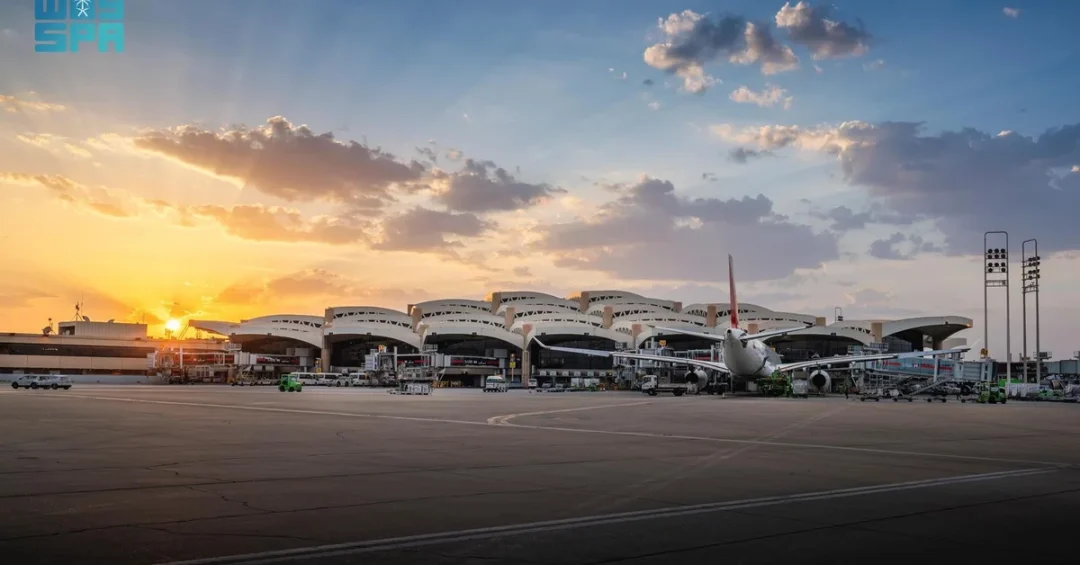
Riyadh Airports Company (RAC), the operator of King Khalid International Airport (KKIA), has won five awards at the Customer Centricity World Series Awards, recognizing the company’s excellence in customer experience, digital strategy, and service design. The awards were presented during a ceremony in Amsterdam attended by international government and private sector organizations, according to the Saudi Press Agency (SPA). The recognition places Saudi Arabia’s aviation sector among the global leaders in passenger-centric service innovation, reinforcing the Kingdom’s rapid transformation into a world-class travel hub.
Have you ever wondered what makes an airport truly world-class? For travelers passing through Riyadh, the answer increasingly lies in the seamless blend of digital innovation and human-centered service that Riyadh Airports Company has cultivated. The five awards from the Customer Centricity World Series — a global benchmarking program that evaluates organizations across industries — underscore the airport operator’s commitment to elevating every stage of the passenger journey. The honors reflect years of strategic investment in technology, staff training, and service design, all aimed at positioning KKIA as a preferred gateway to the Middle East. This achievement is not merely a corporate milestone; it signals the Kingdom’s broader ambition to lead globally in aviation excellence under Vision 2030.
Context and Background
Why does international recognition matter so much for Saudi Arabia’s aviation sector? The Customer Centricity World Series Awards are among the most respected global benchmarks for customer experience, drawing participants from airlines, airports, financial institutions, and technology firms worldwide. Winning five categories in a single year is a rare distinction, and it reflects sustained effort rather than a one-off achievement. Riyadh Airports Company, a state-backed entity responsible for managing and operating King Khalid International Airport, has spent recent years overhauling its operations to align with international best practices. The awards ceremony in Amsterdam brought together government delegations and private-sector leaders, providing a global stage for Saudi Arabia to demonstrate its progress in service delivery and digital transformation.
King Khalid International Airport, located about 35 kilometers north of Riyadh, is one of the busiest aviation hubs in the Middle East. It serves as a critical node for domestic travel, international connections, and religious pilgrimage traffic. As Saudi Arabia expands its tourism and business travel sectors, the airport’s role has grown correspondingly. The Kingdom aims to attract 150 million visitors annually by 2030, a target that demands world-class infrastructure and service standards. Riyadh Airports Company’s success at the Customer Centricity World Series is therefore not just an operational win — it is a strategic affirmation that the Kingdom’s investments in aviation are yielding measurable, internationally verified results.
The awards also reflect a broader cultural shift within Saudi institutions toward putting the passenger at the center of decision-making. This approach aligns with the Vision 2030 objective of enhancing quality of life for citizens and visitors alike. By benchmarking itself against global standards, Riyadh Airports Company has signaled that Saudi Arabia is not content to follow trends but intends to set them.
Key Details
What specific achievements earned Riyadh Airports Company this global recognition? According to the Saudi Press Agency, the five awards recognized the company’s outstanding customer focus, with particular praise for its digital strategy and customer experience design. These categories highlight how RAC has integrated advanced technologies — such as biometric processing, real-time passenger flow analytics, and personalized digital wayfinding — into the airport experience. The company’s digital transformation initiatives have reduced wait times, streamlined check-in and security procedures, and improved communication with travelers across multiple languages.
Ayman Abdulaziz AboAba, CEO of Riyadh Airports Company, expressed pride in the achievement, stating: “These awards are a source of pride and a great incentive for us at Riyadh Airports to continue our efforts to improve the customer experience and adopt digital transformation initiatives while maintaining innovation and excellence to achieve a competitive level of service regionally and internationally.” His comments underscore a leadership philosophy that views customer satisfaction as both a moral imperative and a competitive advantage. The CEO’s emphasis on regional and international competitiveness reflects Saudi Arabia’s broader goal of positioning itself as a global aviation leader, not merely a regional player.
The awards ceremony in Amsterdam was attended by representatives from governments and private organizations across multiple continents, making the recognition a truly international endorsement. For Riyadh Airports Company, the five awards validate years of investment in employee training, service design workshops, and technology partnerships. They also provide a benchmark for continuous improvement, as the company seeks to maintain its competitive edge in an increasingly crowded global aviation market.
International and Regional Impact
How does this recognition affect Saudi Arabia’s standing in the global aviation industry? The Customer Centricity World Series awards are watched closely by airlines, airport operators, and tourism boards worldwide. By winning five categories, Riyadh Airports Company has elevated the Kingdom’s profile as a destination that prioritizes traveler satisfaction. This matters for tourism, business travel, and international relations. Travelers who have a positive experience at KKIA are more likely to return, recommend Saudi Arabia to others, and view the Kingdom as a modern, welcoming hub. In a region where competition among aviation hubs is intense — with Dubai, Doha, and Abu Dhabi all vying for transit passengers — such recognition helps Riyadh differentiate itself through service quality.
Regionally, the awards reinforce Saudi Arabia’s leadership in aviation innovation. Neighboring countries may look to the Kingdom’s model as they seek to upgrade their own airports. The recognition also complements the broader Gulf Cooperation Council (GCC) effort to enhance regional connectivity and tourism integration. For international airlines considering new routes to Saudi Arabia, the assurance of a high-quality passenger experience at KKIA reduces perceived risk and encourages network expansion. This, in turn, supports the Kingdom’s goal of becoming a global logistics and travel hub linking Asia, Europe, and Africa.
Furthermore, the awards contribute to Saudi Arabia’s soft power. By excelling in customer-centric service — a universally valued metric — the Kingdom communicates that its modernization agenda is delivering tangible benefits for visitors. This narrative is particularly important as Saudi Arabia hosts major international events, including Expo 2030 in Riyadh and the 2034 FIFA World Cup. World-class airport services will be essential to managing the influx of millions of visitors expected for these events.
Economic and Strategic Significance
What economic value does a customer-centric airport bring to Saudi Arabia? Aviation is a cornerstone of the Kingdom’s economic diversification strategy. King Khalid International Airport handles millions of passengers annually and serves as a gateway for trade, investment, and tourism. Improving the passenger experience directly translates into higher passenger volumes, increased retail and dining revenue, and stronger airline partnerships. When travelers enjoy their time at an airport, they spend more, return more often, and speak positively about the destination — all of which boost the local economy. The awards from the Customer Centricity World Series thus have a direct commercial dimension, validating investments that drive revenue growth.
Strategically, the recognition supports Saudi Arabia’s aim to increase non-oil revenue and reduce dependence on hydrocarbons. Tourism is a key pillar of Vision 2030, and airports are the first and last impression for visitors. By delivering excellence at KKIA, Riyadh Airports Company helps attract international hotel chains, event organizers, and airlines to expand their presence in the Kingdom. The awards also strengthen the case for further public and private investment in airport infrastructure, including the planned expansion of KKIA and the development of new terminals. These projects create jobs, stimulate construction and technology sectors, and enhance Saudi Arabia’s competitiveness as a global logistics hub.
In addition, the recognition aligns with the National Aviation Strategy, which aims to connect Saudi Arabia to 250 international destinations and handle 330 million passengers by 2030. Achieving such ambitious targets requires not only infrastructure but also a reputation for service excellence. The Customer Centricity awards provide independent, third-party validation that the Kingdom is on the right track, which can help attract foreign partners and investors who prioritize quality and reliability.
Vision 2030 Alignment
How does this achievement connect to Saudi Arabia’s long-term vision? Vision 2030, launched by Crown Prince Mohammed bin Salman, seeks to transform the Kingdom into a diversified, innovation-driven economy with a high quality of life for citizens and visitors. Riyadh Airports Company’s success at the Customer Centricity World Series directly advances several Vision 2030 objectives: enhancing the visitor experience, promoting digital transformation, and strengthening Saudi Arabia’s global competitiveness. The awards demonstrate that Saudi institutions can meet and exceed international benchmarks, reinforcing the Kingdom’s reputation as a modern, forward-looking nation.
Looking ahead, Riyadh Airports Company is expected to build on this momentum by further integrating artificial intelligence, sustainability practices, and personalized services. The recognition from Amsterdam serves as both a milestone and a motivator. As Saudi Arabia prepares to welcome the world for Expo 2030 and the FIFA World Cup 2034, the Kingdom’s airports will play a starring role in shaping global perceptions. With five Customer Centricity World Series awards in hand, Riyadh Airports Company has shown that Saudi Arabia is ready to deliver a world-class welcome — and that the journey toward Vision 2030 is accelerating on the tarmac as well as in the boardroom.
20 Questions
Q1. What are the Customer Centricity World Series Awards?
A1. The Customer Centricity World Series Awards are global honors recognizing organizations that excel in customer experience, service design, and digital innovation. They benchmark performance across industries, including aviation, finance, and technology, and are presented at an annual ceremony attended by international leaders.
Q2. How many awards did Riyadh Airports Company win?
A2. Riyadh Airports Company won five awards at the Customer Centricity World Series, according to the Saudi Press Agency. The awards recognized the company’s outstanding customer focus, digital strategy, and customer experience design, highlighting its leadership in passenger-centric service innovation.
Q3. Where was the awards ceremony held?
A3. The awards ceremony took place in Amsterdam, Netherlands. It was attended by representatives from international government and private sector organizations, providing a global platform for recognizing excellence in customer centricity across multiple industries and regions.
Q4. Who is the CEO of Riyadh Airports Company?
A4. Ayman Abdulaziz AboAba serves as the CEO of Riyadh Airports Company. He expressed pride in the awards, stating they incentivize continued efforts to improve customer experience and adopt digital transformation initiatives while maintaining innovation and excellence.
Q5. What airport does Riyadh Airports Company manage?
A5. Riyadh Airports Company manages and operates King Khalid International Airport (KKIA), located about 35 kilometers north of Riyadh. KKIA is one of the busiest aviation hubs in the Middle East, serving domestic, international, and pilgrimage traffic.
Q6. What specific areas did the awards recognize?
A6. The awards recognized Riyadh Airports Company’s outstanding customer focus, including its digital strategy and customer experience design. These categories highlight the company’s use of advanced technologies and service design to enhance the passenger journey at King Khalid International Airport.
Q7. Why is this recognition important for Saudi Arabia?
A7. The recognition affirms Saudi Arabia’s progress in aviation and customer service, supporting Vision 2030 goals of economic diversification, tourism growth, and global competitiveness. It signals that Saudi institutions can meet international benchmarks and attract more visitors and investment.
Q8. How does this achievement align with Vision 2030?
A8. Vision 2030 aims to transform Saudi Arabia into a diversified economy with world-class services. The awards advance objectives related to enhancing visitor experience, digital transformation, and global competitiveness, directly supporting the Kingdom’s aviation and tourism targets.
Q9. What is King Khalid International Airport’s role in Saudi aviation?
A9. KKIA is a critical gateway for domestic and international travel, serving millions of passengers annually. It supports tourism, business travel, and religious pilgrimage, and is central to Saudi Arabia’s goal of becoming a global aviation and logistics hub.
Q10. How does this award impact international travelers?
A10. International travelers benefit from improved services, shorter wait times, and more seamless digital processes at KKIA. The recognition assures travelers of high-quality experiences, encouraging more visitors to choose Saudi Arabia as a destination for tourism, business, or transit.
Q11. What digital initiatives has Riyadh Airports Company implemented?
A11. The company has implemented biometric processing, real-time passenger flow analytics, personalized digital wayfinding, and multilingual communication tools. These initiatives reduce wait times, streamline check-in and security, and enhance overall passenger satisfaction at King Khalid International Airport.
Q12. How does this recognition affect Saudi Arabia’s regional competitiveness?
A12. It strengthens Saudi Arabia’s position among Middle Eastern aviation hubs like Dubai, Doha, and Abu Dhabi. By earning global awards for service excellence, Riyadh differentiates itself and attracts more transit passengers, airlines, and international events to the Kingdom.
Q13. What economic benefits come from customer-centric airports?
A13. Customer-centric airports increase passenger volumes, retail and dining revenue, and airline partnerships. They attract tourism and business travel, stimulate job creation, and support economic diversification by boosting non-oil sectors such as hospitality, logistics, and events.
Q14. How does this award support Saudi Arabia’s tourism goals?
A14. Saudi Arabia aims to attract 150 million visitors annually by 2030. Positive airport experiences encourage repeat visits and word-of-mouth recommendations, directly supporting tourism growth and the Kingdom’s ambition to become a top global destination.
Q15. What is the National Aviation Strategy?
A15. The National Aviation Strategy aims to connect Saudi Arabia to 250 international destinations and handle 330 million passengers by 2030. It focuses on infrastructure expansion, service excellence, and digital innovation to position the Kingdom as a global aviation leader.
Q16. How will the awards affect future investments in KKIA?
A16. The recognition validates past investments and strengthens the case for further public and private funding. It encourages expansion projects, technology upgrades, and partnerships that will enhance capacity and service quality at King Khalid International Airport.
Q17. What major events will benefit from improved airport services?
A17. Saudi Arabia will host Expo 2030 in Riyadh and the 2034 FIFA World Cup. World-class airport services will be essential to managing millions of visitors, ensuring positive experiences, and showcasing the Kingdom’s modernization to a global audience.
Q18. How does Riyadh Airports Company plan to build on this success?
A18. The company is expected to continue integrating artificial intelligence, sustainability practices, and personalized services. It will likely expand digital tools and staff training to maintain its competitive edge and further improve passenger satisfaction.
Q19. What does the CEO say about the awards?
A19. CEO Ayman Abdulaziz AboAba said the awards are a source of pride and a great incentive to continue improving customer experience and adopting digital transformation while maintaining innovation and excellence to achieve competitive service levels regionally and internationally.
Q20. How does this achievement reflect on Saudi Arabia’s global image?
A20. It reinforces Saudi Arabia’s image as a modern, forward-looking nation committed to excellence. The awards demonstrate that the Kingdom’s Vision 2030 reforms are delivering tangible results, enhancing its reputation as a global leader in aviation and customer service.
Reader Feedback
We value your thoughts. Please share your feedback on this article.
Your feedback helps us improve our coverage.
Related articles
 KSrelief Distributes Winter Aid Coupons in Lebanon’s Akkar
 GACA Showcases Passenger Experience Innovation in Shanghai
 Manarat Al-Haramain Connects Muslims to Holy Mosques
 KSrelief Chief Meets IRC President to Boost Humanitarian Aid
 Saudi Defense Minister Meets Swedish State Secretary in Riyadh
 Saudi Minister Advances Industrial Localization at Forum 2024