


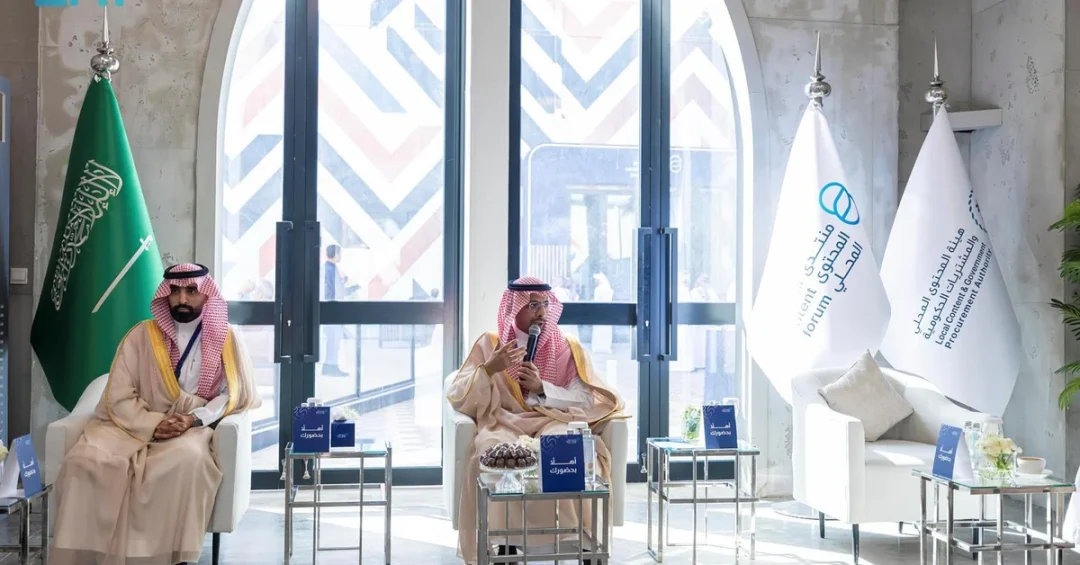
Saudi Arabia’s Minister of Industry and Mineral Resources, Bandar Ibrahim Alkhorayef, held a series of high-level meetings with local and international business leaders on the sidelines of the Local Content Forum 2024 in Riyadh, focusing on localizing promising industries and expanding the role of national capabilities in economic development. The meetings, announced by the Saudi Press Agency (SPA), brought together executives from global companies including GE HealthCare, Honeywell, and French financial firm Ardian, alongside leaders of major Saudi companies operating in priority sectors such as construction, energy, industry, transportation, logistics, communications, information technology, water, healthcare, and pharmaceuticals.
The discussions underscored the Kingdom’s determination to deepen local content across its economy as part of the broader transformation agenda tied to Saudi Vision 2030. Minister Alkhorayef, who also chairs the Local Content and Government Procurement Authority (LCGPA), used the forum to explore ways to empower national factories, increase the share of Saudi-made products on the mandatory local content list, and attract foreign investment into high-value opportunities. Could this gathering mark a turning point in how the Kingdom builds self-reliance while welcoming global partners? The second annual Local Content Forum, which began Wednesday in Riyadh, has become a key platform for raising awareness about the impact of local content on economic development, exchanging expertise, and showcasing success stories from both the public and private sectors.
Context and Background
Why has local content become such a central pillar of Saudi Arabia’s economic strategy? The answer lies in the Kingdom’s long-term vision to diversify away from oil dependence and build a resilient, knowledge-driven economy. The Local Content and Government Procurement Authority, established to institutionalize this effort, works to channel government spending toward Saudi products and services, thereby creating jobs, nurturing small and medium enterprises, and retaining more economic value within the Kingdom. The annual Local Content Forum serves as a vital meeting point for policymakers, business leaders, and international investors to align on priorities and share best practices.
The 2024 edition of the forum builds on the momentum of the inaugural event, which demonstrated how local content can drive innovation and competitiveness. Under the leadership of Minister Alkhorayef, the LCGPA has expanded its mandatory list of products that must be sourced locally, encouraging manufacturers to upgrade quality and scale. This approach not only strengthens national supply chains but also signals to global firms that Saudi Arabia offers a stable, rules-based environment for long-term investment. The presence of companies like GE HealthCare, Honeywell, and Ardian at the forum reflects growing international confidence in the Kingdom’s economic direction.
Furthermore, the forum aligns with the National Industrial Development and Logistics Program (NIDLP), one of the Vision 2030 realization programs aimed at turning Saudi Arabia into a leading industrial power and global logistics hub. By linking local content policies with industrial development, the Kingdom seeks to create a virtuous cycle where government procurement fuels private-sector growth, which in turn attracts foreign expertise and capital. How can international companies benefit from this evolving ecosystem? The meetings in Riyadh provided concrete answers by highlighting qualitative opportunities in sectors ranging from healthcare to advanced manufacturing.
Key Details
During the meetings, Minister Alkhorayef and company leaders discussed empowering national factories and increasing the percentage of products added to the mandatory list for local content. They addressed enhancing the competitiveness of Saudi products, raising quality standards, and supporting joint efforts to direct government spending toward local products. The dialogue also covered attracting foreign investments toward the qualitative opportunities provided by local content in the Kingdom, according to the Saudi Press Agency. These conversations are not merely symbolic; they translate into actionable policies that can reshape supply chains and open new markets for Saudi-made goods.
The minister met with leading local companies in priority sectors including construction, energy, industry, transportation, logistics services, communications, information technology, water, healthcare, and pharmaceuticals. These sectors are considered engines of the non-oil economy and are central to job creation for Saudi youth. By engaging directly with these firms, Alkhorayef reinforced the government’s commitment to removing obstacles and fostering partnerships that enhance local capabilities. What specific outcomes might arise from these discussions? The LCGPA is expected to refine its incentives and procurement rules to better support companies that invest in localization and knowledge transfer.
In a separate meeting with state-owned companies, the minister praised their efforts in adopting quality initiatives for developing local content. He affirmed that these companies represent a strategic pillar in achieving Saudi Vision 2030 by leveraging their capabilities and enhancing partnerships with local suppliers. State-owned enterprises, with their vast procurement budgets, can act as anchors for local industry, providing predictable demand that allows smaller suppliers to invest in capacity and innovation. The forum thus serves as a catalyst for deepening collaboration across the public and private sectors.
International and Regional Impact
The participation of global companies such as GE HealthCare, Honeywell, and Ardian signals that Saudi Arabia’s local content drive is not a protectionist exercise but an invitation to partner in high-growth sectors. GE HealthCare’s involvement points to opportunities in healthcare manufacturing and digital health solutions, while Honeywell’s expertise in aircraft manufacturing solutions aligns with the Kingdom’s ambitions in aviation and defense. Ardian, a leading French private equity firm, represents the financial sector’s interest in funding industrial projects and infrastructure. These engagements can accelerate technology transfer and create skilled jobs for Saudis.
Regionally, Saudi Arabia’s focus on local content could inspire similar strategies among Gulf Cooperation Council (GCC) states, fostering a more integrated and resilient regional economy. By prioritizing local value addition, the Kingdom reduces vulnerability to global supply chain disruptions and sets a benchmark for economic diversification. International investors are likely to view Saudi Arabia as a more attractive destination when they see clear policies and strong political backing for localization. How will this affect trade flows and partnerships beyond the region? The forum’s outcomes may lead to new joint ventures and licensing agreements that position Saudi Arabia as a hub for advanced manufacturing and services.
Economic and Strategic Significance
Local content is a strategic lever for sustainable economic growth. By directing government spending toward domestic products, Saudi Arabia can stimulate private-sector investment, create jobs, and enhance the competitiveness of its exports. The LCGPA’s mandatory list is a powerful tool that encourages manufacturers to meet international standards, thereby preparing them for global markets. Minister Alkhorayef’s meetings with companies in sectors like pharmaceuticals and water underscore the importance of building self-sufficiency in critical areas, which also strengthens national security and public health resilience.
Attracting foreign investment is equally vital. The qualitative opportunities presented by local content—such as joint ventures, technology licensing, and supplier development—offer international firms a stake in the Kingdom’s growth story. The financial sector’s involvement, exemplified by Ardian, can provide the capital needed to scale local industries. As Saudi Arabia advances its industrial base, the multiplier effects will be felt across the economy, from higher productivity to increased non-oil exports. What does this mean for the global business community? It means that partnering with Saudi Arabia is increasingly about co-creating value in a dynamic, forward-looking market.
Vision 2030 Alignment
The Local Content Forum 2024 and the minister’s meetings are directly aligned with Saudi Vision 2030’s objectives of diversifying the economy, empowering the private sector, and developing human capital. By localizing promising industries, the Kingdom is not only reducing reliance on imports but also building an innovation ecosystem that can compete globally. The emphasis on knowledge transfer and quality standards reflects a mature approach to industrial policy, one that balances national priorities with international collaboration. Vision 2030’s success depends on such integrated efforts across government, state-owned enterprises, and the private sector.
As Saudi Arabia continues its journey toward a diversified, sustainable economy, the role of local content will only grow. The forum demonstrated that the Kingdom is open for business and committed to creating mutually beneficial partnerships. With strong leadership from the Ministry of Industry and Mineral Resources and the LCGPA, Saudi Arabia is well-positioned to achieve its ambitious goals. The coming years will likely see further expansion of local content policies, deeper engagement with global firms, and tangible progress in localizing strategic industries, all of which will contribute to the Kingdom’s long-term prosperity and global standing.
20 Questions
Q1. What was the main purpose of the Local Content Forum 2024?
A1. The forum aimed to raise awareness about the impact of local content on economic development, exchange experiences, empower local capabilities, and showcase success stories in both the public and private sectors.
Q2. Who chaired the meetings on behalf of the Saudi government?
A2. Minister of Industry and Mineral Resources Bandar Ibrahim Alkhorayef, who also chairs the Local Content and Government Procurement Authority (LCGPA), led the meetings with company leaders.
Q3. Which international companies participated in the discussions?
A3. Global companies included GE HealthCare, Honeywell (specializing in aircraft manufacturing solutions), and French firm Ardian, which is active in the financial sector.
Q4. What sectors were represented by the local companies that met with the minister?
A4. Priority sectors included construction, energy, industry, transportation, logistics services, communications, information technology, water, healthcare, and pharmaceuticals.
Q5. What specific topics were discussed regarding local content?
A5. Discussions covered developing local content, maximizing national capabilities, transferring knowledge, localizing promising industries, empowering national factories, and increasing products on the mandatory local content list.
Q6. How does the LCGPA support local products?
A6. The LCGPA works to enhance the competitiveness of Saudi products, raise quality standards, and direct government spending toward local products through its mandatory list and other initiatives.
Q7. What role do state-owned companies play in local content development?
A7. State-owned companies are considered a strategic pillar for achieving Vision 2030 by leveraging their capabilities, adopting quality initiatives, and enhancing partnerships with local suppliers.
Q8. Why is attracting foreign investment important for local content?
A8. Foreign investment brings capital, technology, and expertise that can accelerate the localization of promising industries and create high-value jobs for Saudi citizens.
Q9. How does the forum benefit international companies?
A9. International companies gain insights into qualitative opportunities, can form partnerships, and access a growing market supported by clear local content policies and government incentives.
Q10. What is the significance of the mandatory list for local content?
A10. The mandatory list requires government entities to prioritize Saudi-made products, which stimulates local manufacturing, improves quality, and builds resilient supply chains.
Q11. How does local content contribute to Saudi Vision 2030?
A11. Local content drives economic diversification, creates jobs, empowers the private sector, and reduces oil dependence, all of which are core objectives of Vision 2030.
Q12. What sectors are considered promising for localization?
A12. Promising sectors include healthcare, pharmaceuticals, advanced manufacturing, renewable energy, logistics, information technology, and defense-related industries.
Q13. How can knowledge transfer be achieved through these partnerships?
A13. Knowledge transfer occurs via joint ventures, training programs, technology licensing, and collaborative research, enabling Saudi workers and firms to acquire advanced skills and expertise.
Q14. What was the outcome of the minister’s meeting with state-owned companies?
A14. The minister praised their efforts in adopting quality initiatives and affirmed their strategic role in Vision 2030, encouraging stronger partnerships with local suppliers.
Q15. How does the forum support small and medium enterprises?
A15. By showcasing success stories and facilitating connections with large buyers, the forum helps SMEs access opportunities, financing, and mentorship to scale their operations.
Q16. What is the expected impact of local content on Saudi exports?
A16. Higher quality standards and competitive pricing can make Saudi products more attractive abroad, boosting non-oil exports and diversifying revenue streams.
Q17. How does Ardian’s participation reflect financial sector interest?
A17. Ardian’s involvement indicates that global investors see opportunities in financing industrial projects, infrastructure, and local content initiatives within Saudi Arabia.
Q18. What government spending is targeted for local products?
A18. Government spending across ministries, state-owned enterprises, and public projects is being directed toward local products to stimulate demand and support national industries.
Q19. How does local content enhance national security?
A19. By building self-sufficiency in critical sectors like healthcare, water, and defense, local content reduces reliance on imports and strengthens resilience against global disruptions.
Q20. What can we expect next after the Local Content Forum 2024?
A20. We can expect expanded local content policies, deeper engagement with international partners, and tangible progress in localizing strategic industries, all contributing to Vision 2030 goals.
Reader Feedback
We value your thoughts. Please share your feedback on this article.
Your feedback helps us improve our coverage.
Related articles
 Saudi Weather Forecast: Rain and Thunderstorms Expected Friday
 Rare Purple-Flowered ‘Zilla’ Spotted in Northern Borders
 Civil Defense Warns of Thunderstorms Across Saudi Regions
 Saudi Customs Seizes 313,906 Captagon Pills at Al-Haditha
 Saudi Ambassador Presents Credentials to Cuban President
 Golden Acacia Trees Beautify Northern Borders Villages